Gaza Sea: A Time Bomb in Waiting
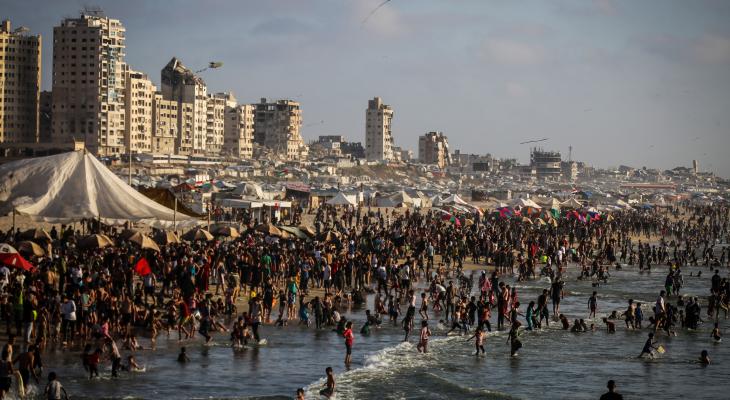
As the sweltering summer heat intensifies and living conditions shrink for residents of the Gaza Strip, the beach is no longer just a place for picnics, relaxation, or seasonal recreation for hundreds of thousands of families. Instead, it has become the last remaining geographical refuge from the scorching heat inside dilapidated tents and overcrowded makeshift settlements.
Along the Gaza City coastline, large numbers of people flock daily in search of fleeting moments of respite and a breath of fresh air.
Faced with an unprecedented and severe shortage of potable water, dozens of families living near the beach have become directly dependent on seawater for their daily needs, such as bathing children and washing clothes and belongings, despite being fully aware of the associated environmental and microbiological risks.
Read also: Between Pollution and the Lack of Rescue Equipment: A Deepening Disaster on Gaza’s Beaches
This crisis is taking on even more complex dimensions as nearly two million Palestinians remain crammed into a narrow coastal strip that comprises only 12% of the Gaza Strip’s total area, according to data from the Civil Defense Authority.
This forced overcrowding along the coastline has made daily, direct contact with the marine environment the only viable option for saving lives from the sweltering heat and harsh displacement conditions.
Before the war, the relevant environmental and health authorities in the Gaza Strip subjected the beach waters to regular monitoring and testing. Based on these tests, they distributed color-coded awareness maps indicating safe and prohibited swimming areas for the public, using precise scientific indicators.
In the last official assessment published before the war, specifically in July 2023, the Palestinian Water and Environmental Quality Authority announced that approximately 60% of the Gaza Strip’s total coastline was classified as a safe and healthy environment for recreational swimming, based on microbiological tests and field health inspections. Pollution was limited to 40% of the coastline near known discharge points.
However, these figures and calculations are now outdated and cannot be applied to the situation in 2026 as reported in the Sanad News Agency.

 marwan


 CrossFireArabia