CrossFireArabia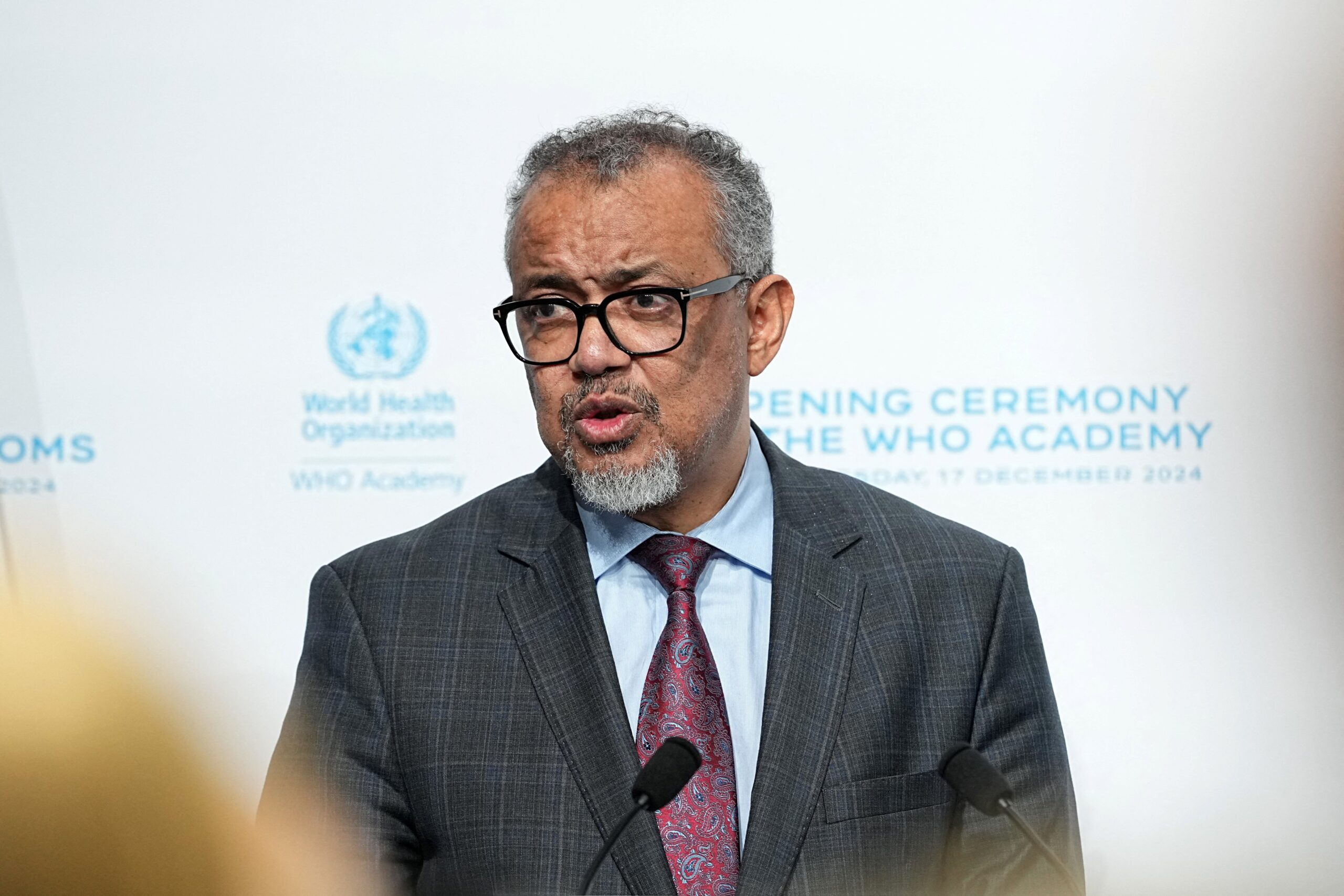
Tedros Adhanom Ghebreyesus, World Health Organization (WHO) said, Thursday, said he was at Yemen’s Sanaa airport when it was hit by Israeli air strikes.
“As we were about to board our flight from Sana’a, about two hours ago, the airport came under aerial bombardment. One of our plane’s crew members was injured,” Tedros wrote on his X account. “At least two people were reported killed at the airport.”
“The air traffic control tower, the departure lounge — just a few meters from where we were — and the runway were damaged,” he said, adding that the mission needs to wait for the damage to the airport to be repaired before they can leave.
Tedros said he and his colleagues are safe and sent “heartfelt condolences” to the relatives of those who lost their lives in the attack.
The WHO chief and his team were in Yemen to negotiate the release of UN staff detainees and assess the country’s health and humanitarian situation.
“We continue to call for the detainees’ immediate release,” he added according to Anadolu.
Houthi Foreign Minister Jamal Amer condemned on his X account the timing of the Israeli airstrike on the airport.
He described the attack as “targeting and disregarding the UN,” as it coincided with preparations for Tedros and UN resident coordinator Julian Harnis to depart on a UN flight.
The Houthi-affiliated Al-Masirah channel said fatalities in the airport’s attack rose to three with 16 injuries, while Israel struck the Ras Isa oil port in Al-Hudaydah which resulted in one death while three people went missing.
Israeli warplanes launched a new wave of airstrikes in Yemen targeting several strategic sites, including Sanaa airport and the port of Al-Hudaydah in western Yemen, Israeli public broadcaster KAN said.
Israel’s Channel 12 said power stations were targeted in the attacks, without providing further details.
According to Israeli Channel 13, dozens of Israeli fighter jets took part in the attacks, which coincided with a televised speech by Houthi leader Abdel-Malik al-Houthi.
KAN said the US was notified before the launch of the attacks.
Channel 14 claimed that critical targets such as air traffic control towers and runways at Sanaa airport were destroyed, alongside Al Hudaydah port, allegedly a hub for arms smuggling to the Houthis.
Senior Israeli security officials, cited by the channel, suggested the strikes could mark the beginning of a broader campaign. They indicated Israel might continue targeting the Houthis as long as the group persists in launching attacks against Israeli cities.
The latest strikes are part of a pattern of Israeli military action in Yemen this year. On 20 July, Israeli airstrikes on Al Hudaydah Port are said to have killed dozens and caused significant material losses, estimated by Houthi officials at $20 million.
On 29 September, Israeli forces conducted widespread airstrikes on western Yemen, including Al Hudaydah and Ras Isa ports.
Most recently, on 19 December, Israel targeted power stations in Sana’a, Al Hudaydah, Salif, and Ras Isa, resulting in nine deaths, three injuries, and severe infrastructure damage. The strikes left hundreds of thousands without electricity.
Israeli daily Yedioth Ahronoth revealed ongoing discussions with the US about the possibility of a major offensive in Yemen. The report said Israel views the Houthis as a resilient adversary with strong morale and widespread support across Arab populations.
The newspaper speculated on the potential for a radical shift in Israeli strategy, possibly involving international ground operations to oust the Houthis. However, such efforts may depend on a change in US leadership, with Israeli officials expressing hope for a tougher stance under a potential Trump administration in 2025.
Israeli Prime Minister Benjamin Netanyahu warned the Houthis, Wednesday, saying: “They will learn the same lessons as Hamas, Hezbollah, the Assad regime, and others, even if it takes time.”
The Houthis have targeted Israel, as well as Israeli-linked shipping and naval vessels in the Red Sea, in solidarity with the Palestinian people in the Gaza Strip, where Israel has killed more than 45,000 people since the 7 October, 2023 Hamas attacks.
The US and UK have also been bombing Houthi targets in Yemen.
Netanyahu, Thursday, visited the Air Force command and control center to monitor the attack, his office said, confirming the attack according to the Turkish news agency.