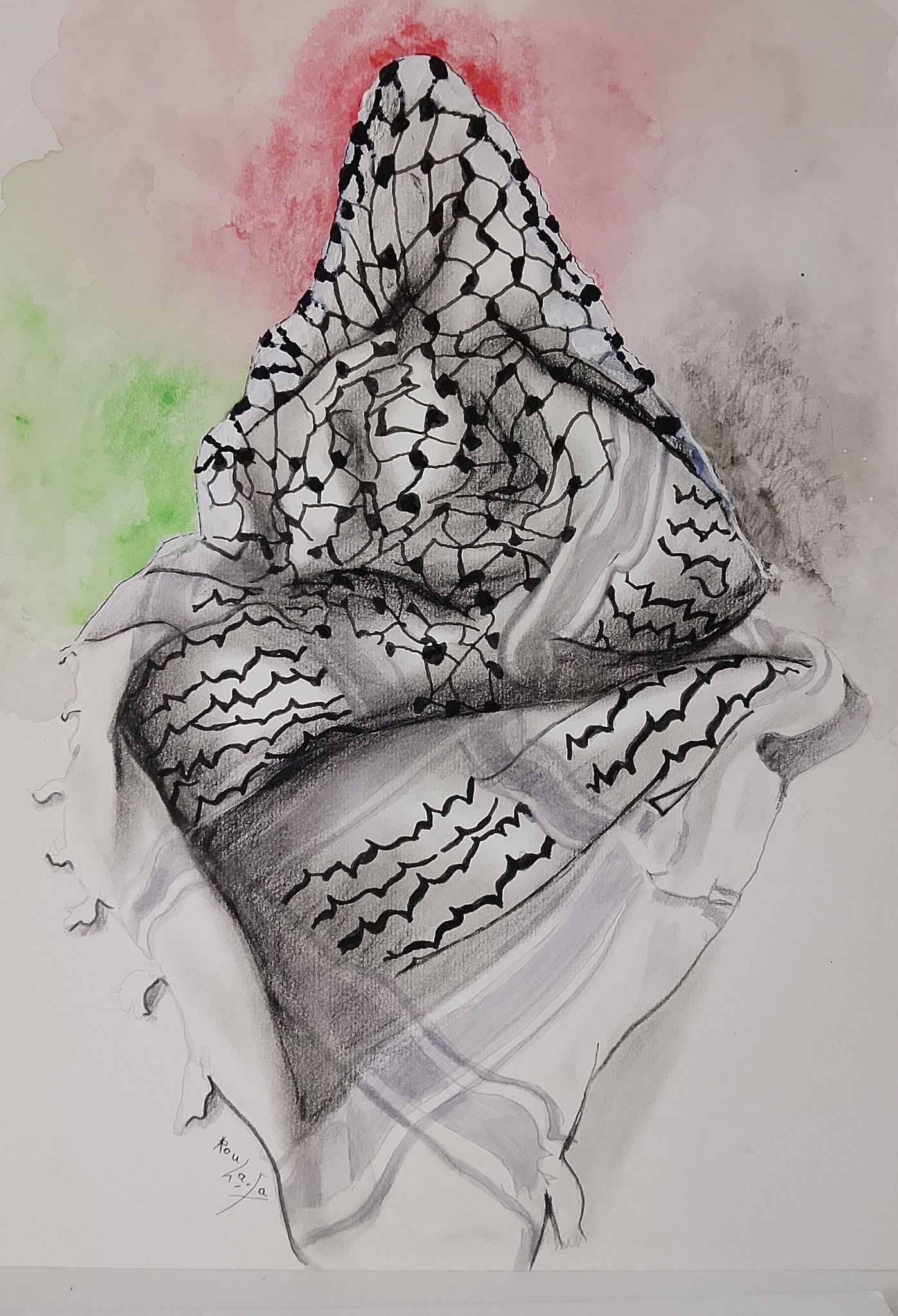
Palestinian artist Qassem Rouhaifa
On Palestinian Dress Day, we renew our commitment to preserving the traditional Palestinian dress and write a story about it every day, a story connected to a homeland we cherish.
The dress of Bethlehem, Palestine.
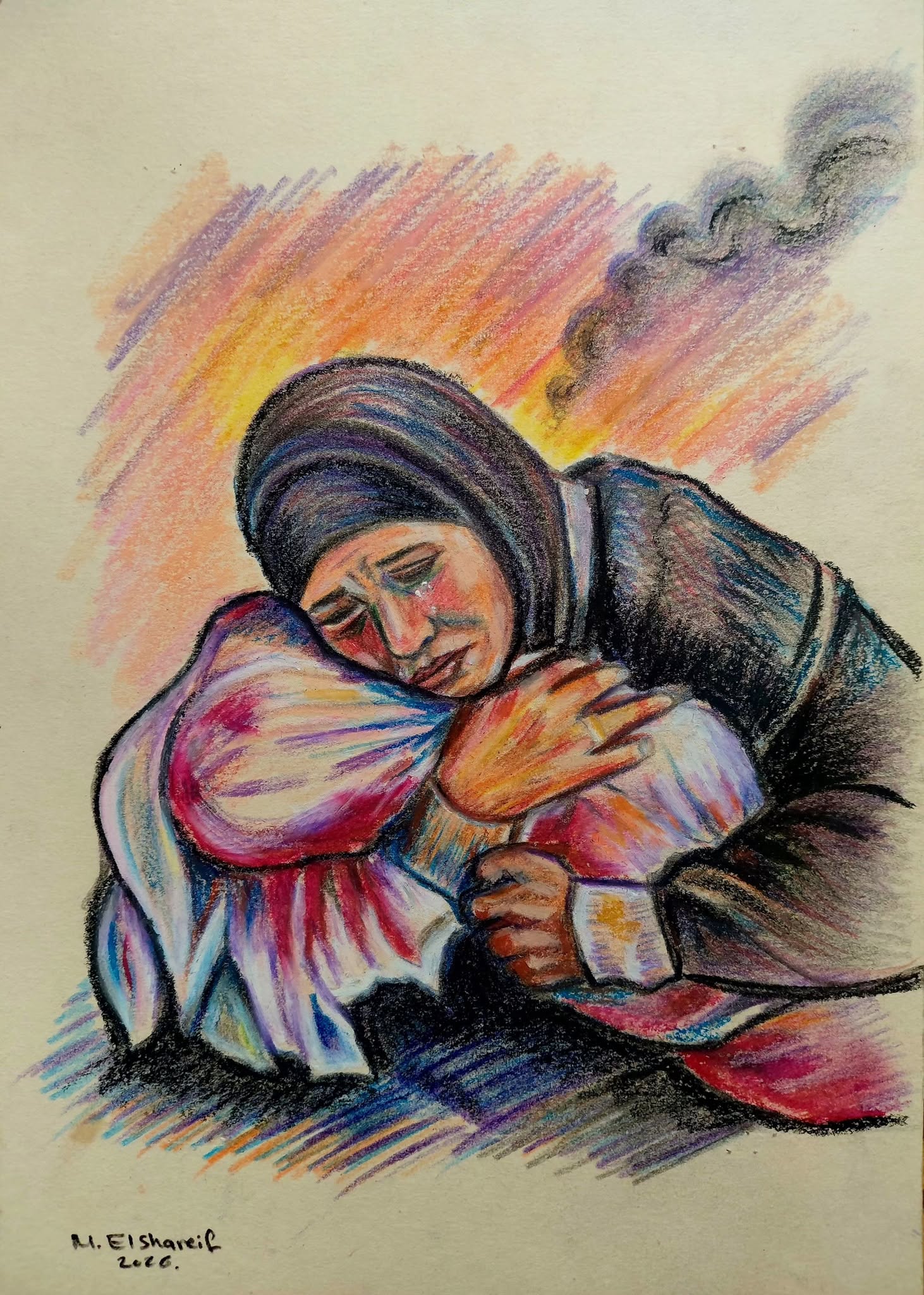
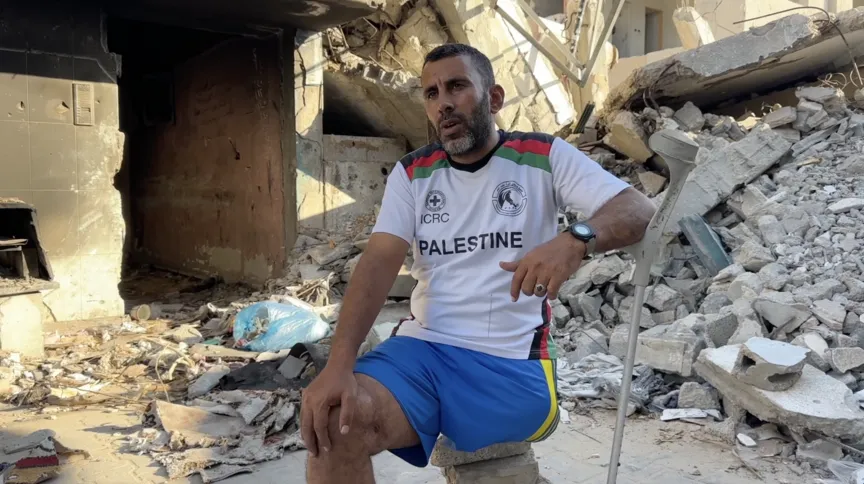
In Gaza, tents are no longer havens from war. They have become prisons of fabric, trapping displaced civilians in the sweltering heat of the summer, while thirst, hunger, mosquitoes, and disease stalk them at every turn.
Here, people don’t escape the constant bombing to safety. Rather day, they face another battle against the scorching sun, the scarce water, and the sleepless nights in tattered tents, that no longer protect from the darkness.
In the Heart of Hell
Read also: “Gaza Live”… 7 Martyrs and Injuries in 13 New Israeli Violations of the “Truce”
“There are eight of us living in a tent, and the situation is hell in the summer,” displaced woman Mariam Baraka, tells the Sanad News Agency, whilst summarizing the details of life inside her tent that offers no protection from the heat and leaves little to dignity.
She says she spends long hours searching for water under the bitter hit of the sun, sometimes managing to fill a few buckets, while other times she returns empty-handed after a grueling journey to a distant water source.
The suffering doesn’t end with thirst. The family is forced to cook over a wood fire amidst sweltering temperatures, and cardboard boxes serve as a primitive makeshift tolls to circulating air inside the tent.
Maryam recounts that her son can no longer bear the intense heat, constantly telling her: “Mommy, I can’t take it anymore.” Her young child is unable to sleep due to the heat and the bites from mosquitoes and flies that have covered his body in blisters. Their entire lives revolve around the sun and what she describes as “extremely difficult” conditions.
Maryam’s testimony reflects the stark reality faced by nearly one million displaced people—about 170,000 families—who endure the summer heat in tents and makeshift shelters, according to a recent report by the Norwegian Refugee Council.
Documented data indicates that 125,000 out of 135,000 tents have been damaged and are unfit for human use due to weather conditions. The organization also reports that approximately 5,000 families are sleeping in the open without any shelter from the sun or darkness.
A Daily Battle
The tents, made of nylon and thick fabric, have become like closed ovens, with temperatures inside sometimes exceeding 37 to 40 degrees Celsius. This makes staying inside nearly impossible due to the trapped heat and humidity, a situation described in international press reports as “slow death inside thermal gas chambers.”
The tragedy is compounded by the severe water crisis. The United Nations Children’s Fund (UNICEF) confirms that water supplies in the camps have dropped to critical levels, forcing families, including children, to walk long distances under the scorching sun to obtain limited quantities of water.
The dangers don’t stop at heat and thirst. The spread of mosquitoes and flies within the camps has led to skin diseases among children, while displacement areas are witnessing an increase in snakes, scorpions, and rats due to the accumulation of rubble and the breakdown of sanitation systems, according to multiple media reports.
Doctors and health workers warn of a rise in skin and infectious diseases, in addition to heatstroke and dehydration, which threaten the lives of children and the elderly.
The Secretary-General of the Norwegian Refugee Council, Jan Egeland, emphasized that this humanitarian catastrophe could have been avoided were it not for the continued blockade and the closure of crossings, which prevent the entry of essential aid, awning materials, wood, and hygiene supplies.
With the destruction of homes and infrastructure, areas like the Khan Younis and Deir al-Balah camps have been transformed into vast tent cities lacking water and sanitation. Each tent has become a new chapter in an unending ordeal, a daily battleground for displaced people struggling for survival.