After 2 ‘Empty’ Years Lebanon Elects a President

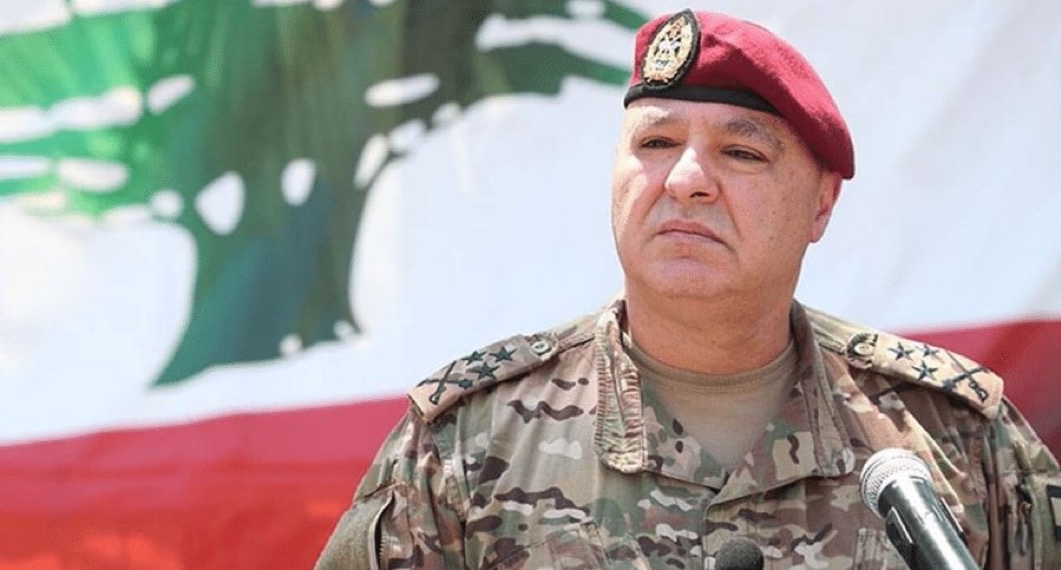
After more than two years of political vacuum, the Lebanese parliament, Thursday, elected army chief Joseph Aoun as president.

Aoun won 99 votes during a second round of voting in the 128-seat parliament after only securing 71 votes in the first round.

The presidential seat has remained vacant for over two years since President Michel Aoun left office on Oct. 31, 2022.

Aoun’s election came after intensified international diplomatic efforts by several countries to end the presidential vacancy in Lebanon, a country whose political and security landscape has been significantly impacted by escalating conflicts with Israel.

Thursday’s presidential vote was attended by several foreign diplomats, including the French special envoy Jean-Yves Le Druan and ambassadors of the Quint committee (Egypt, France, the US, Qatar, and Saudi Arabia) that followed up the issue of presidential vacancy in Lebanon.

According to the Lebanese Constitution, the president must be a Maronite Christian, the prime minister a Sunni Muslim, and the parliamentary speaker a Shia Muslim.

The president’s term is six years, and he could be re-elected after six years from his last mandate.


Army commander

Aoun was born on Jan. 10, 1964, in the Sin El-Fil area of the Matn district in eastern Lebanon.

A father of two sons, he had two bachelor’s degrees in political science and military science and speaks English and French languages.

Aoun joined the army as a volunteer in 1983 after which he got promotions to several military ranks until he became army commander in March 2017.

He also participated in several military trainings in Lebanon and abroad, including trainings in the US, the last of which was in 2009.

During his military career, Aoun was awarded more than 15 military honor medals, including the war medal three times, the national unity medal, the military medal of honor, and the medal in the fight against terrorism.

Aoun was not the first army commander to become president in Lebanon. The country previously saw the election of four army commanders as president – Fouad Chehab, Emile Lahoud, Michel Suleiman and Michel Aoun.

Major challenges

Under Aoun’s command, the Lebanese army launched on Aug. 19, 2017, an anti-terror military campaign, known as Fajr al-Joroud, against ISIS (Daesh) affiliates in the eastern border areas with Syria.

The military campaign successfully managed to kick the militants out of the Baalbek area.

The new president is expected to face several challenges due to years-long economic and political crises that affected the living conditions in Lebanon.

The recent Israeli war on Lebanon also left immense destruction across the country that would require effort by the president to secure international grants and donations from countries to help in the rebuilding of the country according to Anadolu.


Army deployment in southern Lebanon

Aoun supervised the deployment of the army forces in southern Lebanon under a cease-fire deal with Israel that took effect on Nov. 27.

The cease-fire agreement aimed to end over 14 months of fighting between the Israeli army and Hezbollah group since the start of the Gaza war in October 2023.

Under the cease-fire terms, Israel is required to withdraw its forces south of the Blue Line — a de facto border — in phases, while the Lebanese army is to deploy in southern Lebanon within 60 days.

Data from the Lebanese Health Ministry indicates that since Israel’s onslaught against Lebanon began on Oct. 8, 2023, at least 4,063 people have been killed, including women, children, and health workers, while 16,664 others injured.

CrossFireArabia

CrossFireArabia
Dr. Marwan Asmar holds a PhD from Leeds University and is a freelance writer specializing on the Middle East. He has worked as a journalist since the early 1990s in Jordan and the Gulf countries, and been widely published, including at Albawaba, Gulf News, Al Ghad, World Press Review and others.

Related Posts

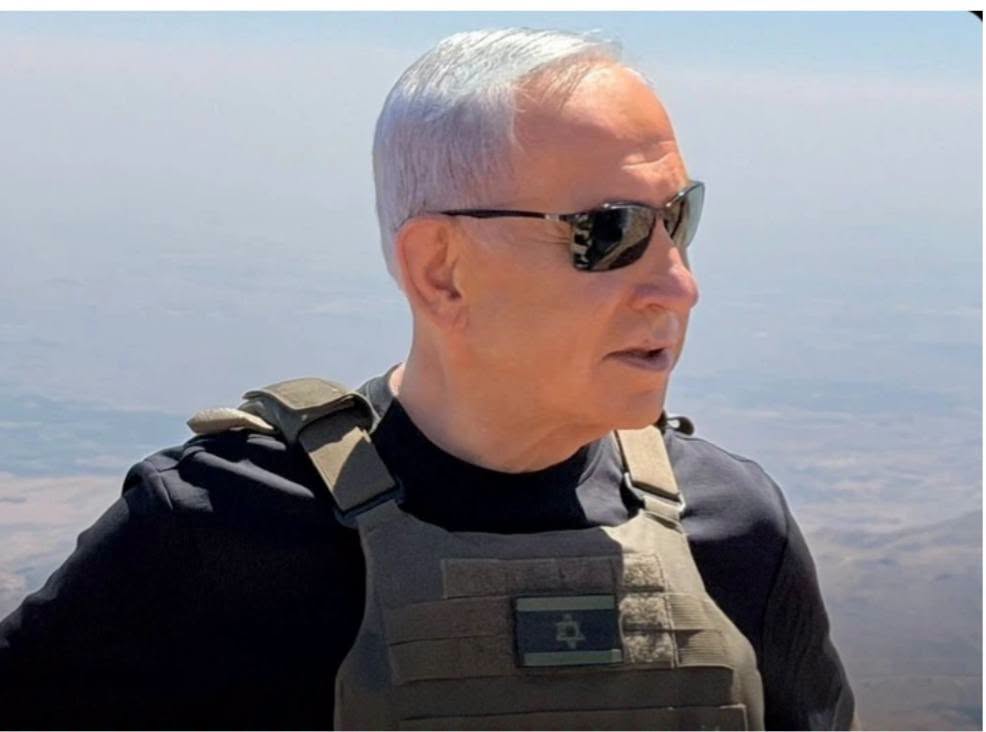
Trump to Netanyahu: ‘You’re crazy. If it weren’t for me, you’d be in jail’ – Axios

The US Axios website, citing senior US officials and another source familiar with the conversation, reported that US President Donald Trump lashed out at Israeli Prime Minister Benjamin Netanyahu amid escalating tensions in Lebanon during a heated phone call on Monday.

The report stated that the Trump-Netanyahu call was filled with profanity, and that the US president told the Israeli prime minister that carrying out his threats to bomb the Lebanese capital would further isolate Israel internationally. Trump also expressed his disapproval of Israel demolishing entire buildings to target a single Hezbollah commander.

According to Axios, Trump told Netanyahu, “You’re crazy. If it weren’t for me, you’d be in jail. I’m saving your political life, and everyone hates you now. Everyone hates Israel, and it’s all your fault.”

Another source familiar with the conversation said that Trump was “furious” and at one point shouted at Netanyahu: “What the hell are you doing?”

The call took place amid threats from Iran to derail negotiations with the US regarding Israeli intervention in Lebanon.

During the call, Trump called Netanyahu “crazy” and accused him of favoritism, according to two sources. Trump also reportedly blocked an Israeli plan to attack Beirut during the same call.

Two of the sources also claimed that Trump said his support helped “keep Netanyahu out of jail,” referring to the ongoing trial against him in Israel.

CNN also reported that the conversation between Trump and Netanyahu turned heated.

According to the report, Trump used harsh language to express his displeasure with the planned Israeli attack on Beirut.

At one point, the president reminded Netanyahu of his past support and warned him that bombing Lebanon could further isolate Israel, according to the sources.

Trump: Hezbollah Will Not Attack Israel, and Israel Will Not Attack Hezbollah

US President Donald Trump said earlier that he had a “very productive” phone call with Israeli Prime Minister Benjamin Netanyahu, adding that “no troops will be going to Beirut, and any troops that were on their way there have already been turned back.”

Trump also claimed that he had a “very good” call with Hezbollah through high-level representatives, saying that they “agreed to a ceasefire, on the condition that Israel does not attack them and they do not attack Israel,”  as reported in the JO24 website.

Continue reading
Thousands Flee as Israel Threatens to Bomb Beirut

As hostilities escalate in Lebanon despite a recent ceasefire extension, the United Nations continues to push for peace and support displaced civilians by providing food, protection and other assistance.

Thousands of people fled the southern suburbs of the capital, Beirut, on Monday after Israeli announced that it will carry out renewed strikes targeting Hezbollah militants sheltered there. 

“Families are leaving by car, motorcycle, and on foot, carrying essentials,” the UN refugee agency, UNHCRtweeted. Many others are returning to shelters and “fear and uncertainty are mounting.” 

The UN reiterated that civilians and civilian infrastructures must not be targeted.  

“We urge all actors to respect the cessation of hostilities and avoid further escalation. We condemn all the loss of civilian lives,” UN Spokesperson Stéphane Dujarric told journalists in New York.

He underscored the need for a diplomatic solution to end the cycle of violence.

High stakes, heavy cost 

The development unfolded as the UN Security Council in New York prepared to hold an emergency session on Monday afternoon to discuss the escalating conflict. 

Humanitarians reported that many people escaped from Beirut and the southern cities of Tyre and Saida following the threat of strikes and renewed displacement orders.

UN Special Coordinator for Lebanon Jeanine-Hennis Plasschaert continues her engagement to de-escalate tensions, reinforce commitments agreed to under the ceasefire, and advance confidence‑building measures.

In a tweet, she noted that southern Lebanon was “in flames” while roads in Beirut were “choked with people fleeing their homes.”

The senior official said that suffering was compounding “as both sides hold out for victory.”   

She added, however, that “escalation has its own logic” and “attempting to contain or manage it is a high-stakes gamble, with costs borne by people who have already lost too much.” 

Thousands killed since March

The crisis in Lebanon is part of unrest across the wider region.  It erupted on 2 March, just days after the United States and Israel began bombing Iran, prompting Hezbollah militants in Lebanon to fire on Israel. 

Since then, 3,412 people have been killed and more than 10,000 injured, the UN aid coordination office OCHA said on Monday, citing the Lebanese health authorities.  At least 88 people reportedly were killed over the past weekend.

Healthcare has also been affected by attacks. The World Health Organization (WHO) said five attacks were recorded in the past three days, resulting in one health worker reportedly killed and 19 others injured.

A US-brokered ceasefire between Lebanon and Israel took effect on 17 April but was never fully observed by either side. It was nominally extended twice, most recently on 16 May for a 45-day period. 

UN agencies are on the ground such as UNHCR, which has been supporting the government-led emergency response.  Alongside partners, it has reached hundreds of thousands with protection services, emergency cash assistance, shelter support, and other relief. 

‘Deepening humanitarian emergency’ 

However, “nearly three months into the conflict, Lebanon faces a deepening humanitarian emergency with a critical combination of displacement and increased food insecurity,” the UN World Food Programme (WFPwarned on Monday. 

More than a million civilians have been uprooted, and food security experts report that 1.24 million people nationwide – nearly a quarter of the population – are not getting enough to eat. 

WFP stressed the critical need for sustained humanitarian access, stable supply flows and predictable funding.

“The ongoing conflict characterised by daily bombardments and displacement orders is challenging humanitarian access and resulting in continued displacement,” the agency said, noting that “these conditions are hampering the delivery of critical assistance, particularly in hard-to-reach areas.” 

Rising food costs 

While food remains available in many areas in Lebanon, costs have risen alongside the escalating fighting.  For example, vegetable prices are now 20 per cent higher, while bread costs roughly 15 per cent more

Furthermore, although markets in Beirut and other areas “remain operational but under growing strain”, most markets in southern Lebanon and Nabatieh – more than 80 per cent – are no longer functioning. 

Recently, a shipment of 250 metric tonnes of wheat flour entered Lebanon through Jordan, which is now supporting roughly 10,000 vulnerable households. 

Hot meals, food parcels and emergency cash 

WFP has ramped up its response efforts, reaching more than 700,000 people to date with hot meals, ready-to-eat rations, and food parcels for families sheltering in displacement sites. 

Teams have distributed nearly five million hot meals, in addition to supporting more than 215,000 displaced people across over 500 shelters nationwide, alongside approximately 85,500 people in host communities and hard-to-reach areas. 

The UN agency has also provided emergency cash support for close to half a million Lebanese through national systems, and cash support for more than 100,000 Syrian refugees. 

Since the conflict began, 24 humanitarian convoys have been deployed to communities in Lebanon facing access restraints, but more than half of those requested have been delayed or cancelled due to movement and access risks. 

Humanitarians will launch a renewed flash appeal this Friday to scale up assistance in Lebanon over the next three months. – UN News

Continue reading

You Missed

In The Grip of Starvation: Israel Will Not Let Gaza Rest!

In The Grip of Starvation: Israel Will Not Let Gaza Rest!

Trump to Netanyahu: ‘You’re crazy. If it weren’t for me, you’d be in jail’ – Axios

Trump to Netanyahu: ‘You’re crazy. If it weren’t for me, you’d be in jail’ – Axios

Israeli Capitan Killed, 7 Soldiers Injured in Lebanon

Israeli Capitan Killed, 7 Soldiers Injured in Lebanon

Thousands Flee as Israel Threatens to Bomb Beirut

Thousands Flee as Israel Threatens to Bomb Beirut

Hush, Hush! Israeli Expert Says Iran Destroyed Spy Center in First Days of The War

Hush, Hush! Israeli Expert Says Iran Destroyed Spy Center in First Days of The War

Tough Battles: 26 Israelis Killed, 1,180 Injured in Lebanon

Tough Battles: 26 Israelis Killed, 1,180 Injured in Lebanon