Bride Killed 2 Days After Wedding!

Silence has wrapped itself around Ahmed Abu Saada’s life since the moment he lost his wife, just two days after their wedding, when a crumbling wall collapsed onto their tent in Gaza, killing her instantly.

What was meant to be the beginning of a shared life turned into a devastating memory, leaving the young Palestinian trapped in grief, surrounded by fragments of dreams that barely had time to form.

Ahmed, a man in his twenties with a hearing disability, had tried to rebuild his life after Israel’s devastating war on Gaza, defying displacement, loss, and hardship. He met Walaa Jahha, and together they chose to face life’s cruelty with hope, planning a modest future inside a tent, the only shelter available to them.

On Dec. 27, the couple held a simple wedding amid displacement. With Ahmed’s family having fled the Tuffah neighborhood in eastern Gaza City after their home was destroyed by Israeli bombardment, the newlyweds set up their tent near damaged buildings along the city’s shoreline.

Two days later, their fragile joy was shattered.

A powerful winter storm swept through Gaza, bringing fierce winds and heavy rain. A partially destroyed wall from a building damaged by earlier Israeli strikes collapsed onto the couple’s tent. Walaa was killed instantly.

Since that night, Ahmed spends his days withdrawn and silent, scrolling through his phone, replaying photos from a wedding that lasted just hours, now transformed into a source of unbearable pain, his father told Anadolu.

“Ahmed tried to overcome his hearing disability and live like any young man,” said his father, Saad al-Din Abu Saada.

“But he found himself facing an even greater tragedy. He was left with a deep psychological shock and can no longer interact as he used to.”

The father said his son has become isolated, spending most of his time lying silently on his bed, the same mattress that still bears traces of his wife’s blood.

– Living beside danger

Ahmed’s family said they had no choice but to pitch the newlyweds’ tent beside damaged and unstable buildings, amid the absence of safe housing alternatives after widespread destruction across Gaza.

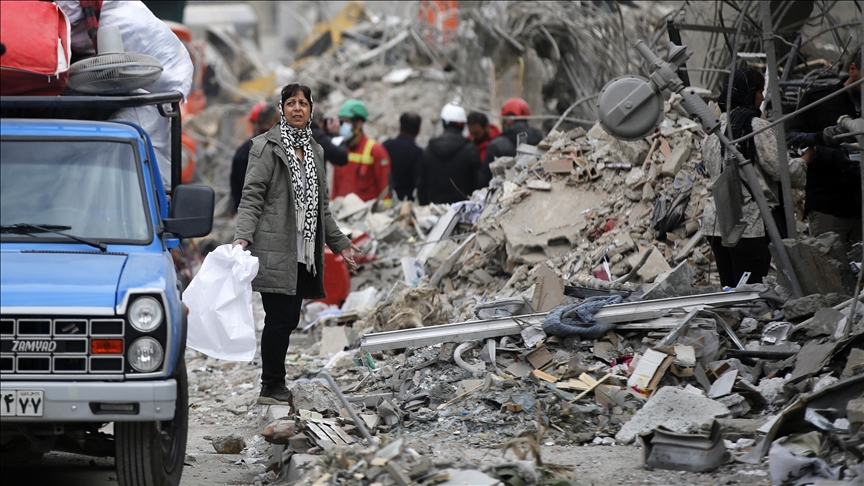
Local reports indicate that thousands of tons of rubble from Israeli bombardment remain scattered throughout residential areas, posing serious structural risks and increasing the likelihood of sudden collapses.

Since December, dozens of buildings previously damaged by Israeli airstrikes have collapsed under harsh winter conditions, killing and injuring Palestinians sheltering nearby.

Ahmed’s father appealed to the international community, and to the conscience of humanity, to look at Gaza’s people with compassion, urging action to provide safe shelter, dignity and protection for families who have already lost everything.

According to recent figures, more than 18 Palestinians have been killed by the collapse of at least 50 damaged buildings during recent storms.

With Israel continuing to block the entry of mobile homes and construction materials, many Palestinians are left with no option but to live beside, or inside, structures on the brink of collapse.

For Ahmed, the tent remains, the wall has fallen, and love, brief and fragile, has become another casualty of war’s long shadow as reported by Anadolu.

The Israeli army has killed more than 71,400 people, mostly women and children, and injured over 171,000 others in a brutal offensive since October 2023 that has left the enclave in ruins.

Despite the ceasefire, the Israeli army has continued its attacks, killing 442 Palestinians and wounding more than 1,200 others, according to the Health Ministry.

  • CrossFireArabia

    CrossFireArabia

    Dr. Marwan Asmar holds a PhD from Leeds University and is a freelance writer specializing on the Middle East. He has worked as a journalist since the early 1990s in Jordan and the Gulf countries, and been widely published, including at Albawaba, Gulf News, Al Ghad, World Press Review and others.

    Related Posts

    Israeli Soldiers Enforce Closure of Al Aqsa

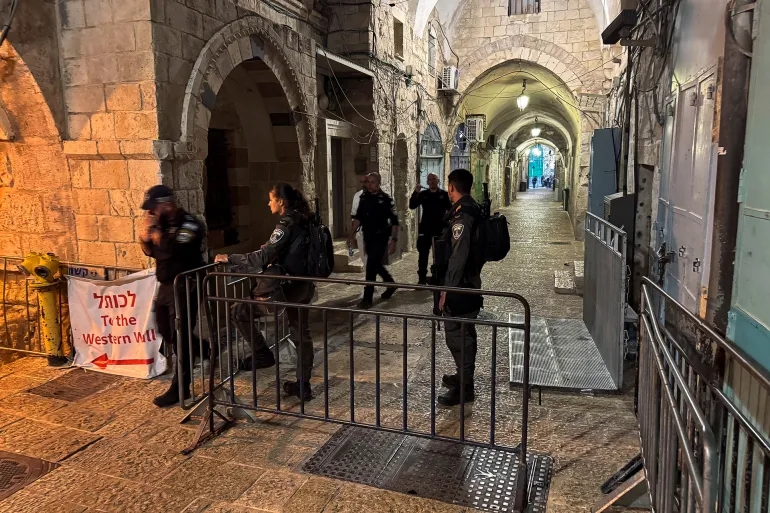
    Israeli occupation authorities continued their closure of the Al-Aqsa Mosque compound on Sunday, marking the 16th consecutive day of closure. As the 27th night of Ramadan approached, they transformed the area surrounding the mosque into a military zone.

    The Palestinian Jerusalem Governorate stated that occupation forces had turned the Old City of Jerusalem into a military barracks, deploying hundreds of soldiers around it.

    It added hundreds of Jerusalemites performed the Isha and Taraweeh prayers in the Bab al-Sahira and Bab al-Amud areas and in the streets, as the Old City and the Al-Aqsa Mosque remained closed “amid a siege by Israeli forces.”

    These Israeli reinforcements coincided with calls on social media to break the siege of the Al-Aqsa Mosque and observe Laylat al-Qadr (Night of Power) within its precincts or wherever possible.

    Since the start of the US-Israeli attack on Iran on February 28, the occupation authorities have closed the Al-Aqsa Mosque under the pretext of declaring a state of emergency and preventing gatherings.

    Palestinians observe the 27th night of Ramadan (Laylat al-Qadr) by observing i’tikaf (seclusion for worship) in mosques, praying, supplicating, and reciting the Quran until dawn. Last year, approximately 180,000 people observed it at Al-Aqsa Mosque.

    According to the Jerusalem Governorate, dozens of Jerusalemites performed the Isha and Taraweeh prayers near the Damascus Gate (Bab al-Sahira) on the northern side of the Old City of Jerusalem, amidst heavy military reinforcements and a large deployment of occupation forces.

    The Wadi Hilweh Information Center for Human Rights stated that occupation forces erected checkpoints, stopped those entering the Old City, and prevented non-residents from entering.

    The center noted the collapse of the Old City’s markets, which appear almost deserted, with most shops closed due to Israeli restrictions, during a season that merchants eagerly anticipate each year.

    The Arab League, in a statement, condemned “in the strongest terms” the continued closure of Al-Aqsa Mosque and the prevention of prayers and religious rituals there, especially during the holy month of Ramadan and its last ten nights.

    The university deemed this “provocative measure a flagrant violation of international law, international humanitarian law, and the existing legal and historical status quo at the Al-Aqsa Mosque/Haram al-Sharif, an unprecedented provocation of the feelings of two billion Muslims worldwide, and an undermining of freedom of worship and unrestricted access to places of worship.”

    It emphasized that “Israel, the occupying power, has no sovereignty over the Palestinian territory occupied in 1967, including the occupied city of Jerusalem and its Islamic and Christian holy sites.”

    It called upon the international community, including the Security Council, to assume its responsibilities and adopt a firm international stance that compels Israel, as the occupying power, to cease its violations and practices, lift all restrictions imposed on Palestinian access to Jerusalem, and respect freedom of worship. J024

    Continue reading
    1 in 7 Displaced in Lebanon – NRC

    Lebanon is approaching a breaking point as displacement accelerates, with one in every seven people now displaced in the first ten days of the escalation, says the Norwegian Refugee Council (NRC).

    Lebanon Published 13. Mar 2026

    At least 816,000, or 14 per cent of Lebanon’s population, have been displaced, according to official figures. The figures are set to rise further as Israel repeats evacuation warnings and bombards more villages and neighbourhoods across Lebanon.

    “The scale of destruction and displacement is increasing with every passing hour,” says Maureen Philippon, NRC Country Director in Lebanon. “This indiscriminate bombing must stop. The situation in the collective shelters I have visited bears witness to repeated trauma among families and their children. People are going through the same cycle of bombing, loss, and displacement that they experienced almost two years ago, only with greater intensity and speed.”

    Israel’s evacuation orders have now engulfed 1,470 square kilometres, or 14 per cent of Lebanon, including South Lebanon, Beirut’s Southern Suburb, and parts of Bekaa. Yesterday, Israel issued additional evacuation orders, further expanding the number of Lebanese villages under imminent threat.

    In Tyr, South Lebanon, NRC’s office was badly damaged in an Israeli attack in the neighbourhood. We are lucky nobody was in the office as the extent of the damage means that colleagues would certainly have been injured. The organisation had notified Israel of its office location through the UN but received no warning from the Israeli military ahead of the strike.

    “Israel’s mass evacuation orders have expanded to broad geographic directives, often demanding immediate movement, creating panic and fear across communities that strikes are imminent – even when they are not. These orders are likely to cause prolonged displacement with little prospect of return. All efforts must be made to end the use of such orders and ensure that whether they choose to leave an area or remain, that civilians are protected in line with International Humanitarian Law at all times by all parties to the conflict,” added Philippon.

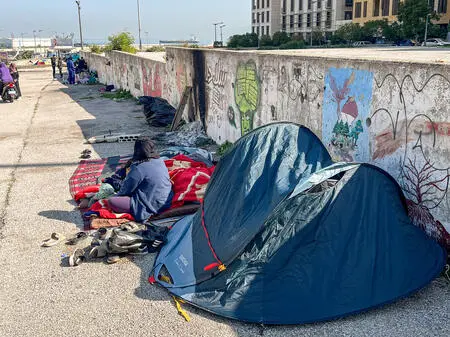
    Across collective shelter, where over 122,000 people have sought safety, conditions present immediate challenges for people. In one school sheltering 1,200 people, an average of 15 people are staying in each classroom, with every 23 people sharing a single toilet. There are no shower facilities or cooking gas and a limited supply of water.

    NRC continues to support collective shelter with pillows, blankets, mattresses, cleaning items and other basics. NRC is also assessing additional support to improve conditions in shelters, including installing showers, adding latrines where needed, providing water, and setting up partitions to give families greater privacy. The scale of needs is already outgrowing support provided by the government and aid organisations.

    NRC urges donors to commit flexible funding to enable humanitarian actors to respond to rapidly growing needs. This must take place while diplomatic efforts exhaust all means to bring an end to attacks on civilians and their infrastructure.

    Notes to editors:

    • Since 2 March, 634 people have been killed and 1,586 injured in Israeli attacks in Lebanon, according to official figures (Lebanon’s Disaster Risk Management Unit). No fatalities have been reported in Israel as a result of Hezbollah’s attacks (Reuters), but several people have been injured, according to news reports (Jerusalem PostTime of Israel).
    • 816,700 people are recorded as displaced in Lebanon as of 12th March. This includes 125,800 staying in collective shelters (Lebanon’s Disaster Risk Management Unit).
    • Lebanon has a population of around 5.8 million (World Bank). With 816,000 people forced from their homes, this makes up 14 per cent of the total population.
    • Israel has placed 1,470 square kilometers of Lebanese territory under evacuation orders, representing about 14 per cent of Lebanon’s total land area.

    For more information or to arrange an interview, please contact:

    Continue reading

    You Missed

    Israeli Soldiers Enforce Closure of Al Aqsa

    Israeli Soldiers Enforce Closure of Al Aqsa

    1 in 7 Displaced in Lebanon – NRC

    1 in 7 Displaced in Lebanon – NRC

    Hormuz: End of an Era of Martime Dominance

    Hormuz: End of an Era of Martime Dominance

    Gaza Faces Massive Dust Storm

    Gaza Faces Massive Dust Storm

    US-Israeli Strikes Kill 503, Injures 5,700 Iranians

    US-Israeli Strikes Kill 503, Injures 5,700 Iranians

    Hormuz and Washington: War Fails to Neutralize Iran

    Hormuz and Washington: War Fails to Neutralize Iran