Bride Killed 2 Days After Wedding!

Silence has wrapped itself around Ahmed Abu Saada’s life since the moment he lost his wife, just two days after their wedding, when a crumbling wall collapsed onto their tent in Gaza, killing her instantly.

What was meant to be the beginning of a shared life turned into a devastating memory, leaving the young Palestinian trapped in grief, surrounded by fragments of dreams that barely had time to form.

Ahmed, a man in his twenties with a hearing disability, had tried to rebuild his life after Israel’s devastating war on Gaza, defying displacement, loss, and hardship. He met Walaa Jahha, and together they chose to face life’s cruelty with hope, planning a modest future inside a tent, the only shelter available to them.

On Dec. 27, the couple held a simple wedding amid displacement. With Ahmed’s family having fled the Tuffah neighborhood in eastern Gaza City after their home was destroyed by Israeli bombardment, the newlyweds set up their tent near damaged buildings along the city’s shoreline.

Two days later, their fragile joy was shattered.

A powerful winter storm swept through Gaza, bringing fierce winds and heavy rain. A partially destroyed wall from a building damaged by earlier Israeli strikes collapsed onto the couple’s tent. Walaa was killed instantly.

Since that night, Ahmed spends his days withdrawn and silent, scrolling through his phone, replaying photos from a wedding that lasted just hours, now transformed into a source of unbearable pain, his father told Anadolu.

“Ahmed tried to overcome his hearing disability and live like any young man,” said his father, Saad al-Din Abu Saada.

“But he found himself facing an even greater tragedy. He was left with a deep psychological shock and can no longer interact as he used to.”

The father said his son has become isolated, spending most of his time lying silently on his bed, the same mattress that still bears traces of his wife’s blood.

– Living beside danger

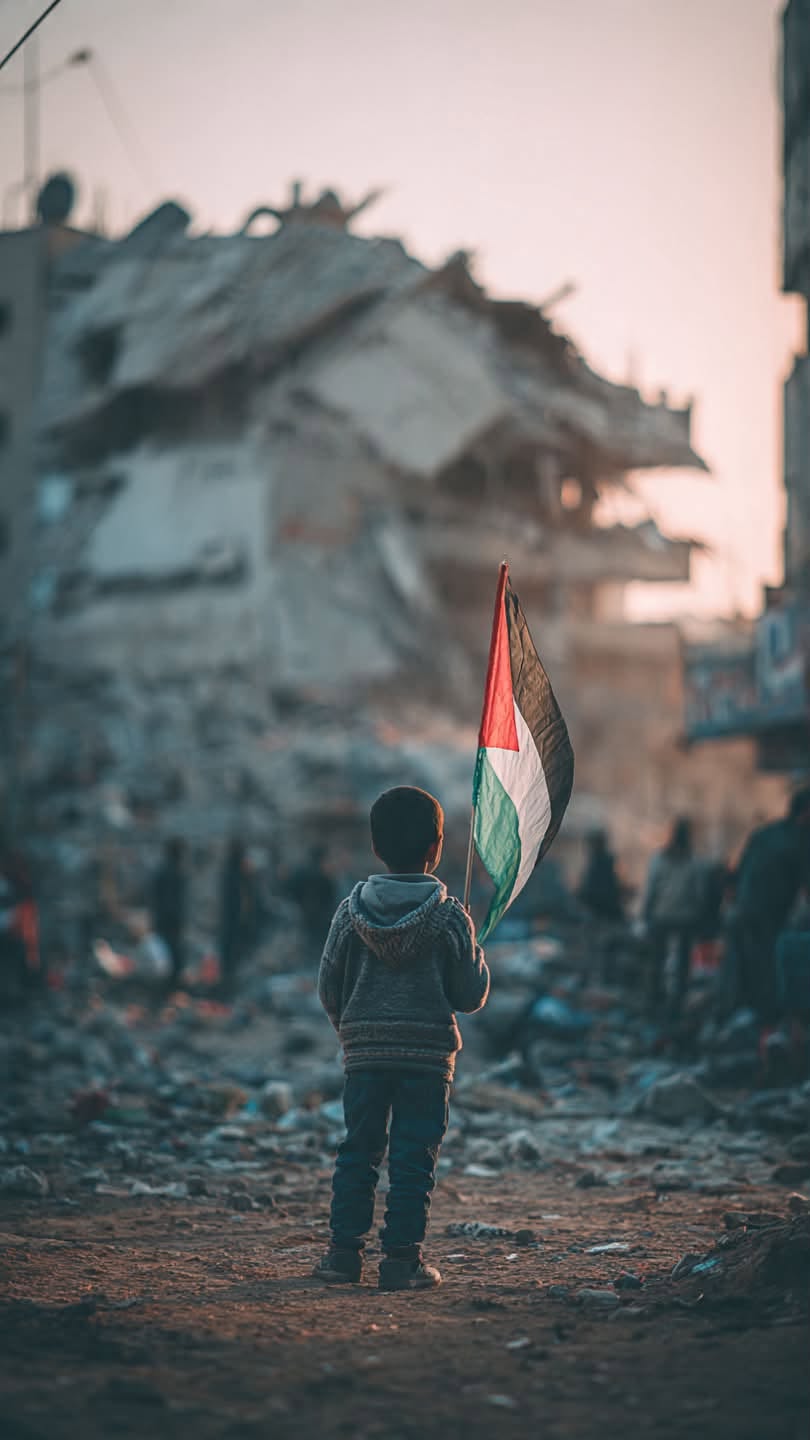
Ahmed’s family said they had no choice but to pitch the newlyweds’ tent beside damaged and unstable buildings, amid the absence of safe housing alternatives after widespread destruction across Gaza.

Local reports indicate that thousands of tons of rubble from Israeli bombardment remain scattered throughout residential areas, posing serious structural risks and increasing the likelihood of sudden collapses.

Since December, dozens of buildings previously damaged by Israeli airstrikes have collapsed under harsh winter conditions, killing and injuring Palestinians sheltering nearby.

Ahmed’s father appealed to the international community, and to the conscience of humanity, to look at Gaza’s people with compassion, urging action to provide safe shelter, dignity and protection for families who have already lost everything.

According to recent figures, more than 18 Palestinians have been killed by the collapse of at least 50 damaged buildings during recent storms.

With Israel continuing to block the entry of mobile homes and construction materials, many Palestinians are left with no option but to live beside, or inside, structures on the brink of collapse.

For Ahmed, the tent remains, the wall has fallen, and love, brief and fragile, has become another casualty of war’s long shadow as reported by Anadolu.

The Israeli army has killed more than 71,400 people, mostly women and children, and injured over 171,000 others in a brutal offensive since October 2023 that has left the enclave in ruins.

Despite the ceasefire, the Israeli army has continued its attacks, killing 442 Palestinians and wounding more than 1,200 others, according to the Health Ministry.

  • CrossFireArabia

    CrossFireArabia

    Dr. Marwan Asmar holds a PhD from Leeds University and is a freelance writer specializing on the Middle East. He has worked as a journalist since the early 1990s in Jordan and the Gulf countries, and been widely published, including at Albawaba, Gulf News, Al Ghad, World Press Review and others.

    Related Posts

    Albanese Calls For World Force to Protect Civilians in Gaza, West Bank

    UN Special Rapporteur Francesca Albanese called Sunday for an “international protection presence” in the occupied West Bank, East Jerusalem and Gaza, saying such a deployment was “absolutely urgent.”

    “Third states have an obligation, per the ICJ, to act to end Israel’s unlawful occupation,” Albanese wrote on the US social media platform X, referring to a July 2024 advisory opinion by the International Court of Justice that deemed Israel’s occupation of Palestinian territory unlawful and said states must not assist in maintaining it.

    Albanese also questioned whether UN Secretary-General Antonio Guterres’ diplomatic efforts and the General Assembly’s “Uniting for Peace” mechanism could overcome the Security Council’s deadlock on the conflict.

    The mechanism allows the General Assembly to consider international peace and security issues when the Security Council cannot act because of a lack of unanimity among its permanent members. The council has repeatedly been unable to take action on Gaza and the West Bank amid vetoes by the US. Anadolu

    Continue reading
    40 Million Tons of Rubble: Gaza Ministry Faces Challenges in Removing it

    Gaza’s Ministry of Public Works and Housing confirmed that Israel’s ongoing targeting of tents and shelters of displaced people in the enclave is a systematic policy of destroying the basic necessities of life. It noted the amount of rubble that has piled up in the various regions of the Strip has exceeded 40 million tons.

    Ministry spokesman Najla Hammad told the Sanad News Agency, Monday, the ministry is facing unprecedented challenges in removing the rubble because of the severe shortage of heavy machinery due to the Israeli-imposed blockade and the closure of crossings.

    Hammad pointed out that the recent Israeli aggression has displaced more than 80 families, leaving them homeless and exposed, noting the ministry received widespread appeals to replace the tents that have been damaged and/or completely destroyed.

    Read also: “Public Works”: Only 5% of shelter supplies enter Gaza

    She added what is making things worse is that the Israeli occupation is preventing the entry of tents, tarpaulins, and shelter supplies and the reduction of usable land in the Gaza Strip to less than 30%.

    Hammad explained that crews are continuing to work on opening main roads and providing alternative spaces for service facilities and educational centers but tough going. However, she announced the completion of the removal of the rubble at the site of the Hijazi Clinic in northern Gaza, in cooperation with the United Nations Development Programme (UNDP), and its handover to the Ministry of Health for reconstruction.

    She indicated that the demolition and clearing of rubble is currently limited to only 4 out of the 10 sites previously identified, due to security restrictions and a lack of heavy equipment. The teams are operating with only one excavator and a very limited number of trucks.

    Hammad noted the use of local alternatives and solutions, such as recycling crushed rubble to level roads and areas threatened by flooding, and melting plastic and aluminum to recycle supplies for health units in the camps is also moving.

    UN reports confirm that the scale of destruction and rubble in the Gaza Strip surpasses that of major wars and conflicts in modern history. International organizations warn that preventing the entry of machinery, engineering equipment, and shelter materials exacerbates the humanitarian, environmental, and health catastrophe, hindering the provision of even the most basic services to more than two million displaced people lacking safe shelter.

    The Ministry of Public Works and Housing in Gaza previously warned in August of the severe deterioration in the housing sector due to the widespread presence of tons of rubble. It emphasized that the aid and tents permitted entry by the Israeli occupation amount to no more than 5% of the actual needs of the displaced, given the strict restrictions at the crossings and the repeated forced displacement.

    Recently, the Ministry of Public Works and Housing launched an emergency program to repair and renovate partially damaged homes in the Gaza Strip, a step aimed at persuading and facilitating the return of displaced families to their homes and original areas.

    Last June, Hammad, announced a comprehensive plan for managing, storing, and crushing rubble for reuse, as part of the ongoing efforts to address the issue of debris resulting from the conflict.

    Hammad said that the Ministry is presently working with the UNDP and have to-date  constructed more than 15 shelters that have accommodated over 1,700 displaced families in the Gaza Strip, including five centers in the south that alone have housed approximately 700 families.

    Continue reading

    You Missed

    Albanese Calls For World Force to Protect Civilians in Gaza, West Bank

    Albanese Calls For World Force to Protect Civilians in Gaza, West Bank

    40 Million Tons of Rubble: Gaza Ministry Faces Challenges in Removing it

    40 Million Tons of Rubble: Gaza Ministry Faces Challenges in Removing it

    Join The Queue For The Drops

    Join The Queue For The Drops

    ‘My Way Out of Insanity’

    ‘My Way Out of Insanity’

    The Child, Tree and The Dark

    The Child, Tree and The Dark

    Palestinian Dr Held Over Social Media Posts Suffers Heart Attack in Israeli Detention

    Palestinian Dr Held Over Social Media Posts Suffers Heart Attack in Israeli Detention