CrossFireArabia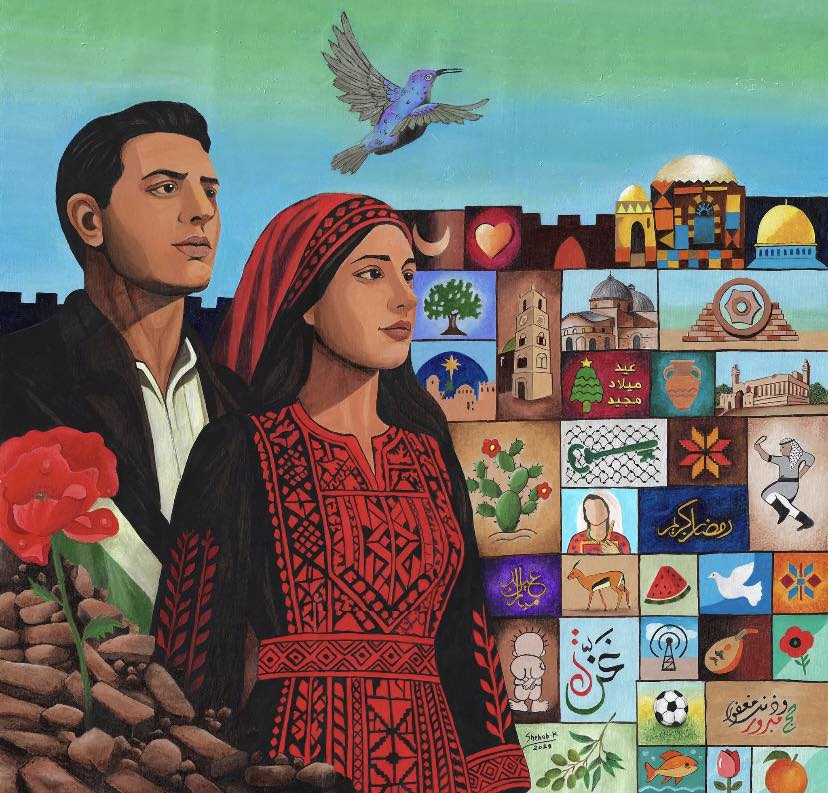
In a gesture of resilience and hope that rises above the aftermath of Israel’s two-year war on Gaza and the continued violations of the ceasefire agreement, Palestinian girls organized a seaside painting workshop in Gaza City.
The workshop, titled Breathe and Paint, was held on Thursday and underscored how the sea has become a place of refuge not only for artists, but for Palestinians seeking relief after enduring the genocidal war that began in October 2023.
Set against sunlight and gentle sea breezes, the initiative offered moments of calm and reflection, symbolizing life’s persistence despite attempts to extinguish it.
Anadolu attended the workshop, which took place at the fishing port west of Gaza City, away from areas devastated by Israeli attacks.
The event gave young Palestinian girls, many bearing deep psychological scars from the war, space to express emotions through art.
Using vivid colors, the participants momentarily set aside the trauma of war. Some painted Palestinian women in traditional dress, while others depicted the sea, the sun, and open horizons, reflecting hopes of renewal despite devastation.
Drawings of the map of Palestine and the national flag also featured prominently, painted by young girls as expressions of belonging and attachment to their homeland.
Israel targets art
During the genocidal war, Israeli forces destroyed major cultural and artistic landmarks across Gaza — actions Palestinians say were aimed at erasing their cultural identity.
Among the destroyed sites was the Rashad Al-Shawa Cultural Center in Gaza City’s Rimal neighborhood, established in 1985.
Israeli attacks also killed dozens of Palestinian artists, including visual artist Heba Zaqout during the war’s first month, theater artist Durgham Qreiqa in March 2025, and standup comedian Mahmoud Shurrab, who was killed when his tent was struck in Khan Younis in June 2025.
Palestinian and international organizations, including UNESCO, repeatedly condemned the targeting of artists, but Tel Aviv has ignored these denunciations and continued its assaults.
A space to breathe
Participant Farah Ajjour said the sea offered rare emotional relief after two years of confinement under war.
“This workshop gave us a chance to release what we were holding inside,” she told Anadolu.
Amid gentle sea breezes brushing her weary face, she said life had been on pause and that she now longs to resume it.
She added: “After the cultural center in Gaza City was destroyed (by the Israeli army), we no longer had a place to practice art.”
Insisting on continuing with life, she said: “I want my voice to be heard through my art. There is no place where I can do that except the seashore; that’s why we are here today.”
Art as resistance
Workshop organizer Noura Al-Qassasiya said the initiative aimed to restore color to the lives of girls deprived of normalcy for more than two years.
“Art helps us communicate the harsh reality of the Israeli genocide,” she said, noting that reaching the location itself was difficult due to widespread destruction and displacement.
She explained that the sea was chosen because it remained untouched by bombardment.
“The people of Gaza love art,” she said. “We want to do that not only through bloody and heartbreaking images, as was the case over the past two years, but also through art.”
Participant Amal Darwish said painting finally allowed her to speak after years of silence.
“Through art, I found space to tell our story and express resistance,” she said, adding that her greatest wish was for life to return “in bright colors.”
Throughout the workshop, fear, loss, and grief were transformed into paintings, alongside visions of a life participants still hope to reclaim.
The Oct. 10, 2025 ceasefire agreement ended Israel’s two-year war that began on Oct. 8, 2023. Palestinian authorities say the conflict killed more than 72,000 Palestinians, wounded over 171,000 others, and caused widespread destruction affecting 90% of civilian infrastructure. The UN estimates reconstruction costs at approximately $70 billion.
At least 591 Palestinians have been killed and over 1,578 others injured in Israeli attacks since the ceasefire, according to Gaza’s Health Ministry.