CrossFireArabia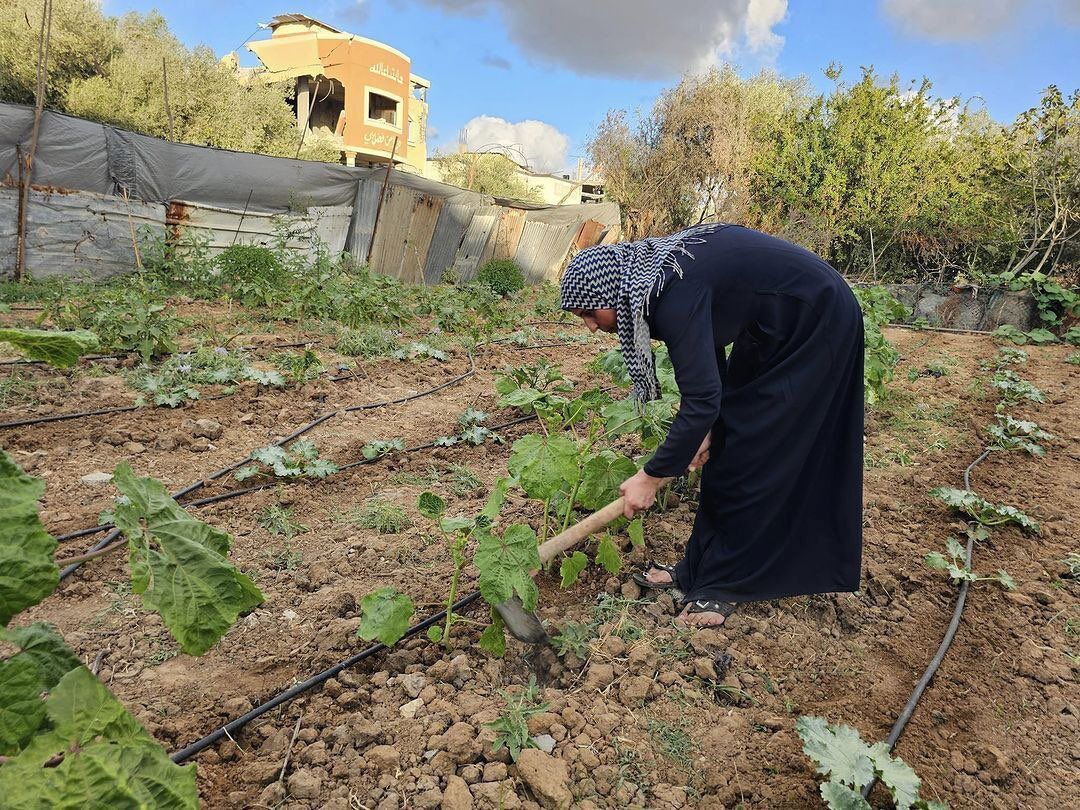
Israel has destroyed hundreds of dunams of agricultural land, depriving Palestinians in the northern Gaza Strip of agricultural land and resources vital to survival, all in support of its illegal blockade of the Strip and tight restrictions on the entry of food supplies for almost a full year. This is an expression of Israel’s insistence on committing genocide against Palestinians in the enclave.
This destruction is part of a larger Israeli plan that dates back to last October. Under this plan, Israeli forces have worked to eliminate almost 80% of the agricultural land in the Gaza Strip from use by Palestinians. Israel has done this either by isolating it in preparation for its forcible annexation to the so-called “buffer zone” or by bulldozing or destroying it by other means, such as bombardment—all of which are in violation of international law.
According to the Euro-Med Monitor field team, Israeli forces stormed the area of Al-Shimaa in Beit Lahia, northern Gaza, early on Tuesday morning, 25 September 2024. Accompanied by military bulldozers, the forces began their bulldozing operations, destroying more than 500 dunums of newly-replanted agricultural land, which was supposed to sustain the needs of the people living in northern Gaza, who are subject to an arbitrary siege and systematic starvation by Israel.
The Israeli destruction of these agricultural lands, the majority of which were filled with eggplants, reflects Israel’s insistence on preventing the Palestinian people from depending on the region’s agricultural food basket during a period when sufficient supplies of vegetables and other foods are being kept out of the northern Gaza Strip. This has led to a severe famine, to the point where a significant portion of the people in the north have been forced to eat tree leaves and bake ground-up animal feed instead of flour.
Twenty-four-year-old farmer Yousef Saqr Abu Rabie of Beit Lahia told Euro-Med Monitor about the significant losses he incurred on Monday and Tuesday, 23-24 September, as a result of the bulldozing of dozens of dunams north of the town. Abu Rabie stated that although his land is outside of the “security zone” established by Israel at the start of the war, the bulldozing operations still occurred, and that the now-bulldozed crops had been bearing fruit that the people of northern Gaza were depending on given Israel’s restrictions on the entry of fruits and vegetables into the northern Gazan markets.
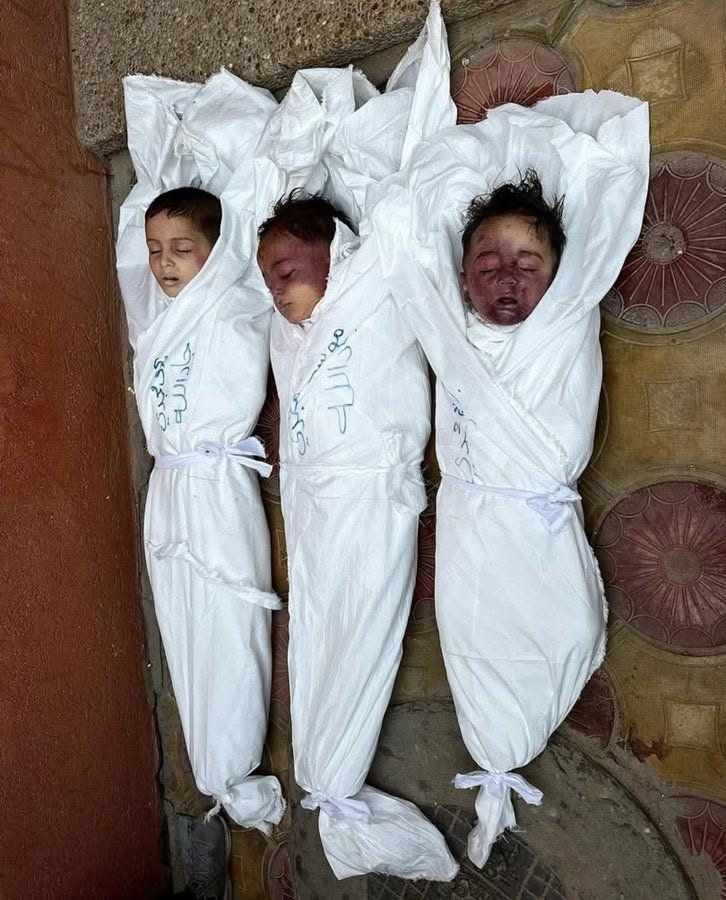
As part of its crime of genocide, ongoing since 7 October 2023, Israel has worked over the past year to systematically and extensively destroy the Gaza Strip’s food basket of fruits, vegetables, and meat, along with all other components of local food production, in addition to blocking the entry of food and humanitarian aid. This has resulted in famine in the Gaza Strip.
Israeli forces have bulldozed or otherwise destroyed all agricultural lands along the “security fence” separating the eastern and northern Gaza Strip at a depth of nearly two kilometres, removing approximately 96 square kilometres in a clear attempt to annex them to its “buffer zone”, in violation of international law. An Israeli “buffer” road and zone splitting Gaza City through its centre, meanwhile, and the creation of Israel’s Netzarim axis to keep sections of the Strip separate, have resulted in the destruction of approximately three square kilometres of agricultural lands. Thus, the agricultural lands destroyed by Israel to enable the creation of its “buffer” areas, specifically, represent about 27.5% of the Gaza Strip.
The Israeli occupation army has worked to destroy almost all buildings and facilities on the vast majority of these lands, which are now within the “buffer zone” and are off-limits to residents and farmers. These lands represented the majority of agricultural land in the Gaza Strip and included hundreds of farms built on hundreds of dunams that were planted with vegetables and fruits, as well as hundreds of farms raising poultry and livestock.
Outside of this “buffer zone”, additional land has been destroyed by Israeli incursions or aerial and artillery bombardment, resulting in the destruction of at least 34 square kilometres of agricultural land and the streets that service it. This brings the total percentage of destroyed land in the Gaza Strip to 36.9%, or more than 75% of the Strip’s area designated for agriculture.
Of the very few remaining areas set aside for agriculture, the majority are in the region of Al-Mawasi in the southern Gaza Strip, west of Khan Yunis, which is now home to hundreds of thousands of people who have been forcibly displaced.
In addition to Israel’s destruction of thousands of farms, greenhouses, water wells, tanks, and stores housing agricultural equipment, Euro-Med Monitor field teams recorded the intentional killing of numerous farmers while these individuals were working or attempting to access their lands. Since the start of the genocide, the Israeli army has also killed several fishermen and destroyed the majority of fishing boats and fishing ports in the Gaza Strip. These actions have negatively impacted the availability of healthy food for over 2.2 million Palestinians living in the Strip, and the repercussions of this are expected to last for years after the withdrawal of the Israeli military.
Farmers are finding it difficult or impossible to access areas that have been spared from the Israeli bombing, due to the ongoing bombardment and ground incursions into numerous areas. Additionally, the lack of electricity, destruction of water wells, and scarcity of fuel all make it difficult to cultivate new areas and irrigate them with water. This occurs while aid supplies are being blocked from reaching residents and displaced people in the Strip by Israeli army forces.
The ongoing Israeli military assaults have detrimental effects on soil, air, water quality, agricultural land, public health, and the environment. These effects compound over time, and at some point, may result in startling increases in the death rate.
The internationally recognised human right to food, water, and sanitation is a basic right that protects population health and dignity. It can only be realised if the international community puts an end to Israel’s crime of genocide; removes the illegal blockade on the Gaza Strip; and salvages what remains of the besieged enclave, which is currently uninhabitable on all fronts. Delays will cause the Strip to deteriorate further, cost more civilian lives, and heavily affect people’s health outcomes.
The international community must act swiftly and forcefully to end to Israel’s crime of genocide in the Gaza Strip, which involves both the direct killing of, and the imposition of unbearable living conditions on, the Palestinian people there. Israel is attempting to rob Palestinians of all hope of survival by turning the Strip into a place without any of the basic necessities of life.
The international community should make sure that humanitarian aid—particularly the basic food and non-food supplies required to respond to the humanitarian crisis safely and effectively—reaches the Gaza Strip swiftly, particularly the northern part of the Strip.
In order to save the civilian population in the Gaza Strip from the threat of further health disasters, pressure must also be applied to Israel to permit the entry of materials required for infrastructure rehabilitation and repair. This includes ensuring that there is enough fuel entering the Occupied Palestinian Territory to run desalination plants and wells, among other water and sanitation facilities.