
 CrossFireArabia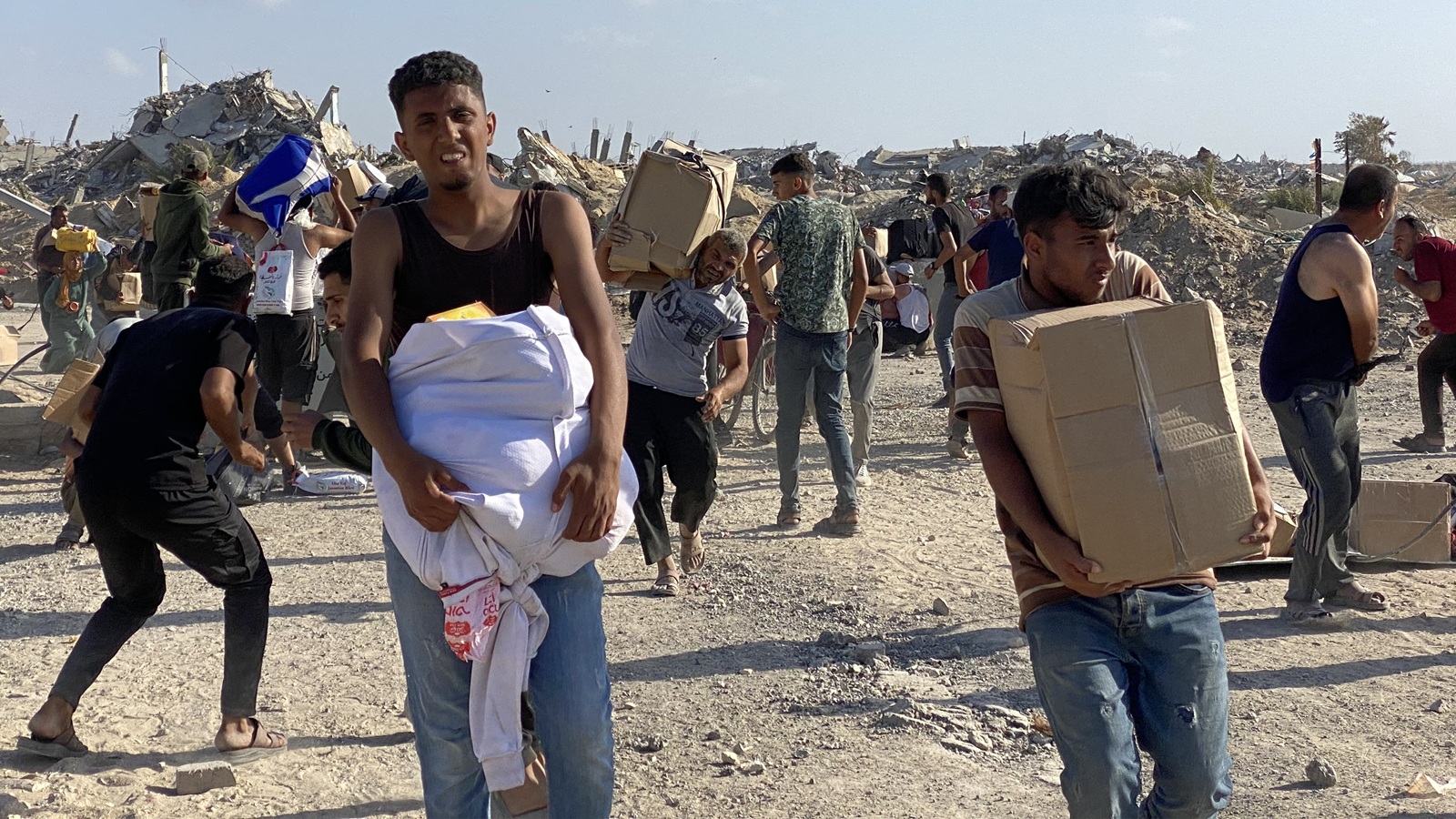
The Gaza Humanitarian Foundation is directly responsible for the escalating Israeli crimes against starved Palestinian civilians near aid distribution points in central and southern Gaza
The foundation’s operational model involves luring civilians to specific locations coordinated with the Israeli army, where they are subjected to killing, injury, and cruel and degrading treatment. These points have effectively become death traps used as tools in Israel’s ongoing genocide against the Palestinian population for over 20 months.
On Tuesday morning, at least 80 Palestinians were killed and 200 others injured by Israeli fire near a US-backed aid distribution point in eastern Khan Younis, southern Gaza Strip, as they approached the site to collect aid.
Euro-Med Human Rights Monitor calls for an independent international investigation into the foundation’s role and for its officials to be held criminally accountable for the crimes they facilitated—whether through planning, enabling, or remaining silent.
Euro-Med Monitor further urges donors to immediately halt all financial or logistical support to the foundation and to blacklist it among entities complicit in grave violations of international law.
The foundation’s continued operation of these sites—despite documentation of over 380 deaths in just three weeks—cannot be seen as incidental or isolated incidents. Rather, it constitutes direct involvement in the crime of starvation and the systematic targeting of civilians, a flagrant violation of humanitarian neutrality, and a clear contribution to war crimes, crimes against humanity, and complicity in genocide.
Euro-Med Human Rights Monitor said in a press statement that Israel has killed around 385 Palestinians and injured over 3,000 others since it imposed its aid distribution mechanism in the Gaza Strip on 27 May until 16 June. The Monitor explained that the mechanism relies on luring thousands of starving civilians each day to two main distribution centres—one near the “Netzarim corridor” in central Gaza and the other in Rafah, southern Gaza. Civilians are forced to walk long, exposed routes stretching for several kilometres, only to come under direct fire from military vehicles, drones, helicopters, and artillery shells. Large numbers are killed or wounded, while only the lucky few who survive the deadly journey reach the distribution points to receive a meagre amount of food that fails to meet even the minimum survival needs.
The Israeli army usually ignores the crimes it commits against starved civilians near aid distribution points. In the rare instances when it issues statements, it offers vague and generic narratives, often citing the presence of “suspects” near the forces—claims that are never substantiated with credible evidence. On the contrary, field data indicates that the victims are civilians, including women, children, and the elderly.
The investigations the Israeli army claims to open are even rarer than its public statements. These investigations are often superficial, left incomplete, their findings withheld, or they result in no real accountability. This reflects a systematic policy aimed at concealing evidence and ensuring impunity for perpetrators—a policy that spans decades of documented Israeli violations that have faced no serious accountability, including those committed as part of the ongoing crime of genocide in the Gaza Strip.
Euro-Med Monitor holds the international community responsible for allowing the continuation and escalation of systematic crimes committed by the Israeli occupation forces against starved civilians near the so-called aid distribution centres in central and southern Gaza. The failure of influential states to take deterrent measures—and their inability to exert any meaningful pressure to stop Israel’s crimes, including the continued operation of its inhumane aid distribution mechanism—has effectively provided political and practical cover for Israel to persist in using these centres as sites of mass killing and for carrying out practices that violate Palestinians’ most basic rights and demean their human dignity.
Israel, which is using starvation as a central tool in committing the crime of genocide, cannot under any circumstances be considered a legitimate party in any humanitarian operation
Relevant states and UN bodies have effectively abandoned their legal and moral obligations to protect civilians and prevent the worsening of the humanitarian catastrophe in Gaza. They have refrained from taking firm measures—not only to hold Israel accountable for killing starved civilians but even to protect the UN-led aid delivery mechanism, which Israel has deliberately undermined through siege and armed force, in blatant and dangerous defiance of the international system and the principles it was founded upon.
International reactions have often been limited to ineffective verbal condemnations, falling far short of any meaningful action. This has enabled Israel to continue committing its crimes without real cost, leaving civilians to face death—either from starvation or from gunfire—as they follow the same path drawn by the occupying power under the guise of “humanitarian aid.”
Continuing to allow Israel to carry out such serious crimes against Palestinians in Gaza—killing and injuring hundreds daily as they attempt to access limited food aid—entails international legal responsibility for states with the capacity to influence events, particularly those that continue to provide political or military support to Israel.
The failure to take effective measures—such as imposing sanctions or exerting genuine pressure to halt these crimes—constitutes, under international law, direct contribution to the crime or responsibility for failing to prevent it despite having the proven ability to do so. This establishes legal liability for those states as parties that have, through action or inaction, contributed to the continuation of the crime.
Since Israel imposed its own mechanism for the distribution of humanitarian aid, Euro-Med Monitor has documented the involvement of Israeli occupation forces—alongside local gangs operating in coordination with them and personnel from the American security company managing the distribution sites—in the killing of Palestinian civilians as they approached the centres, despite posing no real threat to Israeli forces or security personnel.
Even in cases where an alleged threat exists, international law does not justify the use of lethal force. Security forces are bound by international legal standards to adhere to the principle of proportionality and gradual escalation in the use of force, and are only permitted to resort to deadly force as a last resort—and only in situations where there is an imminent and real threat to life. Such conditions were absent in the documented cases, making these killings a grave and explicit violation of international law.
The deliberate targeting of Palestinian civilians—through killings and injuries as they attempt to access food—combined with the use of starvation as a weapon, constitutes a blatant violation of international humanitarian law and international criminal law. These are war crimes under the Rome Statute, including wilful killing, targeting civilians, and using starvation as a method of warfare—all of which are categorically prohibited during armed conflicts.
The pattern of these violations—characterised by their widespread and systematic nature against the civilian population—meets the legal threshold for crimes against humanity, particularly the crimes of murder, persecution, and inhumane acts causing severe suffering or serious injury to mental or physical health, when committed as part of a widespread or systematic attack against a civilian population.
Placing these crimes within their broader context—including the systematic destruction of means of survival, obstruction of humanitarian aid, and the imposition of deadly living conditions on civilians, alongside public statements made by various Israeli political and military officials—reveals a clear and declared intent to destroy the Palestinian population in Gaza. This amounts, under Article II of the Convention on the Prevention and Punishment of the Crime of Genocide, to the crime of genocide—specifically through the deliberate killing of members of the group and the imposition of living conditions intended to bring about its physical destruction, in whole or in part.
As the occupying power, Israel bears a legal obligation under international humanitarian law to ensure the entry of humanitarian aid and the fulfilment of the basic needs of the civilian population in the Gaza Strip. However, this duty in no way entitles Israel to manage or control the distribution of aid.
Aid distribution must remain exclusively in the hands of neutral and specialised humanitarian actors, and that any military or political interference by Israel in this domain constitutes a serious breach of international law and a deviation from the humanitarian purpose of relief work.
Israel, which is using starvation as a central tool in committing the crime of genocide against Palestinians in Gaza with the aim of destroying them as a national group, cannot under any circumstances be considered a legitimate party in any humanitarian operation. Involving Israel in organising or overseeing aid delivery only serves to turn the aid itself into a means of annihilating the population and imposing coercive options on survivors—paving the way for their forced displacement as part of a colonial project aimed at erasing their presence and forcibly annexing their land.
The refusal of UN agencies and independent humanitarian organisations to cooperate with the Israeli mechanism—due to its lack of even the most basic humanitarian standards—should serve as a clear warning and an urgent call for the international community, especially influential states, to intensify political and diplomatic pressure on Israel. This should guarantee the immediate and unconditional flow of humanitarian aid into the Gaza Strip, end the use of any mechanisms employed as tools of genocide, and take swift action to end the ongoing crime against Gaza’s population since October 2023.
Euro-Med Monitor calls for comprehensive and independent international investigations into the role of the so-called Gaza Humanitarian Foundation in facilitating and executing serious crimes committed against Palestinian civilians. These investigations should address the individual responsibility of the organisation’s founders, directors, logistics coordinators, team leaders, and any other staff members—whether through planning, facilitating, directly contributing, or knowingly failing to prevent the commission of crimes.
We urge all states with territorial or universal jurisdiction to open immediate criminal investigations against all individuals affiliated with the Gaza Humanitarian Foundation and its contracted private security firms, in order to hold them accountable for their role in crimes committed against Palestinians in the Gaza Strip, particularly including wilful killings, starvation, and cruel or degrading treatment.
We further call for the initiation of civil lawsuits before national courts to demand compensation from the Gaza Humanitarian Foundation and all implicated entities and individuals for the severe harm caused to victims and their families, including deaths, physical and psychological injuries, and the forced deprivation of the rights to life, food, and dignity. Both criminal and civil accountability is essential to ensuring justice for the victims, ending impunity, and preventing the recurrence of such crimes under the guise of humanitarian work.
States and relevant entities must exert all possible pressure on Israel to force it to cease killing starving civilians, immediately end the operation of its inhumane aid distribution mechanism, and push for the urgent restoration of humanitarian access and the lifting of Israel’s unlawful blockade on the Gaza Strip. This is the only viable path to halting the rapid humanitarian collapse and ensuring the unimpeded entry of aid and goods. Safe humanitarian corridors must be established under UN supervision to guarantee the delivery of food, medicine, and fuel to all areas of Gaza, alongside the deployment of independent international observers to monitor compliance.
Euro-Med Monitor also calls on all states, individually and collectively, to uphold their legal obligations and take urgent action to stop the ongoing genocide in Gaza in all its forms. It calls for all necessary measures to be taken to protect Palestinian civilians, ensure Israel’s compliance with international law and the rulings of the International Court of Justice, and guarantee accountability for crimes committed against Palestinians. It also urged the enforcement of arrest warrants issued by the International Criminal Court against Israel’s Prime Minister and former Defence Minister at the earliest opportunity, without prejudice to the principle that no immunity applies to international crimes.
Finally, Euro-Med Monitor urges the international community to impose economic, diplomatic, and military sanctions on Israel in response to its systematic and grave violations of international law. This includes a comprehensive ban on the export or import of weapons, spare parts, software, or dual-use items; the suspension of all political, financial, military, intelligence, and security cooperation with Israel; the freezing of assets belonging to political and military officials involved in crimes against Palestinians; travel bans against those officials; the suspension of Israeli military and security companies from international markets and the freezing of their assets in international banks; and the suspension of trade privileges, customs benefits, and bilateral agreements that grant Israel economic advantages enabling it to continue committing crimes against the Palestinian people.


 marwan



