Gaza: Toxic Air is a Death Sentence – Experts

Experts are warning that millions of Palestinians in the Gaza Strip are breathing toxic and polluted air that is nothing short of a “death sentence.”

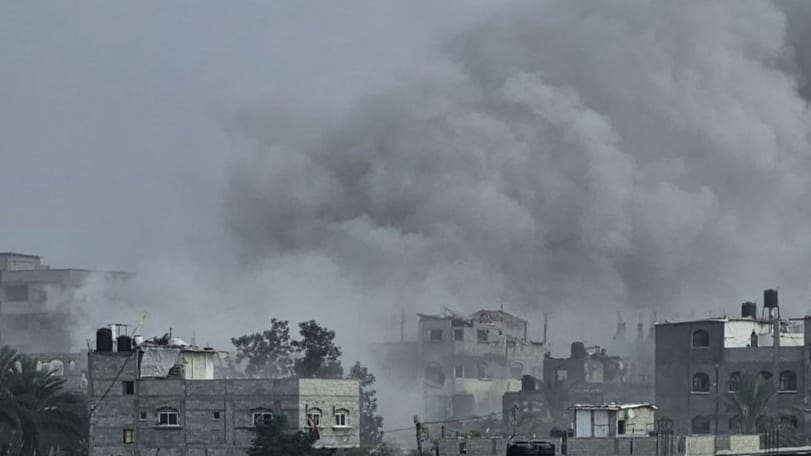
Hundreds of thousands of people in the besieged and bombarded enclave are suffering breathing problems and respiratory issues, and doctors say the scale of the problem will continue to grow as Israeli bombs disperse more chemicals into the air, mixing with dust from the unending mounds of rubble throughout Gaza.

The extent of the crisis will also become clearer when Gaza’s health system is restored and hospitals get back the ability to conduct tests and offer other basic services destroyed in Israel’s ongoing assault.

Dr. Riyad Abu Shamala, a Palestinian ENT specialist in Gaza, fears an increase in birth defects in the near future, along with cases of lung cancer, particularly once “hospitals resume operations and departments such as radiology, MRI, CT scan and others … are restored.”

“I believe the general situation will worsen due to the deterioration of living conditions, increased pollution, lack of sanitation, and the contamination of water and air,” he told Anadolu.

Since 7 October 2023, the World Health Organization (WHO) has recorded 995,000 cases of acute respiratory infections in Gaza.

Yara Asi, an academic specializing in health management, believes these numbers are likely a significant undercount.

“It’s much worse than we know because there are countless people that are in homes or in shelters with no access to physicians or hospitals to tell them about their ailments,” said Asi, an assistant professor at the University of Central Florida’s School of Global Health Management and Informatics.

Why are respiratory infections rising in Gaza?

The problem is rooted in “air pollution caused by dust, debris, chemicals from the destruction of buildings … and explosions,” said Abu Shamala.

Another major pollutant is vegetable oil that is being used as a substitute for diesel, he said.

The living conditions in Gaza are dire, with severe overcrowding in displacement camps, thousands of tents in close proximity, and piles of garbage everywhere, which are exacerbating the health crisis, said the doctor.

Along with that is the weakened immunity of people who are malnourished and relying on canned food as the main source of sustenance, he said.

Abu Shamala said the most common respiratory ailments among Gazans right now are acute and chronic bronchial asthma, chronic obstructive pulmonary disease (COPD), pneumonia, bronchitis, sarcoidosis, and lung cancer.

Most people have symptoms such as severe cough, difficulty in breathing, phlegm with cough, including bloody phlegm, rapid breathing and wheezing, he added.

Since last October, Israel has dropped more than 70,000 tons of bombs on Gaza, and there is more than 40 million tons of rubble across the enclave.

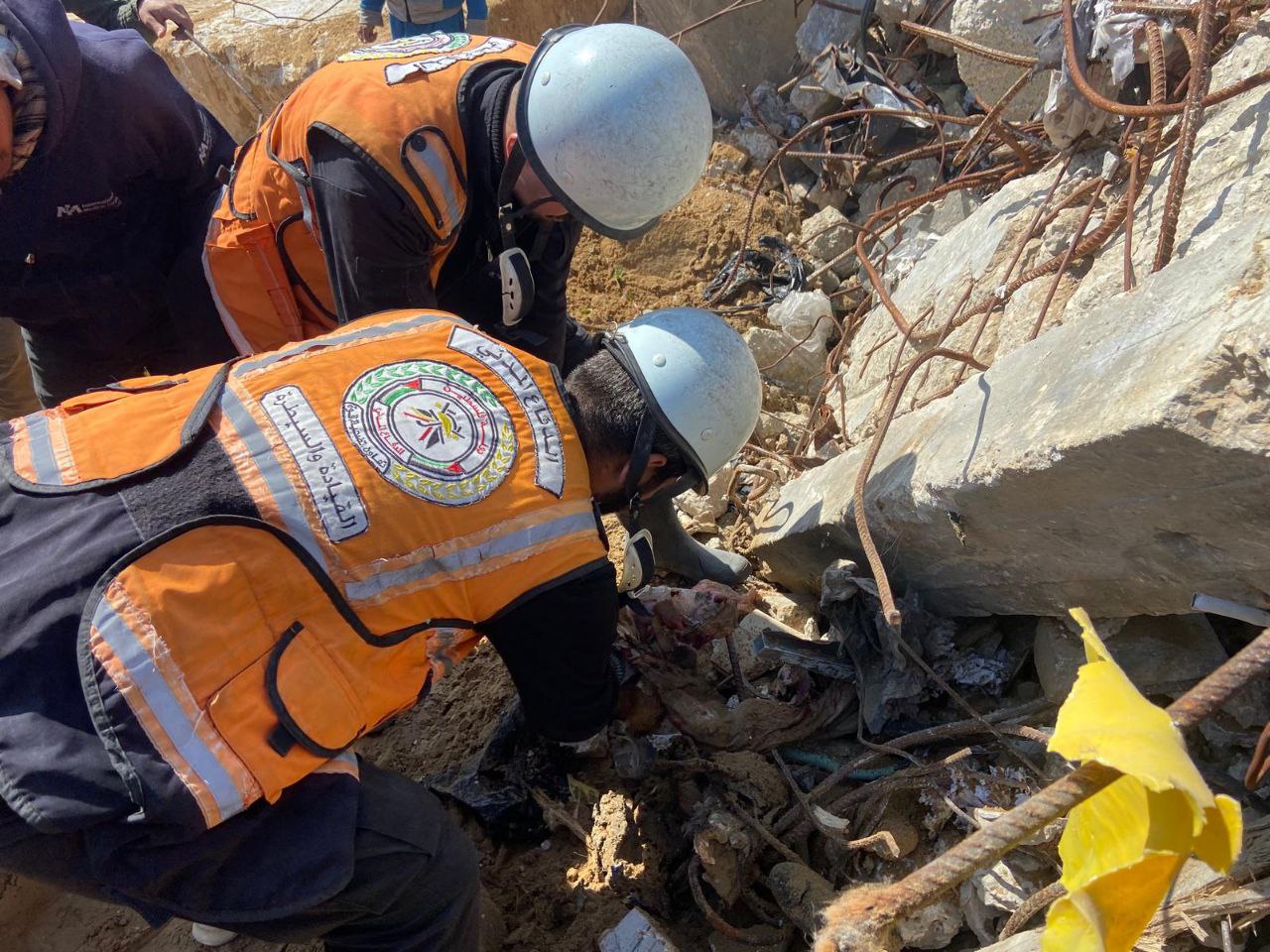
“There are thousands of tons of rubble and dust and people don’t have the tools to clear it. They don’t have the machinery, they don’t have appropriate masks, they’re just walking around in this environment,” said Asi.

Civil rescue workers are literally inside destroyed buildings, trying to dig through the rubble with no protective gear, she said.

“This, of course, will also exacerbate respiratory illnesses,” said Asi.

Normally, smoking is the biggest cause for COPD, but Gaza’s case is entirely different, she said.

“This isn’t a population that is smoking. This is a population that is living amid ruins … with dust, smoke and toxic chemicals that they cannot avoid,” said Asi.

Is prevention possible?

Another major unknown and exacerbating factor, according to Asi, is the kind of warfare being seen in Gaza.

There is indiscriminate bombing all around civilian areas and with bombs packing thousands of pounds of explosives, she said.

“We’ve seen glimpses of this in Syria, but in many cases there, aside from areas under siege, people were able to escape. Here, they are trapped,” said the researcher.

“It’s kind of an unprecedented health crisis in many ways.”

Health problems for the people of Gaza “will unfold over the years … (and) we will have to manage and deal with it,” she said.

Asi finds it particularly frustrating that many of the diseases that are threatening Palestinian lives are completely preventable or treatable.

“We have the treatments. We have vaccines for many of them … All of that is gone, or never was in Gaza, because of the (Israeli) blockade,” she said.

She feels at a loss as to what Gazans can do to protect themselves.

“The ultimate fix … would be to leave Gaza entirely right now, but they cannot even do that,” she said.

“The only thing that will stop this at this point is a cease-fire, and a rigorous and sustained humanitarian effort that includes, in some cases, getting the most vulnerable people out of Gaza to receive the medical care they need.”

Long-term consequences

Asi warned that respiratory illnesses can have long-term consequences, including for babies, children, elderly people, people with compromised immune systems, people with cancer, and pregnant women.

“It is especially dangerous for children whose bodies, immune systems, and lungs are still developing,” she said.

There are studies on the link between exposure to viral infections or toxins and developing asthma or other types of wheezing disorders later in life, she added.

After the US dropped nuclear bombs on Hiroshima and Nagasaki, there were more cases of cancers and other genetic anomalies for decades, as was the case after the Iraq war, said Asi.

“We saw greater incidents of cancers and other ailments, especially in children that were born in those settings,” she said.

“Gaza is yet another setting of environmental disaster and destruction that children are growing up or being born in.”

She fears there will be a rise in “lung cancers, mouth cancers, chronic respiratory illnesses, and asthma.”

“This could be a death sentence for many in the near or short-term future,” she warned.​​​​​​​

  • CrossFireArabia

    CrossFireArabia
    Dr. Marwan Asmar holds a PhD from Leeds University and is a freelance writer specializing on the Middle East. He has worked as a journalist since the early 1990s in Jordan and the Gulf countries, and been widely published, including at Albawaba, Gulf News, Al Ghad, World Press Review and others.

    Related Posts

    Palestinians Remember The Eveil Nakba

    Dozens of Palestinian women at a displacement camp in central Gaza marked the 78th anniversary of the Nakba (Catastrophe) on Thursday, reliving scenes of displacement and loss they said continue to define Palestinian life decades after 1948.

    Held at the Refaat Alareer camp in the Al-Zawaida area, the event linked memories of the historic Palestinian displacement with the reality of the ongoing Israeli war on Gaza, as participants said the suffering of exile and forced displacement had never truly ended.

    The event was organized by the Sameer Project, a relief initiative led by Palestinians in the diaspora, and featured heritage performances, traditional dabke dancing and symbolic scenes highlighting Palestinian identity and the right of return.

    Women and children raised Palestinian flags, symbolic keys, and images reflecting displacement and attachment to the land. Several participants wore traditional Palestinian dresses and chanted songs and national hymns invoking Palestinian memory and what they described as an ongoing Nakba.

    Palestinians commemorate the Nakba every year on May 15 through marches, exhibitions and public events in the Palestinian territories and around the world, calling for rights, including the return of millions of refugees.

    The Nakba refers to the mass displacement of Palestinians in 1948 during the events surrounding the creation of Israel, when hundreds of Palestinian towns and villages were emptied and their residents forced to flee.​​​​​​​

    Reliving displacement

    Ibtisam Abu Muailiq, a displaced Palestinian now living in Al-Zawaida, said Palestinians are still living through the Nakba today.

    The current war, she told Anadolu, had brought back scenes of displacement and tent life that previous generations described after the events of 1948.

    “Our home was destroyed, and we lost loved ones, some killed and others still missing, but we remain steadfast on the land of Palestine,” she said.

    She called on people around the world to show compassion toward Palestinians and support them amid their suffering.

    For Umm Mohammed Abdullah, the Nakba never ended.

    Palestinians, she said, have endured repeated cycles of hunger, thirst, displacement and loss but continue to hold on to their land.

    “No matter how severe the suffering becomes, we will not leave our homeland,” she added.

    Steadfast despite war

    Event coordinator Iman Al-Khatib said holding the event inside a displacement camp carried a message that Palestinians remain steadfast despite wars and catastrophes.

    “We wanted to tell the world that Palestinians remain resilient and that the right of return will continue to live in the conscience of future generations,” she told Anadolu.

    The Israeli army has killed more than 72,000 people, mostly women and children, and injured over 172,000 in a two-year war on the Gaza Strip since October 2023.

    Despite a ceasefire that took effect on Oct. 10, 2025, the Israeli army has continued its attacks, killing at least 856 people and injuring 2,463 others, according to Gaza’s Health Ministry.

    Continue reading
    Palestinian Population Tops 15.5 Million

    The Palestinian Central Bureau of Statistics (PCBS) said Tuesday that the number of Palestinians worldwide has reached about 15.5 million, including 7.4 million living in historic Palestine.

    In a statement marking the 78th anniversary of the Nakba, a term used by Palestinians to mark Israel’s creation in 1948, the bureau said about 8.1 million Palestinians live in the diaspora.

    It said more than two million Palestinians are displaced inside Gaza and the occupied West Bank as a result of Israel’s war on Gaza and continued settlement expansion.

    Israel’s war on Gaza has displaced nearly two million Palestinians out of about 2.2 million who lived in the enclave on the eve of the war, the bureau said. Many now live in tents, shelters and schools.

    About 40,000 Palestinians have also been displaced from refugee camps in the northern West Bank because of the ongoing Israeli military operations, the bureau added.

    In the West Bank, illegal Israeli settlement activity continues to expand, the statement said, adding that the number of illegal settlements and military bases reached 645 by the end of 2025. The total includes 151 illegal settlements, 350 settlement outposts and 144 other sites.

    Official figures show that the number of Israeli occupiers in the West Bank reached about 778,567 by the end of 2024, with 42.8% concentrated in occupied East Jerusalem.

    The bureau said Israeli authorities seized more than 5,571 dunams (1,377 acres) of Palestinian land in 2025 through seizure orders, expropriation and declarations of “state land.”

    It also documented more than 61,000 attacks by Israeli forces and occupiers in the West Bank between 2022 and 2025, which led to the uprooting and bulldozing of more than 81,000 trees, most of them olive trees.

    Israeli authorities continue to impose strict restrictions on Palestinians through about 900 military checkpoints and gates across the West Bank, limiting residents’ movement and blocking access to large areas of agricultural and grazing land, the bureau said.

    In Gaza, the bureau said Israel’s war has completely destroyed more than 102,000 buildings and fully or partially damaged more than 330,000 housing units, along with widespread destruction of infrastructure, health facilities and schools according to Anadolu.

    The Israeli army has killed more than 72,000 Palestinians, mostly women and children, and injured over 172,000 others in a two-year offensive on Gaza since October 2023.

    Continue reading

    You Missed

    Giant Phillippines Volcano Shows no Rest!

    Giant Phillippines Volcano Shows no Rest!

    The Chinese Fortune Cookie and The “Thucydides Trap”! A  View From Amman

    The Chinese Fortune Cookie and The “Thucydides Trap”! A  View From Amman

    Israel Kills 200 Lebanese Children – UNICEF

    Israel Kills 200 Lebanese Children – UNICEF

    Nakba – 78 Years of Occupation Misery

    Nakba – 78 Years of Occupation Misery

    Palestinians Remember The Eveil Nakba

    Palestinians Remember The Eveil Nakba

    Nakba – 78 Years On

    Nakba – 78 Years On