CrossFireArabia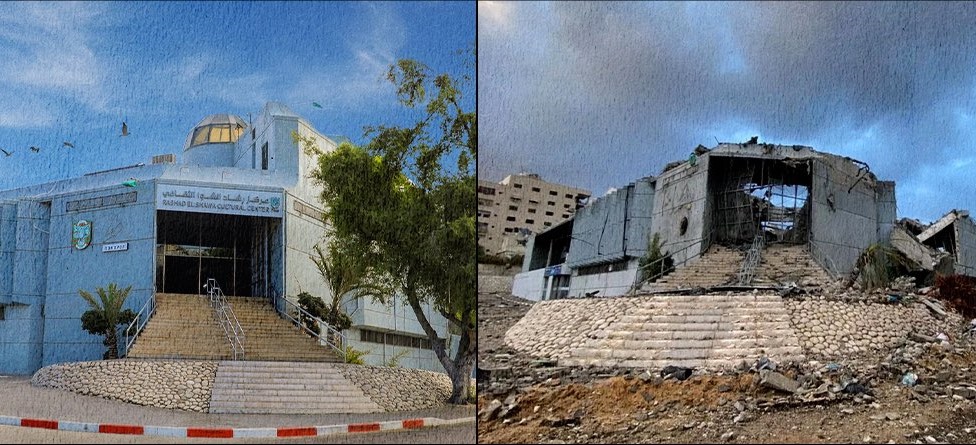
It is unthinkable for “culture” to be destroyed by wars, yet in Gaza it is. Culture, its monuments and symbols have long become military targets crushed in a sadistic and criminal context where the aggressor targets the human and civilizational components of the subjugated party. This is what the Israeli occupation wants from its war on the Gaza Strip, brutal images committed for more than 14 months.
The Rashad Shawa Cultural Center (RSCC) is evidence of the Israeli “scorched-earth” policy on the Gaza Strip. The center was transformed from a cultural symbol receiving hundreds of people daily as part of its intellectual, cultural, and artistic activities, exhibitions, and communicating with the world in seminars addressing all local and global issues, into a destroyed, desolate place now for displaced people who seek shelter from the Israeli Nazi Holocaust the occupation is waging across the Strip.
Following 7 October, 2023, the Israeli aggression began targeting all cities and regions of the Strip, especially the northern governorates, and spreading death everywhere with the residents of Gaza finding themselves forced to move from one place to another, seeking nothing more than escape from the Israeli cauldrons of death.
Weeks passed after the start of that aggression while temporary truces only lasted for a few days, allowing the people of the Al-Rimal neighborhood in Gaza City to return to their wrecked homes, only to be shocked by the the gutted Center that had become a thing of the past, after the Israeli army and occupation bombed it.
The residents had long been accustomed to seeing this great cultural edifice. Inside were chants, competitions, and humming of readers in the library that held more than 100,000 books in the sciences, knowledge, and arts, and a source of pride for the residents of Gaza becoming a destination for visitors from all over the world; a beaconed intellectual window that expresses Palestinian civilization with its diverse spectrums and openness to the world, in addition to what it represented of dear memories, now turned upside down by the brutality of the occupation into a pile of dirt.
The Gaza Municipality condemned the Israeli destruction of the Center, as part of its barbaric aggression on the Gaza Strip, killing thousands of civilians, destroying the city’s main landmarks, and erasing the cultural memory of the Palestinian people according to the Palestine Information Center.
The municipality called on UNESCO to intervene and condemn the occupation’s crimes against cultural centers, libraries, and historical and archaeological landmarks of the city.
The RSCC was the first of its kind to be built in Palestine, and named after Rashad Shawa, who served as the mayor of Gaza between 1972 and 1975, and built this center to become a Palestinian cultural beacon.
The architectural and engineering plans for establishing and designing the center began in 1978 and it first opened its doors in 1985 and its printing press began the following year with the center slowly expanding its activities reaching a peak in the 1990s and especially after 1994 when the Palestinian Authority took its seat there.
The RSCC center had a distinctive design that give it a modernistic outlook spread over two floors with a spiral stairway and an impressive triangular roof. In 1992, it was nominated for the Aga Khan Award for Creativity in Architecture. Before its destruction, those in charge took care of it and restored it periodically to preserve its distinctive architectural appearance.
The building witnessed important events in the history of the Palestinian cause, including: Hosting sessions of the National and Legislative Councils, and visits by heads of state, including former US President Bill Clinton in 1998 met by the late Palestinian President Yasser Arafat, and many world figures.
Cultural isolation
Before its destruction, the center worked to end the cultural and civilizational isolation the Palestinians suffered from as a result of the Israeli occupation, and its attempt to erase the Palestinian identity and steal its heritage.
Even before its destruction, the center faced global isolation because of the continued Israeli siege that was imposed on Gaza since 2007 and the worsening economic situation that was created and which was reflected in the social and cultural aspects of life in the Strip.
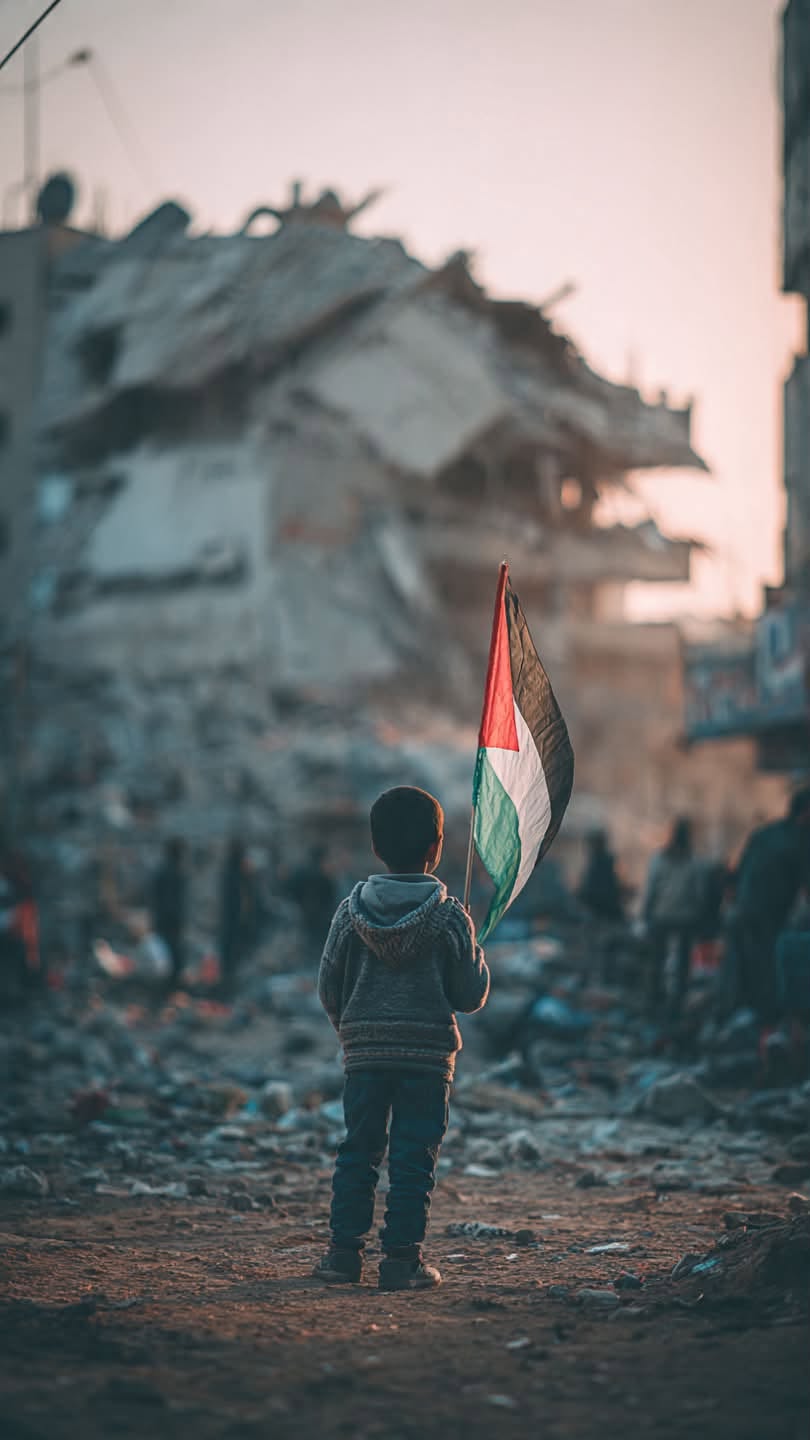
As with all aspects of life in Gaza, nothing has remained the same, the buildings no longer stand, the patterned landmarks destroyed, families scattered while institutions reduced to brick and mortar if not plotted out.
Culture usually plays its role in awareness and enlightenment but here and over the past months, it has become a witness to the tragedies of massacres, separation of family and friends, and the endless journeys of people forced to move with the center reduced to housing refugees who place plastic bags on its walls to protect themselves, and light fires to try and keep warm from the harsh winter.
In its ongoing aggression on the Gaza Strip, the Israeli occupation targeted the cultural and scientific centers of Gaza, its universities, and all outlets expressing the identity, civilization and heritage of the Palestinian people to obliterate their cultural landmarks so that the barbarism of occupation is entrenched in their public memory and the identity of the right of the owners to the land and holy places erased.
Israel Will Not Succeed
The RSCC was not the only architectural and cultural victim of the Israeli aggression as the destruction machine flattened universities and other cultural centers, including Al-Saqa Palace in Gaza City’s Shuja’iyya built at the end of the Ottoman period during the reign of Sultan Muhammad IV.
In November 2023, Abaher Al-Saqa, professor in the Department of Social and Behavioral Sciences at Birzeit University, wrote: “Beit Al-Saqa, or as people call it, Qasr Al-Saqa, was built by my late grandfather’s cousin, Ahmad Al-Saqa, one of the city’s major merchants. Its walls are studded with sandstone and the ceilings are Roman marble. It is 350 years old and was designated by the family to be turned into a cultural center after it was restored by the Islamic University. It was bombed as part of the brutal colonial bombing. The colonial authorities are exterminating the city’s urban and architectural history, in parallel with the genocide.”
Riwaq, the Palestinian Center for Popular Architecture, based in the West Bank city of Al-Bireh (which participated in the restoration of Beit Al-Saqa with the Iwan Center of the Islamic University of Gaza), noted in a recent post the house was completely bombed on 9 November, according to Aser Al-Saqa, a member of the family that owns the historic building in Shuja’iyya.