Israel Holds 52 Palestinians Journalists in Jail

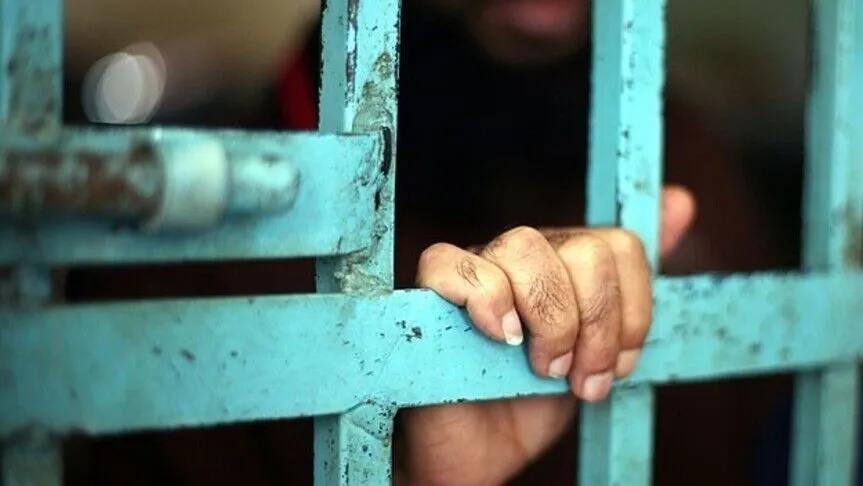
Israel today is adopting a declared policy of imprisoning Palestinian journalists both in the West Bank and Gaza Strip to hide the evil truth.

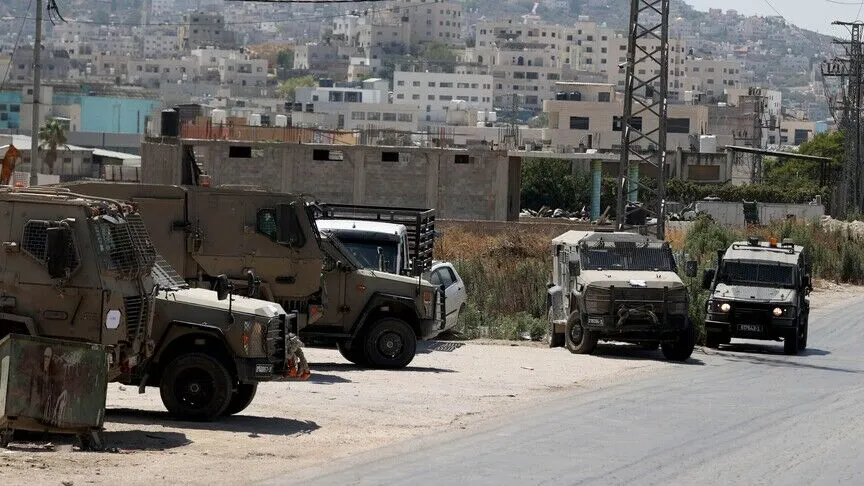
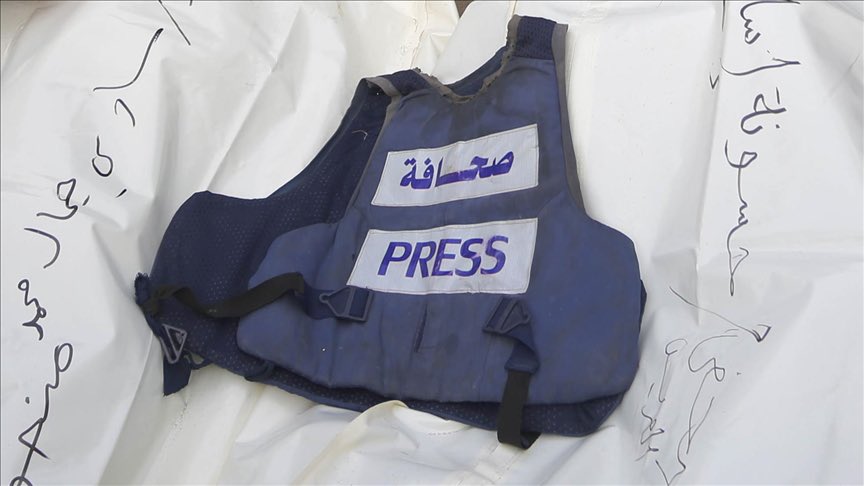
Since 7 October, 2023, the Israeli army has detained at least 98 journalists for daring to report on Israeli atrocities whether in Gaza and/or the West Bank.

The Palestinian Prisoners’ Society (PPS) stated, Monday, that 52 of these detainees remain in Israeli jails, a number that is being brandished in the social media.

The PPS, a non-governmental organization advocating for prisoners’ rights, said among the detained journalists, 15 are being held under administrative detention, including six female journalists, and at least 17 journalists from the Gaza Strip were detained reported Anadolu.

Israel has a routine policy of administrative detention where it can literally pick a Palestinian person off the street and detain him and/or her indefinitely and without charge or trial.

Among the detained journalists from Gaza are Nidal Al-Wahidi and Haitham Abdelwahid. Nobody knows about their wherabouts since they were forcibly taken by Israeli troops and with no information about their conditions, the statement noted.

Thousands of Palestinians were arrested by the Israeli army from areas across the Gaza Strip, but Israeli authorities have refused to give specific figures.

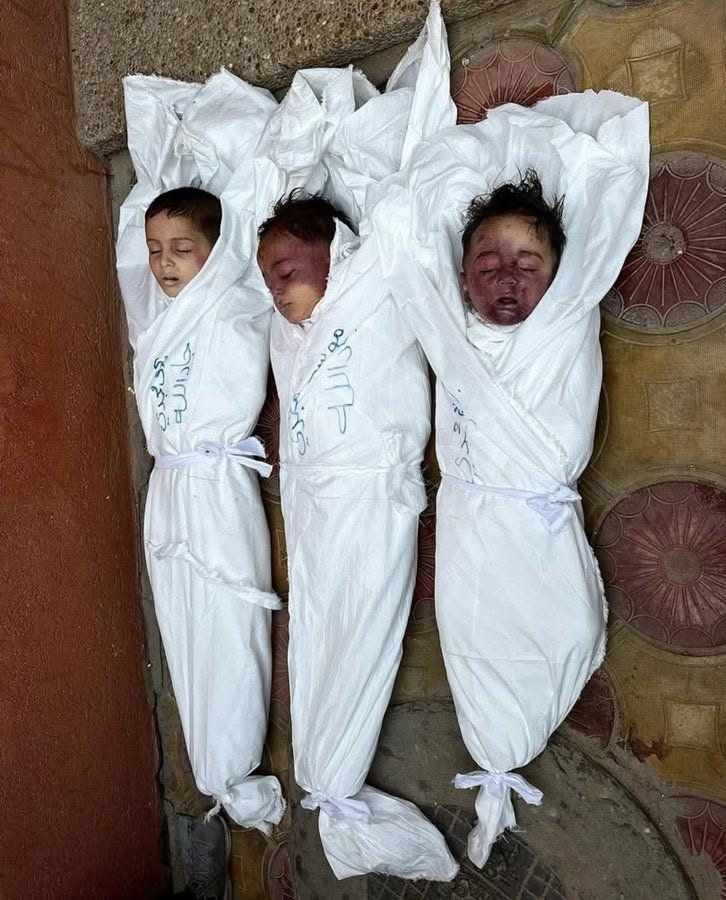
Israel’s ongoing war on the Gaza Strip has killed nearly 40,800 Palestinians, mostly women and children, and injured over 94,200 others, according to local health authorities.

An ongoing blockade of the enclave has led to severe shortages of food, clean water and medicine, leaving much of the region in ruins.

Israel faces accusations of genocide for its actions in Gaza at the International Court of Justice according to the Turkish news agency.

  • CrossFireArabia

    CrossFireArabia
    Dr. Marwan Asmar holds a PhD from Leeds University and is a freelance writer specializing on the Middle East. He has worked as a journalist since the early 1990s in Jordan and the Gulf countries, and been widely published, including at Albawaba, Gulf News, Al Ghad, World Press Review and others.

    Related Posts

    Israeli Soldiers: ‘…We Had to Kill Arabs’

    Newly disclosed testimonies by Israeli soldiers and archival documents published by Israeli newspaper Haaretz have shed new light on the displacement of Palestinians and Syrians during and after the 1967 Arab-Israeli war, with accounts describing killings, expulsions, destruction of villages and widespread looting.

    The investigation, published ahead of the 59th anniversary of the war and authored by Adam Raz, a researcher at the Akevot Institute for Israeli-Palestinian Conflict Research, is based on previously unpublished soldiers’ testimonies, military records, government correspondence and archival material.

    According to the report, approximately 300,000 Arabs were expelled or displaced from the West Bank, Gaza Strip and the occupied Syrian Golan Heights during and after the June 1967 war.

    Haaretz said many of the testimonies originated from discussions held among Israeli soldiers in kibbutzim, Israel’s collective farming communities, shortly after the war. While some excerpts later appeared in the influential 1967 book, The Seventh Day: Soldiers Talk about the Six-Day War, numerous accounts describing alleged war crimes remained unpublished for decades.

    Several testimonies cited by the newspaper describe killings of prisoners, civilians and refugees. One soldier was quoted as saying: “At first I wasn’t willing to execute Arabs who weren’t resisting. Then we came to the conclusion that we had to kill.”

    Another soldier described operations in Gaza after the war, saying: “Human lives didn’t matter. You could kill, there was no law. No one would say a word to you.”

    A third testimony referred to what the soldier described as “punitive expeditions” in Gaza’s refugee camps. “We caught guys, lined them up and eliminated them. In retrospect, it looks like murder,” he said.

    Shoot-at-sight orders for West Bank returnees

    The report also cites testimonies and archival documents alleging that Israeli forces were ordered to prevent Palestinians who had fled across the Jordan River from returning to the West Bank after the fighting ended.

    According to Haaretz, soldiers received instructions to shoot people attempting to cross back into the territory.

    The newspaper cited testimony later published by former Israeli lawmaker Uri Avnery, who quoted a soldier as saying troops had received orders to “shoot, to kill, without prior warning.”

    Another soldier recalled questioning whether such orders applied even if families with children were crossing the river. According to the testimony, he asked: “If I hear babies crying, should I shoot then too?” and was told: “Don’t be a girl.”

    Haaretz said military records indicated that by early September 1967, nearly 150 Palestinians had been killed while attempting to return from Jordan. The newspaper also cited statements by senior Israeli military officials acknowledging the existence of orders aimed at preventing refugee returns.

    According to the investigation, displacement during the war was not solely the result of battlefield conditions. The report cites government discussions and military documents suggesting that senior Israeli political and military leaders viewed the departure of Arab residents as desirable and, in some cases, encouraged or facilitated it.

    Among the most prominent examples highlighted by the report was the expulsion of residents from the Latrun villages of Imwas, Yalo and Beit Nuba west of Jerusalem. The villages were captured during the war and their approximately 8,000 residents were ordered to leave, according to the investigation.

    Haaretz reported that the villages were subsequently demolished and their inhabitants prevented from returning. The area later became the site of Canada Park.

    ‘Population transfer’

    The newspaper also cited testimony from Ishai Amrami, a deputy battalion commander during the war, who later described what he witnessed as “an attempt at massive population transfer.”

    The investigation further details events in Qalqilya and other communities near the Green Line, where residents were allegedly encouraged or forced to leave through military pressure, loudspeaker announcements, transportation arrangements and destruction of homes.

    According to the report, tens of thousands of Palestinians also fled or were displaced from refugee camps in the Jericho area and elsewhere in the West Bank. Many carried memories of the 1948 Nakba and feared another permanent displacement.

    The report revisits events in Gaza as well, where soldiers described raids, arrests and killings in refugee camps after the war. One soldier was quoted as saying: “We would roam through refugee camps in Gaza and carry out purges.”

    Another testimony stated: “Every man we saw was a combatant,” while acknowledging that civilians may also have been among those killed.

    Beyond the Palestinian territories, Haaretz reported that approximately 120,000 Syrians left or were expelled from the Golan Heights after Israeli forces captured the territory from Syria.

    The newspaper cited military documents and testimonies indicating that villages in the Golan Heights were later demolished to prevent residents from returning. According to the report, Israeli commander Elad Peled later described a decision to bring in bulldozers and destroy villages “so there would be nowhere to return.”

    Haaretz also cited reports submitted by Syria to the United Nations and records from the International Committee of the Red Cross alleging intimidation, forced displacement, looting and destruction of civilian property in the occupied territory.

    Israel warned of legal repercussions

    The investigation further describes what it says was widespread looting in areas captured during the war. According to the report, soldiers, civilians and local authorities participated in the removal of property from Palestinian and Syrian homes, schools, businesses and public institutions.

    Among the documents cited is a previously unpublished 1967 letter by Theodor Meron, then legal adviser to Israel’s Foreign Ministry. According to Haaretz, Meron warned that expulsions of civilians constituted “a serious violation of the Geneva Convention” and could create diplomatic complications for Israel.

    The report says Israeli officials were aware of legal concerns surrounding the expulsions but nevertheless approved measures aimed at preventing displaced populations from returning and consolidating control over newly occupied territories.

    The Six-Day War began on June 5, 1967, and ended with Israel capturing the West Bank, East Jerusalem, the Gaza Strip, the Sinai Peninsula and the Golan Heights. While Israel later returned Sinai to Egypt under the 1979 peace treaty, it continues to occupy the West Bank and the Golan Heights.

    For Palestinians, the conflict is remembered as the Naksa, or setback, which triggered a new wave of displacement nearly two decades after the 1948 Nakba and remains a defining event in collective Palestinian memory. Anadolu

    Continue reading

    You Missed

    Single Bullet! Dutch Report = European Press Prize = Gaza

    Single Bullet! Dutch Report = European Press Prize = Gaza

    Yemeni Missile Fired on Israel

    Yemeni Missile Fired on Israel

    Iran Strikes Israel With 10 Ballistic Missiles

    • By marwan
    • June 7, 2026
    • 18 views
    Iran Strikes Israel With 10 Ballistic Missiles

    Israeli Gunboat Kills Gaza Fisherman

    Israeli Gunboat Kills Gaza Fisherman

    Israeli Soldiers Continue to Fall in Lebanon

    Israeli Soldiers Continue to Fall in Lebanon

    Iran: ‘Strategic Patience’ to ‘Sustained Confrontation’

    • By marwan
    • June 7, 2026
    • 16 views
    Iran: ‘Strategic Patience’ to ‘Sustained Confrontation’