CrossFireArabia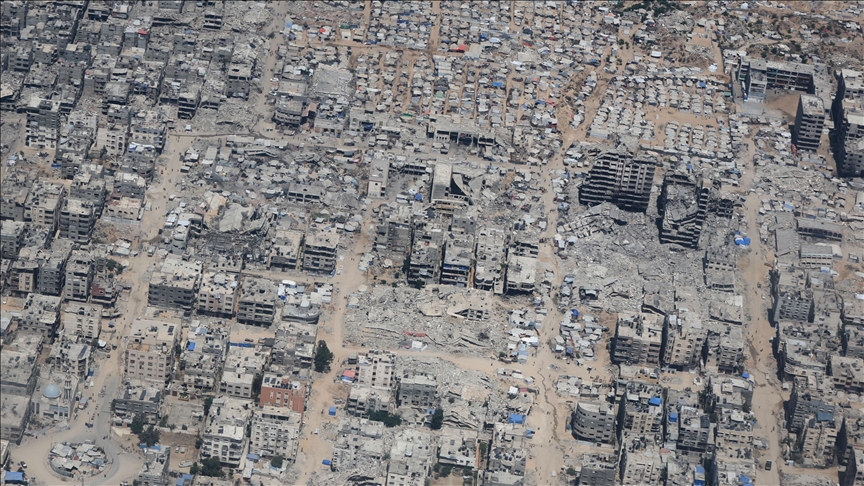
By Najla M. Shahwan
Israel’s military operation in Gaza, in the aftermath of the October 7 attack by Hamas, has become the deadliest, most dangerous conflict for journalists.
Reporting on the Gaza war has become increasingly perilous, with large numbers of journalists and other media personnel killed or deliberately targeted by Israeli armed forces.
Moreover, the Israeli Authorities have since the war began banned the entry of international journalists to Gaza, an unprecedented move in any other conflict in modern history.
It is a ban on the truth and a ban on reporting the facts.
It is the perfect recipe to fuel misinformation, deepening polarisation and dehumanisation.
While the foreign press has been banned from entering Gaza, Palestinian journalists there have been treated by Israel as legitimate military targets.
Palestinian journalists, whether classical “war correspondents” or, more dangerously, operate with varying degrees of independence have been among a precious few remaining actors capable of exposing illegality.
Over the past 22 months, the world has watched the war in Gaza unfold.
The Israeli military onslaught on the Strip continues nonstop, resulting in the killing of more than 65,000 Palestinians, mostly women and children and almost all of the 2.3 million residents displaced multiple times, struggling to survive the dual threats of targeted attacks and starvation.
Palestinian journalists killed, international reporters banned and members of press and influencers covering devastation in Gaza being silenced despite protection under international law.
In its war on the Gaza strip Israel has been running a special campaign for narrative control of how the world understands what was happening.
The vast majority of Palestinian journalists and social media influencers documenting, mass killing, starvation and other Israeli war crimes in Gaza have been killed since then in the deadliest conflict for journalists ever documented, according to the Committee to Protect Journalists (CPJ).
Even though it is illegal to target journalists, the “Palestinian journalists are being threatened, directly targeted and murdered by Israeli forces, and are arbitrarily detained and tortured in retaliation for their work.
By silencing the press – those who document and bear witness – Israel is silencing the war,” the CPJ said.
In Israel’s latest attacks, two more journalists, Rasmi Salem of Al Manara and Eman Al Zamli, were killed, bringing the total number of journalists killed since the war on the Palestinian enclave began to more than 270.
Earlier, on September 31, Islam Abed, a correspondent for Al Quds Today TV, was also killed in an Israeli air strike on Gaza City.
On August 25, five journalists were killedin a “double -tap” Israeli strike targeting Naser hospital in southern Gaza, which killed at least 21 people.
The journalists killed, all worked or freelanced for international media outlets, including Hossam Al Masri, a cameraman with Reuters, Mariam Abu Daqa, a freelance photojournalist with the Associated Press, and Mohammed Salama, a photographer for Al Jazeera.
Freelance journalists Ahmad Abu Aziz and Moas Abu Taha were also killed, while several other journalists were injured in the attack.
Earlier on August 10, another four Al Jazeera journalists and two freelancers were killed by a targeted Israeli strike on their tent outside Al Shifa hospital in Gaza City.
The Israeli army said it deliberately targeted the Al Jazeera crew – the correspondent Anas Al Sharif, who had reported on the war since its outset, the reporter Mohammed Qreiqeh, the cameraman Ibrahim Zaher, and Mohammed Noufal, a crew driver and cameraman.
The Israeli army claimed it had evidence that Sharif was a Hamas terrorist.
The CPJ and other organisations said that this claim is part of a pattern of misinformation, along with other cases where slain journalists have been labelled as Hamas fighters or operatives, and is without credibility.
Press freedom groups and journalists said that those killings are part of a campaign of intimidation to shut down vital reporting, which Israel has justified internationally with smears and false claims that the targets were undercover Hamas fighters.
To many people outside Gaza, the war flashes by as a doom scroll of headlines and casualty tolls and photos of screaming children, the bloody shreds of somebody else’s anguish but the true unimaginable scale of death and destruction is impossible to grasp, the details hazy and shrouded by internet and cell phone blackouts that obstruct communication, restrictions barring international journalists, extreme, often life-threatening challenges local journalist reporting from Gaza are facing.
Besides, local journalists inside Gaza face displacement, starvation, and extreme violence.
On August 21, 29 member states of the Media Freedom Coalition issued a statement calling for access to the Strip by foreign press and for Israel to ensure the safety of local journalists working inside Gaza.
French President Emmanuel Macron called on Israel to respect international law, emphasising the important role of independent media in covering “the reality of the conflict.”
Germany’s ambassador to Israel Steffen Seibert demanded an investigation and access for international media to Gaza, while United Kingdom’s Foreign Secretary David Lammy also condemned the attacks, calling for the protection of journalists.
“We are appalled and shocked to see Israel continue to kill journalists with no accountability, as the world watches. It is critical for the international community to step up and take concrete action to ensure the safety of Gaza’s remaining journalists,” International Press Institute (IPI) Executive Director Scott Griffen said.
“As more journalists in Gaza are killed, fewer remain to carry on their work, which means we know less about what is actually happening on the ground.”
“The unabated killing of journalists during the course of this conflict has grave implications for journalists not only in Gaza, who have sacrificed so much and endured such unimaginable violence to cover this war – but also for journalists’ safety all over the world,” Griffen added.
Despite growing global condemnation and concerns over breaches of international law, Israel is continuing its military assault on Gaza and it is likely that more journalists will die as a result.
International journalists must independently report from Gaza and support their Palestinian colleagues who continue to do a heroic job at a heavy price.
The international community must act fast to ensure that journalists are kept safe and hold Israel to account for the deaths of all journalists whose killings may have been targeted. Journalists are civilians, and it is illegal to attack them in a war zone.
Reliable information about wars and conflicts is essential for the wellbeing of local populations and is necessary to enlighten the world on the forces behind wars and the toll on civilians.
The author writes for The Jordan Times.