Kids of The Sea

By Ibrahim Isam

The Things They Never Chose

There are certain truths we do not need to be taught.

When we are thirsty, we look for water.

When we are hungry, we look for food.

When we are afraid, we look for safety.

And when the heart grows tired of darkness, it instinctively turns toward light.

These are not political ideas.

They are among the oldest truths of being human.

So I often find myself asking:

When are we allowed to ask for peace?

My answer is simple:

Always.

But perhaps it is precisely when the world grows darkest that the right to speak of peace becomes most sacred.

There is a particular kind of shame in watching an innocent human being lose their dignity because of the colour of their skin, the faith into which they were born, the name they carry, or the place in which history happened to place them.

A place they did not choose.

A history they did not write.

A burden they did not create.

What have we become when a human being must first prove that they belong before we grant them the right to be safe?

And what have we become when the suffering of another person is judged according to which side they were born on?

Perhaps humanity begins with a simpler question:

Not “Who are they?”

But:

“What is happening to them?”

A child does not enter this world knowing whom to hate.

A child does not know borders.

A child does not inherit our maps, our arguments, our wounds, or the stories we tell ourselves about who deserves more and who deserves less.

We teach them these things.

We give them our fears and sometimes call them history.

We give them our divisions and sometimes call them identity.

We give them our hatred and ask them to carry it into the future.

But why should a child inherit a debt they never borrowed?

Why should the innocent pay for the failures of those who came before them?

There is something almost sacred in the simple fact that a child wants what every other child wants:

to laugh,

to play,

to feel safe,

to wake tomorrow.

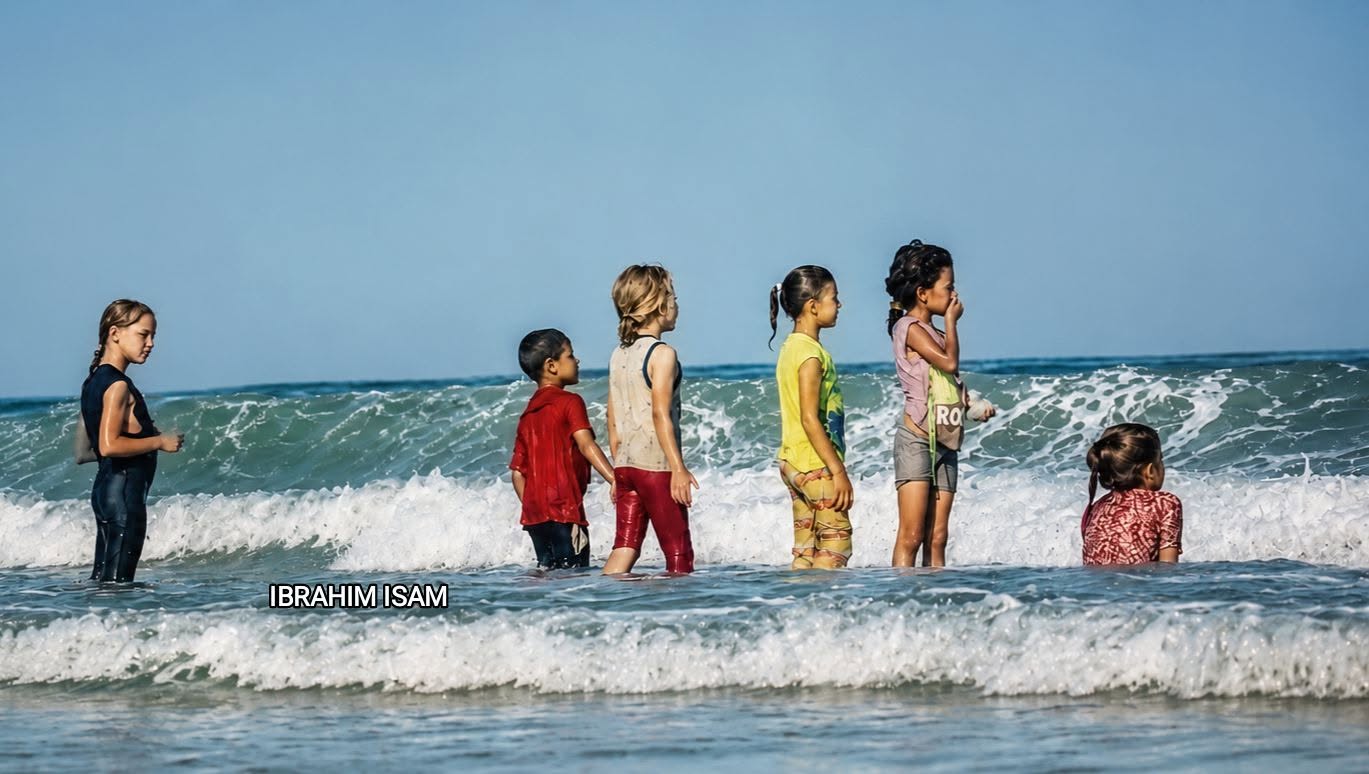
Perhaps that is why the sight of children finding a moment of peace in the middle of war moves me so deeply.

Not because it makes the war beautiful.

But because it reminds me that life, even wounded, continues to reach for life.

And I cannot look at such a moment without feeling both hope and shame.

Hope—because something in the human spirit still refuses to disappear.

Shame—because we have allowed a world to exist in which a child must search for moments of safety at all.

War destroys more than buildings.

It distorts memory.

It teaches fear.

It passes wounds from one generation to another.

And eventually, if we are not careful, it teaches children to inherit the hatred of people they have never met.

That may be one of humanity’s deepest failures:

turning the wounds of yesterday into the inheritance of tomorrow.

Peace, therefore, is not weakness.

It is not surrender.

It is not forgetting.

Peace is the courage to refuse the endless inheritance of suffering.

It is the belief that justice does not require us to abandon compassion, and that dignity cannot be reserved for those who look like us, pray like us, speak like us, or come from the same piece of earth.

We may disagree about almost everything.

We may carry different scriptures, different philosophies, different memories, or no faith at all.

Yet surely there remains one place where we can meet:

in the recognition that another human life is as precious as our own.

Perhaps this is the oldest prayer there is.

Not a prayer belonging to one religion.

Not a prayer belonging to one nation.

Not even necessarily a prayer that requires belief in God.

Simply this:

May no child have to be afraid.

May no human being be humiliated for the circumstances of their birth.

May no generation be condemned to inherit the hatred of another.

And may we become wise enough to understand that war cannot ultimately end war.

Only peace can.

Not the peace of silence imposed by fear,

but the peace that allows people to breathe, to remember their humanity, and to imagine a future that does not resemble their past.

Hope is not the opposite of reality.

Hope is the refusal to let reality become an excuse for surrendering our humanity.

And perhaps that is what I see when I look at children beside the sea.

A small, almost fragile reminder that beneath all our histories, identities, borders and beliefs, we are still human beings searching for the same ancient things:

water when we are thirsty,

food when we are hungry,

safety when we are afraid,

and a little light when the world becomes dark.

Maybe peace begins there.

In that recognition.

In that refusal to look away.

In the quiet decision that the suffering of another human being must never become ordinary.

And perhaps, from that small place inside us

that war has not yet reached,

hope begins.

Then hope.

Then hope again.

Because the world, with all its differences,

does not need more people who know how to make war.

It needs those who will remind us, quietly and steadfastly,

that peace is not merely a beautiful dream…

it is the human right to remain human.

  • CrossFireArabia

    CrossFireArabia
    Dr. Marwan Asmar holds a PhD from Leeds University and is a freelance writer specializing on the Middle East. He has worked as a journalist since the early 1990s in Jordan and the Gulf countries, and been widely published, including at Albawaba, Gulf News, Al Ghad, World Press Review and others.

    Related Posts

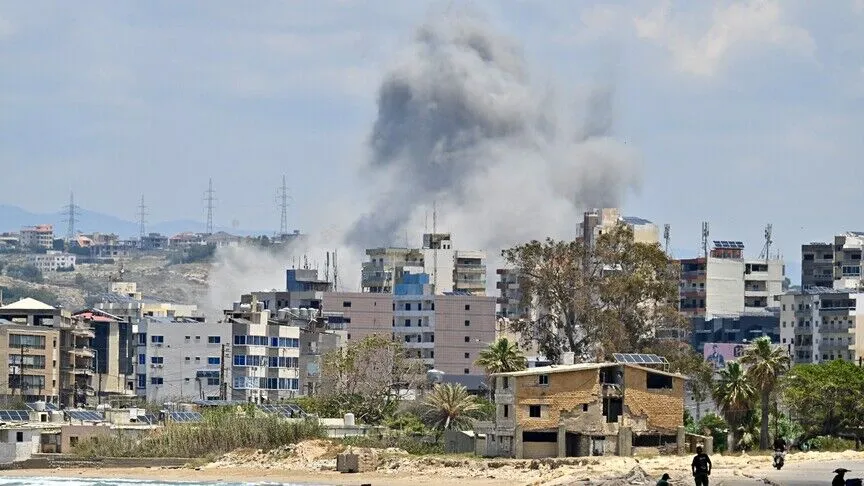
    Israeli Army Blows up a Home For The Elderly!

    The Israeli army blew up an elderly care home in southern Lebanon on Saturday in yet another violation of the country’s sovereignty, the Lebanese NNA news agency reported.

    The elderly social care home was situated in the town of Houla, Marjayoun distrcit.

    The army also demolished buildings between the towns of Markaba and Rab El Thalathine in the district.

    In the southern Nabatieh district, an Israeli drone struck an open area between Jarmaq and Kfar Remman, while artillery fire targeted the outskirts of the town of Zawtar al-Gharbiyeh.

    Israeli artillery also shelled an area between the towns of Haddatha and Haris.

    Israel has continued military operations in Lebanon since launching a new offensive in March, with its forces advancing into additional areas of the south.

    On June 26, Lebanon and Israel reached a US-mediated framework agreement providing for a gradual Israeli withdrawal in exchange for the deployment of the Lebanese army and the disarmament of armed groups, including Hezbollah. Anadolu

    Continue reading
    Israeli Settlers, Army Besiege Qusra Families For 21 Days

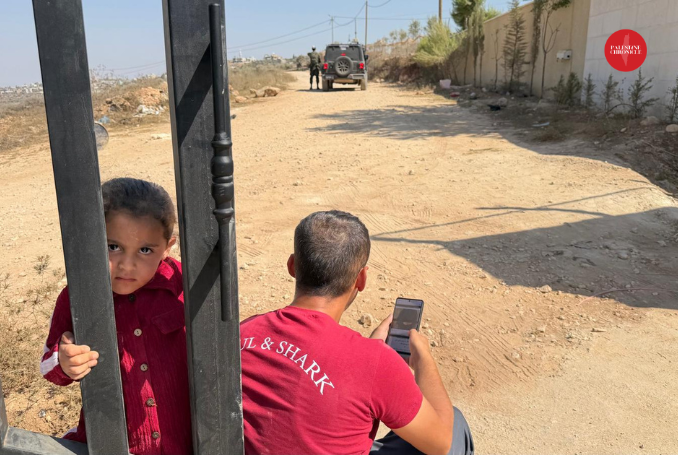
    Three Palestinian families remain under siege in Qusra as Israeli occupation forces and settlers intensify pressure to force them from their land.

    Twenty Days under Siege in Qusra

    Israeli occupation forces and illegal Israeli Jewish settlers have maintained a siege on three Palestinian homes in the Ras al-Ain area of Qusra, south of Nablus, for 20 consecutive days, Quds News Network and local sources reported on Friday.

    Residents say the operation is intended to force the three families from their homes and ultimately seize their land.

    Israeli occupation forces have intensified their presence around Jabal Ras al-Ain, restricting the families’ movement and their ability to obtain basic daily necessities.

    Soldiers reportedly erected a military tent directly in front of the home of Palestinian resident Loai Abu Ridi and installed iron gates at entrances to the area, further restricting access.

    Local residents warned that the prolonged siege increasingly threatens the ability of the three families to remain in their homes.

    At the same time, illegal Israeli settlers, operating under the protection of occupation forces, installed new mobile homes at the eastern entrance to Qusra.

    Residents said the move was intended to expand settlement outposts and consolidate control over additional Palestinian land.

    Despite the pressure, the families and other residents of Qusra said they would remain on their land and rejected attempts to force them from the area.

    Settler Attacks amid Widespread Raids

    The siege in Qusra came amid widespread Israeli military raids and settler attacks across the occupied West Bank overnight Thursday and early Friday.

    In Beita, south of Nablus, armed settlers assaulted Palestinian resident Issa Abdullah Hamayel and his wife in the Ain Umm al-Jarba area before forcing the couple to leave their land at gunpoint.

    The Palestinian Red Crescent separately treated a Palestinian who was injured after being assaulted by Israeli forces in Tell, west of Nablus.

    Israeli troops also stormed Beit Iba, Madama and Awarta, raiding homes and firing tear gas. A settler vehicle entered residential neighborhoods in Awarta during the military incursion.

    In Jenin, Israeli occupation forces arrested Abdul Razzaq Abed, Adnan Abed and Mahmoud Abed after raiding their homes in Kafr Dan.

    Troops also raided housing used by Palestinians displaced from the Jenin refugee camp near the Arab American University.

    According to local reports, Israeli occupation forces detained relatives of wanted Palestinian Qais al-Bitawi, including a woman, in an attempt to pressure him to surrender.

    Additional Israeli raids were reported in Tammun, south of Tubas, and Azzun, east of Qalqilya.

    In Hebron (Al-Khalil), military vehicles entered the Al-Murabba’a area and southern parts of the city, where soldiers raided and searched Palestinian homes. Illegal settlers also gathered near Palestinian homes in the Al-Dawarah area of Sa’ir, north of Hebron.

    Israeli Forces Remain inside Qalandiya Institute

    In occupied Jerusalem, Israeli occupation forces maintained military control of the Qalandiya Vocational Institute for a fourth consecutive day on Friday.

    Israeli military vehicles continued patrolling the surrounding area after occupation forces seized the UNRWA facility earlier this week, expelled its staff and raised an Israeli flag over the compound.

    The institute, established in 1952, was the first UNRWA vocational training center in Palestine and has provided vocational education to generations of Palestinian refugees.

    Israeli occupation forces also stormed Airport Street near the Qalandiya refugee camp on Friday, firing volleys of tear gas.

    A Palestinian young man was detained during the raid before Israeli troops withdrew toward nearby military checkpoints. Palestine Chronicle

    Continue reading

    Leave a Reply

    Your email address will not be published. Required fields are marked *

    You Missed

    Kids of The Sea

    Kids of The Sea

    Palestinian Dresses & Heritage

    Palestinian Dresses & Heritage

    Youssef Heikal: Last Mayor of Yafa

    Youssef Heikal: Last Mayor of Yafa

    A Traditional Dress Tribute

    A Traditional Dress Tribute

    Israel’s War: Lebanese Deaths Spikes to 4354 With 12325 Injured

    Israel’s War: Lebanese Deaths Spikes to 4354 With 12325 Injured

    26 Raids on Al Aqsa, Ban on Athan in Ibrahimi Mosques 155 Times

    • By Heba
    • September 2, 2026
    • 4 views
    26 Raids on Al Aqsa, Ban on Athan in Ibrahimi Mosques 155 Times