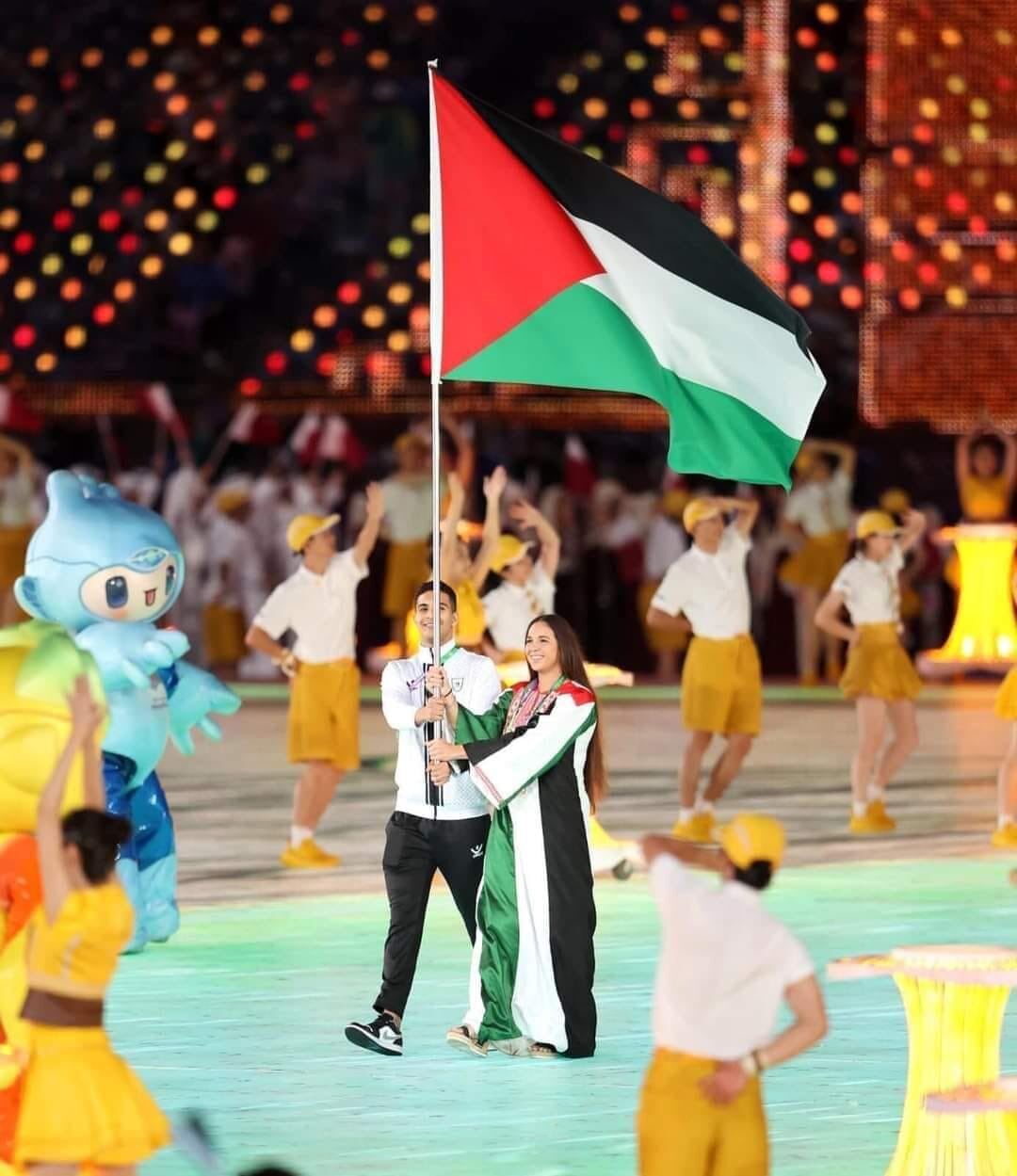
Palestine Team Towers at The Paris Olympics

In the world of sports, the Olympics represent the pinnacle of achievement, bringing together the world’s best men and women in dozens of disciplines to push the limits of athletic prowess with each passing Games.

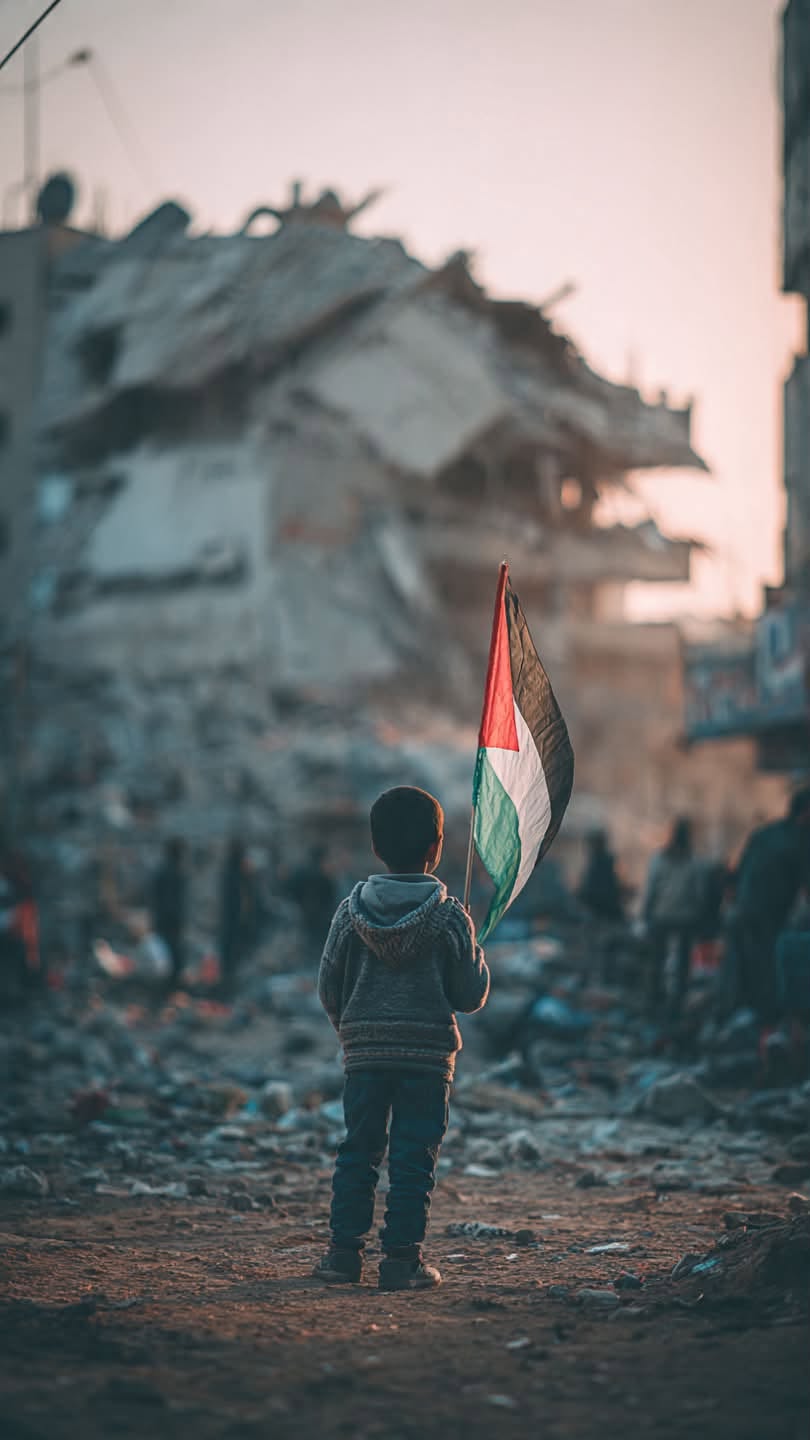
While Olympians from most countries prepare for years to put on their best performance at the largest sporting event, those from Palestine must face the double challenge of surviving periodic Israeli military incursions. Over the decades, these have cut short the athletic journeys of hundreds if not thousands of aspiring sportspeople in the occupied territories according to Anadolu.

Hassan Abu Zaitar, Shaker Safi, and Basem Al-Nabahin are just a few of those killed by relentless Israeli airstrikes and ground attacks that have devastated the Gaza Strip since Oct 7 last year.

With the Paris Games starting on July 26, Israel’s killing of athletes and players in Gaza, along with its destruction of the enclave’s sports facilities, has triggered mounting demands to disqualify Israel from the tournament as activists and spectators question the legitimacy of its participation.

Palestinian writers and sports commentators contend that Israel’s Gaza onslaught, which has killed nearly 40,000 Palestinians, also represents an attempt to eliminate sports and athletic achievement.

“It’s a genocide … ethnic cleansing of the Palestinian people, and the attacks on athletes and sports in particular in the Gaza Strip are all very systematic attacks to obliterate and erase sports in the territory,” Abubaker Abed, a Gaza-based sports journalist told Anadolu.

Israel’s intentions go further than eliminating Gaza’s current athletic capacity, according to writer and lecturer Abdaljawad Omar, who held that it was part of a concerted effort by Tel Aviv to undermine Palestinians’ achievements in all areas, with sports being no exception.

“Israel systemically seeks to ensure that Palestinian accomplishments and potential in all realms remain dampened and always dwarfed by its own achievements.

“This applies to political, intellectual, economic, and literary fields, where historically, many talented and highly accomplished Palestinians have been targeted. Sports is no exception in this sense,” he explained.  

Killing of athletes

The situation is “extremely worse” for athletes in Gaza, according to football journalist Abed, adding that many players have been killed in the territory.

According to the Palestinian Olympic Committee and Palestine Football Association, about 400 athletes have been killed since Oct. 7, with the football association noting that the war has claimed 245 players in that sport alone, including 69 children and 176 young men.

Some 33 scouts and 70 members of sports unions have also been killed.

According to the association, Israeli forces have also detained players, including 12 in the occupied West Bank.

Israel’s attacks have killed several Olympians as well. Sixty-nine have been killed during Israel’s ongoing assault, says the Palestinian Campaign for the Academic and Cultural Boycott of Israel, launched in 2004.  

Destruction of sports facilities

Besides athletes, sports facilities also have not been spared. Dozens, including gyms, training halls, fields, and stadiums, have been damaged or destroyed since Oct. 7.

A total of 42 facilities have been leveled in Gaza, while seven were destroyed in the West Bank, says the Palestinian Football Association.

Abed pointed out how Israel has destroyed football schools, including the Al-Wahda Academy and the Champions Academy, which “was one of the most promising football projects” in Gaza.

He pointed out how Israel has eradicated talent in football, the most popular sport among Gaza’s residents, leaving only one stadium, the Al-Dorra stadium, intact out of the enclave’s 10.

Israeli forces have been seizing stadiums in Gaza and turning them into detention centers.

Human rights monitor Euro-Med highlights that the Israeli army turned the Yarmouk Stadium in Gaza City into a detention center “to hold and humiliate hundreds of Palestinians, including children, shown naked and stripped of their clothes in footage published by the Israeli media in December 2023.”

A report by the group published in May indicates that facilities bulldozed and destroyed include “300 five-a-side courts, 22 swimming courts, 12 covered sports halls for basketball, volleyball, and handball, and six tennis stadiums.

“Twenty-eight sports and fitness centers have been targeted, damaged, and destroyed.”  

Death of prominent athletes

Israel’s offensive has also caused the death of prominent players in Gaza, including champions of tournaments in ……

This includes Palestine’s first-ever Olympian and flagbearer, Majed Abu Maraheel, who died due to kidney failure in a refugee camp in June.

The 61-year-old Olympic distance runner died as Israel’s ongoing blockade of humanitarian assistance left many, including Maraheel, lacking medical treatment and facilities.

Maraheel had competed in the men’s 10,000-meter race at the 1996 Atlanta Olympic Games.

In January, the Palestinian Olympic football team’s coach Hani Al-Mossader was killed in an Israeli airstrike.

The same month, Nagham Abu Samra, a karate champion who was set to participate in the Paris Olympics, died in a hospital in Egypt after succumbing to her injuries.

She had been severely wounded by an Israeli attack that left her with head injuries and led to the amputation of one of her legs.

Prominent football players have also been killed in Israeli attacks.

In March, Mohammed Barakat, nicknamed the “legend of Khan Younis,” died in a raid targeting him in the southern Gaza Strip city.

The 39-year-old forward, who scored 114 goals, had played for several football clubs including the Khan Younis Youth Club, which he captained. He also played in the occupied West Bank and Jordan, including Al-Wahdat, as well as Al-Shoalah, a Saudi club.

Hazem Al-Ghalban was also killed by Israeli an bombing in Khan Younis. According to Abed, the 26-year-old defender scored seven goals in his career and “put on stellar displays with his team before Oct 7th, placed 3rd in the league.”

Shadi Abu-Alarraj, a renowned goalkeeper for the Khan Younis Youth Club, was killed last week.

“The death toll among athletes continues, unfortunately,” says Abed.  

‘Apartheid’ Olympics

With hours left until the Paris 2024 Games’ opening ceremony, experts are still questioning the International Olympic Committee’s (IOC) decision to keep Israel in the tournament.

“Athletes, whether footballers … whatever the sport is, they don’t belong to political factions … they are targeted and are illegitimate targets for Israeli forces, and this is absolutely prohibited by all international laws and all FIFA regulations,” says Abed.

He argued that Israel’s actions show that it lacks the Olympic values of peace, tolerance, forgiveness, love, and sportsmanship.

“So, how could Israel even participate in the Olympics?” he asked.

Russia, meanwhile, has been banned from Olympic and FIFA tournaments after it launched its war on Ukraine in 2022, noted Abed, who maintained that Moscow’s actions in that conflict were mild compared to the devastation Israel has caused in Gaza.

This “disgraceful stance,” he asserts, revealed the hypocrisy of the IOC, as well as the world governing body for football.

The organizers of this year’s Olympics have said their decision to keep Israel in the Games while upholding the ban on Russia and Belarus is due to Moscow’s annexation of Ukrainian territory, while Tel Aviv has not formally seized territory in Gaza.

Fadi Quran, senior director at US-based rights group Avaaz, said the Olympics and the IOC’s current leadership will be remembered for “turning a blind eye to a country committing what the ICJ ruled is a plausible genocide, and said is apartheid.”

He was referring to a preliminary ruling by the International Court of Justice that recognized genocide as a plausible risk in Gaza. Israel stands accused of genocide at the top UN court, which in its latest ruling has ordered Tel Aviv to immediately halt its operation in the southern city of Rafah, where over a million Palestinians had sought refuge from the war before it was invaded on May 6.

Quran expects that athletes will protest Israel’s presence at the Olympics and fans will boycott events where the Israeli flag is raised.

“Now that the IOC has refused to ban Israel, activists across the world will take action to ensure that the Paris Olympics are branded as the ‘Apartheid Olympics,’ or ‘War Crime Olympics’,” he said.

According to Abed, it will take a decade to revive sports in the Gaza Strip.

“The war on Gaza has changed everything. The war on Gaza has killed the dreams of many.”

CrossFireArabia

CrossFireArabia
Dr. Marwan Asmar holds a PhD from Leeds University and is a freelance writer specializing on the Middle East. He has worked as a journalist since the early 1990s in Jordan and the Gulf countries, and been widely published, including at Albawaba, Gulf News, Al Ghad, World Press Review and others.

Related Posts

Lebanese Media in The Age of Political Conspiracies

By Sama Abu Sharar

Lebanese media outlets have traditionally played a pivotal role in shaping public opinion on the current issues of the day. This includes their promotion of the Syrian tutelage in the 1990s, their tacit acceptance of Hezbollah’s influence during the 2016 presidential settlement, and their consistent coverage of the framework agreement recently signed in Washington.

Local TV channels align with the agendas of their respective political parties. Each era has its agenda with the current one clearly aimed at whitewashing the image of Israel in the eyes of the Lebanese public, and reinforcing the notion that peace with Israel is possible, and normalization is not impossible.

Lebanese television stations are controlled by influential figures linked to political parties or families known for their impact on local politics. Al-Manar is affiliated with Hezbollah, while NBN is owned by Speaker of Parliament Nabih Berri and seen as the official mouthpiece of the Amal Movement. Pierre Daher, who broke away from the Lebanese Forces following a dispute that reached the courts, owns half of LBCI.

This is while MTV, headed by Michel Murr, is owned by his family and is known for promoting the Lebanese Forces’ rhetoric. Al-Jadeed, owned by Tahsin Khayat, fluctuates its editorial policy depending on its funding sources, and OTV is affiliated with the Free Patriotic Movement. Given the clear affiliations and loyalties of the Lebanese audience, these television channels appear more like a mirror image reflecting the sectarian and political mosaic of the country, spanning the spectrum from the far right to the far left and everything in between.

Political Money in Lebanese Media

A study by the Maharat Foundation in collaboration with the Legal Agenda and the European Media and Journalism Research Centre (MJRC) indicates that the vast majority of print, broadcast, and online media outlets in Lebanon are affiliated with political parties, sectarian groups, or influential political entities. These outlets reflect political agendas rather than editorial independence, transformed into tools in the hands of powerful decision-makers, whether individuals, parties, or even regional states. The study describes journalism in Lebanon as a weapon in the ongoing political conflicts.

Media coverage of the recent Israeli war on Lebanon reveals that most television stations chose to prioritize their political agendas over the Israeli crimes targeting Lebanese civilians and this demonstrates their political alignment over the issues professionalism and interests of the people.

Research by the Legal Agenda reveals shortcomings in the media coverage of the 2024 Israeli war on Lebanon. This coverage has sometimes misled public opinion, justified violations, weakened documentation, and obscured the victims. A review of the media coverage of 10 war crimes committed by Israel showed that the three most-watched television channels (Al-Jadeed, LBC, and MTV) omitted crucial legal questions. The extent of Israel’s adherence to the principles of international humanitarian law and its disregard for necessary measures to protect civilians. These were ignored. Furthermore, their coverage lacked legal analysis of the Israeli attacks, despite their serious violations amounting to war crimes.

Lebanese journalist Jumana Baalbaki affirms that some media outlets “deepened the division, justified the aggression, and indulged in dangerous sectarian rhetoric, thus deviating from the priority of maintaining peace and accuracy.” The accuracy that Baalbaki refers to is not limited to publishing the correct news; it also refers to the neglect of events and realities such as people’s stories, their deaths, displacement, and their suffering. “The victims became mere numbers, without names or faces, and consequently, their stories not part of the narrative that could have exerted pressure to stop the war, as happened in Gaza, where its people shared their suffering through TikTok.”

In his study, “The Lebanese Press and Its Role in Times of Peace and War,” Dr. Nassim Khoury argues that the Lebanese media has historically played a constructive role on one hand and a destructive one on the other. It contributed to strengthening nationalist and independence sentiments, while on the other hand, at various periods in Lebanon’s history, it served as a tool for political polarization, sectarian conflict, and foreign influence.

According to Khoury, the relatively broad press freedom in Lebanon allowed for the flourishing of diverse opinions, but it also enabled newspapers to align themselves with political parties, sectarian groups, and foreign governments instead of serving the public interest. Although the study focused on Lebanese newspapers, most of which no longer exist, its conclusions can be applied to the majority of visual, audio, and electronic media.

He argues that the media formed part of the conflict during the Lebanese Civil War, whether through its work as an arm of the various political factions and militias or through fueling fear, hatred, and division.

Mobilizing the Street

Some might think the various Lebanese media outlets learned from their experience with political alignments, but not so. Political money, promoting specific agendas, continues to influence most of them, and more openly than in previous eras.

Lebanese journalist Hussein Ayoub confirms the role played by most Lebanese media outlets has not changed. He points to the worsening situation with the deepening internal divisions over Lebanon’s identity and regional positioning. Are these media outlets “an ally of America and Israel, or an ally of Iran? Are they an ally of Turkey, Saudi Arabia, and the Gulf states, or an ally of Europe? Is it even permissible for a country like Lebanon to be neutral?” Ayoub asks.

The environment in which the media operates takes us back to the early stages of the formation of the Lebanese state, according to Ayoub: “When you live in a country called Lebanon, whose pillars, since it’s founding a 100 years ago, have been sectarian and reinforced by foreign tutelage,” political, partisan, cultural, and media institutions represent “an extension of the sectarian system.” They are distributed according to sectarian considerations, making them a tool for measuring the sectarian audience that follows this channel or boycotts that one, based on criteria of polarization and alienation.

It is clear to observers today that the loudest voices are those of media outlets promoting peace—if their presence is compared to the voices rejecting any kind of relationship with Israel. And abundant political funding not only ensures the media’s adherence to the peace agenda but has also demonstrated its ability to disseminate this orientation.

As Lebanese media outlets compete to promote the Israeli narrative to their local audiences, MTV hosted members of the South Lebanon Army residing in Israel on one of its programs to glorify the Jewish state and create the impression of Israelis’ love for the Lebanese, revealing a performance that aligns with a predetermined agenda. LBCI television defied the Israeli boycott law by hosting Israeli journalist Barak Ravid, a correspondent for Israel’s Channel 12 and Axios.

In this context, Al-Jadeed’s Washington correspondent, Pedro Ghanem, rushed to make an exclusive interview with Israeli Ambassador Yechiel Leiter following a round of negotiations between the Lebanese and Israeli delegations, giving him airtime to comment on the talks.

During an interview with MP Hassan Fadlallah, a member of the Loyalty to the Resistance Bloc, George Salibi, host of the “Halak Shu” program on Al-Jadeed, posed a question on behalf of Israeli army spokesperson Avichai Adraee to his guest, who declined to answer it.

Ayoub believes that such matters transcend normalization with Israel and reach the level of professional ethics. He argues that “the most egregious aspect of this is that of George Salibi and the question he raised while his country negotiates directly with the Israelis in Washington and concluding an agreement with them that can only be described as a complete violation of Lebanese sovereignty. Nothing prevents the deployment of Lahad militia operatives in villages whose inhabitants have not been displaced, or mercenary companies contacting Lahad agents in Israel to determine if they can exploit them or their children should the security zone be established” in southern Lebanon.

In an interview with “Voice of the People” radio, university professor and researcher Jad Melki links the Lebanese media’s promotion of the Israeli narrative to the official Lebanese discourse that has criminalized the resistance. He points out that the media chaos facilitated by the Lebanese presidency is being met with widespread condemnation from the Lebanese public.

He gives as an example the video that went viral on the social media, in which a young Lebanese woman, participating in a survey about the possibility of peace with Israel, says: “They party like us, they talk like us, and they value women like us,” attempting to draw parallels between Lebanese and Israelis. Maliki says this video wouldn’t have gained such widespread attention had there not been a negative reaction and rejection of what the young woman said.

Malki add: “In all media coverage, those on the fringes, the extremes, attract the largest audience, even though they might represent only one percent. For example, today in the United States, those who talk about abortion are very few. A large segment is on the extreme right, and a small segment is on the extreme left. These are the ones who attract the most attention. But the majority of the population, those in the middle, and most of them are rational on this issue, accept abortion under certain circumstances, but not always. The same applies to all issues,” Maliki explains.

Opinion Polls and the Transparency of Representation

Public opinion polls typically reflect people’s views on a particular topic by taking the opinions of a representative sample encompassing all segments of society according to rigorous scientific standards. However, things take a different turn in a country like Lebanon, where those concerned question the representativeness of public opinion polls and the extent to which the institutions conducting them are subject to political funding.

Hussein Ayoub states: “There are questions raised about the timing of most opinion polls in Lebanon like who funds them, and what are their objectives, do they have Lebanese or foreign agendas.” He points out also that scientific standards are absent from many opinion polls, especially in the way questions are formulated. “It’s not just about asking the question, but also about selecting the sample,” he says, asking rhetorically: “Can you ask a drowning person if they would like to travel to La La Land?” He stresses the necessity for a scientific methodology related to types of questions asked, timing, sample selection, and target audience.

Among the polls that sparked controversy in Lebanon was the one held by “International Information,” which showed a significant increase in public support for signing a peace agreement with Israel, from 25 percent in August 2025 to 49 percent this year. But there was much criticism on the way the organization used in conducting the poll. Ayoub points out that the poll overlooked the fact that 26 percent of respondents refused to answer and were given alternatives—a percentage that, if included, could have altered the poll’s results whilst mentioning other shortcomings, errors, and flaws common in most opinion polls.

Political parties and research centers

Jumana Baalbaki focuses on several Lebanese political parties that rely on research centers to conduct polls for purely internal purposes: Gauging popularity and/or identifying factors that benefit the party in its battles with its rivals. She questions whether research institutions classified as independent, such as Ipsos, International Information, and Araa, are truly free from the influence of business interests in their work and results, especially since many of these polls are conducted or commissioned by political parties to reinforce a particular viewpoint.

Neither Ayoub nor Baalbaki believes that opinion polls in Lebanon—like the media—actually reflect the pulse of the street. “Perhaps a more accurate approach would be to hold a public referendum, provided its results are not manipulated as happens in elections,” Baalbaki explains. Ayoub argues that “the problem with opinion polls is more serious than with the media, in that most of the funding is external.”

He points to the electoral climate where polling institutions compete to demonstrate their support for one candidate or another, resulting in figures determined by who pays the most. There are always exceptions, whether in the media or polling institutions, but they are few in a country like Lebanon, governed by sectarianism and sharp internal divisions, amidst the extremely delicate and complex circumstances the country is experiencing.

A study on media platforms and news sources and their impact on political trends during the 2026 Israeli war on Lebanon, supervised by Dr. Jad Melki, Journalism and Media Studies Professor at the Lebanese American University, revealed a radical shift in how Lebanese people access news. According to a survey of 1,000 participants, television stations lost their position as the primary source of war news for the first time to social media, specifically to WhatsApp. The study showed 73 percent of those following war news received their information via mobile phones, 63 percent via television, and only 2 percent via radio.

The study indicates that despite the fact that 50% of survey participants closely followed war news, 82% did not share any war-related content on social media. WhatsApp again emerged as the most used platform, with 53% of respondents using it, followed by Facebook at 22%, Instagram at 14%, and TikTok at the bottom, with less than 7%.

The study reveals that despite the sharp political differences among respondents, there was widespread agreement regarding the stance towards Israel; with 87% of those surveyed considering Israel as the enemy, 51% the United States as an enemy, and 38%, as Iran as the enemy. Regarding the future path, 54% chose diplomacy as the sole means for liberation, while 35% in favour of armed resistance.

The study concludes that media usage in Lebanon reflects and reinforces political polarization. The shift from traditional media like television to social media platforms is a double-edged sword. While it threatens social cohesion during wartime, it also empowers the new generation with broader global perspectives and a more critical outlook, particularly if they transcend their sectarian divisions.

The lack of trust in traditional media and polls has fostered critical thinking, analytical skills, and the ability to read between the lines. In a country like Lebanon, there are no single friends or enemies, and the country is governed by a sectarian system characterized by sectarian power-sharing in all state institutions. The media, often referred to as the fourth estate, struggles to transcend its role as a mirror of this sectarian power-sharing system. This raises doubts about its ability to represent the pulse of the street and transforms it into a platform for loud noise, still striving to convince the audience that it represents the majority.

This article, originally written in Arabic, appeared in Al Quds Al Arabi and is reprinted in crossfirearabia.com.  Sama Abu Sharar is a professional journalist, writer and translator with skills in three languages: Arabic, French and English. She is currently residing in Beirut and writes on different Palestinian and Lebanese issues for publications such as the online Palestine Chronicle and Al Quds Al Arabi, a prestigious Arabic language daily newspaper published in London. Her articles appear in translated form in crossfirearabia.com.

Continue reading
Mustapha Barghouti: ‘Repression Will Not Deter The Palestinian People’

CROSSFIREARABIA – Palestinian leader Dr. Mustafa Barghouti affirmed that the brutal genocidal war waged by the Israeli occupation against the Palestinian people of the Gaza Strip has been transformed into a war of attrition—humanitarian, economic, and humanitarian—all in full view of the world.  He stressed that the practices of oppression and abuse will not succeed in breaking the will of the Palestinian people and will not stop them from continuing to resist injustice and repression.  He added that Israel is not hiding the fact that it is involved in a process of ethnic cleansing coupled with terrorist settler groups in the West Bank under a fascist government with Israeli army protection. He added the western soft sanctions against settlers is nothing but “ashes” and what is needed is real and effective sanctions against the Israeli government which finances and protects the terrorists.

Continue reading

You Missed

Lebanese Media in The Age of Political Conspiracies

  • By marwan
  • July 13, 2026
  • 12 views
Lebanese Media in The Age of Political Conspiracies

Don’t Forget Palestine!

  • By marwan
  • July 13, 2026
  • 12 views
Don’t Forget Palestine!

Israeli Settlements Shoot up!

  • By marwan
  • July 13, 2026
  • 3 views
Israeli Settlements Shoot up!

Mahmoud Darwish: I will live, even if life betrays me and I will dream, even if dreams abandon me

  • By marwan
  • July 13, 2026
  • 8 views
Mahmoud Darwish: I will live, even if life betrays me and I will dream, even if dreams abandon me

Margot Saba Abdo: A Photo Pioneer in Jerusalem

  • By marwan
  • July 12, 2026
  • 10 views
Margot Saba Abdo: A Photo Pioneer in Jerusalem

Mustapha Barghouti: ‘Repression Will Not Deter The Palestinian People’

Mustapha Barghouti: ‘Repression Will Not Deter The Palestinian People’