Palestinian Massacre Disguised as Rescue

By Dr Marwan Asmar  

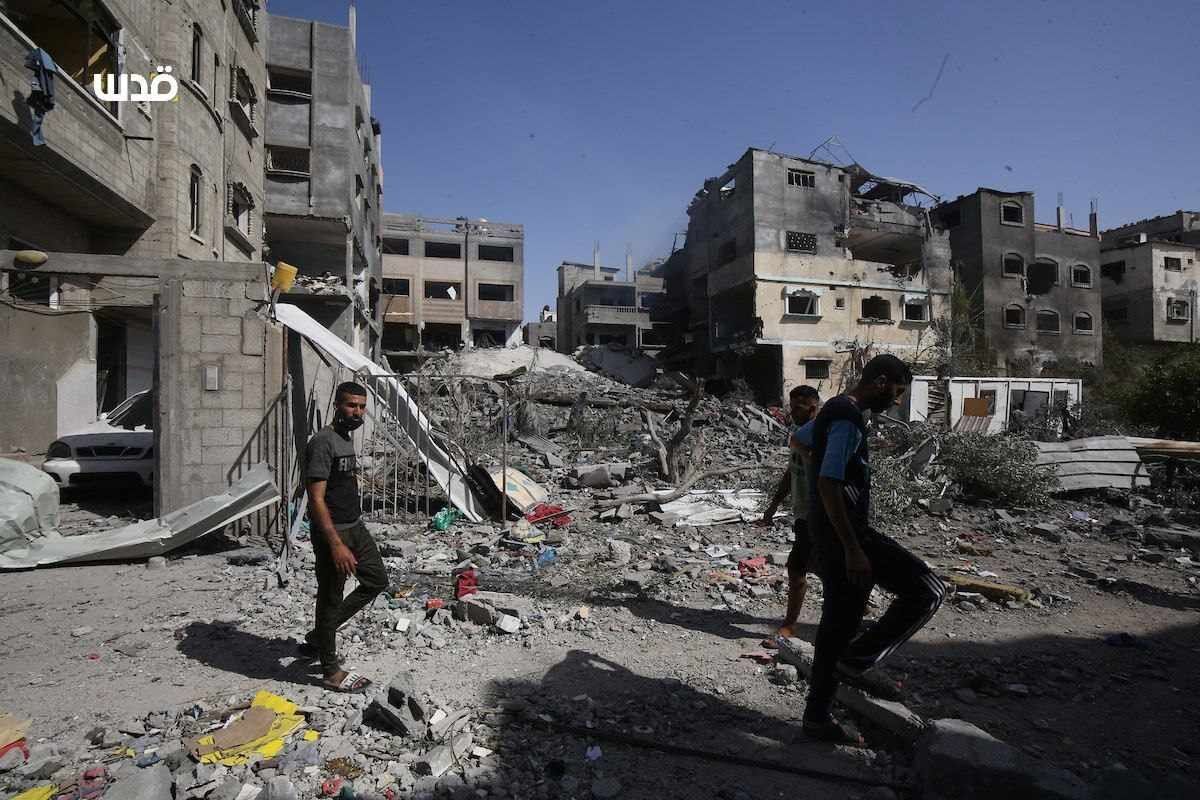
It’s a criminal act under the eyes of the world. Israel’s Nusseirat massacre with the active cooperation of American help is grotesque by any standard for the 250 Israeli strikes made on the camp during this flagrant military operation.

The number of innocent Palestinians killed kept climbing up on the day of the massacre, Saturday, with the final death toll reaching 274 martyrs. These included 64 children, 57 women and 37 elderly people. Shameful is the fact, the massacre was carried out by Israeli soldiers, Shabak agents and members of the police who had been planning this for weeks.

The number of injuries was equally horrific as 698 people were injured during this killing spree that was backed from the air, sea and with ground tanks helping the infiltrators who went into the camp camouflaged in an aid truck and a car with Israeli tanks behind. Among the injured were 153 children, 161 women 54 elderly people according to the Gaza Government Media Office.

The shooting begun after the disguised aid lorry and a vehicle stopped in the middle of the housing area just outside the central market and begun the bloody mayhem. The lorry was at first thought to carry displaced people with their belongings but soon got out their machine guns and started shooting.  According to the Media Office soldiers were disguised in civilian clothing in ambulances with medical and health signals.

Hostages

The massacre was all made to rescue four Israeli hostages taken by Hamas on 7 October when they pushed through the barrier fence that blocked Gaza from the so-called Israeli territories. The four hostages, three men and a woman, were part of the 250 Israelis and foreigners that were taken back to Gaza by members of the Islamic organization on the fateful month and day.

Their rescue was seen as a major victory by Israel after 245 days of war destroying the Gaza Strip and killing its civilian population, earmarked at over 36,000 dead. The Israeli media was jubilant, ignoring the fact the operation was nearly botched with a major fight in getting to the four captives resulting in at least one Israeli soldier and at least three other captives getting killed, one of them an American citizen, though massive Israeli gunfire.

This fact is not yet receiving much attention in the media because it is given by a credible source from Hamas but it has become known the Nusseirat “rescue” operation was a heinous, diabolical affair for the Israeli occupation army bombed 89 houses and residential buildings inhabited by residents in the early hours of committing this massacre.

Eye witness reports say many of the houses were bombed over the heads of their residents without prior warning. Residents were shocked at the sudden bombs and missiles stuck from the air. These were made simultaneously to distract civilians from the underground operation to get to the four hostages reportedly held in different building and flats.

Women, children, men and old people, passerby were all in the line of fire for this was a busy area in between houses and the central market in West Nusseirat.

It is being described as another area genocide with a great impact on central Gaza and executed with dozens of warplanes, quadcopters, helicopters and drones with espionage and intelligence purposes, and tanks in more than four axes and directions, the Gaza Media office stated.

At the time of writing the Government Media office said it is yet to confirm which soldiers from different countries were used in the mass attacks on the camp but there is already confirmation that thousands of American soldiers have been stationed in Israel shortly after 7 October and are providing technical and logistical advice to the Israeli army.

Disturbing however, and as reported is the fact that the aid truck that was used to enter the Nusseirat camp was from the recently constructed American pier where US officials previously said they made this construct to make it easier to bring food to the starving Gazans imposed by Israel.

Social media commentators couldn’t but help make the comparison of the treatment between the Israeli hostages and those “limp” Palestinians coming out of Israeli prisons, spotlighting Noa Argamani with her father in a happy state.

One blogger commented on how Noa was treate and how Israelis treat Palestinians in their  prisons. The latter are old and haggard because they are denied basic things, are beaten, tortured and denied food.

Dr Marwan Asmar is a writer based in Amman covering Middle East affairs

  • CrossFireArabia

    CrossFireArabia
    Dr. Marwan Asmar holds a PhD from Leeds University and is a freelance writer specializing on the Middle East. He has worked as a journalist since the early 1990s in Jordan and the Gulf countries, and been widely published, including at Albawaba, Gulf News, Al Ghad, World Press Review and others.

    Related Posts

    ESCWA: The War on Lebanon Displaces 140,000 Old People

    BEIRUT – The recent conflict has displaced around 20% of the Lebanese population, including an estimated 140,000 older persons, many of whom are living in dire conditions. This is revealed in a new policy brief issued, Monday, by the United Nations Economic and Social Commission for Western Asia (ESCWA), titled “Conflict and its shockwaves: older persons amid war and displacement in Lebanon”. 

    The brief warns of a deepening crisis threatening older persons’ health, dignity, and independence, amid humanitarian responses that remain insufficient to meet their specific needs, despite the efforts by the governmental and non-governmental sectors. As the conflict escalated, this group faced harsh choices between staying in unsafe areas or fleeing to environments that are ill-equipped to accommodate them, especially given the mobility limitations of some of them and limited available support.

    The situation has been further aggravated by the closure of six hospitals, the targeting of 23 health centres, and the killing and injury of hundreds of healthcare workers. This has reduced service availability and made it more difficult for older persons, particularly those with chronic conditions, to access the care they needed. Despite government efforts to organize the health response, many older persons remain unable to access treatment due to transportation costs, limited mobility, or lack of information about available services.

    In this context, ESCWA Population Affairs Officer Sara Salman warned that the conditions of war, ongoing anxiety, and accumulated trauma were leading to a deterioration in older persons’ mental and psychological health, with rising symptoms of depression and isolation. “What we are witnessing today is a double marginalization of older persons amid crises. They are not only losing their homes or sources of income but are also being deprived of essential services and recognition of their vital role in their communities,” she added.

    The brief notes that overlapping crises have led to a sharp deterioration in the economic conditions of older persons, with many losing income or property, increasing their dependence on others and deepening their sense of marginalisation. Inadequate displacement environments have also undermined their independence and dignity, as many are forced to sleep on the ground or live without basic hygiene and care necessities.

    Additional challenges are also highlighted in the brief including the inadequacy between food assistance and the needs of older persons. Food is often distributed according to standardized models that fail to consider their health requirements, effectively limiting their ability to benefit from it.

    Despite this grim picture, Salman stressed the importance of recognizing the overlooked contributions of older persons within humanitarian responses, which tend to view them only through a lens of vulnerability. “They play a central role in supporting their families and communities. They are a pillar of resilience, and much of the credit for preserving social cohesion during crises and post crisis recovery goes to them,” she said.

    The brief calls for a more inclusive humanitarian response that systematically addresses the needs of older persons by ensuring continuity of healthcare, especially for chronic diseases, improving shelter conditions to suit their needs, developing targeted economic support and social protection mechanisms, designing more appropriate food assistance and basic services, and involving older persons in the design and implementation of response programmes.

    Continue reading
    War Places Israeli Society in a Psychological Crisis – Haaretz

    There is an unprecedented psychological crisis in Israel as underlined by rising rates of anxiety, sleep disorders, domestic violence, eating disorders, and traffic accidents. The Jewish daily Haaretz states that it is the war Israeli launched on Gaza starting 7 October, 2023 that created this psychological crisis that will affect Israeli society for years to come.

    Haaretz highlighted the case of a reserve soldier who had been functioning normally before the war, but subsequently lost his ability to work and became susceptible to suicide due to psychological distress.

    The newspaper quoted Nadav Firsh, head of the Yehalomi Krav Association, which deals with the psychological trauma of combat victims, as saying these cases “are no longer exceptional, but have become commonplace.” He noted that a growing number of soldiers are suffering from similar conditions.

    Haaretz added it has documented numerous testimonies from newly-affected individuals since the outbreak of the war, emphasizing that what appear to be isolated cases actually reflect a widespread phenomenon.

    Unprecedented Rise in Psychological Trauma

    The newspaper noted that data from the Israeli Ministry of Defense shows a sharp increase in the number of those receiving treatment for psychological trauma. It rose from about 62,000 before the war to 87,000, while the number of those suffering from psychological trauma jumped from about 11,000 to 31,000.

    Despite this, experts believe the current figures do not reflect the true extent of the crisis. The newspaper quoted Professor Zahava Solomon, a researcher in the field of psychological trauma, as saying what is visible today is “just the tip of the iceberg,” explaining that many psychological effects emerge after the battles end, and warning that a large number of discharged reservists could become “time bombs” over time.

    The Crisis Extends Beyond the Military to Israeli Society

    The newspaper notes the repercussions of the war are no longer limited to the military, but now extends to broad segments of Israeli society, including residents of areas bordering the Gaza Strip, participants in the Nova Festival, and civilians whose homes were bombed, emphasizing the expansion of the war has led to a rise in the number of those suffering psychological trauma.

    According to National Insurance Institute data, the number of civilians recognized as suffering psychological trauma as a result of the hostilities has risen from 6,412 on the eve of October 7, 2023, to more than 69,000 this week. Approximately 35,000 of them have received official recognition of their psychological disabilities, a development described by an official at the institute as exceeding even the most pessimistic scenarios.

    “Collective Trauma”

    The newspaper points out that the war’s repercussions are no longer confined to soldiers or those directly affected by the fighting, but have extended to reservists and individuals who have experienced violence or lost relatives during the war.

    Professor Yossi Levy-Pelz was quoted as saying that Israel is experiencing a state of “collective trauma” that has affected the entire society, amidst increasing psychological strain and a loss of confidence in the leadership.

    He added that ignoring this crisis exacerbates its effects, noting that the rise in traffic fatalities during the war years may be one of the consequences of post-traumatic stress disorder, resulting from the tendency of those affected to drive recklessly.

    Worsening Social and Psychological Repercussions:

    The newspaper pointed out that the effects of the war have extended to various aspects of life, noting a rise in anxiety and eating disorders among teenagers, and a 65% increase in domestic violence cases during the first half of the war. Studies have also shown an increased risk of violence within families where both spouses serve in the reserves.

    A significant increase in sleep disorders was also recorded, with the percentage of those suffering from clinical insomnia rising from 5% before the war to 28% by the end of 2025. Experts attribute this to the continued state of anxiety and uncertainty experienced by Israelis, amid constant fears of renewed attacks. Jo24

    Continue reading

    You Missed

    ESCWA: The War on Lebanon Displaces 140,000 Old People

    ESCWA: The War on Lebanon Displaces 140,000 Old People

    War Places Israeli Society in a Psychological Crisis – Haaretz

    War Places Israeli Society in a Psychological Crisis – Haaretz

    Despite The ‘PR’ Spin Israel Still Wants to Force Palestinians to Leave

    Quranic Centers Serve as Protection

    Quranic Centers Serve as Protection

    Gaza’s Dead Wait For Burial

    Gaza’s Dead Wait For Burial

    The Lebanese-Israeli Accord is War on The Resistance

    The Lebanese-Israeli Accord is War on The Resistance