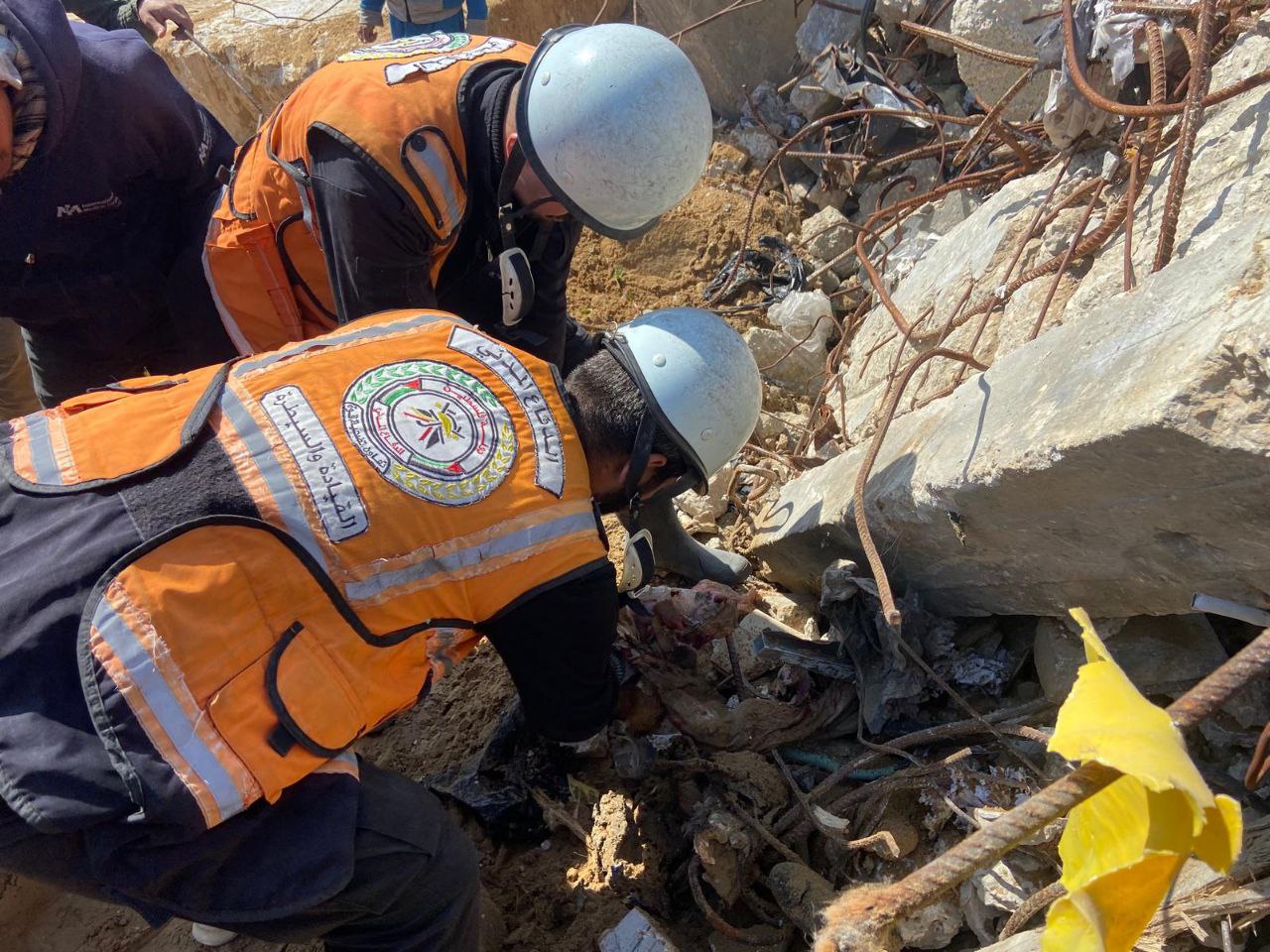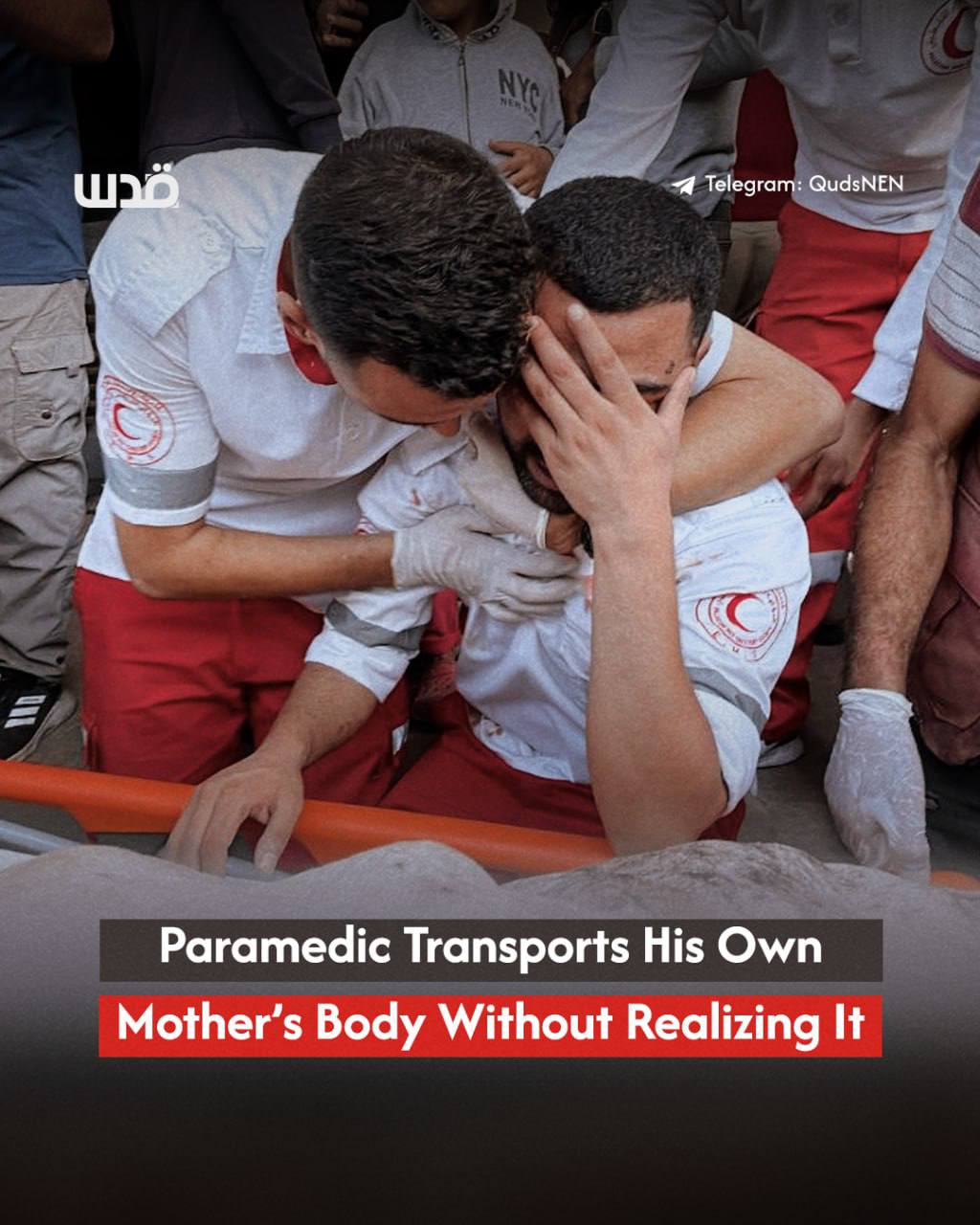
Palestinian paramedic Abdul Aziz al-Bardini discovered his mother among those killed while working to recover victims following an airstrike that targeted a civilian vehicle in Al-Nussairat refugee camp in central Gaza.

 CrossFireArabia
 Palestinian paramedic Abdul Aziz al-Bardini discovered his mother among those killed while working to recover victims following an airstrike that targeted a civilian vehicle in Al-Nussairat refugee camp in central Gaza.
 CrossFireArabia
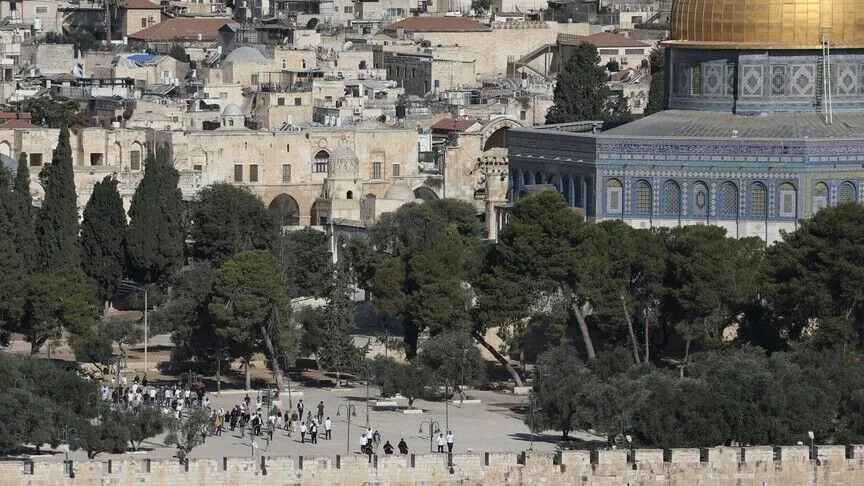
Nearly 600 Israeli occupiers stormed the Al-Aqsa Mosque compound in occupied East Jerusalem on Sunday as Israeli authorities imposed restrictions on Palestinian worshippers during the Jewish New Year, according to the Jerusalem Governorate.
The governorate said in a statement that 593 occupiers entered the compound through the Dung Gate (Bab al-Maghariba) on the second day of the Jewish holiday.
The incursions took place in morning and afternoon sessions under the protection of Israeli forces, it added.
The governorate had earlier put the number of those who entered the mosque at 480 before updating the figure to 593.
In a separate statement, it said Israeli authorities restricted access to Al-Aqsa Mosque during dawn prayers Sunday to the Hutta and Chain gates.
Israeli authorities also imposed age restrictions on worshippers, while soldiers stationed at checkpoints refused to disclose which age groups were permitted to enter, according to the governorate.
The measures prevented many worshippers from reaching the mosque, while a small number who managed to reach the area were forced to pray at its gates.
The restrictions coincided with calls by Israeli Temple groups for intensified incursions into the Al-Aqsa Mosque compound during the Jewish New Year.
The Jerusalem Governorate said the incursions are part of an ongoing escalation targeting the mosque during the Jewish holiday season, alongside a rise in orders barring Palestinians from entering the site.
It said it had documented around 850 such orders since the beginning of the year.
On Friday, the governorate warned of “growing calls by alleged Israeli Temple groups to impose their religious rituals inside Al-Aqsa Mosque during the Jewish holidays.”
It said Israeli occupiers are seeking to impose their rituals “by force” around the mosque and at its gates, warning of attempts to establish “a new reality” and undermine the site’s Islamic identity.
The Jewish holiday season began with Rosh Hashanah on Sept. 12-13 and continues with Yom Kippur on Sept. 21, followed by Sukkot from Sept. 26 to Oct. 2 and Simchat Torah on Oct. 3.
Since 2003, Israeli police have unilaterally allowed Israeli occupiers to enter the Al-Aqsa Mosque compound, despite repeated calls by the Islamic Waqf Department in Jerusalem to halt such incursions.
Palestinians say Israel has for decades intensified efforts to Judaize occupied East Jerusalem, including Al-Aqsa Mosque, and erase its Arab and Islamic identity.
They insist that East Jerusalem should be the capital of a future Palestinian state under international resolutions that do not recognize Israel’s occupation of the city in 1967 or its 1980 annexation. Anadolu
CrossFireArabia
Israel has advanced 153 plans for illegal settlements in the occupied West Bank, including East Jerusalem, since the beginning of 2026, targeting the construction of more than 18,000 housing units, a Palestinian government body said Sunday.
The Palestinian Colonization and Wall Resistance Commission said its monitoring showed a “high level of planning activity aimed at expanding settlements.”
Israeli authorities advanced 100 plans targeting the construction of 12,300 housing units across the West Bank between the beginning of the year and Sept. 13, it added.
Another 53 plans target 5,783 housing units in occupied East Jerusalem within the boundaries set by the Israeli municipality, the commission said.
In September alone, Israeli authorities advanced 12 new plans for 2,340 housing units covering a total area of 1,761 dunams, it said.
In an earlier report, the commission said Israeli planning bodies had considered 524 structural plans for illegal settlements between Oct. 7, 2023, and June 30, 2026.
The government of Prime Minister Benjamin Netanyahu has accelerated illegal settlement expansion in the occupied West Bank since taking office in late 2022, approving the establishment of 104 new illegal settlements since then.
Israel has occupied the West Bank, including East Jerusalem, since 1967. Israeli settlements built on occupied Palestinian land are considered illegal under international law. Anadolu