CrossFireArabia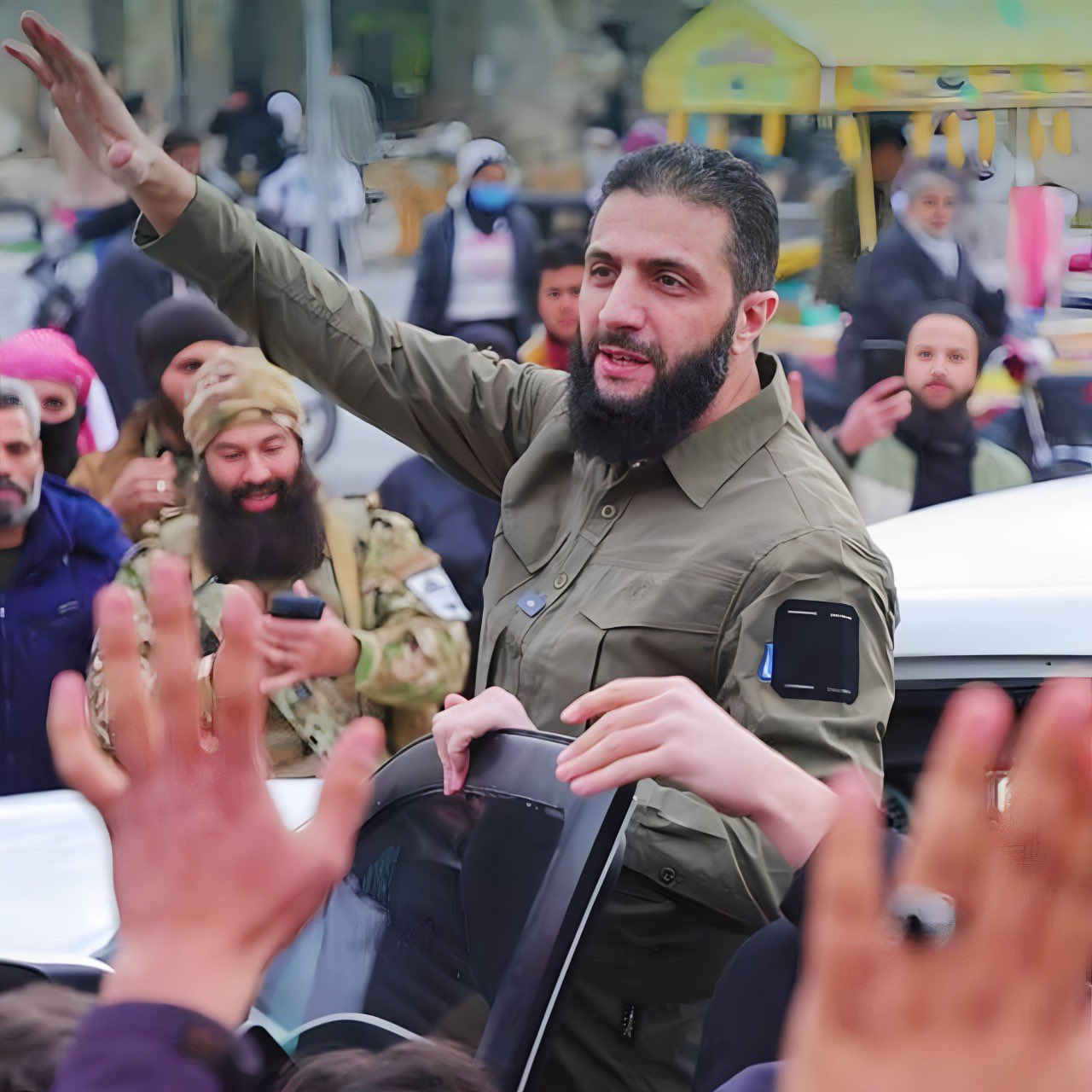
US President Joe Biden welcomed the shock ouster of his Syrian counterpart Bashar Assad but called it “a moment of risk and uncertainty” for this region. Biden said he would consult with partners on how to proceed with the regime led by Hay ‘at Tahrir Al Sham (HTS).
Having continued destructive US policies in Syria adopted by predecessors, Biden needs to entirely rethink the US approach to this core Eastern Arab World country. To provide Washington with leverage with HTS, Biden needs to tackle the 2019 Caesar Act passed by the US Congress which imposes sanctions on Assad-related Syrian industries and individuals.
While Assad is no longer a factor, these entities and figures could remain sanctioned. Biden must end the sanctions to encourage investment in the shattered Syrian economy and crumbling infrastructure. Unless HTS and its allies rebuild the economy and provide Syrians with electricity, water, affordable food, and decent health care, Syrians will turn against their new rulers.
Biden must also press Israel to stop grabbing Syrian territory. In the immediate aftermath of Assad’s fall, Israel occupied the demilitarised UN-controlled buffer zone between Syria’s Golan province and Israeli-occupied Golan Heights. On Monday Israeli commandos seized the Syrian outpost on the highest peak of Jabal Al Sheikh (Mount Hermon), another piece of Syrian territory.
This peak is a strategic site from which provides the Israeli army with a wide view of southern Syria and provides a launch pad for missiles and artillery shells. Israel has also conducted scores of strikes on arms depots, missile storage sites, and a research facility near Damascus. Meanwhile, to maintain regional tensions and assert its military hegemony, Israel has continued to bomb Gaza and violate the ceasefire agreement with Hizbollah in Lebanon.
By seizing sensitive Syrian territory while HTS is consolidating its rule, Israel is unnecessarily provoking the movement’s leader Ahmed Al Sharaa who adopted the nom de guerre of Abu Mohammad Al Jolani as his family was driven from Syria’s Golan Heights in 1967. He was born in 1982 in Saudi Arabia. His father, Hussein, was an Arab Nationalist (Nasserite) who was imprisoned in Syria following the 1961 rupture between Syria and Egypt. After escaping prison, Hussein pursued higher education in Iraq and travelled to Jordan where he joined Palestine Liberation Organisation fighters.
Ahmad followed in his father’s footsteps. In a 2021 interview with Frontline Jolani said he was politicised by the second Palestinian intifada in 2000. He stated, “I started thinking about how I could fulfill my duties, defending a people who are oppressed by occupiers and invaders.” During the build up to the 2003 US invasion of Iraq, Jolani travelled to Baghdad and joined Al Qaeda where he served as a fighter. He was arrested and confined for five years in US prisons in Iraq where he and fellow inmates forged networks which enabled them to organize when they were freed.
Upon release in 2011, Jolani crossed into Syria to prepare the ground for the creation of local branch of Al Qaeda dubbed Jabhat al-Nusra which began operations in 2012. He later quarrelled with Iraq’s Al Qaeda chief Abu Bakr Al Baghdadi, who sought to merge Nusra with Daesh. Jolani declared independence and focused on the struggle for Syria. In January 2017, he announced the Jabhat’s entry into the umbrella HTS coalition which occupied Syria’s northwest Idlib province. HTS then mounted the campaign to oust Assad and rule Syria.
Jolani has renounced Al Qaeda’s proselytising fundamentalist ideology, focused on ending Assad’s reign in Syria and proclaimed himself a pragmatist. However, when in control of Idlib, HTS imposed conservative practices, marginalized minorities, and ruled with an iron fist while providing utilities, education, and healthcare. UN special envoy for Syria Geir Pedersen pointed out in a weekend CNN interview, “Idlib is not Syria.”
In his official statement, he said, “..let me emphasise the clear desire expressed by millions of Syrians that stable and inclusive transitional arrangements are put in place urgently, and that the Syrian institutions continue to function, and that the Syrian people are enabled to begin to chart the path to meeting the legitimate aspirations of the Syrian people and restore a unified Syria, with its sovereignty, independence and territorial integrity, in a way that can receive the support and engagement of the entire international community.”
While welcoming the fall of the Assad dynasty, the dithering Biden administration claims it has opened backchannel contacts to HTS but has not removed the $10 million bounty for the death or delivery to the US of Jolani. Instead, US officials have rushed to Turkey, Jordan, Lebanon, Iraq, Saudi Arabia, Egypt and Israel to discuss how to maintain stability in Syria stability in Syria and foster a smooth political transition.
By contrast, German Chancellor Olaf Scholz and French President Emmanuel Macron have agreed to work with the new regime in Damascus “on the basis of fundamental human rights and the protection of ethnic and religious minorities”.
Michael Jansen is a columnist in The Jordan Times