CrossFireArabia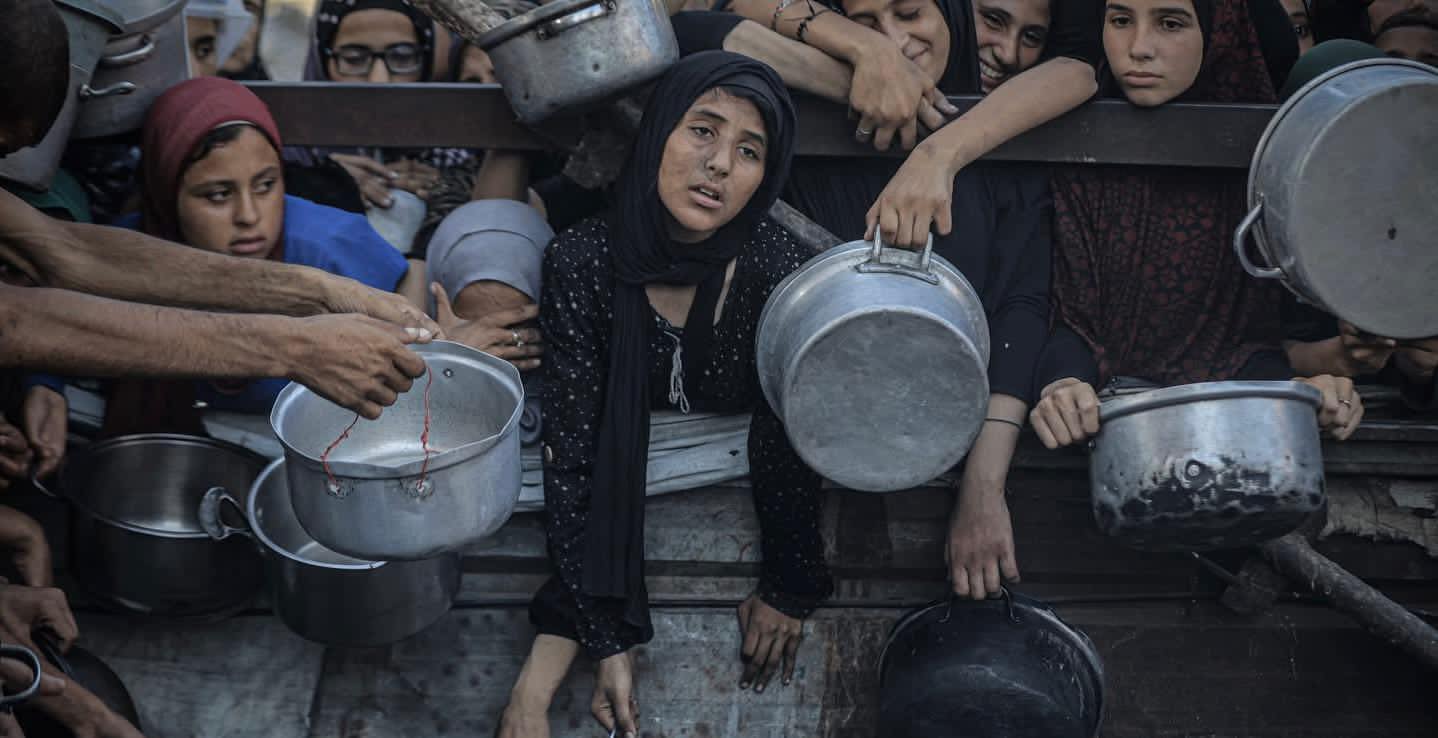
By Munia Jamal
Sameh described how people — sometimes 20,000 to 30,000 at a time — wait all day in the heat. When the gate opens, they surge forward, crashing through barbed wire, trampling over each other, trying to grab whatever they can from the aid.
I watched a video last week that I wish I couldn’t see: A small boy, no older than nine, crying over the body of his martyred mother in front of a journalist’s camera. His eyes were red, his shoulders shaking, dust still clinging to his face.
“She went out to bring us aid,” he said. “She never came back.”
That boy is Ahmed Zidan. And I haven’t been able to forget his face since. His mother had left that day just to get food. That’s all: A little flour, a few canned goods, if she got lucky. But she never returned. She was killed in western Rafah, surrounded by gunfire, panic, and chaos.
Ahmed’s mother was just trying to feed her children. But like so many others, she became a victim of what the world dares to call “The American humanitarian aid.”
Ahmed’s tearful face was shared on the news, across social media, and around the world. But for him, it wasn’t a story, it wasn’t content, it was the moment his world collapsed.
Don’t go, says Ahmad Zeidan holding his mother’s shoes after she was killed: it’s a lie, a lie | the Gaza Humanitarian Foundation is a firing squad pic.twitter.com/QwcU9udAZJ
— Sarah Wilkinson (@swilkinsonbc) June 3, 2025
The Aid that Kills
When the first Gaza Humanitarian Foundation (GHF) site opened on May 26, 2025, it came with bold promises. It was billed as the solution of four centralized aid hubs, guarded by US private contractors, coordinated with Israeli oversight, and allegedly designed to bring order to the chaos of Gaza’s hunger crisis.
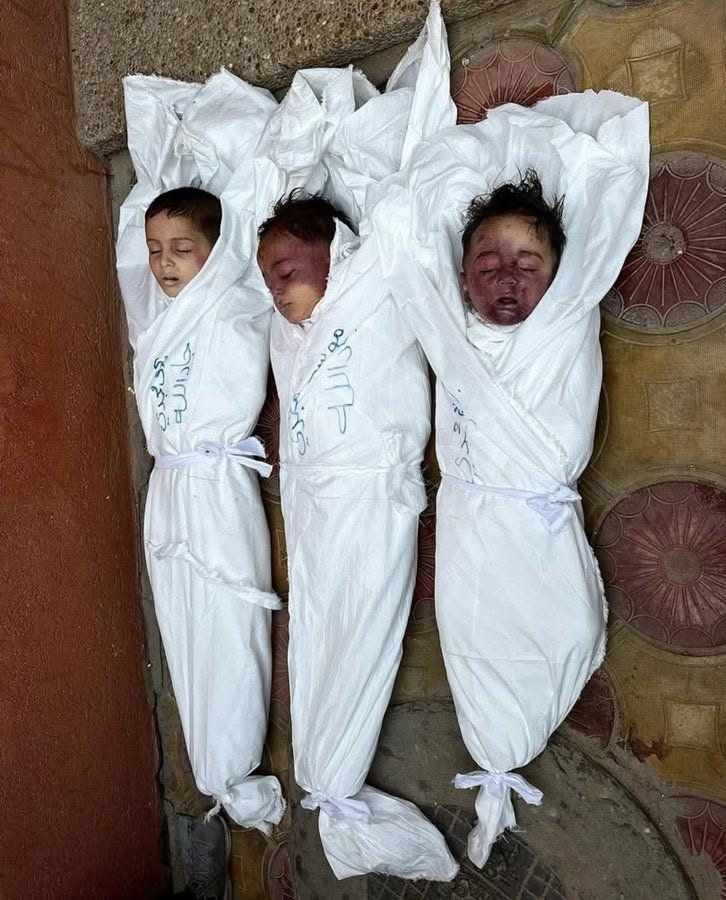
According to Israeli and US officials’ claims, aid was supposed to flow safely to the most vulnerable. But just two days later, tanks, tear gas, and bullets greeted the crowds who gathered in Rafah. Instead of food, they found death. So far, nearly 900 Palestinians have been killed and over 5,000 wounded recorded at aid sites. Mothers, children, and elders are all caught between hunger and bullets.
It’s hard to explain the feeling of being watched while trying to survive, of having your basic needs locked behind fences, guards, and guns. And with any wrong move, you could be shot.
They called it online “the real-life Squid Game.”
And honestly? They’re right. Because in Gaza, we run for food and get shot for it. Not for prize money, but for a bag of flour. It’s not an exaggeration; it’s the daily reality for the hungry in Gaza.
Scores of Palestinians Killed in Israeli Strikes, Including 20 Aid Seekers
‘Forgive Me’
Israa is from Khan Yunis, but today she lives in a tent in Al-Mawasi, one of Gaza’s last so-called “safe zones.” Her family was forced to flee months ago. “We’ve lost our home,” she said, “but losing Abdullah… that broke something deeper.”
Abdullah was her cousin — 31 years old, an orphan, and a caretaker to his younger siblings. He lived with his younger brother and sister in the tent. The rest of the family is scattered, most of them are married and displaced in different parts of Gaza.
He used to work as a cleaner, even during the war, hired by Doctors Without Borders when everything else shut down. He was engaged to be married at the end of July. “His fiancée was sewing her wedding dress,” Israa told me. “Now, she’s burying his clothes.”
On July 3, 2025, Abdullah went to the American aid center in Khan Younis. He went there almost every day. “Not because he wanted to,” Israa said, “but because he had to. There was no other way to feed the family.”
That day, an Israeli artillery shell struck the crowd. Abdullah was killed instantly.
“It wasn’t random,” Israa said. “They were aiming at the people. He told us before he left, ‘If I don’t come back today, forgive me.’ It’s like he knew. Like he could feel it.”
When we heard the news, the family was shocked. “We couldn’t believe it. Even now, it doesn’t feel real. He had dreams. He wanted a family. He wanted peace.”
Why do people still go to these centers? Israa answered without hesitation: “Because people are starving. There’s no other choice. We know it’s dangerous. But what’s worse, dying slowly from hunger, or all at once from a bomb?”
I ask if there’s anything she wants to say to the world. She looked at me tired, but clear. “Tell them we are not numbers. Tell them Abdullah had dreams. A fiancée. A wedding date. A heart. He was human. We all are. But this world doesn’t treat us like that anymore.”
Massacre at Aid Centers: Scores of Palestinians Killed by Israeli Fire in Gaza
It’s a Trap
Sameh is 40, from Beit Lahia, now displaced in Al-Shati refugee camp. When I spoke to him, he didn’t start with anger. He started with exhaustion, the kind that comes from hunger, from fear, from waiting in line not for bread, but for a chance at it.
“They starved us for over 100 days,” Sameh told me. “No food was allowed in. Nothing. Then they opened these so-called American aid centers protected by Israeli soldiers and said, “It’s not food. It’s a trap.”
He was talking about the Gaza Humanitarian Foundation centers. Sameh made his way to the Wadi Gaza center near Netzarim in the middle of the strip. “It was like a playground surrounded by barbed wire, and the aid was inside. They open the gate at random. No one knows when. It could be in the morning or at night. A green flare means the center is open. Red means it’s closed. If it’s daytime, you hear a drone announce it. And that’s when the chaos begins.”
Sameh described how people — sometimes 20,000 to 30,000 at a time — wait all day in the heat. When the gate opens, they surge forward, crashing through barbed wire, trampling over each other, trying to grab whatever they can from the aid.
He said it never lasts more than ten minutes. “I’ve gone twice. The first time, I left with nothing. The second time, I found a few things on the ground — a kilo of lentils, a kilo of chickpeas, a kilo of peas, and some salt. That’s what I brought home to my kids.”
Sameh told me that only about 10% of these people actually get anything. Organized gangs always push to the front, looting the best items — flour, sugar, oil — and then reselling them at outrageous prices.
He said the Israeli army watches and lets it happen. In fact, it feels like they want it that way. “There’s no safety. No system. Just weapons, fear, and starvation. The gangs take what they want. The rest of us crawl on the ground like animals. That’s what they made us.”
Sameh has seen more than just hunger. “I saw a young man next to me get shot in the leg. He fell down and screamed, but no one could help him — they were too busy trying to grab food. Another time, a boy no older than 17 — he was right next to me — took a sniper bullet between the eyes. Dead. Just like that. Another guy next to him was hit in the chest.”
Sameh paused before adding something that shook me. “You know what? I’d rather die trying to feed my children than watch them die of hunger in front of me. I have no money. I can’t buy anything. If I don’t go, we starve. If I do go, I might not come back.”
Gaza Humanitarian Foundation ‘Responsible’ for Aid Point ‘Death Traps’
He said Israel allows this violence to continue because it wants disorder. When trucks entered through Netzarim or Zikim in the north, he said, the tribes once organized a secure delivery to UN warehouses.
It worked — until Israel blocked it. “They don’t want dignity. They want panic,” he told me. “These centers are just a show. They open them so the world can say, ‘Look, Gaza is getting help.’ But what does that help even mean if we can’t reach it? If we have to risk our lives just to get a bag of flour? What kind of aid is this, if we can’t even survive the line to receive it?”
Sameh’s voice didn’t crack when he told me this. It hardened. Because in Gaza today, even hope feels like something we have to fight for.
Creating Monsters
Sabri is 23. He’s the oldest of five, and ever since his father died, he’s had no choice but to become everything — brother, provider, protector. “I walked from Al-Shati camp to Rafah,” he said. “I left at 4 in the afternoon. I didn’t get back until 3 the next day.”
Twenty-three hours. All of that — the walking, the waiting, the risk — for just three kilos of flour. But it’s not just the distance. It’s what you face when you get there.
Sabri told me the crowds are like groups. “At the front, there are gangs. They’re not like us. They come to steal the valuable stuff and throw the rest on the ground.”
Behind them, a few desperate people try to collect what’s left. And the ones who truly need the aid? They usually leave empty-handed. Sabri was one of them. “Some people don’t even go for food,” he told me. “They just collect the empty cardboard boxes to burn for fire.”
He said he was lucky this time. He got something. But that luck came with a price. “The shooting started in front of me. People were screaming and trying to cover. But I stayed. Because my brothers were hungry. What else could I do?”
Don’t Fund the Gaza Humanitarian Foundation: It’s a Genocidal Smokescreen
Hunger doesn’t scare him anymore, not the way the silence at home does, when his siblings look at him with tired faces, waiting for food. “I didn’t care if I died. I just wanted to come back with something.”
Then, Sabri said something that stuck with me: “This war — this way of helping — it’s made monsters out of people. People kill each other for a sack of flour. That’s what they’ve done to us.”
He says that it’s normal now. Like that’s what life should be: risking death for food.
But it’s not normal. Nothing about this is.
It feels like a game, but we are not playing. What kind of help is this? Where feeding your family feels like breaking the law; where aid comes wrapped in barbed wire and guarded by snipers; Where people must risk their lives just to eat.
How did we get to a place where a single bag of flour can cost someone their life? Where hunger turns people fight each other, forget who they are — just to survive.
If the world truly wants to help Gaza, start by treating us like human beings.
We don’t need pity, we need protection; we need a future; we want to live, not die trying to eat.
We are not players in a game; we are not your footage; we are not actors in a show, we are not numbers on a screen.
At the end of Squid Game, the player 456 whispers: “We are not horses. We are humans. Humans are…”
He never finishes. Neither do we. Because in Gaza, we’re never given the chance.
(The Palestine Chronicle)