Al-Duwairi: Houthi Missiles on Tel Aviv Confirms Failure of US Airstrikes on Yemen

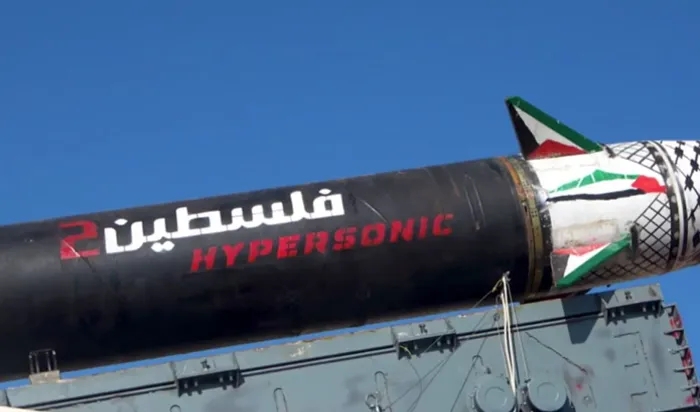
The missiles launched by the Houthis at Israel do not make a significant military difference, according to military expert Major-General Fayez al-Duwairi. However, he said they confirm the failure of the US airstrikes to destroy the group’s capabilities and reveal the contradictions in Israeli statements regarding the interception of these missiles.

In an analysis of the military situation on Al Jazeera, al-Duwairi asserts that the Israeli military’s statement about the interception of the missile launched, Monday, before it entered Israeli airspace contradicts its statement about interceptor debris falling west of Jerusalem and south of Tel Aviv.

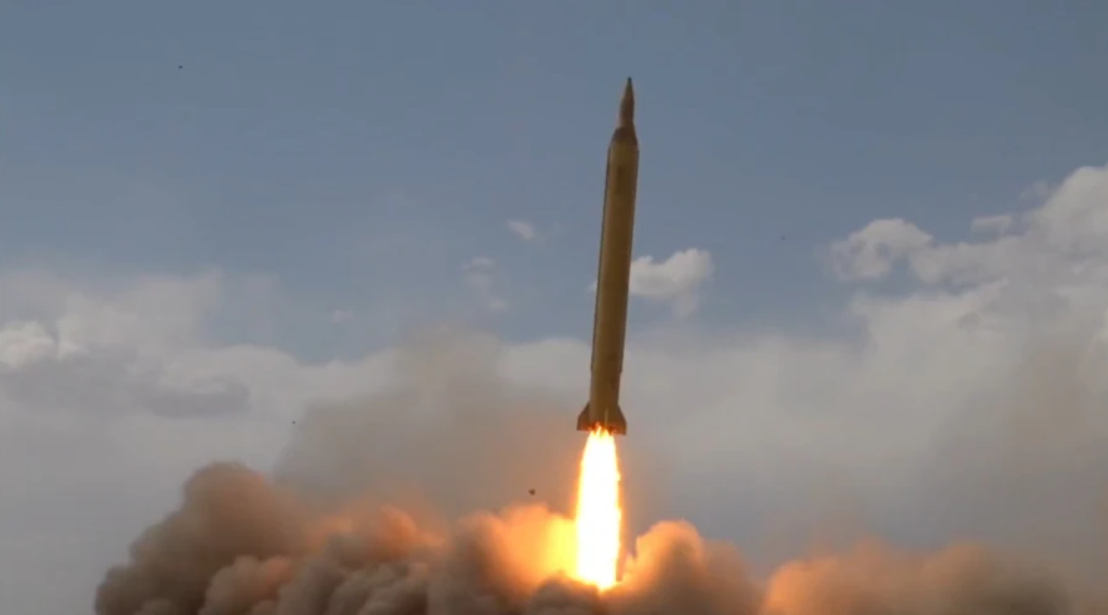
The fact that these debris fell on these areas, in al-Duwairi’s opinion, means that the missile bypassed Israeli air defenses, whilst confirming the Houthis’ possession of sonic missile technology. He added that this is something not many countries possess.

The fact that air raid sirens sounded only in Jerusalem and greater Tel Aviv, but not in the rest of Israel, confirms that the missile was not detected until it reached these specific areas, al-Duwairi said.

Confusion in Israeli Society


Whilst the Houthi missiles will not bring about a military change, according to the strategic expert, they put Israeli society on almost daily alert, disrupting daily life, and proving that the intensive US air campaign has not prevented the Houthis from launching attacks.

The Houthis’ launch of an eighth missile in just a few days demonstrates the failure of intensive US strikes to stop these attacks. The failure of Israeli defenses to detect the missiles before they entered Israeli airspace is a qualitative advantage for this Yemeni group.

As for the missiles that the Palestinian resistance has begun launching in the past few days, they carry more political than military messages, according to al-Duwairi, because it is impossible to compare the resistance’s capabilities today with those of the beginning of the war nearly 18 months ago.

However, the resistance’s ability to bombard greater Tel Aviv, as it did two days ago, confirms that it has a stockpile of missiles capable of causing disruption within Israel.

Yesterday evening, the Israeli Home Front Command announced that air raid sirens sounded in Jerusalem and its suburbs, as well as in more than 200 towns and cities in central Israel, as a result of a missile launched from Yemen.

The Israeli military said it intercepted the missile with its Arrow missile system before it entered airspace. However, sources confirmed to Al Jazeera that explosions were heard in areas of Tel Aviv, Jerusalem, and the coastal region south of Tel Aviv following the launch of a missile from Yemen.


Continue reading
Israel, Trump and the Latest Bombing of Gaza

Israel relaunched its bloody war on Gaza, with vehemence and callousness and with the blessing of the Donald Trump administration in the White House.

Its back to the “good old bloody days” of murder, mayhem and slaughter of mostly innocent women and children who have no part in the current war waged between Israel and Hamas.

Unwilling to quench its thirst for blood, Israel relaunched its war on the 364-kilometer Gaza Strip by killing over 322 people in the first five hours of early morning Tuesday while everyone was fast asleep.

Up until then it has been a “slight” rest bite reached through a ceasefire on 19 January between Hamas and Israel through US, Qatari and Egyptian mediators bringing an end to the daily killing of Gazans that today stands at 48,500 people.

Everyone is asking if the ceasefire is wrecked and stands in ruin on day 525, the total length of the carnage started on the people of Gaza soon after 7 October 2023, when about 1200 Israelis were killed.

Whatever the politics of the recent war, it has become amply clear the Israel slaughter has not been aimed at Hamas fighters, which it couldn’t eradicate even after 15 months of war on the Islamic organization but resulted in the mass killing of the women and children of Gaza.

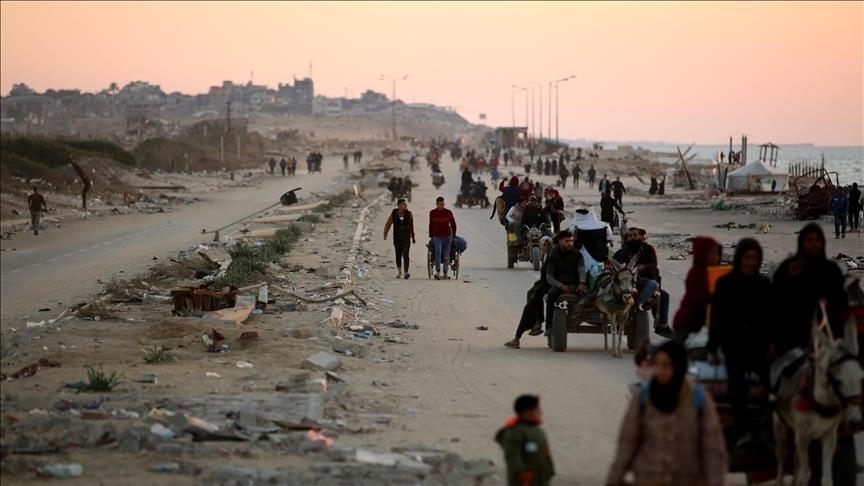
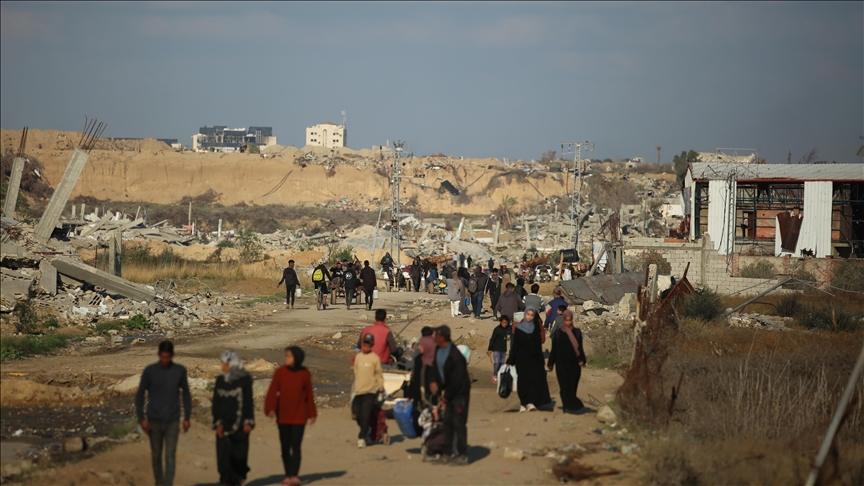
The latest spate of dropping bombs on the people of Gaza, facilitated by the United States which stands as complicit in this genocide, sees no end light, but is seen as just the beginning although Gaza and its infrastructure is already annihilated with its people displaced and living in the wild and under the skies.

The world stands and waits to see, if the genocide will continue from this day onwards, or is it just a pressure tool to get Hamas to release the 59 or so Israeli prisoners it currently holds. If the latter is the case however, Hamas has long shown, it has a long breath and will not release the prisoners that originally were around 250 and now stands at the current number through exchange deals with the fact that the Israeli army has killed around 23 of them in failed rescue operations.

The latest bombings, carried from the air starting from the south of the strip on the southern city of Rafah, Nuseirat, Al Shati and Maghazi camps, and Deir Al Balah in the center of the enclave, including Gaza city and the destroyed northern areas, speaks of dark days are expected ahead.

Hamas are yet to respond militarily. There are couple of issues to consider here. Hamas officials have been talking to the Trump administration officials in the last couple of weeks about different paths.

Will that continue, particularly after this bloody debacle. Prime Minister Benjamin Netanyahu, who long wanted to destroy Hamas, and thus the war to continue, said this time around, the latest military operation in Gaza is being carried out “in consultation” with Trump and his associates.

If this is the case, the latest Israeli deadly spate, may not last long, particularly because Trump is on record of stating that he doesn’t want the war to continue but wants to end it which means he will not continue to supply Israel with weapons indefinitely and there will come a time when he will stop.

But that might be a while before that and he may continue to tolerate the mass bombing of Gaza. However, since he is talking to different parties through his envoy Steve Witkoff, he will likely “manage” what Israel continues to militarily do in the Gaza Strip and be involved in a “stop-go” war process.

The problem with Trump is that also he is looking for different objectives in Gaza. He first wanted to displace its 2.2 million people to neighboring countries like Jordan and Egypt. Now, he appears to be retracting from this position because of Arab and world pressure.  

Will he backdown and order Israel for a quick “fix” and or let the war on Gaza continue by which time Hamas, will once again, start fighting Israel again, both in the Strip and through endlessly targeting its major cities, towns, settlements for the past 15 months.

Despite the fact that Trump said that “all hell will break lose” on Gaza if the war doesn’t stop and Hamas is not brought to heed, the US president is choosing to forget the Houthis, despite mass bombing them in the last couple of days. They promised they will continue to strike Israel if it continues to stand as an obstacle to humanitarian and food delivery to Israel and will not be deterred by US and British bombing of Yemen. And to prove their point, a ballistic missile was fired on the same day, Tuesday, after the Israeli bombing of the Strip.

Hence what Trump wants and what he will get on the ground are two different things. His wish to end the Israel-Hamas war and establish a “new Gaza” will not be achieved through parochial thinking.

The Palestinians are on the ground, they have no wish to go anywhere while Hamas continues to have a formidable fighting capability and have no qualms to going back to war. The fact they are talking to the mediating parties, including the US doesn’t mean they are ready to put their guns down and leave the grounds of Gaza.

Netanyahu must realize that unless he wants the whole Middle East region to be engaged in a perpetual long-term war. The question is Trump and the United States military establishment prepared for that?

The above-analysis is written by Dr Marwan Asmar, chief editor of the crossfirearabia.com website.

Continue reading
War in The Red Sea Escalates

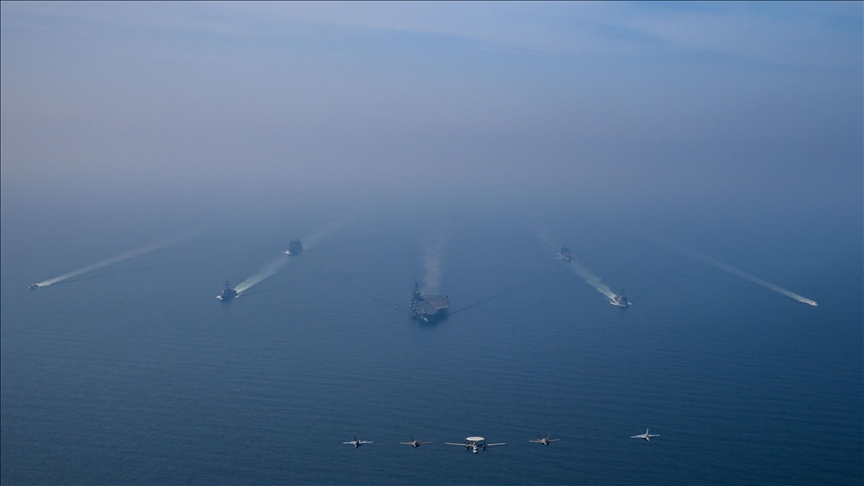
The Yemeni Armed Forces have announced a large-scale military operation against the US Navy in response to deadly American airstrikes on Yemen. The military confirmed that US forces launched 47 air raids targeting the capital, Sana’a, and seven other provinces.

In retaliation, Yemeni forces carried out a military operation against the USS Harry S. Truman and its warships in the northern Red Sea. According to the statement, the attack involved 18 ballistic and cruise missiles, along with drones.

The Yemeni Armed Forces declared that they will not hesitate to target all US warships in the Red Sea and the Arabian Sea. They emphasized that the American assault will only strengthen Yemen’s resistance according to the Quds News Network.

Additionally, the military reaffirmed its commitment to enforcing the naval blockade on Israeli-linked ships. They stated that the blockade will continue until humanitarian aid reaches Gaza.

The Yemeni Ministry of Health had confirmed that the death toll from US airstrikes on multiple provinces rose to 31, with 101 people injured. Most of the victims are women and children.

Explosions shook the capital, Sana’a, as missiles struck several locations on Saturday. Local sources reported that residential areas were among the targets. Thick smoke and debris covered parts of the city. Houthi-affiliated media described the damage as severe.

Ansar Allah’s political office condemned the attack, calling it a direct act of war. The group stated that the US is serving Israel’s interests and vowed retaliation. Houthi leaders stated that the strikes would not stop their military operations against Israeli ships.

US officials confirmed the assault and warned that strikes could continue for weeks.

Since November 2023, the Houthis have targeted Israeli-linked ships in response to Israel’s genocide in Gaza. The US and UK launched earlier airstrikes on Yemen in 2024, hitting mostly civilian areas. The Houthis retaliated by expanding their operations against American and British warships.

Continue reading
Arab States Say No to Trump On Gaza

Arab nations and organizations continued to express their firm rejection of US President Donald Trump’s plan to seize Gaza and displace Palestinians.

Egypt, Algeria, Iraq, Libya and the Palestinian group Hamas released statements Thursday.

It followed earlier rejections from Saudi Arabia, the United Arab Emirates, Jordan and Oman, along with several regional and international organizations including the Arab League and the Gulf Cooperation Council.

On Thursday, Trump claimed that Palestinians would have “better lives” under his plan, suggesting they would settle in “safer and more beautiful communities with modern homes.” He said the US would collaborate with development teams to build “one of the greatest projects of its kind.”

Earlier in the day, he claimed that Palestinians would have “a chance to be happy, safe, and free” due to the relocation scheme he proposed.

He added that they “would have already been resettled in far safer and more beautiful communities, with new and modern homes, in the region.”

On Tuesday, Trump told a press conference with Israeli Prime Minister Benjamin Netanyahu that the US will “take over” Gaza and resettle Palestinians elsewhere under an extraordinary redevelopment plan that he said could turn the enclave into “the Riviera of the Middle East.”

Commenting on Trump’s plan, Egypt said it rejects any proposal “that aims to liquidate the Palestinian cause by uprooting the Palestinian people or displacing them from their historical land and seizing it, whether temporarily or permanently.”

King Abdullah II of Jordan reiterated in a call with UN Secretary-General Antonio Guterres that Jordan opposes any attempts to annex land or displace Palestinians from Gaza and the West Bank.

Kuwait’s Ministry of Foreign Affairs reaffirmed its steadfast support for Palestine’s right to establish an independent state, condemning Israeli settlement policies and the displacement of Palestinians.

Algeria condemned any plan to expel Gaza’s residents, warning that such schemes “undermine the core of the Palestinian national project.”

Both Iraq and Libya expressed their strong opposition to any proposals or attempts to forcibly displace Palestinians, calling on the international community to take a firm stand against these actions.

Palestinian President Mahmoud Abbas called Trump’s plan a violation of international law, asserting that Gaza is an integral part of Palestine and rejecting foreign decisions about the future of Palestinians.

Hamas also denounced Trump’s statements, with spokesperson Hazem Qassem calling for an urgent Arab summit to oppose the displacement project, warning that the US is essentially seeking to occupy Gaza.

Saudi Arabia reiterated its unwavering support for Palestinian statehood, while the United Arab Emirates also condemned the displacement efforts, calling for a just solution to the Israeli-Palestinian conflict.

The Arab League and Gulf Cooperation Council both reaffirmed their commitment to the Palestinian cause, rejecting any plans for the forced relocation of Palestinians.

The Houthi movement in Yemen also condemned Trump’s statements as a blatant attack on Palestinian rights and an insult to the Arab and Muslim world.

A ceasefire agreement took effect in Gaza on Jan. 19, halting Israel’s genocidal war, which has killed nearly 47,600 Palestinians, most of them women and children, and left the enclave in ruins, according to Anadolu.

The International Criminal Court issued arrest warrants in November last year for Israeli Prime Minister Benjamin Netanyahu and his former Defense Minister Yoav Gallant for war crimes and crimes against humanity in Gaza.

Israel also faces a genocide case at the International Court of Justice for its war on the enclave.

Continue reading
Cairo Plans to Rebuild Gaza Without Displacing Palestinians

Egypt said Sunday that it has a “clear vision” regarding the reconstruction of the war-torn Gaza Strip without displacing Palestinians from the territory.

“The Egyptian efforts regarding Gaza are ongoing and will not stop with regard to implementing the specific requirements of the ceasefire agreement in its three stages,” Foreign Minister Badr Abdelatty told a news conference in Cairo with his Djiboutian counterpart Mahamoud Ali Youssouf.

“We have a clear vision for rebuilding the Gaza Strip without any citizen leaving his land,” he added.

Trump suggested last weekend that Palestinians in Gaza should be relocated to Egypt and Jordan, calling the enclave a “demolition site” after Israel’s war. His proposal, however, was vehemently rejected by Cairo and Amman.

A six-nation Arab ministerial meeting in Cairo on Saturday firmly rejected Palestinian displacement from Gaza and renewed calls for implementing a two-state solution to the Israeli-Palestinian conflict.

Trump’s proposal came after a ceasefire agreement took effect in Gaza on Jan. 19, suspending Israel’s genocidal war that has killed nearly 47,500 people, most of them women and children, and injured over 111,000 since Oct. 7, 2023.


Red Sea

The top Egyptian diplomat said there is no justification for military escalation in the Red Sea after the Gaza ceasefire.

“We stress the need to enhance the security of the Red Sea and freedom of maritime navigation, and we reject any military presence of any country that does not border the Red Sea,” he added.

Tension has begun to ease in the Red Sea after the Gaza ceasefire deal. During the Gaza war, Yemen’s Houthi group carried out drone and missile attacks on Israeli cargo ships or ones linked with Tel Aviv in the Red Sea in a show of support for the Palestinian enclave.

Egyptian President Abdel Fattah al-Sisi met early Sunday with the Djiboutian foreign minister to discuss bilateral cooperation and the latest developments in Somalia and the Red Sea region, the presidency said in a statement.

Tension escalated between Ethiopia and Somalia originated in January 2024, when Addis Ababa signed an agreement with Somalia’s breakaway region of Somaliland to use the Red Sea port of Berbera. Since then, Türkiye has actively mediated to ease tensions between the two nations.

Egypt and Ethiopia are already locked in a decade-long dispute over the construction of a dam project on the Nile River, which Cairo fears will drastically reduce its share from the Nile water. Ethiopia says that the dam is vital for its development process according to Anadolu.

Continue reading