Trump, Witkoff Need To Stop The Netanyahu Tune

By Michael Jansen

Israeli Prime Minister Benyamin Netanyahu has said, “There is no policy of starvation in Gaza, and there is no starvation in Gaza.” Israel has enabled “humanitarian aid throughout the duration of the war to enter Gaza – otherwise, there would be no Gazans.”

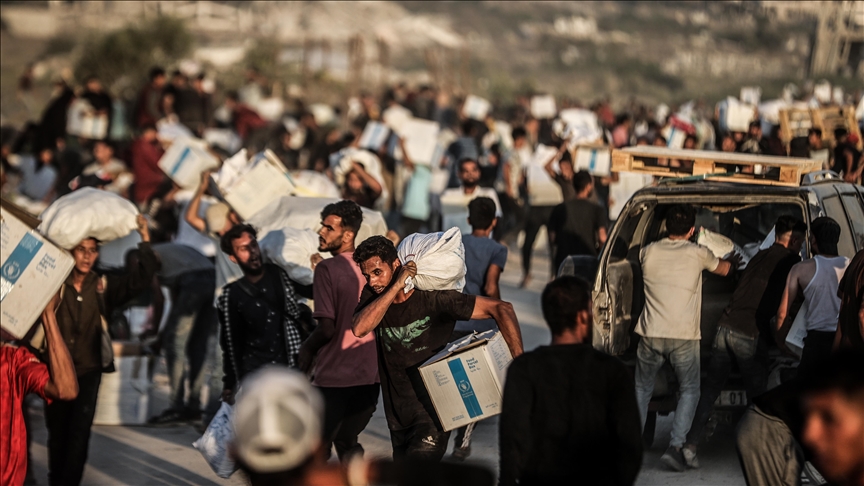
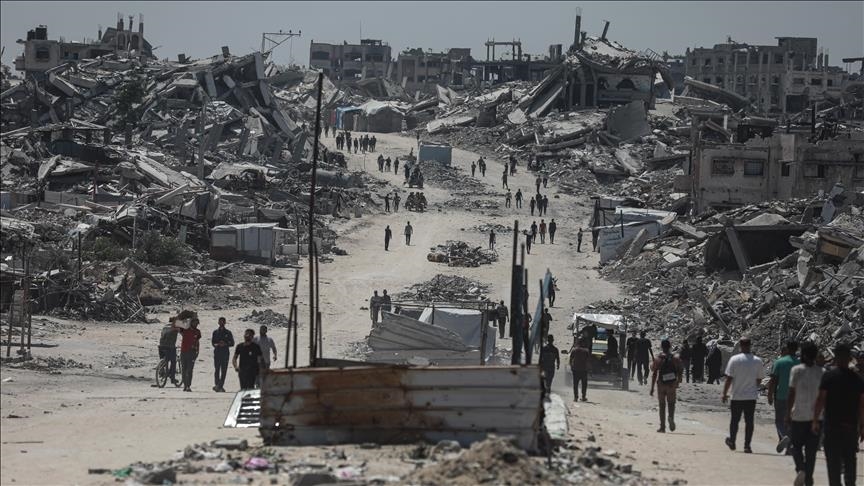
However, Gaza’s government media office told Al-Jazeera that only 674 aid trucks have entered Gaza since Israel eased restrictions on July 27, averaging just 84 laden trucks per day. This is only 14 per cent of needs as humanitarian organisations say at least 600 trucks of water, food, medicine and fuel are required at a minimum.

Echoing Netanyahu, US regional envoy Steve Wikoff proclaimed there is “no starvation” in Gaza after a brief visit to one of the aid delivery hubs in the Strip. “There is hardship but no starvation,” he said. His assessment appeared to contradict his boss Donald Trump who had said there is “real starvation.”

“Once we refute this Hamas claim, we can continue new actions to end the war and bring back all the hostages” held by Hamas, Witkoff said. He added that Trump believes piecemeal deals do not work and so a new arrangement is needed that would free the hostages all at once.

However, Witkoff argued that only Hamas “total surrender” and disarmament would be accepted. Writing in Haaretz daily on 2 August, Amir Tibon decries Netanyahu’s decision to carry on with the war, despite opposition from most Israelis and Israel’s foreign friends. “Israel’s military leadership admits today that the last five months have been a wasted effort, and that it would have been preferable for Israel to continue the January 2025 ceasefire, get the rest of the hostages out of Gaza in an agreement, and conclude the war.”

He is sharply critical of the Trump administration which “gave Netanyahu total backing for this disastrous policy, including his decision to block all aid from coming into Gaza, which caused the humanitarian crisis there. “Consequently, Witkoff’s latest visit has been met with popular Israeli “disappointment over the Trump administration’s failure to rein in Netanyahu and bring the Gaza war to an end.”

This means that there will be no quick fix under pressure from starvation even though Israelis held captive by Hamas are suffering the same lack of nourishment as their captors. The International Committee of the Red Cross has been asked to provide food for the captives but not the 2.3 million hungry Palestinians in Gaza.

Witkoff has been contradicted by the UN-supported Integrated Food Security Phase Classification” (IPC) which has warned that “the worse-case scenario of famine” is unfolding as 60,000 Palestinians died from bombs and bullets and an untold toll, especially among children, is being gripped by hunger and malnourishment. IPC called for a ceasefire to avert further “catastrophic human suffering.” The total number of people who have died from hunger-related causes since the start of the war in October 2023 has risen to more than 181, including 94 children. This does not include the 1,400 who have been killed by Israeli army fire when trying to secure aid at the highly controversial US-Israel Gaza Humanitarian Foundation which has not alleviated starvation but given a false image of US and Israeli efforts to deliver food.

UN Secretary-General Antonio Guterres said the IPC alert “confirms what we have heard. The facts are in and they are undeniable. Palestinians in Gaza are enduring a humanitarian catastrophe of epic proportions. This is not a warning. It is a reality unfolding before our eyes.”

Australian Prime Minister Anthony Albanese declared it was “beyond comprehension” for Israel to claim starvation was not an issue in Gaza and accused Israel of breaching international law by blocking aid.

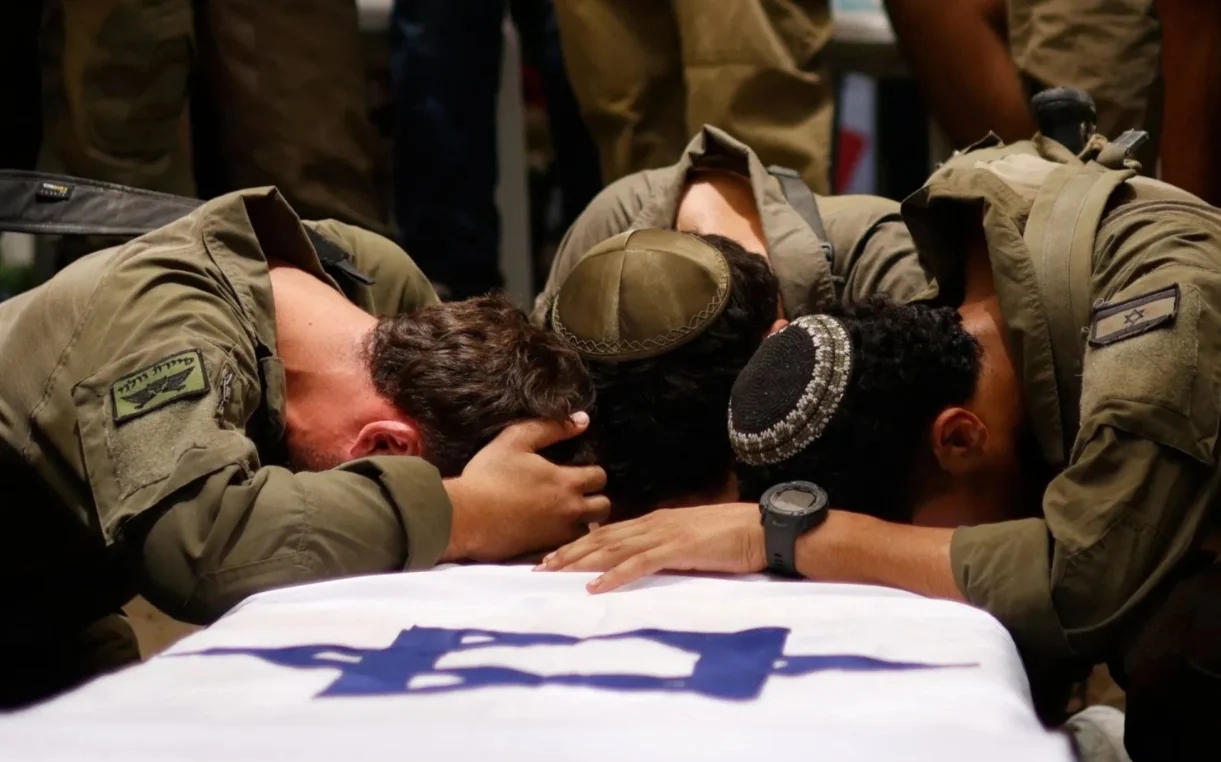
Netanyahu is personally responsible for torpedoing January’s ceasefire agreement which would have led to the release of Israeli captives in exchange for Palestinian prisoners, Israel military withdrawal from Gaza, and an end to the war. Instead on 2 March, he imposed the blockade and on 18 March, he resumed the war. Tibon summed up, “Netanyahu, for political reasons, chose to blow up the deal, restart the war, and bring us to where we are today: Our hostages are being starved and tortured, our soldiers are dying, and the entire world is turning against us due to the broader humanitarian catastrophe in Gaza.”

As the 15 August 20th anniversary approaches of the beginning of Israel’s withdrawal of settlers and soldiers from Gaza, 600 retired Israeli security officials have written to Trump to ask him to pressure Netanyahu to end the war. This group included former Mossad chief Tamir Pardo, former Shin Bet chief Ami Ayalon, former Prime Minister Ehud Barak, and former Defence Minister Moshe Yaalon.

Ayalon argued: “At first this war was a just war, a defensive war, but when we achieved all military objectives, this war ceased to be a just war…It is our professional judgement that Hamas no longer poses a strategic threat to Israel,” the officials stated. “Your credibility with the vast majority of Israelis augments your ability to steer [Netanyahu] and his government in the right direction: End the war, return the hostages, stop the suffering.”

On the political front, this policy has contributed to decisions by Britain, France, Canada and half a dozen other countries to recognize the state of Palestine during next month’s opening of the 80th UN General Assembly session. Although recognized by 147 of the 193 UN members, many Western countries have delayed recognition. The addition of Britain and France will mean four of the five permanent members of the UN Security Council (which includes China and Russia) will recognize Palestine while the US will remain the outlier as it is on any effort to criticize or rein in Israel.

Michael Jansen is a columnist for The Jordan Times
Continue reading
2400 Israeli Artists, Architects Protest Netanyahu’s Starvation

Around 2,400 Israeli artists and architects have signed two separate petitions demanding an immediate end to Israel’s starvation policy, forced displacement of Palestinians and war crimes in Gaza, Israeli media reported Sunday.

The Walla news outlet said that approximately 1,000 Israeli cultural figures including prominent names in music, theater, literature and film signed a petition calling for “an immediate ceasefire in Gaza.”

“We, the artists of Israel, refuse to be complicit — against our will — in the atrocities committed in Gaza: the killing of children and civilians, starvation, displacement and the senseless destruction of Gaza’s cities,” the petition said according to Anadolu.

“We appeal to decision-makers: Stop! Do not issue unlawful orders. Do not commit war crimes. Do not abandon ethical and humanitarian principles or the values of Judaism,” it added.

The petition concluded with a clear demand: “Stop the war. Bring the hostages home.”

A second petition, also reported by Walla, was signed by nearly 1,400 visual artists, designers and architects. It described the situation in Gaza as “horror on a historic scale” and warned of a deepening humanitarian catastrophe.

“The Israeli public bears responsibility for what is happening just a few kilometers away,” it stated.

Earlier Sunday, the Gaza Health Ministry said the number of Palestinians who have died from starvation caused by the Israeli blockade has reached 175, including 93 children, since Israel’s genocide began in October 2023.

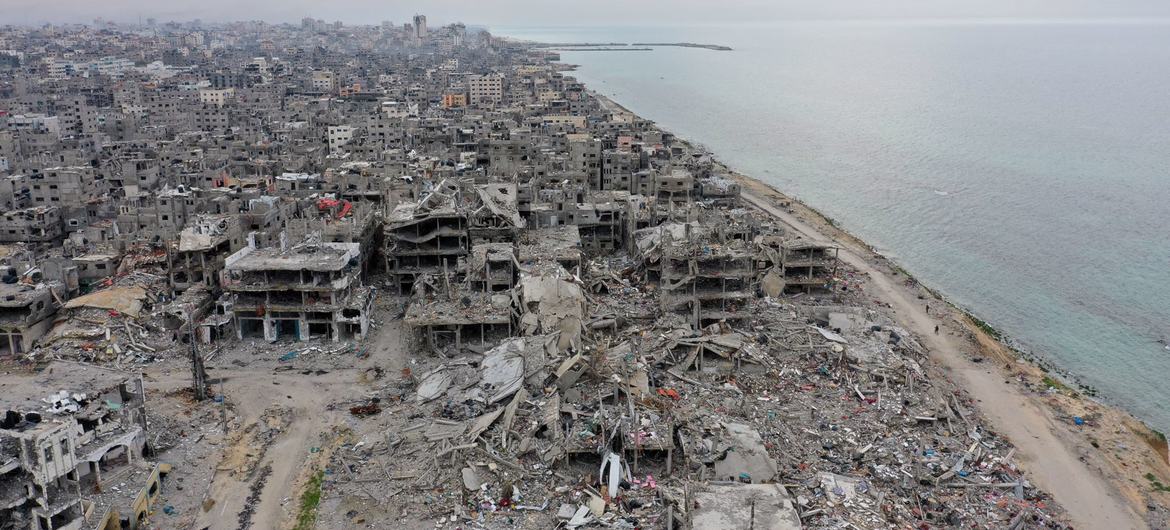
The Israeli army, rejecting international calls for a ceasefire, has pursued a brutal offensive on Gaza since Oct. 7, 2023, killing more than 60,800 Palestinians, most of them women and children.

Last November, the International Criminal Court issued arrest warrants for Israeli Prime Minister Benjamin Netanyahu and his former Defense Minister Yoav Gallant for war crimes and crimes against humanity in Gaza.

Israel also faces a genocide case at the International Court of Justice for its war on the enclave.

Continue reading
Syria – The New Battleground?

By Dr Amer Al Sabaileh

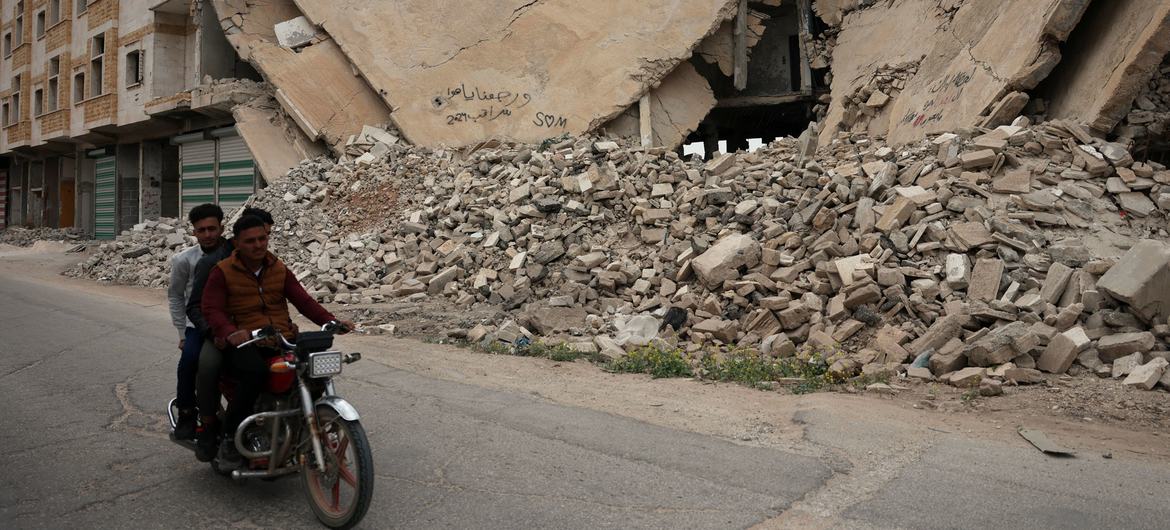
Southern Syria has returned to the center of regional attention with the recent outbreak of violent clashes. These developments, while not surprising, reflect the ongoing fragility of Syria’s political and security landscape. Since the collapse of the Assad regime, Syria has remained in a state of uncertainty, with internal power balances eroded and the rise of the Shar-Joulani administration in the absence of a viable and inclusive governance framework.

Over the past seven months, the country has witnessed massacres and targeted attacks against Alawites, Druze, Kurds, and Christians—clear signs of deep and worsening instability. This internal collapse is being exploited by external actors, particularly Israel, which views southwestern Syria as critical to establishing a demilitarized buffer zone along the Golan Heights. Despite the complexity of Syria’s internal landscape, Israeli strategic calculations in southwestern Syria remain a pivotal factor in shaping the region’s future.

While Israel initially entered the scene under the banner of “protecting the Druze,” this intervention risks inflaming sectarian tensions and sparking a prolonged conflict. At the same time, it has begun to impose a new reality on the ground—one that cannot be addressed without genuine understanding amongst key Syrian groups such as the Druze and Kurds, as well as broader arrangements with Israel itself. The latter has already sent unmistakable signals to Damascus through symbolic military strikes, indicating that future operations could escalate to directly undermine or even topple the current regime.

The ongoing clashes in Sweida and Damascus are likely to persist, especially in the absence of a clear military map for southern Syria. This suggests that Israeli strikes on military infrastructure in Damascus and beyond may continue. Furthermore, sectarian instability is set to deepen amid mutual distrust between the Druze, Bedouin tribes, and the central government—raising the probability of renewed violence. The recent developments have provided Druze militias with significant de facto autonomy, potentially opening the door for direct regional support, as they increasingly emerge as independent actors on the ground.

In parallel, this fragmentation heightens the risk of southern Syria becoming a multi-front proxy battlefield. Hezbollah—under internal pressure in Lebanon—alongside Iranian militias, may seek to open a new front against Israel, exploiting Syria’s geography to mount a tangible threat and divert Israeli focus away from Tehran.

These developments expose the deep institutional fragility of the Syrian state. The new transitional government remains unable to assert control or establish legitimacy in contested provinces, which paves the way for militias to expand their influence and for chaos to deepen. With the resurgence of extremist groups, the implications for long-term stability and reconstruction in Syria are deeply alarming.

Israel is moving forward with plans to establish a demilitarized buffer zone along its border with Syria, administered by friendly or at least non-hostile forces. The areas of Sweida and southern Daraa are of particular strategic importance, as Israel aims to prevent the advance of forces loyal to the new Syrian administration or the infiltration of Iranian proxies and Hezbollah operatives.

This unprecedented weakening of the Syrian administration may leave it increasingly prone to align with Israeli interests or offer major concessions simply to survive—an opportunity Israel will likely exploit to reshape not just Syria’s security geography, but its broader political map in accordance with long-term Israeli strategic goals.

From the Jordanian perspective, this evolving reality on Syria’s southern border presents a real and growing threat to national security. The concern goes beyond the spectre of chaos or fighting spilling across the border. It’s about a broader attempt to reshape the geopolitical landscape of the entire region—a transformation that will inevitably affect Jordan. Rising security threats are likely to be accompanied by political ones, as the drivers and dynamics of the Syrian conflict may cross borders. This makes it imperative for Jordan to adopt a proactive approach that prevents the spread of this new reality—both in its security and societal dimensions—into its own territory.

The author is a writer for The Jordan Times

Continue reading
Trump, Netanyahu’s Shared Secret!

By Dr Hasan Al Dajah

Since his arrival on the American political scene, Donald Trump has been an exceptional case in the United States’ relationship with Israel. Historically described as a strategic alliance, this relationship has transformed under Trump into a personal partnership between him and Israeli Prime Minister Benjamin Netanyahu. This relationship has deepened to an unprecedented degree, with Trump becoming one of the most biased and supportive American presidents toward Netanyahu, not only in foreign policy decisions but also on issues of a purely Israeli domestic nature, such as the ongoing trials against Netanyahu or calls for early elections.

What drives Trump to this level of involvement in Israeli domestic affairs? And why does he insist on defending Netanyahu despite the criticism and accusations against him? In the current Israeli landscape, Netanyahu faces significant domestic challenges related to multiple corruption trials, in addition to escalating tensions within the ruling coalition, particularly with the religious parties, which have expressed on more than one occasion their desire to dissolve the Knesset and call for early elections. These parties, despite being partners in the government, view continuing under Netanyahu’s leadership as a political burden due to the corruption cases and poor performance in some cases. This recently prompted them to propose a vote within the Knesset to call for new elections.

In this context, Trump’s position was clearly supportive of Netanyahu, expressing his rejection of any attempt to remove Netanyahu from power and considering his continued rule essential to Israel’s stability and its security and political future. Even stranger are the reported interventions by Trump or his circle in the matter of Netanyahu’s trial. It has been reported—through both official and unofficial channels—that he called for a pardon or an end to the legal proceedings against him, arguing that these trials are politically motivated and that Netanyahu is being subjected to an unfair campaign by the Israeli judiciary. This intervention raises many questions, most importantly: What is Trump’s interest in Netanyahu’s survival? Why would he risk his political reputation for the sake of being a foreign leader facing criminal charges?

The answer to these questions requires examining the nature of the relationship between the two men. Since Trump assumed the presidency in 2017, he has pursued an unprecedented agenda in support of Israel, including moving the US embassy to Jerusalem, recognizing Israel’s sovereignty over the occupied Syrian Golan Heights, and supporting the “Deal of the Century,” considered the most biased in the history of US mediation.

All these measures were met with widespread acclaim and celebration by Netanyahu, who used them in his election campaign to bolster his domestic popularity, portraying himself as capable of bringing absolute US support to Israel.

In turn, Trump found in Netanyahu a reliable ally who reflects his vision for the Middle East and helps him win the support of a pivotal electoral base within the United States: evangelical Christians. People must realize that the true backbone of support for Israel in America is not the Jewish community, but evangelicals, who constitute approximately 25% of the population, compared to less than 2% of American Jews.

Therefore, Trump—as he has stated on more than one occasion—considers engaging with evangelicals more effective than appeasing the Jews, because they constitute a formidable lobbying force pushing for American policies aligned with the Israeli right-wing agenda, and view support for Israel as part of the Christian Zionist religious doctrine. These people see Netanyahu as the leader most qualified to preserve the “Jewishness of the state” and advance policies of expansion and hegemony.

Accordingly, Netanyahu’s downfall, or even his trial, represents a threat not only to Trump, but also to the political and ideological system he has meticulously crafted during his presidency. It is impossible to trust that potential Israeli alternatives will maintain the same level of loyalty or pursue the same confrontational approach toward Iran and the Palestinians.

Hence, for Trump, defending Netanyahu becomes a defense of a broader regional project that keeps Israel at the forefront of the confrontation with Tehran and strengthens right-wing populist alliances globally.

Moreover, Trump himself faces investigations and legal prosecutions in the United States, whether related to his attempt to overturn the election results, his retention of classified documents after leaving the White House, or various financial issues. Therefore, his defense of Netanyahu may be implicitly understood as self-defense. He seeks to establish the principle that the trial of political leaders is primarily a selective political process, not a fair judicial process. If Netanyahu is able to escape accountability or obtain a pardon, Trump will see this as a precedent that will strengthen his argument before the American judiciary and domestic public opinion.

Strategically, Trump does not view Israel merely as a traditional ally, but rather as an extension of his global political vision based on isolation from international institutions, undermining the liberal multilateral order, and strengthening bilateral alliances with strong leaders who share his political style and confrontational personality. For him, Netanyahu is the Israeli version of this model: a leader who clings to power despite internal and external pressures, fiercely confronts the media and the judiciary, and relies on a solid right-wing popular base fueled by a sense of existential danger and threat.

From this perspective, Trump’s support for Netanyahu is not limited to domestic issues but extends to regional security issues, most notably the open confrontation with Iran. Trump believes that an alliance with Netanyahu is necessary to sustain the escalation against Tehran and contain its influence in the region. Therefore, any weakening of Netanyahu, whether through elections or trials, is viewed as a direct blow to the axis of pressure on Iran and a threat to the deterrence strategy adopted by Trump during his presidency.

All of this explains why Trump supports Netanyahu and even intervenes in domestic issues, such as seeking a judicial pardon or rejecting early elections that could lead to Netanyahu’s removal from the political scene. It is a deeply mercenary relationship that transcends diplomatic protocol and extends to an ideological alliance between two leaders who each see the other as a mirror to their own selves and a first line of defense for their political and personal futures. Despite the criticism Trump faces for this involvement, he continues this approach without wavering, driven by an overwhelming desire to return to the White House and see a world shaped according to his own vision. In this world, there is no place for trials of political leaders, no room for elections that bring down allies, and only mutual loyalty, no matter the cost.

Dr Dajah is a professor of Strategic Studies at Al-Hussein Bin Talal University. He contributed this article to the Jordan Times.

Continue reading
Shame! Drugs Found in US Flour Bags to Gaza

Palestinian authorities in Gaza said Friday that narcotic pills had been found inside US-dispatched flour bags in the Israeli-besieged enclave.

In a statement, Gaza’s government media office said prescription painkiller Oxycodone was found by Palestinians inside flour bags they received from US-run aid distribution points in Gaza.

“It is possible that these pills were deliberately ground or dissolved inside the flour itself, which constitutes a direct assault on public health,” it warned according to Anadolu.

The media office held Israel fully responsible for this “heinous crime” aimed at spreading addiction and destroying the Palestinian social fabric from within.

“This is a part of the ongoing Israeli genocide against the Palestinians,” it said, calling Israel’s use of drugs a “soft weapon in a dirty war against civilians.”

Israel has crafted a plan to establish four aid distribution points in southern and central Gaza, which Israeli media say aims to evacuate Palestinians from northern Gaza into the south.

The Israeli mechanism was opposed by the international community and the UN, which came as an alternative attempt by Israel to bypass the aid distribution through UN channels.

According to Gaza’s Health Ministry, at least 549 Palestinians have been killed and more than 4,000 wounded by Israeli fire near aid centers and UN food truck locations since May 27.

Rejecting international calls for a ceasefire, the Israeli army has pursued a brutal offensive against Gaza since October 2023, killing over 56,300 Palestinians, most of them women and children.

Last November, the International Criminal Court issued arrest warrants for Israeli Prime Minister Benjamin Netanyahu and his former Defense Minister Yoav Gallant for war crimes and crimes against humanity in Gaza.

Israel also faces a genocide case at the International Court of Justice for its war on the enclave.

Continue reading