The Olive Tree Defies Israel

By Ali Osman Karaoglu  

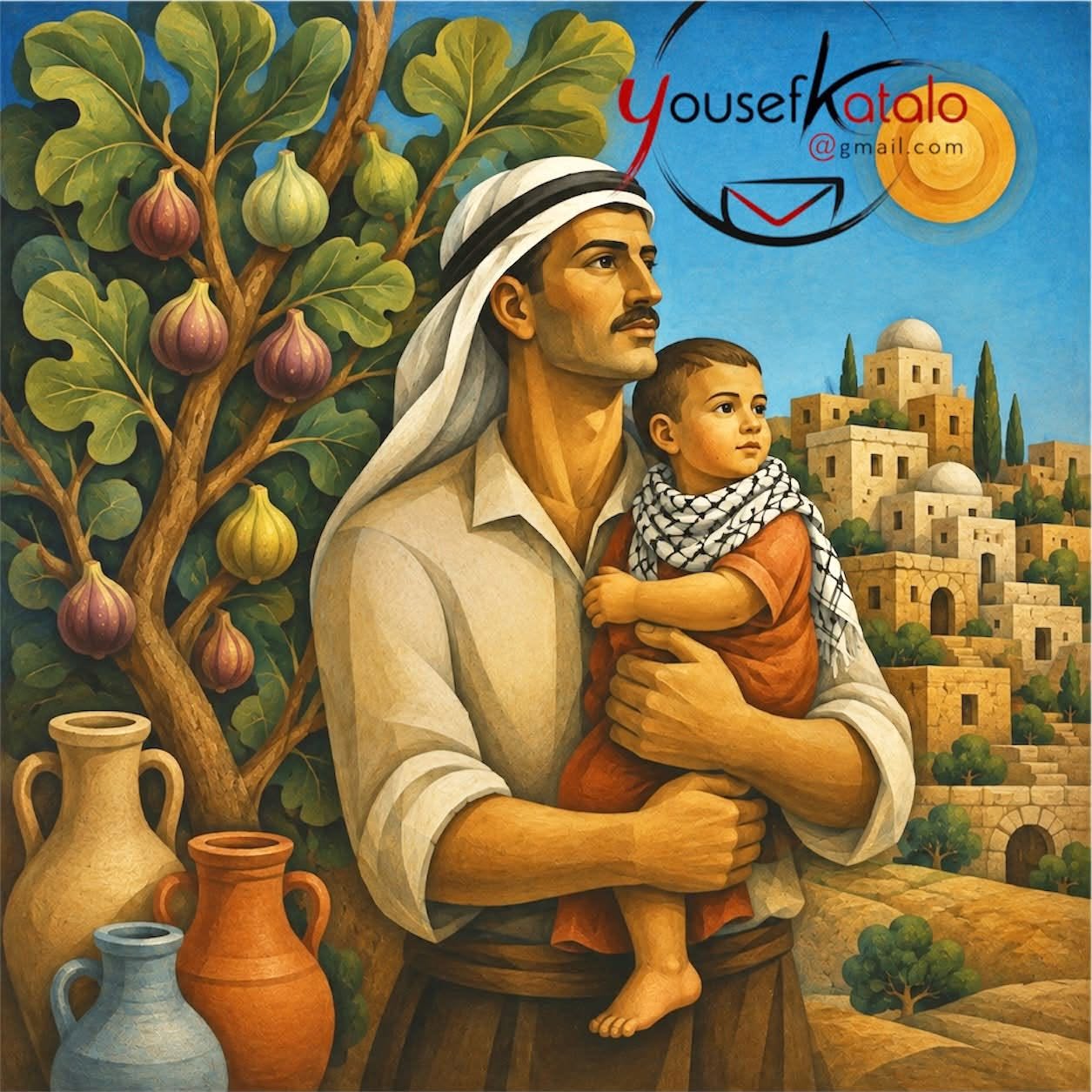
A lesser-known dimension of Israel’s ongoing occupation of Palestine since 1967 is the systematic destruction of the Palestinian people’s economic resources and means of livelihood. One of the most important sources of income for Palestinians is olive cultivation – so much so that the olive tree is regarded as one of Palestine’s national symbols. Palestinian poet Mahmoud Darwish captured this symbolism in his famous words: “Here we remain, as long as thyme and olives remain.”

Beyond its symbolic value, the olive tree is the main source of income for nearly 80,000 Palestinian families. According to UN data, about 48% of the agricultural land in the West Bank and Gaza is covered with olive trees. Olive production contributes around 14% to the Palestinian economy. About 93% of harvested olives are used for olive oil production, while the remainder is used to make soap, table olives, and pickles.  

Usurpation of olive trees: Israel’s assault on nature and identity

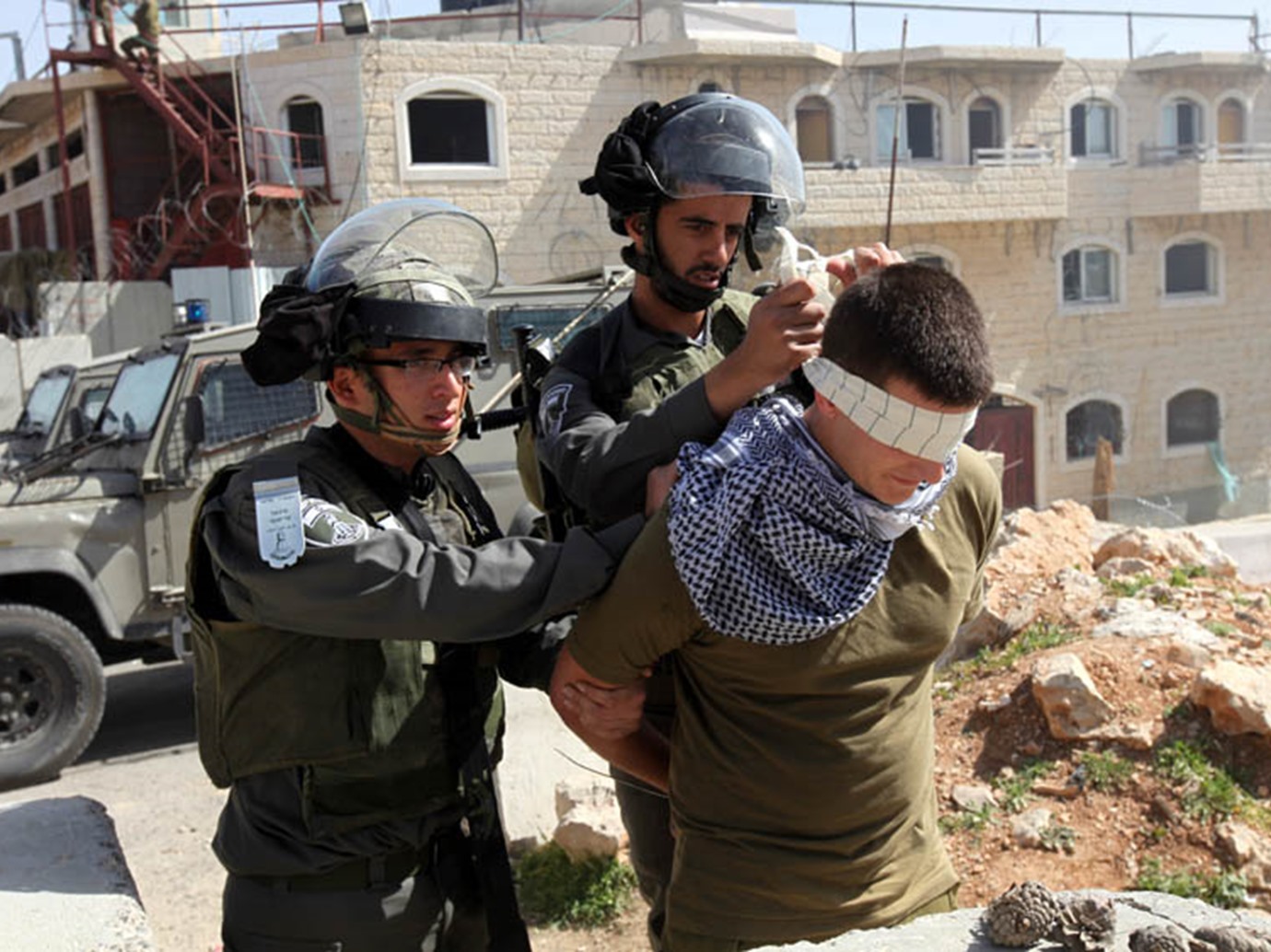
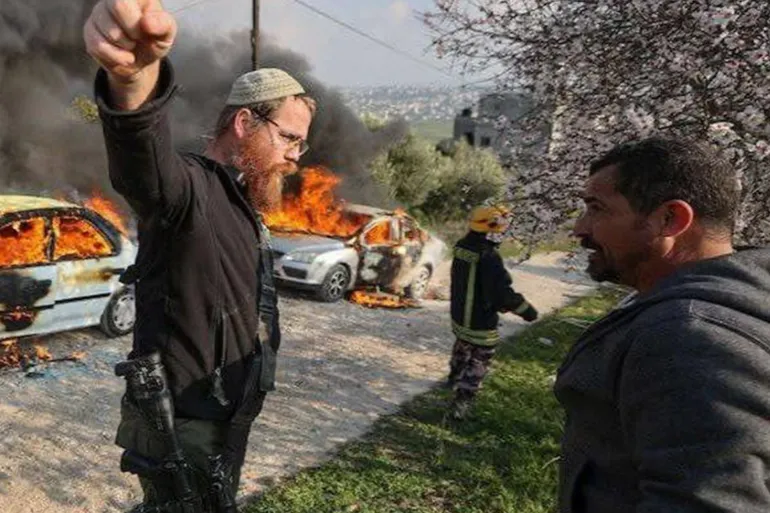
Recently, Israeli settlers in the West Bank prevented Palestinians from harvesting olives, an essential source of livelihood, and destroyed 13,000 olive trees. Such actions, either directly committed or condoned by Israeli authorities, are known and documented as systematic practices.   

According to various international reports, Israel has destroyed around 800,000 olive trees over the past 20 years, and more than 2.5 million trees since 1967.

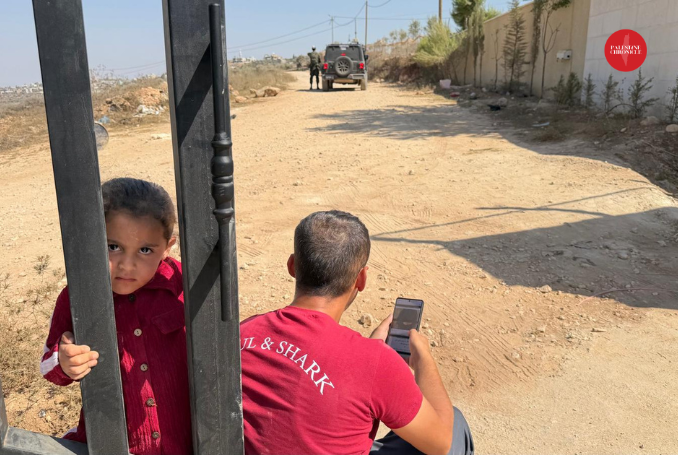
Palestinians face great difficulty in harvesting and protecting their olive trees. Since the Oslo Accords, Israel has exercised full control over 60% of the West Bank and requires Palestinians entering these areas to obtain a “permit issued by Israeli authorities.”

Farmers are therefore forced to secure permission to access their own land, but this permit system is largely arbitrary. There are no clear criteria specifying what conditions Palestinian applicants must meet to obtain a permit.

Even when they provide ownership documents and pass “security” checks, permits are often issued only to the person named on the deed, excluding other family members from entering the land. The permits are typically short-term, and each time they expire, farmers must reapply without any guarantee of renewal.

According to UN data, nearly half of permit applications are rejected on arbitrary grounds, turning the system into a policy of harassment and attrition. The same restrictive policy applies to bringing in agricultural necessities such as tractors, equipment, and fertilizers.

Over time, many Palestinians who once cultivated other crops have converted their land into olive groves, since olive trees can survive even without intensive care.  

How Israel’s seizure of olive trees violates international law

The destruction of olive trees in the occupied Palestinian territories occurs almost every year. Thousands of trees are destroyed annually during Israeli military operations or through attacks by settlers. Such incidents are rarely taken seriously or investigated by police or other public authorities.

Israeli soldiers frequently fail to protect Palestinians from settler attacks and, in many cases, act against the Palestinians themselves when they try to defend their land and trees.

In fact, the destruction of Palestinian farmlands and olive trees violates international law. Even Israel’s own Supreme Court has recognized the illegality of arbitrary practices in the “Morar v. IDF Commander” case.

In that case, Palestinian farmers appealed to the Israeli Supreme Court after a military commander denied them access to their farmland. The commander claimed the closure was intended to “protect Palestinian farmers from settler harassment.” The plaintiffs argued, however, that Israeli settlers systematically harass, assault, and damage the property of Palestinian villagers, while the Israeli army fails to intervene to stop this violence or take necessary measures to protect Palestinians and their agricultural products.

The court ruled that the army must take steps to prevent settler violence, stating that the proper way to protect Palestinian farmers from harassment is for Israeli military authorities to implement necessary security measures and impose restrictions on the settlers responsible for unlawful actions. Nevertheless, Israeli authorities continue to disregard their own court’s ruling and persist with arbitrary practices.

Under international humanitarian law, causing environmental damage as a military tactic is prohibited. The law stipulates that “care shall be taken to protect the natural environment against widespread, long-term, and severe damage during armed conflict.” This protection includes prohibiting methods or means of warfare that are intended – or expected – to cause such damage, as these may endanger the health or survival of the population.

Palestinian territories have been under Israeli occupation since 1967. This ongoing occupation constitutes a “continuing act of aggression,” and under the provisions of the 1949 Fourth Geneva Convention, imposes obligations on the occupying power.

The occupying power is responsible for ensuring a secure environment that allows the local population to meet its daily needs, and must protect civilians against looting and destruction of property.

Moreover, the damages caused by Israel – an apartheid regime – to the environment and to olive trees are considered war crimes under Article 8 of the Rome Statute.

UN Security Council resolutions also emphasize that Israel must refrain from harming the environment and is obligated to prevent settler provocations. Israel has repeatedly violated these obligations and continues to act in breach of international law.

It is known that Israel’s policy of destroying olive trees aims both to make its occupation permanent and to clear land for the establishment of future settlements. Therefore, Israel’s environmental crimes should be added to the cases currently being pursued against it at the International Court of Justice (ICJ) and the International Criminal Court (ICC).  

The author who contributed this piece to Anadolu, is a faculty member in the Department of International Law at Yalova University’s Faculty of Law. 

Continue reading
Trump’s Nightmare Triangle

By Dr Khairi Janbek

For all intents and purposes, US President Donald Trump is presenting himself as the arbiter of Arab-Israeli relations, and/or Arab-Israeli conflict and showing his presence as the patron for the time being, of the Gaza agreement. Therefore, no one, including Israel will be allowed to make him look bad in this multi-phased accord.

Most likely, his intention to reign in Prime Minister Benjamin Netanyahu and rejecting the Israeli rejection of the West Bank, boils down to keeping the Arabs on board in terms of money and influence for the success of his Gaza plan, as well as keeping his hopes alive for the Abrahamic Accords especially the red apple, Saudi-Israeli normalization.

Indeed Trump’s ambiguous stand of rejecting a Palestinian state while at the same time, rejecting Israeli annexation, either means giving the positive nod to Tel Aviv to create facts on the ground and create de facto annexation without the fanfare, and start the gradual population transfer, if we take Gaza as a precedence for his words, to Jordan and probably also to the wider Arab world, or, it could also be, that the future of the West Bank is intended to be united to the East Bank of River Jordan.

In the mean time, the world press talks about the continuous shuttle diplomacy of high-ranking Washington officials to Israel, and Trump’s warnings to Netanyahu, veiled as well explicit not to attempt to jeopardize the Gaza peace, to the extent of saying that Israel would lose all US support.

But what about the other side of this presumed potential rift? Netanyahu after two years of war, has nothing to show for it to the Israelis except barbarism, murder and destruction, in addition to gaining the status of becoming a fullyfledged international war criminal.

The war which he declared to finish off Hamas is increasingly controlled by the American plans, now, face a big failure with him reluctantly having to put up with. However it does not necessarily mean there are no other parties in his government, whose messianic fervour does not override the risk of losing American support, which indeed means, Netanyahu is now stuck between the rock and the hard place.

Indeed one cannot predict his longevity as the prime minister for Israel, but all what can be said is that, the alternative to him, is neither likely to be more peace loving, or more liberal in political outlook.

Dr Janbek is a Jordanian writer based in Paris, France

Continue reading
Who is The ‘True’ Terrorist Here?!

By Mohammad Abu Rumman

“This is not a geopolitical battle; it is a spiritual battle. A battle of the ages. It is not horizontal. It is not left or right, liberal or conservative. It is a vertical battle… a battle of heaven against hell, good against evil. People must see it in this context, or they will completely fail to understand it.”

With these words, Mike Huckabee, the U.S. ambassador to Israel, described the ongoing war of extermination in Gaza during an interview with NBC. He criticized the move by several European states to recognize Palestine at the United Nations this month, adding: “You do not stand with Israel merely because you agree with its government… but because it defends the traditions of Abraham, Isaac, and Jacob.”

This rhetoric aligns seamlessly with statements made by members of Netanyahu’s government. Finance Minister Bezalel Smotrich, for example, openly called for the “complete destruction of Gaza” and the forced displacement of its residents to other countries, invoking biblical injunctions about “erasing the memory of Israel’s enemies.” What is striking is that such discourse is no longer viewed as fringe or shocking in Western and global media and political circles. It has become commonplace—voiced by ministers, politicians, and even Netanyahu himself—steeped in extremism and religious absolutism toward “the other.” In this case, the “other” is the Palestinians as a whole, along with anyone who dares oppose the Israeli far right.

Here, the urgent question arises: how should terrorism and extremism be redefined today? Who is the true terrorist? And what form of terrorism most threatens regional security and societal peace?

Following the September 11 attacks in 2001, the United States declared its “war on terror,” rallying dozens of states against al-Qaeda and later ISIS. ISIS was undeniably a brutal extremist group that committed massacres, established a so-called caliphate, and tore down borders between Syria and Iraq. Yet it remained an isolated, besieged organization—globally reviled, stripped of legitimacy, and unsupported by institutions or states. What we witness today, by contrast, is state terrorism practiced openly, backed by major powers, and legitimized through religious rhetoric presented as divine will. The irony is palpable: Israel engages in territorial expansion, rejects recognized borders, launches cross-border military strikes, and has a prime minister who frames his mission in explicitly spiritual and historic terms—the realization of Greater Israel.

Skeptics may argue that labeling Israel a terrorist state changes nothing; it clashes with power dynamics and U.S. strategic interests. Perhaps. Yet it remains essential to reshape Arab, Islamic—and indeed universal—awareness of these realities, and to recalibrate the very language and definitions we use. These should form part of today’s Arab political, media, and diplomatic discourse. If an international coalition against terrorism is to exist, the actor most deserving of that designation is Israel’s government—not transient groups like ISIS or al-Qaeda. Huckabee’s words and the declarations of Netanyahu’s ministers are not aberrations; they are clear manifestations of this reality: state terrorism, sanctified by religion and legitimized internationally. If there is a rogue state whose leaders should stand before the International Criminal Court for genocide and mass killings, it is Israel.

This framing is of enormous significance for international, regional, and even domestic debates. Otherwise, Arab political and intellectual circles will continue to be dragged along by narratives that consistently place the blame on extremist movements emerging here or there—movements that are, in truth, the predictable outcomes of political dysfunction. Whether born of Israeli aggression or Arab authoritarianism, such groups are less causes than consequences. To blame them alone is to misread the sequence of cause and effect.

Today, amid the genocidal war on Gaza, a new political generation is coming of age. It witnesses, daily and directly, the starvation, slaughter, and devastation visited upon children, women, and civilians. It also sees the deafening global silence, alongside Arab paralysis and strategic impotence. What reactions can we reasonably expect from such a generation? This is not an attempt at justification, but rather an explanation of what is taking shape: a coming wave of anger among youth, or a wave that others may channel into particular political or religious agendas. That wave is already being born—out of the crucible of Gaza.

The writer is a columnist in The Jordan Times

Continue reading
Israel Strikes Qatar, Condemnations Abound

Qatar’s Emir Sheikh Tamim bin Hamad Al Thani vowed, Wednesday, to take all measures to protect his country’s sovereignty following an Israeli strike on the Qatari capital, Doha.

Emir Tamim said Qatar will pursue all measures to maintain its security and sovereignty in the face of the “blatant” Israeli attack, according to statement by the Emiri Diwan.

Direct targeting

Israeli warplanes launched an airstrike targeting the Hamas leadership in the Qatari capital, Tuesday but it emerged the targeting was unsuccessful despite the fact that five people were killed including a Qatari security personnel.

Israel targeted the Hamas negotiating delegation, Tuesday with an airstrike in which Islamic the group described as a “failed,” attempt.

Hamas announced Israel failed to assassinate its negotiating team working on a Gaza ceasefire during the raid in Doha residential complex.

However the strike killed Hammam al-Hayya, son of the movement’s Gaza leader Khalil al-Hayya, his office director Jihad Lubad, three aides and a Qatari security officer Badr al-Dosari.

Khalil Al-Hayya

Hamas political bureau member Suhail al-Hindi told Al Jazeera “the movement’s leadership, headed by Khalil al-Hayya and Zaher Jabarin, survived the cowardly assassination attempt.” He explained the bombing took place during a meeting of the negotiating team to discuss the latest US proposal on a Gaza ceasefire.

The Israeli raid was aid at assassinating Al-Hayya who is one of Hamas’ most prominent figures and is part of a five-man leadership council that led the group since the death of Yahya Sinwar, the leader of Hamas in the Gaza Strip.

Al- Hayya has been Hamas’ chief negotiator during ceasefire and hostage talks and is responsible for many of the movement’s foreign and political affairs.

He has previously served as deputy to Sinwar and came under the spotlight after successive Israeli assassinations eliminated several top leaders of the movement, including Sinwar, Ismail Haniyeh and Saleh al-Arouri.

He previously chaired the Hamas Arab and Islamic Relations Office in the 2021 leadership elections.

In May 2007, eight of his relatives, including several of his brothers and their children, were killed in an Israeli airstrike targeting him. Al-Hayya was not present during the attack.

Members of his family have also been killed in the ongoing Israeli war on Gaza since Oct. 7, 2023.

Zaher Jabarin

Zaher Jabarin, Hamas’ leader in the occupied West Bank, hails from the city of Salfit and is considered one of the founders of the Al-Qassam Brigades in the territory, playing a central role in building the movement’s military structure there.

He was first arrested by Israeli forces in 1993, during the First Intifada, and was sentenced to life in prison. He was held responsible for several military operations against Israel in the 1990s. He was released in a 2011 prisoner swap deal and deported outside Palestine.

On Tuesday morning, Hamas officials stated the Israeli strike occurred during a meeting to discuss the latest ceasefire proposal by US President Donald Trump. On Sunday, Trump, a close ally of Israel, confirmed that a new proposal was presented to Hamas to end the Gaza war. Hours later, Hamas announced it received US ideas via mediators and welcomed any initiative to help end the nearly two-year war on Gaza.

Trump said Tuesday an Israeli strike on Qatar was decided by Israeli Prime Minister Benjamin Netanyahu, not Washington after reports of Israel-US collaberation.

“This was a decision made by Prime Minister Netanyahu, it was not a decision made by me,” Trump wrote on his the US Truth Social media platform, which he owns.

“I immediately directed Special Envoy Steve Witkoff to inform the Qataris of the impending attack, which he did. However, unfortunately, too late to stop the attack,” he added.

It came after Qatar’s Foreign Ministry denied claims by the White House that the Gulf nation was informed in advance of Israel’s attack, adding that communication from a US official came only as explosions were underway.

Trump

Trump said he spoke with Netanyahu after the strike, and the Israeli leader told him he wants to “make peace.”

He also said he called Qatari Emir Sheikh Tamim bin Hamad Al Thani, assuring him that a similar incident would not be repeated on Qatari soil.

“Unilaterally bombing inside Qatar, a sovereign nation and close ally of the United States, that is working very hard and bravely taking risks with us to broker peace, does not advance Israel or America’s goals,” Trump wrote, reiterating an earlier statement from White House spokesperson Karoline Leavitt in a news conference.

Trump said he directed Secretary of State Marco Rubio to finalize a defense cooperation agreement with Qatar.

Later in the day, speaking to reporters as he was heading out for dinner in Washington, DC with Cabinet members, Trump said he was not “thrilled about the whole situation.”

“It’s not a good situation, but I will say this: We want the hostages back, but we are not thrilled about the way that went down today,” he said.

Israel’s military confirmed it conducted a “precise strike targeting the senior leadership” of the Palestinian group Hamas in the capital Doha.

Qatar strongly condemned the attack as a “blatant violation of international law” and a threat to its sovereignty and security.

The Gulf state, along with Egypt and the US, has been leading mediation efforts between Israel and Hamas for a ceasefire agreement.

‘Cowardly assassination’

Suhail al-Hindi, a member of Hamas’ political bureau, told Al Jazeera television that the leadership survived a “cowardly assassination attempt.”

He said Hammam al-Hayya, the son of Hamas leader Khalil al-Hayya, and his office director, Jihad Lubad, were killed in the attack along with several aides.

According to al-Hindi, the strike took place during a meeting of the group’s negotiating team to discuss a US proposal for a Gaza ceasefire.

He added that Hamas leaders Khalil al-Hayya and Zaher Jabarin were among those who escaped the strike unharmed.

Al-Hindi stressed that Hamas holds both Israel and the US responsible for the attack on the Qatari capital.

Qatar’s Prime Minister and Foreign Minister Sheikh Mohammed bin Abdulrahman Al Thani strongly condemned Israel’s attack Tuesday on the Palestinian group Hamas’ leadership in Doha, describing it as “treacherous” and an act that “can only be defined as state terrorism.”​​​​​​​

He said the attack occurred during a meeting of Hamas leaders discussing the latest US Gaza ceasefire proposal but that “Israel is working to sabotage every chance for peace.”

He affirmed that Doha “will not tolerate any violation of its sovereignty and reserves the right to respond to this blatant attack.”

“What Netanyahu is practicing is state terrorism aimed at destabilizing the region. He earlier said he would reshape the Middle East. Will he reshape the Gulf as well?”

10-Minute Warning

Al Thani said Qatar was notified of the Israeli strike 10 minutes after the attack began. The White House earlier said that the US administration had warned Qatar of the impending attack.

The attack is considered to be the first Israeli against a Gulf Cooperation Council (GCC) member state.

“This terrorism is practiced by someone like Netanyahu in the context of systematic policies and continuous attempts to destabilize regional security,” Al Thani told reporters.

“The message is clear: there is a rogue player in this region engaging in ongoing political thuggery and violating the sovereignty of states,” he added.

He noted the attack occurred while Qatar was hosting indirect negotiations between Hamas and Israel under US and Egyptian mediation.

“We are talking about a mediator state hosting official, declared negotiations – then rockets are fired at the negotiating delegation,” he said.

No moral standard

“By what logic or moral standard can this be accepted? It can only be described as outright treachery.”

Qatar, he affirmed, “will not tolerate violations of its sovereignty or territorial integrity and will act firmly against reckless breaches that endanger its security.

“There are no ongoing talks after today’s attack. Nothing remains on the table,” he added but stressed that “stability in the [Middle East] region will not be achieved through wars but through diplomacy.”

Al Thani also revealed that Israel used weapons undetected by Qatari radar systems and said Doha has held consultations with “friendly and brotherly states” to coordinate a response to the attack.

A Qatari security personnel was killed in an Israeli airstrike that targeted Hamas leadership in Doha on Tuesday, Qatar’s Interior Ministry said.

A ministry statement said that several members of the Internal Security Force were also injured in the attack.

The ministry confirmed that explosions heard in the capital on Tuesday were the result of an Israeli strike on residences housing members of the Hamas political bureau.

According to the statement, Qatari authorities continue to survey and secure the targeted area to ensure effective containment and control of the situation.

The ministry said it is closely monitoring developments and taking all necessary measures to guarantee the safety of citizens and residents.

It said that several civilians were injured in the Israeli attacks and were hospitalized to receive medical attention.

Israel’s military earlier confirmed that it conducted a “precise strike” on senior Hamas leadership, without specifying the Qatari capital.

Hamas, for its part, said that five members were killed in the Israeli attack, but said that its negotiating delegation had survived the strike.

Blatant violation

Qatar’s Foreign Ministry strongly condemned the Israeli strike, calling it a “blatant violation of international law.”

Qatar, along with Egypt and the US, have been mediating indirect negotiations between Israel and Hamas on a potential prisoner swap and ceasefire deal.

Saudi Crown Prince Mohammed bin Salman called Wednesday for an Arab, Islamic and international action following an Israeli airstrike on Doha, pledging full support for Qatar.

“We will stand with the State of Qatar in all measures it takes, without limits, and we will harness all our capabilities for that,” bin Salman said in an address to the Shura Council.

He strongly condemned the Israeli attack that targeted Hamas leadership in Doha on Tuesday, killing five group members.

“We reject and condemn the attacks of the Israeli occupation in the region, the latest of which was the brutal aggression against the State of Qatar,” the crown prince said.

“This requires Arab, Islamic, and international action to confront this aggression and to take international measures to stop the occupation authority and deter it from its criminal practices aimed at destabilizing the region’s security and stability.”

Bin Salman reaffirmed Saudi Arabia’s long-standing support for Palestinian rights.

“The Arab Peace Initiative is an unprecedented path to establish the Palestinian state,” he said, referring to a 2002 blueprint that offers Israel diplomatic recognition in exchange for withdrawal from all Arab lands occupied in 1967.

“The land of Gaza is an inalienable Palestinian right that can’t be taken away by aggression or nullified by threats,” he stressed.

The United Arab Emirates (UAE) has barred Israeli defense firms from participating in a defense conference set to be held in Dubai next month, Israeli media said on Wednesday.

UAE

According to the Yedioth Ahronoth daily, Israel’s Defense Ministry was notified that companies would not be permitted to attend the event, with the decision also communicated directly to industry executives.

While official explanations cited security concerns, senior Israeli officials claimed the move was in response to Tuesday’s Israeli strike targeting Hamas leadership in the Qatari capital, Doha.

There has been no official announcement from the UAE regarding the reported ban.

This was reported however, just after UAE President Mohamed bin Zayed Al Nahyan arrived in Doha for a “fraternal visit” on Wednesday, and a day after the Israeli airstrike on the Qatari capital.

The Emirati state news agency WAM said bin Zayed was personally welcomed by Qatar’s Emir Sheikh Tamim bin Hamad Al Thani at the airport.

The Israeli airstrike has drawn a wave of condemnations as a blatant violation of Qatar’s sovereignty and international law.

Sheikh Mohamed denounced the Israeli attack as “a violation of the sovereignty of sisterly Qatar and all international laws and norms,” and affirmed the UAE’s full solidarity with Qatar during a phone call with Sheikh Tamim according to the Anadolu news agency that reported on the Israeli strike on Qatar.

Continue reading
Macron: Persona Non Grata in Israel

Israel signaled Thursday it will rebuff any visit by French President Emmanuel Macron over his country’s plan to recognize a Palestinian state.

Israeli Foreign Minister Gideon Saar said in a phone call with his French counterpart, Jean-Noel Barrot, that France’s move to recognize Palestinian statehood would “undermine stability in the Middle East and harm Israel’s national and security interests.”

“Israel seeks good relations with France, but France must respect Israel’s position when it comes to matters essential to its security and future,” Saar said during the call as cited by his office’s statement according to Anadolu.

He stressed that any visit by Macron “has no place” as long as France pursues the recognition move.

According to The Times of Israel news outlet, Prime Minister Benjamin Netanyahu has conditioned any visit by Macron on scrapping his move to recognize a Palestinian state.

There was no immediate French comment on Saar’s statement.

France and several European countries, including Belgium, the UK, Canada, and Australia, plan to recognize Palestinian statehood during the upcoming meetings of the UN General Assembly on September 8-23, joining 147 nations that already do.

Continue reading