CrossFireArabia
Qatar’s Emir Sheikh Tamim bin Hamad Al Thani vowed, Wednesday, to take all measures to protect his country’s sovereignty following an Israeli strike on the Qatari capital, Doha.
Emir Tamim said Qatar will pursue all measures to maintain its security and sovereignty in the face of the “blatant” Israeli attack, according to statement by the Emiri Diwan.
Direct targeting
Israeli warplanes launched an airstrike targeting the Hamas leadership in the Qatari capital, Tuesday but it emerged the targeting was unsuccessful despite the fact that five people were killed including a Qatari security personnel.
Israel targeted the Hamas negotiating delegation, Tuesday with an airstrike in which Islamic the group described as a “failed,” attempt.
Hamas announced Israel failed to assassinate its negotiating team working on a Gaza ceasefire during the raid in Doha residential complex.
However the strike killed Hammam al-Hayya, son of the movement’s Gaza leader Khalil al-Hayya, his office director Jihad Lubad, three aides and a Qatari security officer Badr al-Dosari.
Khalil Al-Hayya
Hamas political bureau member Suhail al-Hindi told Al Jazeera “the movement’s leadership, headed by Khalil al-Hayya and Zaher Jabarin, survived the cowardly assassination attempt.” He explained the bombing took place during a meeting of the negotiating team to discuss the latest US proposal on a Gaza ceasefire.
The Israeli raid was aid at assassinating Al-Hayya who is one of Hamas’ most prominent figures and is part of a five-man leadership council that led the group since the death of Yahya Sinwar, the leader of Hamas in the Gaza Strip.
Al- Hayya has been Hamas’ chief negotiator during ceasefire and hostage talks and is responsible for many of the movement’s foreign and political affairs.
He has previously served as deputy to Sinwar and came under the spotlight after successive Israeli assassinations eliminated several top leaders of the movement, including Sinwar, Ismail Haniyeh and Saleh al-Arouri.
He previously chaired the Hamas Arab and Islamic Relations Office in the 2021 leadership elections.
In May 2007, eight of his relatives, including several of his brothers and their children, were killed in an Israeli airstrike targeting him. Al-Hayya was not present during the attack.
Members of his family have also been killed in the ongoing Israeli war on Gaza since Oct. 7, 2023.
Zaher Jabarin
Zaher Jabarin, Hamas’ leader in the occupied West Bank, hails from the city of Salfit and is considered one of the founders of the Al-Qassam Brigades in the territory, playing a central role in building the movement’s military structure there.
He was first arrested by Israeli forces in 1993, during the First Intifada, and was sentenced to life in prison. He was held responsible for several military operations against Israel in the 1990s. He was released in a 2011 prisoner swap deal and deported outside Palestine.
On Tuesday morning, Hamas officials stated the Israeli strike occurred during a meeting to discuss the latest ceasefire proposal by US President Donald Trump. On Sunday, Trump, a close ally of Israel, confirmed that a new proposal was presented to Hamas to end the Gaza war. Hours later, Hamas announced it received US ideas via mediators and welcomed any initiative to help end the nearly two-year war on Gaza.
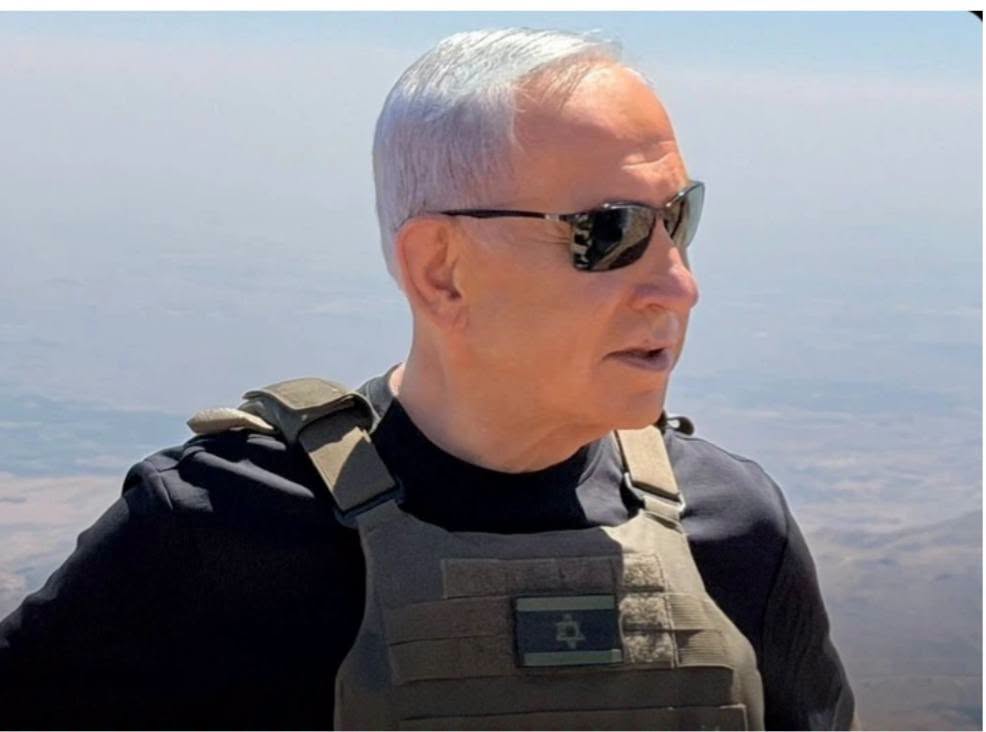
Trump said Tuesday an Israeli strike on Qatar was decided by Israeli Prime Minister Benjamin Netanyahu, not Washington after reports of Israel-US collaberation.
“This was a decision made by Prime Minister Netanyahu, it was not a decision made by me,” Trump wrote on his the US Truth Social media platform, which he owns.
“I immediately directed Special Envoy Steve Witkoff to inform the Qataris of the impending attack, which he did. However, unfortunately, too late to stop the attack,” he added.
It came after Qatar’s Foreign Ministry denied claims by the White House that the Gulf nation was informed in advance of Israel’s attack, adding that communication from a US official came only as explosions were underway.
Trump
Trump said he spoke with Netanyahu after the strike, and the Israeli leader told him he wants to “make peace.”
He also said he called Qatari Emir Sheikh Tamim bin Hamad Al Thani, assuring him that a similar incident would not be repeated on Qatari soil.
“Unilaterally bombing inside Qatar, a sovereign nation and close ally of the United States, that is working very hard and bravely taking risks with us to broker peace, does not advance Israel or America’s goals,” Trump wrote, reiterating an earlier statement from White House spokesperson Karoline Leavitt in a news conference.
Trump said he directed Secretary of State Marco Rubio to finalize a defense cooperation agreement with Qatar.
Later in the day, speaking to reporters as he was heading out for dinner in Washington, DC with Cabinet members, Trump said he was not “thrilled about the whole situation.”
“It’s not a good situation, but I will say this: We want the hostages back, but we are not thrilled about the way that went down today,” he said.
Israel’s military confirmed it conducted a “precise strike targeting the senior leadership” of the Palestinian group Hamas in the capital Doha.
Qatar strongly condemned the attack as a “blatant violation of international law” and a threat to its sovereignty and security.
The Gulf state, along with Egypt and the US, has been leading mediation efforts between Israel and Hamas for a ceasefire agreement.
‘Cowardly assassination’
Suhail al-Hindi, a member of Hamas’ political bureau, told Al Jazeera television that the leadership survived a “cowardly assassination attempt.”
He said Hammam al-Hayya, the son of Hamas leader Khalil al-Hayya, and his office director, Jihad Lubad, were killed in the attack along with several aides.
According to al-Hindi, the strike took place during a meeting of the group’s negotiating team to discuss a US proposal for a Gaza ceasefire.
He added that Hamas leaders Khalil al-Hayya and Zaher Jabarin were among those who escaped the strike unharmed.
Al-Hindi stressed that Hamas holds both Israel and the US responsible for the attack on the Qatari capital.
Qatar’s Prime Minister and Foreign Minister Sheikh Mohammed bin Abdulrahman Al Thani strongly condemned Israel’s attack Tuesday on the Palestinian group Hamas’ leadership in Doha, describing it as “treacherous” and an act that “can only be defined as state terrorism.”
He said the attack occurred during a meeting of Hamas leaders discussing the latest US Gaza ceasefire proposal but that “Israel is working to sabotage every chance for peace.”
He affirmed that Doha “will not tolerate any violation of its sovereignty and reserves the right to respond to this blatant attack.”
“What Netanyahu is practicing is state terrorism aimed at destabilizing the region. He earlier said he would reshape the Middle East. Will he reshape the Gulf as well?”
10-Minute Warning
Al Thani said Qatar was notified of the Israeli strike 10 minutes after the attack began. The White House earlier said that the US administration had warned Qatar of the impending attack.
The attack is considered to be the first Israeli against a Gulf Cooperation Council (GCC) member state.
“This terrorism is practiced by someone like Netanyahu in the context of systematic policies and continuous attempts to destabilize regional security,” Al Thani told reporters.
“The message is clear: there is a rogue player in this region engaging in ongoing political thuggery and violating the sovereignty of states,” he added.
He noted the attack occurred while Qatar was hosting indirect negotiations between Hamas and Israel under US and Egyptian mediation.
“We are talking about a mediator state hosting official, declared negotiations – then rockets are fired at the negotiating delegation,” he said.
No moral standard
“By what logic or moral standard can this be accepted? It can only be described as outright treachery.”
Qatar, he affirmed, “will not tolerate violations of its sovereignty or territorial integrity and will act firmly against reckless breaches that endanger its security.
“There are no ongoing talks after today’s attack. Nothing remains on the table,” he added but stressed that “stability in the [Middle East] region will not be achieved through wars but through diplomacy.”
Al Thani also revealed that Israel used weapons undetected by Qatari radar systems and said Doha has held consultations with “friendly and brotherly states” to coordinate a response to the attack.
A Qatari security personnel was killed in an Israeli airstrike that targeted Hamas leadership in Doha on Tuesday, Qatar’s Interior Ministry said.
A ministry statement said that several members of the Internal Security Force were also injured in the attack.
The ministry confirmed that explosions heard in the capital on Tuesday were the result of an Israeli strike on residences housing members of the Hamas political bureau.
According to the statement, Qatari authorities continue to survey and secure the targeted area to ensure effective containment and control of the situation.
The ministry said it is closely monitoring developments and taking all necessary measures to guarantee the safety of citizens and residents.
It said that several civilians were injured in the Israeli attacks and were hospitalized to receive medical attention.
Israel’s military earlier confirmed that it conducted a “precise strike” on senior Hamas leadership, without specifying the Qatari capital.
Hamas, for its part, said that five members were killed in the Israeli attack, but said that its negotiating delegation had survived the strike.
Blatant violation
Qatar’s Foreign Ministry strongly condemned the Israeli strike, calling it a “blatant violation of international law.”
Qatar, along with Egypt and the US, have been mediating indirect negotiations between Israel and Hamas on a potential prisoner swap and ceasefire deal.
Saudi Crown Prince Mohammed bin Salman called Wednesday for an Arab, Islamic and international action following an Israeli airstrike on Doha, pledging full support for Qatar.
“We will stand with the State of Qatar in all measures it takes, without limits, and we will harness all our capabilities for that,” bin Salman said in an address to the Shura Council.
He strongly condemned the Israeli attack that targeted Hamas leadership in Doha on Tuesday, killing five group members.
“We reject and condemn the attacks of the Israeli occupation in the region, the latest of which was the brutal aggression against the State of Qatar,” the crown prince said.
“This requires Arab, Islamic, and international action to confront this aggression and to take international measures to stop the occupation authority and deter it from its criminal practices aimed at destabilizing the region’s security and stability.”
Bin Salman reaffirmed Saudi Arabia’s long-standing support for Palestinian rights.
“The Arab Peace Initiative is an unprecedented path to establish the Palestinian state,” he said, referring to a 2002 blueprint that offers Israel diplomatic recognition in exchange for withdrawal from all Arab lands occupied in 1967.
“The land of Gaza is an inalienable Palestinian right that can’t be taken away by aggression or nullified by threats,” he stressed.
The United Arab Emirates (UAE) has barred Israeli defense firms from participating in a defense conference set to be held in Dubai next month, Israeli media said on Wednesday.
UAE
According to the Yedioth Ahronoth daily, Israel’s Defense Ministry was notified that companies would not be permitted to attend the event, with the decision also communicated directly to industry executives.
While official explanations cited security concerns, senior Israeli officials claimed the move was in response to Tuesday’s Israeli strike targeting Hamas leadership in the Qatari capital, Doha.
There has been no official announcement from the UAE regarding the reported ban.
This was reported however, just after UAE President Mohamed bin Zayed Al Nahyan arrived in Doha for a “fraternal visit” on Wednesday, and a day after the Israeli airstrike on the Qatari capital.
The Emirati state news agency WAM said bin Zayed was personally welcomed by Qatar’s Emir Sheikh Tamim bin Hamad Al Thani at the airport.
The Israeli airstrike has drawn a wave of condemnations as a blatant violation of Qatar’s sovereignty and international law.
Sheikh Mohamed denounced the Israeli attack as “a violation of the sovereignty of sisterly Qatar and all international laws and norms,” and affirmed the UAE’s full solidarity with Qatar during a phone call with Sheikh Tamim according to the Anadolu news agency that reported on the Israeli strike on Qatar.


 marwan