‘This War is Not Hours’

By Dr Hasan Al Dajah

Events in the Middle East are accelerating, foreshadowing a comprehensive regional explosion. However, a deeper reading of the situation transcends the traditional narrative that attempts to portray the conflict as an “Arab-Iranian” or sectarian one that transcends borders. The reality emerging today from the rubble of burning military bases and oil facilities is clear: this war is not ours; it is a major strategic war led by Washington with direct Israeli planning, aimed at reshaping the region to serve absolute Western hegemony, even if the price is turning Arab capitals into arenas of destruction and settling scores in which we have no stake.

For years, the United States promoted the concept of “deterrence” and providing protection to allied countries in exchange for billions of dollars in arms deals and a massive military presence. However, Operation “True Promise 5” and the subsequent precise Iranian strikes have stripped away the fig leaf from these claims. Field reports indicate that US bases, once described as “impregnable fortresses,” have become vulnerable targets themselves, requiring protection. At Al Udeid Air Base in Qatar, damage to the AN/FPS-132 early warning radar and the AN/TPY-2 facility resulted in a near-total paralysis of surveillance capabilities.

In Bahrain, home to the Fifth Fleet, the destruction of satellite communications stations led to a loss of centralized control over naval vessels. In Kuwait and the UAE, the casualties and the destruction of F-15 fighter jets revealed that advanced US technology was incapable of countering waves of drones and missiles that disrupted even civilian air traffic and struck vital facilities at Jebel Ali Port, reducing military installations and oil depots to ashes.

This resounding failure raises a fundamental question about the viability of relying on a “security umbrella” that has failed to protect its own perimeter and has become a security burden, attracting attacks rather than repelling them. This is no longer mere political analysis; it has become a public admission emanating from the corridors of Washington. What Senator Lindsey Graham recently revealed represents the pinnacle of terrifying candor. He confirmed that the true agenda is not about spreading “democracy” or protecting allies, but rather about embroiling the Gulf States as the military front and human cannon fodder in a direct confrontation with Iran. This is a prelude to seizing oil wells and managing the region’s wealth for Washington’s benefit, thus paying the price for the American presence, while simultaneously imposing full normalization and strangling China’s energy lifeline.

The United States’ recent attempt to seek refuge in French bases in the UAE, such as Al Dhafra Air Base and Camp de la Paix, is nothing more than a desperate effort to spread losses and hide behind the European umbrella after the deterioration of the original American bases. However, even these shared bases have not been immune to attack.

The strikes have proven that any facility supporting Western operations is a legitimate target in this zero-sum confrontation. The effects of this war extend beyond the military arena, striking at the very heart of daily life. The threat to the Strait of Hormuz has triggered seismic repercussions in global markets. The price of a barrel of oil jumped to around $116, an increase of more than $38, while gas prices in Europe rose by more than €25, and oil shipping costs soared by over 90 per cent, foreshadowing an uncontrollable wave of global inflation.

The United States, which today expresses its “displeasure” at Israel exceeding expectations in striking Iranian fuel depots, is not acting out of a desire for peace, but rather out of fear that the economic game will backfire on it and on oil markets, which cannot withstand the loss of Gulf supplies, especially given the 11 per cent increase in gasoline prices in America and the 70 per cent increase in jet fuel prices. What is happening in Jebel Ali, Manama, Doha, and Kuwait is not a struggle to defend Arab sovereignty, but rather a settling of scores between major powers that want to use Arab land as a chessboard.

The American bases that are groaning today under the weight of the strikes have proven to be a “paper tiger” when it comes to protecting allies, and that their presence is nothing but a magnet for crises that drains Arab capabilities for the benefit of foreign agendas that do not take into account Arab national security.

Arab capitals must realize, before it’s too late, that the “illusion of protection” has completely evaporated under the weight of missiles and drones. To be drawn into Israel’s desire to destroy the region, and to accommodate American ambitions to seize energy resources to finance its expansionist policies, is strategic suicide by any measure.

This raging war is not our war, and staying out of the inferno of this manufactured conflict is the only way to ensure that our wealth and the future of our generations do not become fuel for the schemes of Netanyahu, Trump, and the war profiteers behind them.

The time has come to seriously seek a self-reliant regional security system, one that originates from within the continent and is based on the shared interests of the region’s countries, far removed from foreign bases that today lack even the most basic military effectiveness and have become a strategic burden that itself needs protection after its defensive vulnerabilities have been exposed.

False American promises only increase our subservience and dependence on a modern colonial project that sees Arabs as nothing more than insignificant figures on its debt list, or mere cheap tools in its proxy wars. The true protection of homelands begins today with disengaging from these destructive agendas, and with the explicit acknowledgment that bases that have failed to protect their own walls and platforms will never be a shield for others.

Hasan Al-Dajah, a Professor of Strategic Studies at Al-Hussein Bin Talal University, is a columnist in the Jordan Times.

Continue reading
Erdogan: ‘Netanyahu is Like a Relative of Hitler’

Turkish President Recep Tayyip Erdogan lambasted Israeli Prime Minister Benjamin Netanyahu on Tuesday for Israel’s attack on the Hamas negotiation team in Qatar last week, saying, “Ideologically, Netanyahu is like a relative of Hitler.”

“Just as Hitler could not foresee the defeat that awaited him, Netanyahu will face the same ultimate fate,” he added while returning from Doha, where he attended an emergency Arab-Islamic summit following the Israeli airstrike according to Anadolu.

Erdogan called the attack on the Hamas negotiation team “a blatant challenge to international order and international law” and said Israel’s leadership has “turned their radical mindset into nothing more than a murderous network built on fascist ideology.”

The Turkish president also addressed Western countries’ recognition of Palestine, saying it would put further pressure on Israel and pledging to raise the issue again at the United Nations.

He expressed hope that “the front of humanity will gain broader support” at the upcoming UN General Assembly.

Lastly, Erdogan also addressed Türkiye’s diplomacy in Libya, emphasizing the protection of the country’s sovereignty and unity. “We are committed to safeguarding Libya’s sovereignty, territorial integrity, and political unity, and all our actions are guided by these objectives,” he said.

He noted that Türkiye has supported the legitimate Tripoli government from the outset, while recent policies have also sought to open diplomatic channels with eastern Libya. “This reflects Türkiye’s multidimensional diplomatic efforts, regional vision, and commitment to achieving peace,” Erdogan said.

He added that the Benghazi administration’s approval of the maritime jurisdiction agreement signed between Türkiye and Tripoli would be a “significant gain under international law.”

Continue reading
Israel’s Mideast Message

By Dr Maisa Al Masri

“This is a message to the entire Middle East,” Israeli Knesset Speaker Amir Ohana said in response to the Israeli airstrike that targeted Hamas leaders in the heart of the Qatari capital, Doha.

However, this statement is not merely a comment on the military operation strike into a declared strategic message, telling the entire region, and primarily the Gulf, that Israel, in partnership with Washington, has become the master of the decision-making process in the region.

Ohana’s statement is an explicit and direct threat that leaves no room for interpretation,  reflecting the new deterrence doctrine adopted by Tel Aviv: No red lines, no geographical immunities, and no Western allies outside the confines of Israeli dictates. Simply put, anyone who disagrees with us becomes a legitimate target, even if they are in the heart of a friendly capital that hosts the largest American military base.

This makes for a dangerous conclusion: Israel no longer views the Gulf states as partners in stability, but rather as “open arenas for fiery messages.” Washington is blessing the silence, participating in complicity, and mocking the Arabs.

Naked dominance

And don’t forget the Israeli crime in the heart of the Gulf marks the beginning of a new era of naked dominance. It’s not a traditional security operation, but a pivotal turning point in the rules of regional engagement, in which Qatar has been embarrassed both on the Arab level and internationally.

Israel has now publicly placed itself in a circle (no longer concealing its intentions) – through bombing and military strikes – that it no longer sees a distinction between political geography and the theater of operations. More dangerously, the heart of the Gulf today has become openly subject to Tel Aviv’s fire. And who can challenge it?

The strike wasn’t an intelligence leak or a silent targeting, but a direct airstrike in an area teeming with embassies, schools, and residential buildings, in a country that is a major ally of Washington and a pillar of American security in the Middle East.

Thus the message has become clear to everyone: No one is above attack… no state, no sovereignty, no partnership.

The US administration, led by Donald Trump, evaded with a series of conflicting statements about its prior knowledge of the operation. But whether it knew and blessed it, knew and remained silent, knew too late, or did not know at all, the outcome is the same: The American cover was removed, Gulf confidence eroded, and billions perished. The statements of the US embassy in Doha did not go beyond expressions of caution to American citizens, while White House statements swayed between “regret over the location” to “understanding the goal of eliminating terrorism.”

I believe the opposite message was conveyed to the Gulf capitals: Your security is not a priority, and your sovereignty does not equate to a clear position from Washington. The question that now arises however is: Why Qatar? Why now? Why was the strike carried out in Qatar and not in Turkey, or Iran for example? This is despite the fact that the Hamas leaders that were targeted had just returned from Istanbul, suggesting Tel Aviv chose the location not arbitrarily but with deep political awareness. Tel Aviv did not pull the trigger in Istanbul, even though the targeted leaders passed through it only hours earlier.

Turkey, with all its military, political, and international complexity, is not a testing ground for Israeli madness. There are red lines that even Tel Aviv dares not cross… and Turkey is one of them. The potential Turkish military response, the internal Turkish explosion during a highly sensitive election season, and the delicate balance of power within NATO rendered Turkish territory “operationally closed” even to the most violent wings of Israeli decision-making. But when the targeted figures left Istanbul for Doha, everything changed.

Qatar, like other threatened Arab states, in the Israeli security and intelligence mindset, is merely an intermediate gray area, neither neutral nor classified as an “enemy,” potentially a shocking target at a low cost. This is something all Arab decision-makers should be aware of.

From Tel Aviv’s perspective, Qatar is balancing contradictory roles, managing mediation, funding aid, and hosting parties that anger Israel without possessing a genuine deterrent umbrella. There are no international calculations that could prevent a surgical strike carried out within hours. Merely hosting an American base does not make Doha “immune,” but may even further tempt Tel Aviv, proving that decision-making in the region is no longer solely in Washington’s hands but in Tel Aviv as well.

In short, Israel needed a platform to send the biggest message since the Gaza war… so it chose the weakest link, amid the silence of its strongest ally.

Here, we can pause a moment at the Knesset member’s statement that the operation was “a message to the Middle East.” This is not a slip of the tongue, but a strategic doctrine upon which future decisions are based. Israel is telling all countries in the region that whoever harbors Hamas, or even engages in dialogue with it, will be next.

If the Arab states fail to take a firm political stand, the Doha precedent will be repeated elsewhere. It may not be Hamas’s mediation that stands accuse but rather the concepts of neutrality, balance, and even dialogue with parties Tel Aviv disapproves of and which then could become sufficient justification for a strike. It’s a policy of punishment.

This scene is posing existential questions for Arab capitals. If Qatar, Washington’s most important ally, is being bombed over the heads of its own people, after Syria, Lebanon, and Gaza… should we wait for Iraq’s turn? Riyadh? Abu Dhabi? Kuwait? And others? Does the American umbrella truly protect us, or is it used only when our interests intersect with Israel’s?

And what is the point of hosting American bases if they do not prevent airspace violations? Or provide protection?

What happened in Doha is pushing the region to crossroads: Either continuing its position of dependency and timid mediation, or repositioning strategically and developing independent air defenses, which is logistically difficult, or seeking alternative alliances (Ankara, Beijing, Moscow, Tehran?), and establishing red lines that Tel Aviv will not cross.

Qatar now faces difficult choices: Will it withdraw from the Hamas mediation? Will it demand real security guarantees? Will it go further, toward symbolic deterrence or unconventional partnerships? Or will it pay the price of protection once again?

Beware: A war of wills is beginning now. The Israeli airstrike in Doha was not just a blow to Hamas, but also a slap in the face to the sovereignty of the Gulf and the region, an undermining of the prestige of international law and its signed, ratified, and binding agreements, and an insult to the concept of the alleged strategic partnership with America.

This is the beginning of a new era, one in which Israel and Washington declare that the security of the region is no longer an Arab decision. The question now is: Will the Arabs as a whole wake up before “Ohana’s message” reaches other capitals? Perhaps.

The author is a political writer based in Amman Jordan and contributed this article to the Al Rai Alyoum Arabic website

Continue reading
Barghouti: Arabs Must End Israel Ties After Doha Bombing

ُُُThe Israeli attack targeting the Hamas delegation in Doha represents a “turning point” that will have very dangerous consequences warned Secretary-General of the Palestinian National Initiative Movement Dr. Mustafa Barghouti. He stated Israel has been exposed for what it truly is: The one obstructing an agreement, not the Palestinian side, and is deliberately escalating every time.

The State of Qatar condemned the Israeli attack, which targeted the residential headquarters of several members of the Hamas Political Bureau, stressing it will not tolerate this reckless Israeli behavior.

The Qatari Foreign Ministry said in a statement: “The criminal attack is a violation of all international laws and a serious threat to the security and safety of Qataris and residents.”

Barghouti said the Israeli aggression, which failed to achieve its goal in the war on Gaza, targeted Qatar, which was undertaking mediation efforts, and targeted Hamas leaders while they were discussing the American proposal. This means that “this proposal was not serious, and Israel does not want any agreement. It persists in its genocidal war against the Gaza Strip and its ethnic cleansing of the Palestinian people.”

In an interview with Al Jazeera, Barghouti did not rule out the possibility that the United States was involved in what happened today, saying no one could believe that Washington was actually playing the role of mediator.

What is required by Arabs and Muslims?

Barghouti said he hoped the attack on Doha would lead to a major shift in the position of Arab and Islamic countries, especially since the one that was being attacked was the State of Qatar, known as a peaceful country that has never attacked any party and has devoted all of its resources to reaching peace agreements. Without its role, a large number of Israeli and Palestinian prisoners would not have been released in previous agreements.

Regarding what is currently required of Arab countries in light of Israel’s continued implementation of its plan, which could lead to the mass displacement of Palestinians from Gaza, Barghouti explained Arab and Islamic countries, especially those that have normalized relations with Israel, are required to halt and sever all relations with Israel, impose comprehensive sanctions, and boycott it completely.

He added that in the light of the Israeli aggression on Doha, Arab and Islamic countries must ask themselves know how to protect their own national security, not just of the Palestinians.

Barghouti called for imposing sanctions and completely isolating Israel. He noted that Israeli Prime Minister Benjamin Netanyahu (wanted by the International Criminal Court) has “lost his mind and acts like the leader of a crazy gang out of control.” Barghouti said that he continually attacks Palestinians, Lebanon, Syria, Yemen, Iran, and now Qatar.

He also indicated that the Israeli occupation’s failure to achieve its goal behind the attack on Hamas leaders in Doha will have domestic repercussions for Netanyahu and his government according to Al Jazeera.

Continue reading
Israel Strikes Qatar, Condemnations Abound

Qatar’s Emir Sheikh Tamim bin Hamad Al Thani vowed, Wednesday, to take all measures to protect his country’s sovereignty following an Israeli strike on the Qatari capital, Doha.

Emir Tamim said Qatar will pursue all measures to maintain its security and sovereignty in the face of the “blatant” Israeli attack, according to statement by the Emiri Diwan.

Direct targeting

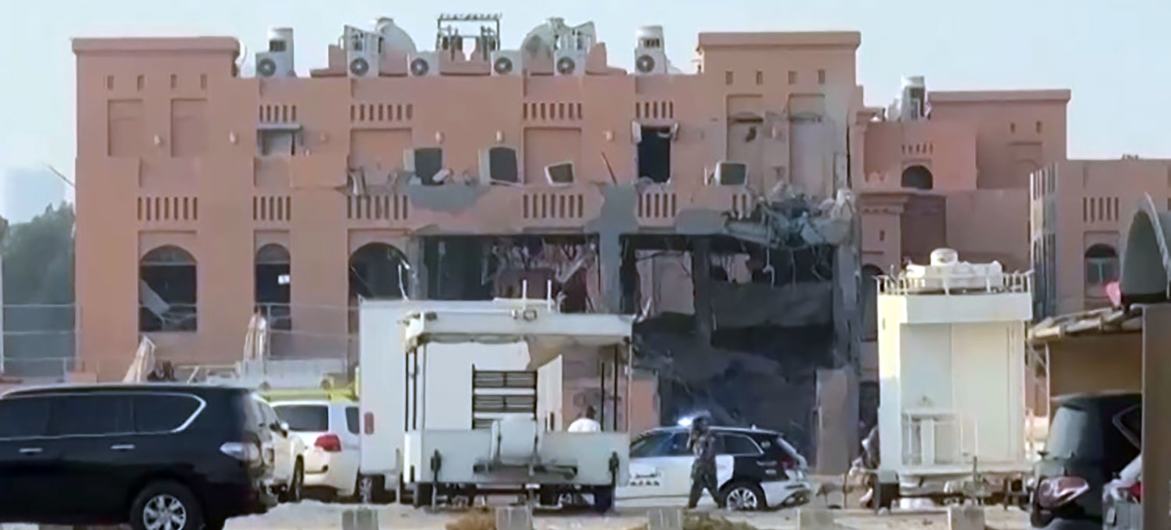
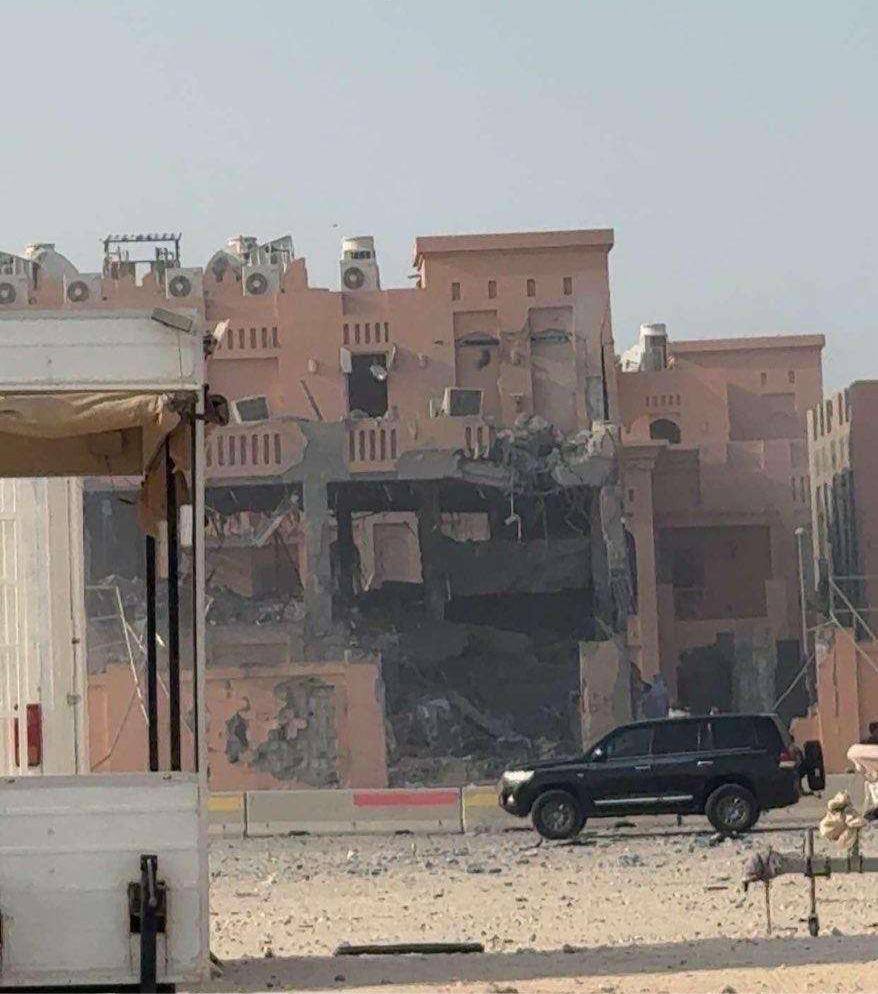
Israeli warplanes launched an airstrike targeting the Hamas leadership in the Qatari capital, Tuesday but it emerged the targeting was unsuccessful despite the fact that five people were killed including a Qatari security personnel.

Israel targeted the Hamas negotiating delegation, Tuesday with an airstrike in which Islamic the group described as a “failed,” attempt.

Hamas announced Israel failed to assassinate its negotiating team working on a Gaza ceasefire during the raid in Doha residential complex.

However the strike killed Hammam al-Hayya, son of the movement’s Gaza leader Khalil al-Hayya, his office director Jihad Lubad, three aides and a Qatari security officer Badr al-Dosari.

Khalil Al-Hayya

Hamas political bureau member Suhail al-Hindi told Al Jazeera “the movement’s leadership, headed by Khalil al-Hayya and Zaher Jabarin, survived the cowardly assassination attempt.” He explained the bombing took place during a meeting of the negotiating team to discuss the latest US proposal on a Gaza ceasefire.

The Israeli raid was aid at assassinating Al-Hayya who is one of Hamas’ most prominent figures and is part of a five-man leadership council that led the group since the death of Yahya Sinwar, the leader of Hamas in the Gaza Strip.

Al- Hayya has been Hamas’ chief negotiator during ceasefire and hostage talks and is responsible for many of the movement’s foreign and political affairs.

He has previously served as deputy to Sinwar and came under the spotlight after successive Israeli assassinations eliminated several top leaders of the movement, including Sinwar, Ismail Haniyeh and Saleh al-Arouri.

He previously chaired the Hamas Arab and Islamic Relations Office in the 2021 leadership elections.

In May 2007, eight of his relatives, including several of his brothers and their children, were killed in an Israeli airstrike targeting him. Al-Hayya was not present during the attack.

Members of his family have also been killed in the ongoing Israeli war on Gaza since Oct. 7, 2023.

Zaher Jabarin

Zaher Jabarin, Hamas’ leader in the occupied West Bank, hails from the city of Salfit and is considered one of the founders of the Al-Qassam Brigades in the territory, playing a central role in building the movement’s military structure there.

He was first arrested by Israeli forces in 1993, during the First Intifada, and was sentenced to life in prison. He was held responsible for several military operations against Israel in the 1990s. He was released in a 2011 prisoner swap deal and deported outside Palestine.

On Tuesday morning, Hamas officials stated the Israeli strike occurred during a meeting to discuss the latest ceasefire proposal by US President Donald Trump. On Sunday, Trump, a close ally of Israel, confirmed that a new proposal was presented to Hamas to end the Gaza war. Hours later, Hamas announced it received US ideas via mediators and welcomed any initiative to help end the nearly two-year war on Gaza.

Trump said Tuesday an Israeli strike on Qatar was decided by Israeli Prime Minister Benjamin Netanyahu, not Washington after reports of Israel-US collaberation.

“This was a decision made by Prime Minister Netanyahu, it was not a decision made by me,” Trump wrote on his the US Truth Social media platform, which he owns.

“I immediately directed Special Envoy Steve Witkoff to inform the Qataris of the impending attack, which he did. However, unfortunately, too late to stop the attack,” he added.

It came after Qatar’s Foreign Ministry denied claims by the White House that the Gulf nation was informed in advance of Israel’s attack, adding that communication from a US official came only as explosions were underway.

Trump

Trump said he spoke with Netanyahu after the strike, and the Israeli leader told him he wants to “make peace.”

He also said he called Qatari Emir Sheikh Tamim bin Hamad Al Thani, assuring him that a similar incident would not be repeated on Qatari soil.

“Unilaterally bombing inside Qatar, a sovereign nation and close ally of the United States, that is working very hard and bravely taking risks with us to broker peace, does not advance Israel or America’s goals,” Trump wrote, reiterating an earlier statement from White House spokesperson Karoline Leavitt in a news conference.

Trump said he directed Secretary of State Marco Rubio to finalize a defense cooperation agreement with Qatar.

Later in the day, speaking to reporters as he was heading out for dinner in Washington, DC with Cabinet members, Trump said he was not “thrilled about the whole situation.”

“It’s not a good situation, but I will say this: We want the hostages back, but we are not thrilled about the way that went down today,” he said.

Israel’s military confirmed it conducted a “precise strike targeting the senior leadership” of the Palestinian group Hamas in the capital Doha.

Qatar strongly condemned the attack as a “blatant violation of international law” and a threat to its sovereignty and security.

The Gulf state, along with Egypt and the US, has been leading mediation efforts between Israel and Hamas for a ceasefire agreement.

‘Cowardly assassination’

Suhail al-Hindi, a member of Hamas’ political bureau, told Al Jazeera television that the leadership survived a “cowardly assassination attempt.”

He said Hammam al-Hayya, the son of Hamas leader Khalil al-Hayya, and his office director, Jihad Lubad, were killed in the attack along with several aides.

According to al-Hindi, the strike took place during a meeting of the group’s negotiating team to discuss a US proposal for a Gaza ceasefire.

He added that Hamas leaders Khalil al-Hayya and Zaher Jabarin were among those who escaped the strike unharmed.

Al-Hindi stressed that Hamas holds both Israel and the US responsible for the attack on the Qatari capital.

Qatar’s Prime Minister and Foreign Minister Sheikh Mohammed bin Abdulrahman Al Thani strongly condemned Israel’s attack Tuesday on the Palestinian group Hamas’ leadership in Doha, describing it as “treacherous” and an act that “can only be defined as state terrorism.”​​​​​​​

He said the attack occurred during a meeting of Hamas leaders discussing the latest US Gaza ceasefire proposal but that “Israel is working to sabotage every chance for peace.”

He affirmed that Doha “will not tolerate any violation of its sovereignty and reserves the right to respond to this blatant attack.”

“What Netanyahu is practicing is state terrorism aimed at destabilizing the region. He earlier said he would reshape the Middle East. Will he reshape the Gulf as well?”

10-Minute Warning

Al Thani said Qatar was notified of the Israeli strike 10 minutes after the attack began. The White House earlier said that the US administration had warned Qatar of the impending attack.

The attack is considered to be the first Israeli against a Gulf Cooperation Council (GCC) member state.

“This terrorism is practiced by someone like Netanyahu in the context of systematic policies and continuous attempts to destabilize regional security,” Al Thani told reporters.

“The message is clear: there is a rogue player in this region engaging in ongoing political thuggery and violating the sovereignty of states,” he added.

He noted the attack occurred while Qatar was hosting indirect negotiations between Hamas and Israel under US and Egyptian mediation.

“We are talking about a mediator state hosting official, declared negotiations – then rockets are fired at the negotiating delegation,” he said.

No moral standard

“By what logic or moral standard can this be accepted? It can only be described as outright treachery.”

Qatar, he affirmed, “will not tolerate violations of its sovereignty or territorial integrity and will act firmly against reckless breaches that endanger its security.

“There are no ongoing talks after today’s attack. Nothing remains on the table,” he added but stressed that “stability in the [Middle East] region will not be achieved through wars but through diplomacy.”

Al Thani also revealed that Israel used weapons undetected by Qatari radar systems and said Doha has held consultations with “friendly and brotherly states” to coordinate a response to the attack.

A Qatari security personnel was killed in an Israeli airstrike that targeted Hamas leadership in Doha on Tuesday, Qatar’s Interior Ministry said.

A ministry statement said that several members of the Internal Security Force were also injured in the attack.

The ministry confirmed that explosions heard in the capital on Tuesday were the result of an Israeli strike on residences housing members of the Hamas political bureau.

According to the statement, Qatari authorities continue to survey and secure the targeted area to ensure effective containment and control of the situation.

The ministry said it is closely monitoring developments and taking all necessary measures to guarantee the safety of citizens and residents.

It said that several civilians were injured in the Israeli attacks and were hospitalized to receive medical attention.

Israel’s military earlier confirmed that it conducted a “precise strike” on senior Hamas leadership, without specifying the Qatari capital.

Hamas, for its part, said that five members were killed in the Israeli attack, but said that its negotiating delegation had survived the strike.

Blatant violation

Qatar’s Foreign Ministry strongly condemned the Israeli strike, calling it a “blatant violation of international law.”

Qatar, along with Egypt and the US, have been mediating indirect negotiations between Israel and Hamas on a potential prisoner swap and ceasefire deal.

Saudi Crown Prince Mohammed bin Salman called Wednesday for an Arab, Islamic and international action following an Israeli airstrike on Doha, pledging full support for Qatar.

“We will stand with the State of Qatar in all measures it takes, without limits, and we will harness all our capabilities for that,” bin Salman said in an address to the Shura Council.

He strongly condemned the Israeli attack that targeted Hamas leadership in Doha on Tuesday, killing five group members.

“We reject and condemn the attacks of the Israeli occupation in the region, the latest of which was the brutal aggression against the State of Qatar,” the crown prince said.

“This requires Arab, Islamic, and international action to confront this aggression and to take international measures to stop the occupation authority and deter it from its criminal practices aimed at destabilizing the region’s security and stability.”

Bin Salman reaffirmed Saudi Arabia’s long-standing support for Palestinian rights.

“The Arab Peace Initiative is an unprecedented path to establish the Palestinian state,” he said, referring to a 2002 blueprint that offers Israel diplomatic recognition in exchange for withdrawal from all Arab lands occupied in 1967.

“The land of Gaza is an inalienable Palestinian right that can’t be taken away by aggression or nullified by threats,” he stressed.

The United Arab Emirates (UAE) has barred Israeli defense firms from participating in a defense conference set to be held in Dubai next month, Israeli media said on Wednesday.

UAE

According to the Yedioth Ahronoth daily, Israel’s Defense Ministry was notified that companies would not be permitted to attend the event, with the decision also communicated directly to industry executives.

While official explanations cited security concerns, senior Israeli officials claimed the move was in response to Tuesday’s Israeli strike targeting Hamas leadership in the Qatari capital, Doha.

There has been no official announcement from the UAE regarding the reported ban.

This was reported however, just after UAE President Mohamed bin Zayed Al Nahyan arrived in Doha for a “fraternal visit” on Wednesday, and a day after the Israeli airstrike on the Qatari capital.

The Emirati state news agency WAM said bin Zayed was personally welcomed by Qatar’s Emir Sheikh Tamim bin Hamad Al Thani at the airport.

The Israeli airstrike has drawn a wave of condemnations as a blatant violation of Qatar’s sovereignty and international law.

Sheikh Mohamed denounced the Israeli attack as “a violation of the sovereignty of sisterly Qatar and all international laws and norms,” and affirmed the UAE’s full solidarity with Qatar during a phone call with Sheikh Tamim according to the Anadolu news agency that reported on the Israeli strike on Qatar.

Continue reading