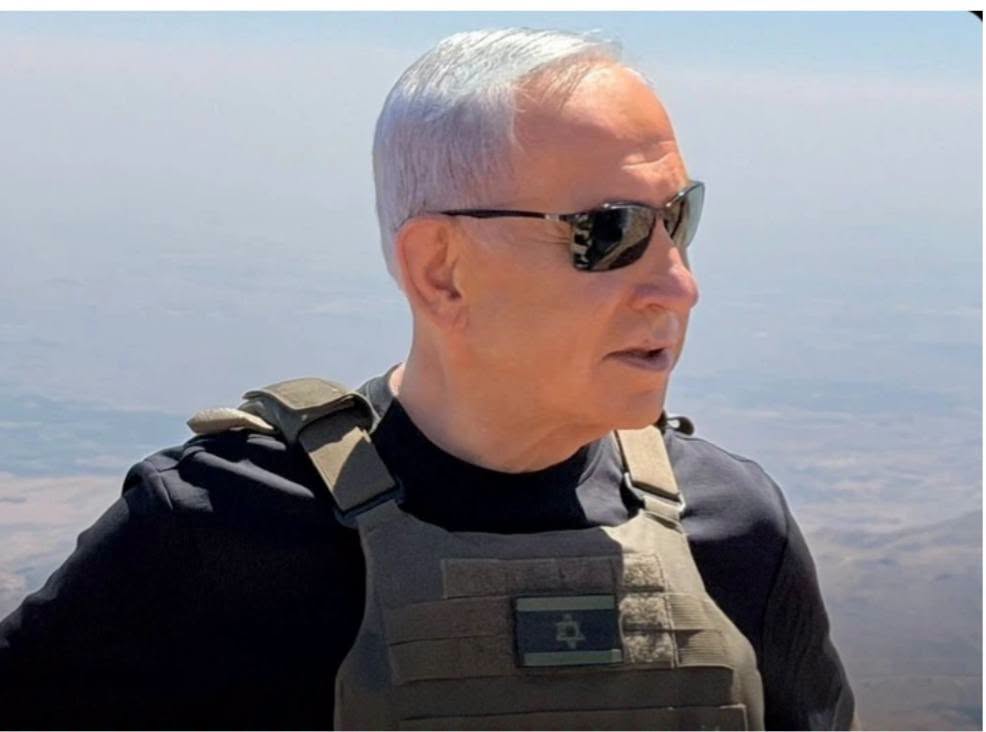
Israel’s Top General Fears Reoccupation of Gaza

Israeli Chief of Staff Eyal Zamir described Prime Minister Benjamin Netanyahu’s plan to reoccupy the Gaza Strip as a “strategic trap”. Speaking on Wednesday, he stressed that it will exhaust the army for years to come and endanger the lives of prisoners.

Israel’s Channel 13 reported that a heated discussion took place between Zamir and Netanyahu in a meeting, Tuesday evening, which it described as “difficult and direct,” in light of the latter’s decision to proceed with the occupation of Gaza.

Zamir described the decision as a “strategic trap,” stressing it will exhaust the Israeli army for years later and endanger the lives of the Israeli prisoners in Gaza who are believed to be down to 20.

On Tuesday evening, Netanyahu held a closed-door meeting that lasted three hours, including a limited number of ministers and senior security officials, during which he discussed the plan to encircle Gaza City and the central military bases as the first stage of the occupation of the Strip, according to what the Broadcasting Authority quoted from an unnamed Israeli official.

Channel 13 reported that Zamir “proposed an alternative to the occupation operation, which is to isolate the Gaza Strip and impose a tight siege on Gaza City, along with airstrikes on Hamas positions. However, Netanyahu rejected the proposal and insisted on proceeding with the plan to occupy the Strip.”

Senior military officials, who were not named, quoted Zamir as hinting during the meeting at a threat to resign, saying: “I only have one bullet in my mouth.”

The security cabinet is scheduled to meet tomorrow, Thursday, to discuss the plan to occupy Gaza City and the central Gaza Strip, which Chief of Staff Zamir opposes.

On Tuesday, Netanyahu’s son, Yair, launched a sharp attack on Zamir, accusing him of “leading a rebellion and a military coup.”

On Wednesday, Israeli Defense Minister Yisrael Katz announced his support for Zamir in the face of criticism from Netanyahu’s son, Yair.

Katz said in a post on the X platform that “Major General Zamir is leading the army and adopting a strong and aggressive policy.”

He continued: “It is the right and duty of the Chief of Staff to express his position, and after the political leadership makes decisions, the army will implement them firmly.”

Israel previously occupied the Gaza Strip for 38 years, between 1967 and 2005.

Tel Aviv estimates that there are 50 Israeli prisoners in Gaza, 20 of whom are still alive, while more than 10,800 Palestinians are languishing in its prisons, suffering from torture, starvation, and medical neglect, many of whom have died, according to Palestinian and Israeli human rights and media reports.

On July 24, Israel withdrew from indirect negotiations with Hamas in Doha, following Tel Aviv’s intransigence regarding the withdrawal from Gaza, the end of the war, Palestinian prisoners, and the mechanism for distributing humanitarian aid.

According to a poll published Sunday by the Israeli Institute for National Security Studies, 52 percent of Israelis hold their government fully or partially responsible for the failure to reach an agreement with Hamas.

Hamas has repeatedly declared its willingness to release Israeli prisoners “in one go” in exchange for an end to the war of extermination, the withdrawal of the Israeli army from Gaza, and the release of Palestinian prisoners.

The opposition and the prisoners’ families assert that Netanyahu is seeking partial deals that would allow the continuation of the war while ensuring his continued rule. He fears the collapse of his government if the most extremist faction, which refuses to end the war, withdraws from it.

Domestically, Netanyahu is being tried on corruption charges that would result in his imprisonment if convicted. The International Criminal Court is seeking his arrest on charges of war crimes and crimes against humanity against Palestinians in Gaza.

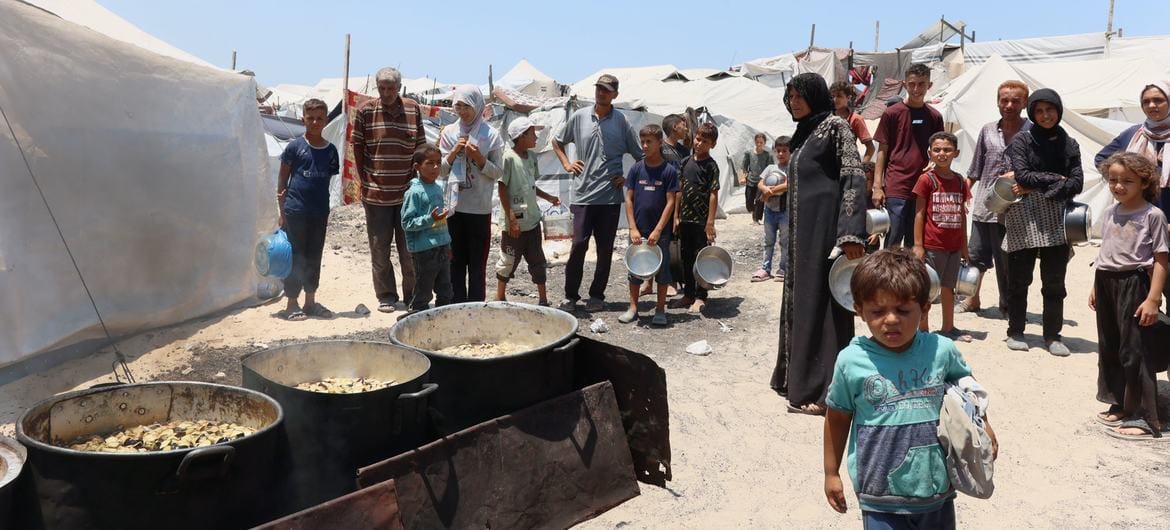
Since October 7, 2023, Israel has been committing genocide in the Gaza Strip and starving Palestinians. On March 2, it tightened its measures by closing the crossings to humanitarian, relief, and medical aid, causing a famine that has reached “catastrophic” levels.

The US-backed genocide left more than 211,000 Palestinians dead or wounded, most of them children and women, and more than 9,000 missing, in addition to hundreds of thousands of displaced persons and a famine that claimed the lives of many according to Anadolu.
Continue reading
Gaza, Surrealism and Empty Stomachs

By Michael Jansen

“Let them eat cake” is a careless remark traditionally but falsely attributed to France’s Queen Marie Antoinette at a time peasants had no bread and were starving. She and her husband King Louis the 16th were beheaded in 1793 during the French Revolution which overthrew the monarchy.

This past week Donald Trump spent five days in Scotland playing golf at two courses which he owns while 2.3 million Palestinians faced famine and starvation due to a four-and-a-half-month Israeli blockade of Gaza. During a press conference with British Prime Minister Keir Starmer, Trump finally acknowledged there is “real starvation” in Gaza. Later in the day, he claimed he had “told Israel maybe they have to do it a different way.” This suggested by adopting a new, less punitive policy. He was speaking after Egyptian and Qatari-mediated negotiations on a 60-day ceasefire had broken down, the US and Israel blamed Hamas and left Doha, delaying a full resumption of aid.

Hamas had demanded a return to UN and international agency deliveries of water, food, medicine, and fuel which have been blocked by Israel since March 2nd, Israeli withdrawal from areas of Gaza occupied since Israel broke the ceasefire on March 18th, and an end to Israel’s war on Gaza once the ceasefire expired.

Israeli Prime Minister Binyamin Netanyahu had refused all these demands and was backed up by his good friend Donald Trump. Instead of thinking of starving Gazans, Trump stated, “Hamas didn’t really want to make a deal. I think they want to die, and it’s very bad. It got to the point where you [Israel] have to finish the job.” He did at that time admit that images of starving children in Gaza were “terrible” but added, “They’re stealing the food,” echoing the Israeli accusation that Hamas is guilty of depriving Gazans of food. This has been denied by the World Food Programme and the UN agency looking after Palestinian refugees, UNRWA.

Israel has been fighting Hamas since October 7th, 2023, when it killed 1,200 and abducted 250, but Israel’s armed forces have failed to “finish the job.” Trump has given Israel permission to fight on indefinitely without totatally ending the blockade.

Alarmed by the “humanitarian catastrophe” in Gaza, Germany, France and Britian have called on Israel to end the conflict, “immediately lift restrictions on the flow of aid and urgently allow UN and humanitarian NGOs to resume operations. “Israel must uphold its obligations under international humanitarian law.”

Pressure from these three countries, the UN, and international humanitarian agencies has compelled Israel to declare 10-hour tactical pauses in the fighting in three areas of Gaza. During these pauses which could last a week or so, Israel is to allow air drops of supplies by Jordan, the Emirates and Israel, permit scores of lorries laden with aid to enter the strip, and create “humanitarian corridors” for aid deliveries. These “concessions” are far from a ceasefire and the reopening of all crossings into Gaza for between 500-600 lorries a day. Furthermore, this number must be greatly increased to compensate for Israel’s blockade which has deprived Gazans of sustenance as well as water, electricity and fuel.

Specialised food to treat malnutrition must be included as starving people cannot absorb normal food. Parcels being delivered contain rice, lentils, and beans which cannot be cooked by many of the 90 per cent of Palestinians who have been displaced from their homes and live in tents in crowded camps. There is no wood in Gaza for fires and Palestinians rely on rubbish and plastic which pollute the environment. Palestinians cannot survive on the other items the parcels: sugar, salt, and flour. The latter they can exchange at bakeries for bread.

If ever the previous flow of humanitarian aid is restored, Gazans will need fresh vegetables, fruit, meat and chicken to revert to a nutritious diet. They used to be raised on Gaza’s farms or brought into Gaza by commercial firms from Egypt, Israel, and the West Bank.

In Sunday’s New York Times, World Central Kitchen (WCK) founder Jose Andres proposed a programme which could help resolve Gaza’s hunger crisis. He called for the reopening by Israel of humanitarian corridors to all aid groups working in Gaza and permission to operate multiple communal kitchens. While WCK has been providing hot meals in Gaza since the war began in 2023, he proposed an increase in the production from thousands to one million hot meals a day and to feed families where they dwell. He said five large cooking facilities would have to be built in safe zones “where bulk supplies can be delivered, prepared and distributed without risk of violence.” These kitchens “would supply hundreds of smaller community kitchens “at the neighbourhood level throughout Gaza, empowering communities as essential partners.”

This project depends on obtaining the agreement of Israel and equipment, raw food and fuel supplies which could be provided by aid agencies and concerned governments.

The author is a columnist for the Jordan Times

Continue reading
Hamas Releases US-Israeli Hostage

The International Committee of the Red Cross received Israeli-American soldier Idan Alexander from Hamas on Monday evening. His family confirmed he would travel to Doha later in May to meet President Trump and Qatar’s Emir, Sheikh Tamim bin Hamad Al Thani.

Hamas had captured Alexander in Gaza during the war as he served in the Israeli military. The release followed direct talks between Hamas and the U.S., and came as part of broader efforts to secure a ceasefire, open border crossings, and allow humanitarian aid into Gaza.

The handover took place in Khan Younis in southern Gaza. The Israeli military confirmed it received Alexander and said he is in good health.

Hamas said it released Alexander after “important talks” with the U.S. and praised the American administration’s efforts. The resistance movement emphasized that serious and responsible negotiations produce results in freeing prisoners. Continued military aggression, they warned, only prolongs prisoners’ suffering and risks killing them.

Hamas declared its readiness to begin immediate negotiations for a permanent ceasefire, the withdrawal of Israeli forces, lifting the blockade on Gaza, a prisoner exchange deal, and reconstruction of the war-torn enclave. It also called on U.S. President Donald Trump to intensify efforts to end “Netanyahu’s brutal war against children, women, and unarmed civilians in Gaza.”

Earlier Monday, Israeli media reported full preparations were in place to receive Alexander. His family confirmed he would travel to Doha later in May to meet President Trump and Qatar’s Emir, Sheikh Tamim bin Hamad Al Thani.

Channel 12 said the Israeli army received orders to halt fire in Gaza from midday to ensure a smooth handover. A military helicopter brought Alexander’s family to the Re’im base near the Gaza border to await his release.

Meanwhile, hundreds of Israelis demonstrated outside the U.S. Embassy in Tel Aviv, demanding the release of all Israeli prisoners.

Earlier in the day, Abu Obeida, spokesperson for Hamas’s military wing, said on Telegram that the group had decided to free Alexander. The 21-year-old soldier, originally from New Jersey, had served in the Israeli army and became the 39th prisoner released by Hamas since January 19, when a temporary ceasefire was reached. That deal later collapsed in March when Israel resumed its offensive.

U.S. Middle East envoy Steven Witkoff arrived in Israel for the release. Adam Boehler, the U.S. envoy for hostage affairs, posted a photo from the plane flying him and Alexander’s mother to Israel to receive the soldier.

Boehler praised Hamas’s decision and called for the return of the remains of four other U.S. citizens reportedly killed and still in Gaza.

Israeli Prime Minister Benjamin Netanyahu’s office issued a statement saying Israel remains committed only to securing a safe corridor for Alexander’s release—not to a broader ceasefire or exchange. Talks for other Israeli prisoners, they added, will continue while Israel prepares to intensify attacks.

Netanyahu claimed Alexander’s release came without concessions, crediting U.S. support and Israeli military pressure. “We are in critical days,” he said, “and Hamas now has a deal on the table that could lead to the return of our captives.”

Haaretz quoted a senior Israeli source saying Israel demands that Hamas release at least half of the Israeli prisoners—dead or alive—before it enters full negotiations to end the genocide.

The Times of Israel reported that Hamas had received assurances from a mediator that releasing Alexander would improve their standing with Trump. The resistance movement reportedly hopes the move will encourage the U.S. president to pressure Netanyahu into accepting a broader deal according to the Quds News Network.

Continue reading
The Gaza Death Trap

While everyone waits for the full-blast war on Gaza which Israel promises to continue, Tel Aviv must know this will not be an easy matter not least of all by the Benjamin Netanyahu government whose ministers are split over allowing the army to resume its “fighting” position in Gaza.

Not everyone holds the view of extremist Finance Minister Bezalel Smotrich. He wants to resume, or continue, a large scale offensive on Gaza and reoccupy the enclave forever! For these opposing ministers as well as a large number of army soldiers and officers are not in favor of going back to fighting in Gaza because (a) of the bloody situation and danger soldiers were subjected to since 7 October, 2023, and because they want the rest of the remaining hostages – 59 and about 24 still thought to be alive – to be returned.

They fear – and reflecting major sections of society who have been demonstrating daily in Tel Aviv and other major Israeli cities under the of banner “bring them home,” – that increasing the wheels of war on Gaza would be signing the death warrants of the remaining hostages, originally marked at 250 and over 40 of them killed by indiscriminate Israeli bombing of the different areas of enclave over the past 17 months or so of fighting.

In the eyes of Smotrich, and he doesn’t mince his words, the return of the hostages is now secondary and what is crucial is to destroy Hamas and end its presence in the Gaza Strip.

But this is not happening. Since the resumption of the Israeli war on Gaza on 19 March, 2025 the resistance led by the Islamic organization and the other Palestinian factions have also resumed their fighting. While it is true, Hamas was slow in getting back to the war, preferring to give the ceasefire and peace talks a chance, and which led many to say the resistance are finished, this was far further from the truth.

Fighting again

Exactly one month later after 19 March, the Palestinian resistance led by Hamas and Islamic Jihad, re-started their fight against the Israeli army and the targeting of its soldiers; the Zionist army had maintained an active presence in the different areas of the Gaza Strip since the ceasefire took effect on 19 January, 2025 when the newly-elected US president was installed in the White House.

After much waiting and the gradual realization that Israel was no longer interested in the ceasefire nor in ongoing talks in Doha and Cairo, Hamas and Islamic Jihad reignited their war tactics on the Gaza battlefield. They realized Netanyahu, as prime minister of an extreme right-wing government, was no longer interested in maintaining a ceasefire.

Analysts maintained that Netanyahu was encouraged by Trump’s conflicting and dangerous stance on Gaza on top of which was the dramatic and subsequently abhorred idea of expelling the 2.1 million population of Gaza to build the Strip as the newly-plushed Middle East Riviera.

Although he quickly backed down due to Palestinian, Arab and even world pressure, Netanyahu interpreted this hugely-wrongful idea as greenlight to continue to hammer Gaza from the air and reimpose the starvation policy of its population.

Although the people got the backend of the Israeli willful mad firepower while shutting down the curtain on aid entering the 364-kilometer enclave, Hamas and the other Palestinian groups begun to regroup and re-started its military operations against the Israeli army in Biet Hanoon in the northern Gaza Strip to Gaza City in the center, Shujaiyia to the west, Khan Younis lower down and Refah, further south on the border with Egypt.

Like before, since 7 October, 2023, the resistance has now embarked on the increasing use of ambushes and booby-trap operations of luring Israeli soldiers and targeting Israeli tanks, armored vehicles and bulldozers while firing at them through locally-made, cheap but effective and deadly missiles that resulted in many of these soldiers being killed and badly-injured – numbers in the thousands – while many of the tanks and bulldozers either blown up and/or put out of action.

Towards the end of April onwards, this strategy was reactivated at full length and on different days sniping Israeli soldiers and targeting armoury would rise in multiple and different operations through the Gaza Strip. What is today of major worry to the Israeli army is that these geographical areas which were supposed to be “cleaned up” from Palestinian operatives are becoming active once again which means that for the Israeli army its back to square one.

The Israeli army had literally destroyed many of the major cities, towns, neighborhoods, villages of Gaza not once but many times. They entered places like Khan Younis, Jabalia, Shujaiyia, Nuseirat, Rafah and many more multiple times and declared them free from Palestinian resistance groups but these fighters just continue to emerge as seen recently and to the chagrin and frustration of the Israeli army.

Such frustration has led Israeli politicians like Netanyhu, and arch anti-Palestinian politicians like Itamar Ben-Gvir, Minister of National Security and hated by some Israelis for his extreme rightwing views to call for the re-occupation of Gaza, something that Netanyahu is actively contemplating. The prevailing view that once the army gets into Gaza once again, and on a mass scale, they can never leave! There are many in the army who have long rejected such an idea because they know of the “bloody situation” their soldiers would face.

However, the Israeli government and its army continues to operate under a set of illusions it is refusing to budge away from simply because Hamas and the Palestinian resistance presence is still operating in Gaza and in a robust mode to fight and kill Israeli soldiers and destroy their tanks and military hardware.

This is in addition to the fact the Israel and its army is getting nowhere near to freeing the rest of the hostages and who are likely to die if Israel embarks on a bigger war on Gaza and which Netanyahu and his extremist government are determined to do despite the warnings of the Israeli army which admits the rest of the hostages could die in any bigger military offensive.

Trump in region

Throughout this war there was always one external factor that played a permanent role in fuelling the Israeli genocide of Gaza and that was the United States through its provision of military support to Tel Aviv first under the Joe Biden administration and now under Trump.

If he could be persuaded to stop the supply of weapons to Israel, Netanyahu will finally stop the war on Gaza. Trump is on record, especially when he was running for the White House he would stop the war in Ukraine and Gaza. But will he? First of all, the Israeli lobby is entrenched in the US government.

However, there is one important factor that can pressure the Trump administration and that is the Arab countries. Trump is soon visiting Saudi Arabia and the Gulf countries including Qatar and the United Arab Emirates. If enough pressure can be applied from these quarters then surely the US president can move on the Gaza issue and halt any plans that Netanyahu is concocting for the enclave.

The Trump visit is being made in mid-May and its already played as a “bilateral” tour between the United States and these states whilest focusing on investment. And this is where their influence can be made with investment, economics and politics moving on one pedestal.

So the ball at the present time is in the hands of the Arab Gulf countries!

This comment is written by Dr Marwan Asmar, chief editor of the crossfirearabia.com website. 

Continue reading
Netanyahu Has Irked Trump. Why?

What should one make of the recent White House meeting between US President Donald Trump and Israeli Prime Minister Benjamin Netanyahu?

Well, this time Netanyahu was almost summoned to the White House to be told few home truths. This meeting was not like the first time when Netanyahu came to the White House in early February when it was all glow to be unexpectedly told that Trump wants the USA to take over Gaza.

This time around, the meeting was more subdued, almost in a rush, like an after-thought on the part of Trump who keeps chopping and changing as he figures out how he wants to conduct America’s foreign policy in his second “robust” administration.

This time around, although Trump displayed the usual friendliness to Netanyahu, he was somewhat distant because of the tariffs the White House is set upon to start imposing on the rest of the world including best-friend Israel. Its leaders, businessmen are still in shock because Washington has slammed a 17 percent tariff on its products entering the United States.

Israeli industrialists continue to be up-in-arms. It was they who appealed to Netanyahu to seek Washington clarification because they argued that the new tariffs will cost them up to $3 billion in losses, reduce Israeli exports by 26 percent and increase unemployment by 26,000. They are already in a bad situation because of the war on Gaza but this latest step will surely cripple them.

At the White House meeting last Monday, with a chitchat in front of the cameras that looked as if it was a rehearsed meeting with Trump dominating the conversation and everyone taking their que to speak only when they are told, he pointed out to Netanyahu that he “may not” consider reversing tariffs on Israeli exports because “we give Israel $4 billion a year. That’s a lot.” He really sounded like lecturing to the Israelis.  

For a man considered to be greatly influenced by the Israeli lobby that seemed to be tough talking for in the immediate conversation Trump told Netanyahu that there would be and for the first time direct face-to-face talking with Iranians about their nuclear file.  

This seemed to be another unsuspecting blow. If there was a “shock” on his face, Netanyahu didn’t show it as he just nodded; the Israeli Prime Minister was looking for a tough military stance on Iran, possibly going to war and striking the country’s nuclear facilities. It was he, who persuaded Trump in 2018 to exit from the 2015 nuclear deal brokered by the UN with other world powers of Britain, France, Russia, China and Germany at the behest of the Barack Obama administration.

Now with Trump in the driving seat, and wanting a “tainted-Donald” deal, Netanyahu couldn’t but agree with an alluring American president. If he had any misgivings, he kept them to himself except to say Tel Aviv and Washington had an objective not to let Iran have nuclear weapons, but Tehran constantly said and throughout the past years that their nuclear program was for peaceful purposes unlike the clandestine extensive Israeli nuclear program.

Although he may not have outwardly shown it, Trump may have been a little irritated by Netanyahu in other ways. Take Gaza for example when Israel restarted its war on the enclave on 19 March exactly two months after a ceasefire took effect ending a 15-month genocide and which was brokered by Trump and his team lead Steve Witkoff.

The recent talks in the White House, and shown in front of the cameras suggest Trump would have like more time for the Doha negotiations to take hold between Hamas and Israel to see the release of the 59 remaining hostages – which include one American who is still deemed to be alive – hidden in the Gaza enclave.

The relaunching of the war, and so quickly, and with the breaking of the 19 January ceasefire is adding to the tension between Washington and Tel Aviv and is sending signals that Netanyahu wants to continue the war in Gaza and doesn’t particularly care about the remaining hostages, and whether they come out of their nightmare dead or alive.

Trump, and as shown by the White House meeting, is showing a diversion from thoughts projected by Netanyahu. As well as Iran, he has told Netanyahu, he favors Turkish President Recep Tayyip Erdogan and that he has a ‘very, very good relationship with Turkey and with their leader…”, adding that “I happen to like him, and we never had a problem” and he offered to mediate between Israel on any problem between the two countries.

Such words may have suddenly added to the glum mood of the Israeli PM who fears that Turkish influence in Syria despite the fact it is Israel that is today bombarding different Syrian cities and occupying parts of their territory, a situation that increased after the toppling of the Bashar Al Assad regime on 9 December, 2024 by a new government in Damascus, and which is seen as a threat to Israeli security by Tel Aviv.

What is worrying Netanyahu is the fact Trump recognizes Turkish influence and Syria and Ankara’s relationship with the new government in Damascus, and apparenty the man in the White House, is “ok” with it.

With all this going on, Netanyahu is not sure anymore of the way the White House is going despite the fact that Washington continues to be the main supplier of weapons to Tel Aviv. But with Trump as “fickle-minded” as he is, all cards are on the table for a new and changing relationship between the USA and the rest of the world with the strong possibility of including Israel in the new international set of thinking.

This comment is written by Dr Marwan Asmar, chief editor of the crossfirearabia.com website. 

Continue reading