‘This Key is The Only Thing Left of Our Destroyed House’

Editor’s Note: On the first anniversary of the bloody 7 October, 2023, I reprint the story I wrote on Mariam Abu Daqqa that was scribbled early this year and published in countercurrents. I then wrote Journalist Abu Duqqa gave us an insight of how she felt about her demolished house in Gaza which the Israelis long destroyed. Together with her family, she lived in a six-story building of six apartments hosting scores of family members, relatives and neighbors. All this, is now rubble and wreckage. Abu Daqqa continues to report on the mayhem in Gaza despite the fact more than 120 of her colleagues were targeted and killed since 7 October, the biggest crime in the history of mankind.  Today the number of journalists killed have shot up to 175.

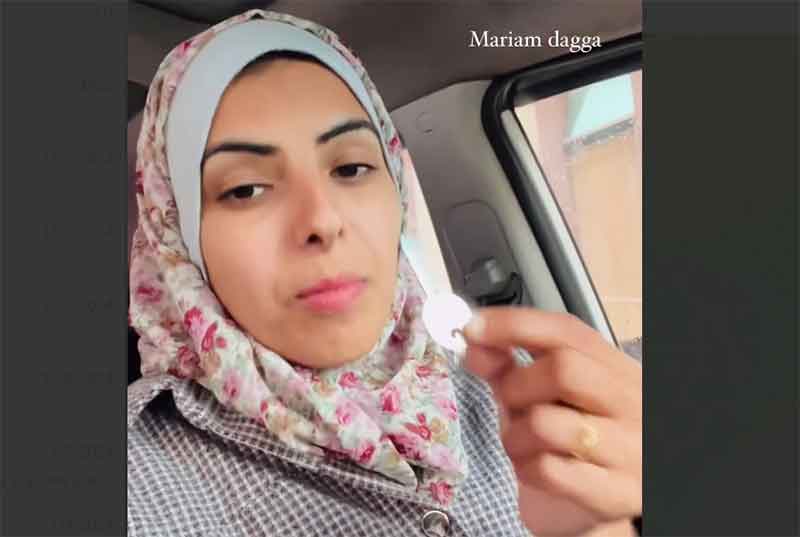
“This small key which I hold in my hand, used to be a key to my apartment,” she tells the camera in a daze.

“This is what has remained from our house, a key to a home that no longer exists,” she laments in an absent-minded way.

“Our house had been targeted long time and was finally struck and demolished into the ground,” she says this almost tracing the steps of when it collapsed into the ground and how they escaped.

“Our house was part of a three-story building of six apartments with our storerooms in the basement where we kept the rest of our belongings, odd stand, table, chair, bric-a-bracs and other things which we thought that we might need one day. 

“Too late now. No more, everything had been targeted, destroyed, perished into thin air. What remained of it is this key – the house of memories, of childhood, the home of the family, our forgotten laughter and happy times,” Mariam talks in reverie.  

“From the day I knew our home was targeted I kept thinking, and on a daily basis, just thoughts that came to my mind about how are we going to live after the war, ‘where will we live, is it here, somewhere else, where, which part of town.’

Idol thoughts but very real, everything of ours is destroyed, blocks of apartments long gone and what remained turned into debris and wreckage. I don’t think that we will even find a house to rent. Thinking about this is difficult and painful, a creepy character in my head bellows in the back of my mind.

Who is going to rebuild our houses and all the other houses. I try and think about working hard again to make money to rebuild our home but what about the others all, the great majority of the people of Gaza have left their homes hastily and with just this key….”

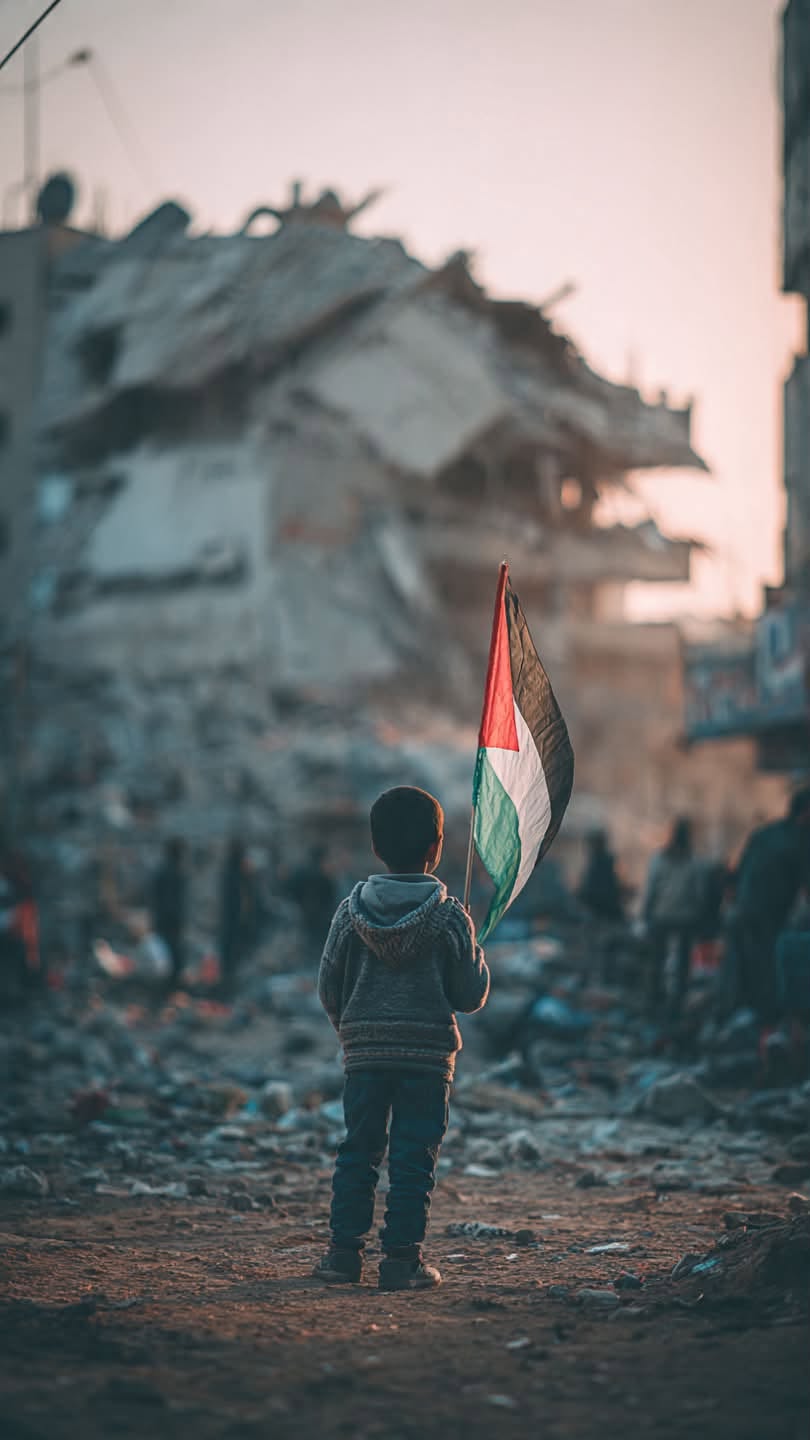
The scale of destruction in Gaza is phenomenal. Figures can’t tell the truth. One has to see the images to fathom what the Israelis did right across the strip to be able to comprehend the extent of their vengeance – mass murder, mass destruction of property, a genocide for years to come. 

CrossFireArabia

CrossFireArabia
Dr. Marwan Asmar holds a PhD from Leeds University and is a freelance writer specializing on the Middle East. He has worked as a journalist since the early 1990s in Jordan and the Gulf countries, and been widely published, including at Albawaba, Gulf News, Al Ghad, World Press Review and others.

Related Posts

On a 1932 US Passport: ‘Jerusalem, Palestine’

An American man was going through his grandmother’s old belongings when he stumbled upon a surprise that completely changed his perspective. He found his grandmother’s original passport, issued in 1932, which clearly stated: “Jerusalem, Capital of Palestine.” Overcome with shock, he grabbed his phone and began recording, his hands trembling as he said, “They lied to us… Palestine has always existed, and Jerusalem was its capital.”
This passport is genuine—a historical document over 90 years old. Documents and history do not lie.

Continue reading
Salman Abu Sitta: Safeguarding Palestinian Memory

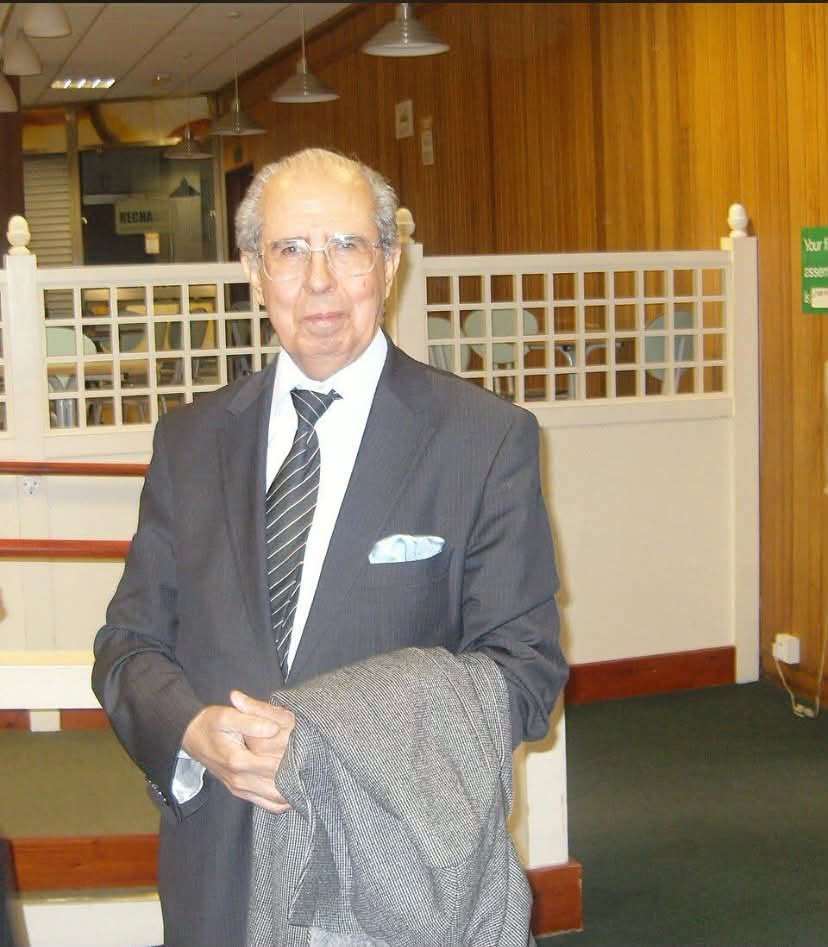
Salman Abu Sitta (b. 1937) is a Palestinian researcher born in the city of Beersheba; he is considered one of the researchers most deeply engaged with the issues of Palestinian refugees and the right of return.

Abu Sitta: A Note

Salman Abu Sitta was born in Beersheba, Palestine, in 1937. He earned a Bachelor’s degree in Civil Engineering from Cairo University in 1959 and a PhD in Civil Engineering from the University of London in 1964. He is a fellow of the Institution of Structural Engineers (UK), the Association of Professional Engineers of Ontario (Canada), and the American Society of Civil Engineers. He is also a former member of the Chartered Institute of Arbitrators (UK), the American committee for energy facility specifications, and the executive council for space structures. He has authored over 30 scientific papers and books on engineering and received multiple awards from the British engineering association.

He served as a professor at the University of Western Ontario in Canada and was an independent member of the Palestinian National Council from 1974 until the signing of the Oslo Accords in 1993. Additionally, he was a member of the Palestinian Cooperation body in Geneva, where he chaired the committee on refugees and UNRWA. He has authored more than 80 research papers and articles and published four books on the refugee issue in both Arabic and English. He also designed and illustrated a comprehensive map of all the villages and cities of Palestine, with three-quarters of a million copies distributed in both Arabic and English.

Documenting the Nakba


Abu Sitta spent over 40 years researching information regarding Palestine—both before and after the establishment of Israel. The mission he undertook went beyond merely chronicling the Nakba and documenting Palestine; he also strove to ensure that “the memories and identity of the homeland would never be lost.” Abu Sitta began his documentation work in his thirties after discovering the memoirs of the Turkish commander of Beersheba—which was under Ottoman rule at the time—a document dating back to the early 19th century. “That is where the research began, and it has never stopped since,” he says. “I have continued to gather every scrap of material regarding every inch of my homeland.”

Works
Atlas of Palestine 1917–1966.
The Right of Return: Sacred, Legal, and Feasible (2001), Arab Institute for Research and Publishing.
The Road to Return: A Guide to Displaced and Existing Towns and Villages and Holy Sites in Palestine (2007), Palestine Culture Foundation.
The Nakba Register 1948 (2000), Baheth Center for Studies.
Sources
Geographicus Rare Antique Maps biographical dictionary of cartographers | Salman Abu Sitta (in English), QID: Q133842860.
The Palestinian Return Centre. “Third Return Week” (in English). Archived from the original on 2023-12-12. Retrieved 2023-11-23.
Al Jazeera: Bila Hudood (Without Borders) – Dr. Salman Abu Sitta, October 10, 2007 [Broken link]; archived copy (March 4, 2016).
Interview with Al-Ahram newspaper [Broken link]; archived copy (September 24, 2013).


Continue reading

You Missed

Remains of Journalist Doaa Al Sharaf Recovered After 3 Years

  • By marwan
  • September 13, 2026
  • 23 views
Remains of Journalist Doaa Al Sharaf Recovered After 3 Years

On a 1932 US Passport: ‘Jerusalem, Palestine’

On a 1932 US Passport: ‘Jerusalem, Palestine’

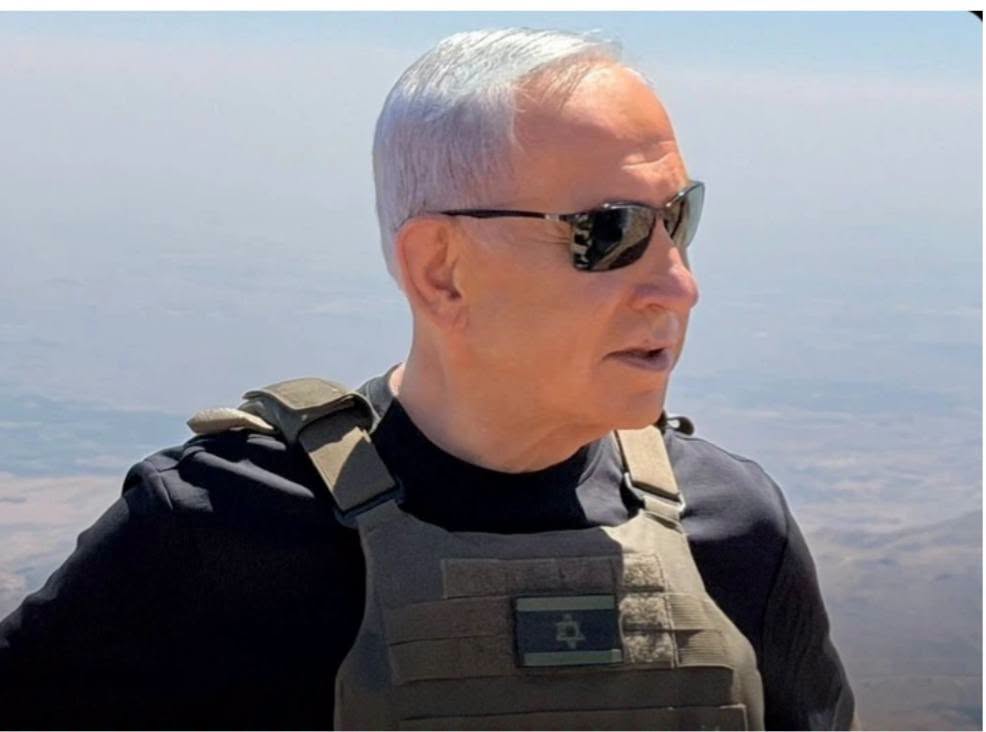
Netanyahu, Mount Hermon and Arab Silense

  • By Heba
  • September 13, 2026
  • 18 views
Netanyahu, Mount Hermon and Arab Silense

Don’t Let The Flag Down

Don’t Let The Flag Down

Art in History

Art in History

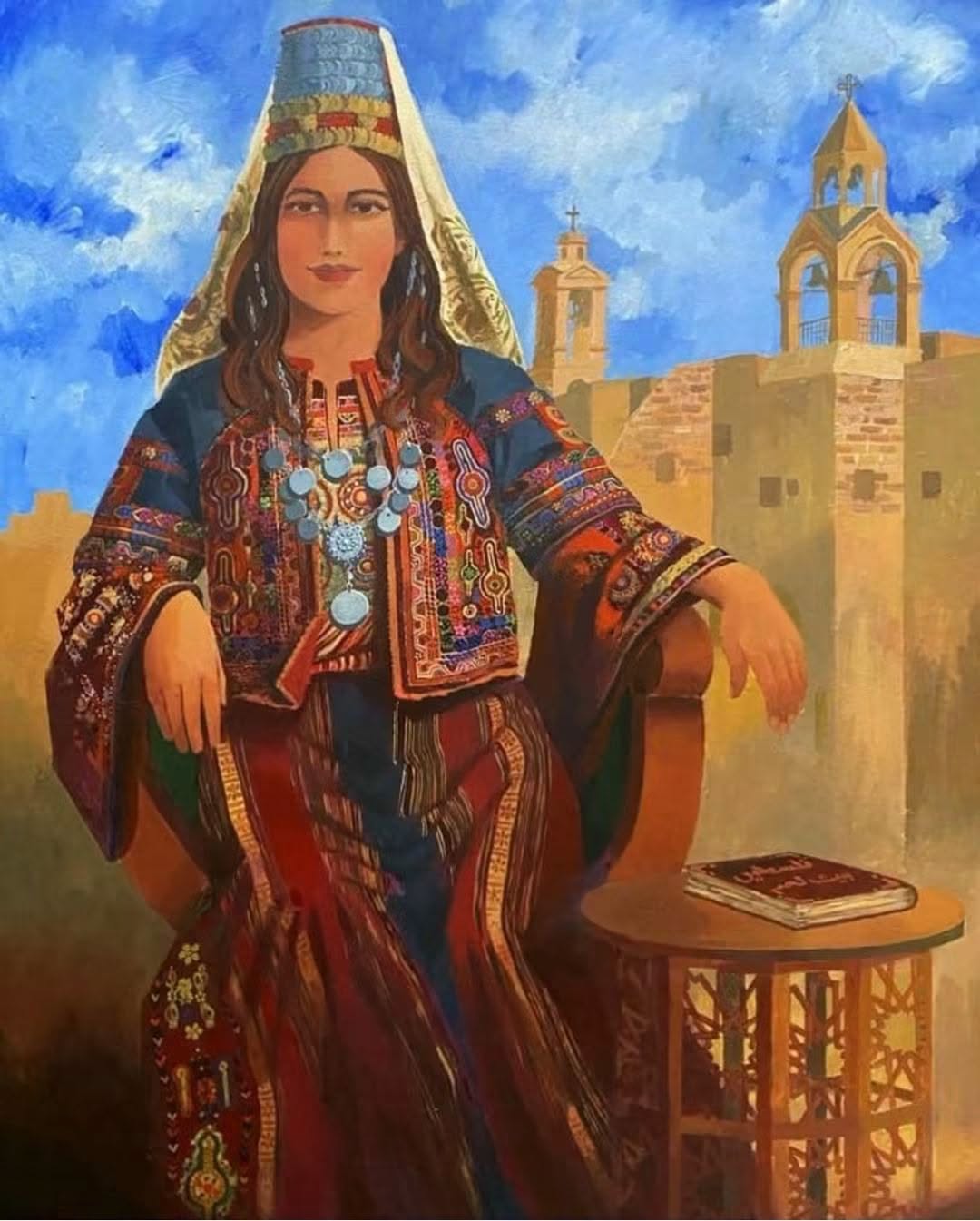
The Dress of Ramallah

The Dress of Ramallah