Top Writer Says ‘No’ to Berlinale

Top Indian writer Arundhati Roy has pulled out of the Berlin International Film Festival (Berlinale) after criticizing “unconscionable statements” by members of the festival jury, who said that art should not be political when asked about the Israeli genocide in Gaza.

Roy had been scheduled to attend a screening of her 1989 film In Which Annie Gives It Those Ones in the Classics section of Berlinale 2026.

In a strongly worded statement, Roy said the selection of the film had initially filled her with warmth and nostalgia. She noted that she had long felt disturbed by the positions of the German government and several cultural institutions on Palestine. Still, she said she had consistently received solidarity from German audiences when speaking about Gaza, which encouraged her to consider attending the festival.

However, Roy said she changed her decision after hearing comments from members of the Berlinale jury earlier that day.

“Like millions of people across the world, I heard the unconscionable statements made by members of the jury of the Berlin film festival when they were asked to comment about the genocide in Gaza,” Roy wrote.

She described labeling the genocide a political issue then insisting that art should remain separate from politics as “jaw-dropping.” She added that such framing shuts down urgent conversations about a crime against humanity.

Roy stated clearly in her message that she believes events in Gaza amount to genocide against Palestinians by Israel. She further added that the United States and Germany, along with several European governments, support and fund Israel and therefore share responsibility.

“If the greatest film makers and artists of our time cannot stand up and say so, they should know that history will judge them,” she wrote, adding that she felt “shocked and disgusted.”

Roy concluded her statement by confirming that, “with deep regret,” she would not attend the Berlinale.

The controversy emerged after journalists asked Berlinale jury members to comment on the genocide in Gaza and Germany’s support for Israel, which also funds the festival.

Polish producer Ewa Puszczyńska, a member of the jury, refused to answer.

“There are many other wars where genocide is committed, and we do not talk about that,” Puszczyńska said. She described the issue as “complex” and claimed that it was unfair to ask jury members to comment on government policies.

Roy’s withdrawal adds to rising tensions within European cultural spaces over the Israeli genocide in Gaza. Artists, writers, and filmmakers have increasingly debated whether cultural platforms should take political positions. – Quds News Network

CrossFireArabia

CrossFireArabia

Dr. Marwan Asmar holds a PhD from Leeds University and is a freelance writer specializing on the Middle East. He has worked as a journalist since the early 1990s in Jordan and the Gulf countries, and been widely published, including at Albawaba, Gulf News, Al Ghad, World Press Review and others.

Related Posts

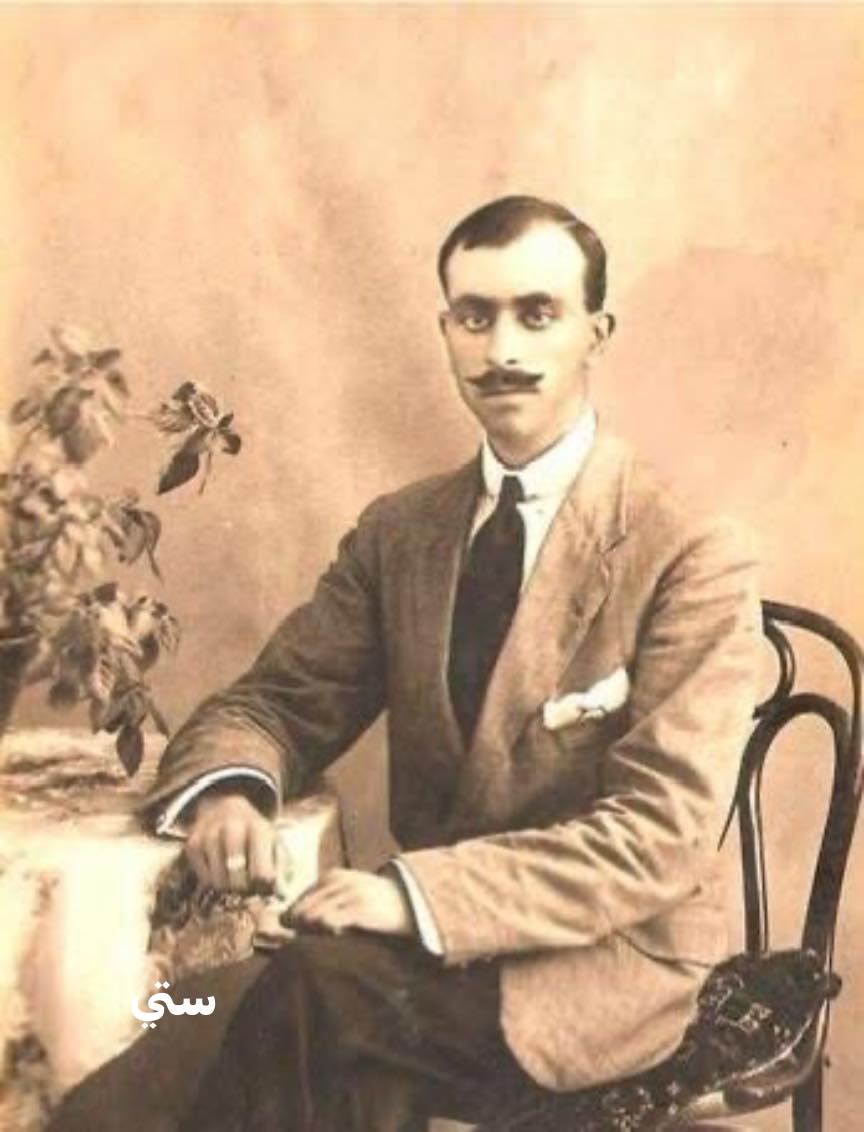
Al Bahri: The Man Who Set Palestinian Theater

He is a playwright and author of 12 plays, nearly 20 novels, and numerous translations. Jamil Habib Afara (al-Bahri) was known as the “Father of Theater.” He was born in 1895 in Haifa and his family name dates back to the mid-18th century, as his ancestor owned a merchant fleet that sailed the Mediterranean between Haifa, Acre, and Tripoli. This is where his family name originated.

He showed early interest in literature and writing. He and his brother, Hanna, were keen to revitalize the literary and intellectual scene in Haifa, establishing the National Library there in 1922. He first published the “Zahrat al-Jamil” (The Beautiful Flower) and later “al-Zahra” (The Flower) which was initially a weekly publication that later became a bi-weekly and continued publication for about nine months after his death in 1931. His last piece was

a journalistic investigation into the execution of the three martyrs: Muhammad Jamjoum, Fuad Hijazi, and Ata al-Zeer, in the city of Acre in 1930. He dedicated his time and his newspaper that day to the souls of these martyrs, leading with: “The terrible hour in Haifa and all of Palestine: Let us commemorate those who gave their lives for the homeland.” A large funeral was held for him, and poems and eulogies were recited and published in the Palestinian press, such as the “Al-Karmel” and “Falastin,” newspapers.

The Department of Culture of the Palestine Liberation Organization posthumously awarded him the Jerusalem Medal for Culture and Arts in 1990, and the Palestinian Ministry of Culture reprinted his first book, “The History of Haifa,” in 2022.

Continue reading
Palestine Mourns a Giant

By Dr Hussan Zomlot

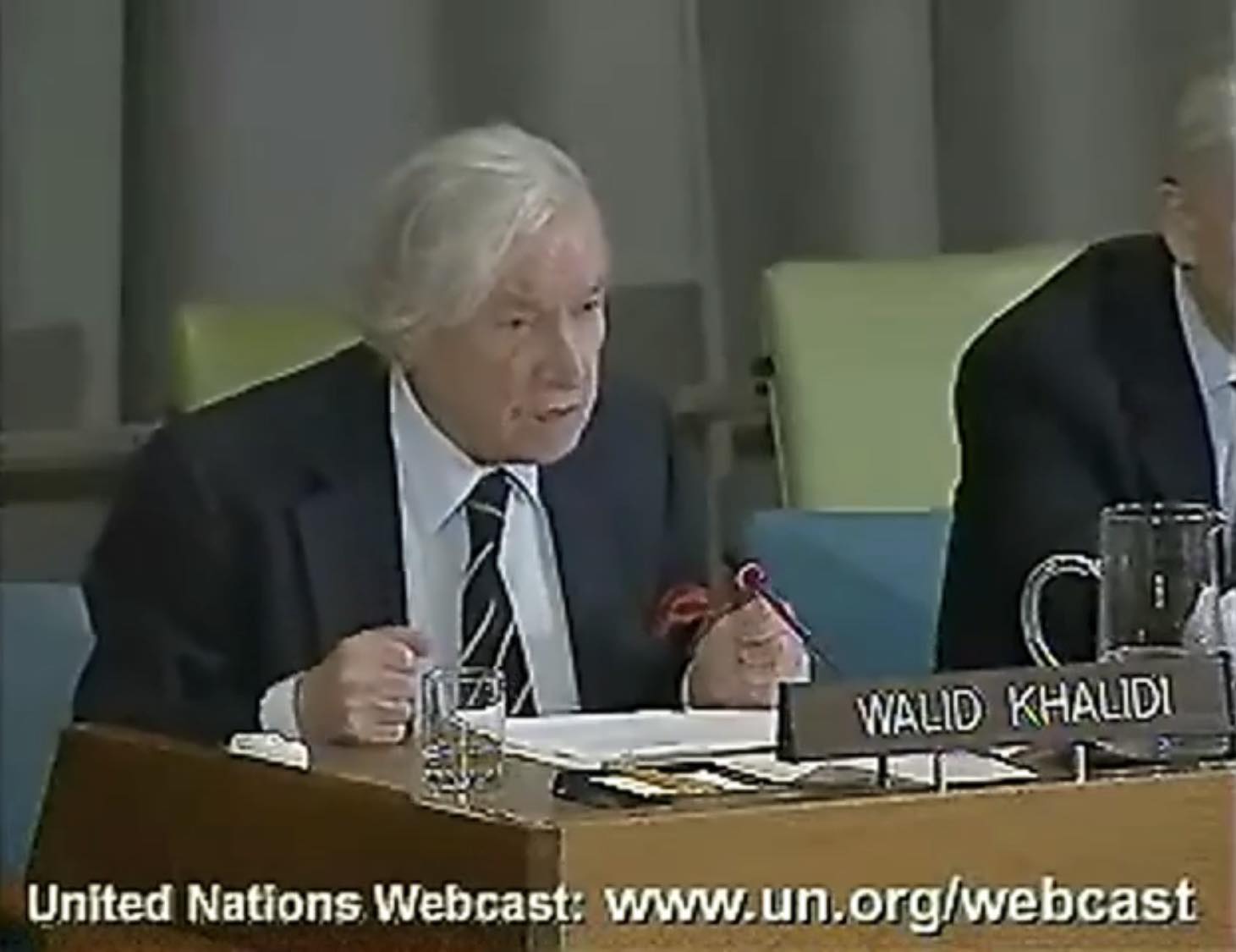
We bid farewell to Dr. Walid Khalidi — a national treasure, a guardian of memory, and a mentor to generations.

Born in Jerusalem in 1925, he was one of the most commanding Palestinian voices of the modern era. For more than seven decades, he dedicated his life to bearing witness — documenting what happened to Palestine in 1948 with unflinching honesty and scholarly precision, and ensuring that new generations understand Palestine as it was, as it is, and as it must one day be again. He was the teller of our history and the keeper of our collective memory.

I first had the honour of meeting Dr. Khalidi in 2008 in Cambridge, Massachusetts, where I was a Visiting Scholar at Harvard University. By then, he had long made Cambridge his home after decades of teaching and research at institutions including Oxford, the American University of Beirut, and Harvard.

Over the years that followed, his home in Cambridge became a place of refuge and reflection. We would sit for hours speaking about Palestine — its past, its wounds, and its future. He gave generously of his time, wisdom, and spirit. Even through the darkest years — and none have been darker than these last two — he remained a source of steadiness and moral clarity. His emails, arriving with the care and weight of a mentor who never stopped believing, were a lifeline. The last came only weeks ago.

Dr. Khalidi’s extraordinary impact was not only in his scholarship but in his refusal to allow Palestine to be erased. Through landmark works such as Before Their Diaspora and All That Remains, and through the institutions he helped build — most notably the Institute for Palestine Studies — he ensured that the story of our people would be preserved with rigour and dignity for generations to come.

He devoted his life entirely to Palestine — through scholarship, diplomacy, and mentorship. To countless Palestinian researchers, students, and public servants, he was a teacher and a guiding light.

Today, as news of his passing reaches us, I was honoured to speak with his son, Dr. Ahmed Khalidi — himself a distinguished Palestinian scholar — to share my condolences and memories. What I felt most was a proud sadness: proud of everything Dr. Khalidi gave to Palestine and to all of us who followed his path, and sad because the world is immeasurably diminished without him.

Today, Jerusalem mourns one of its most distinguished sons, as it once mourned Edward Said. Jaffa mourns as it did with Ibrahim Abu-Lughod. Nablus mourns as it did with Fadwa Tuqan. Palestine mourns a giant.

We shall honour Dr. Walid Khalidi in the only way he would have wanted — by continuing the struggle for truth, for justice, and for liberation, until the day scholars walk freely through the gates of a great university in Jerusalem that bears his name, and the Palestine he devoted his life to documenting stands free.

Continue reading

You Missed

Israeli Official: ‘Life in The North is Dead’

Israeli Official: ‘Life in The North is Dead’

White House Economic Council Head Says The Iran War May End in 6 Weeks, Wont Stay Months

White House Economic Council Head Says The Iran War May End in 6 Weeks, Wont Stay Months

At Day 16 of The War The Israeli Air Force Say The Dropped 10,000 Bombs on Iran

At Day 16 of The War The Israeli Air Force Say The Dropped 10,000 Bombs on Iran

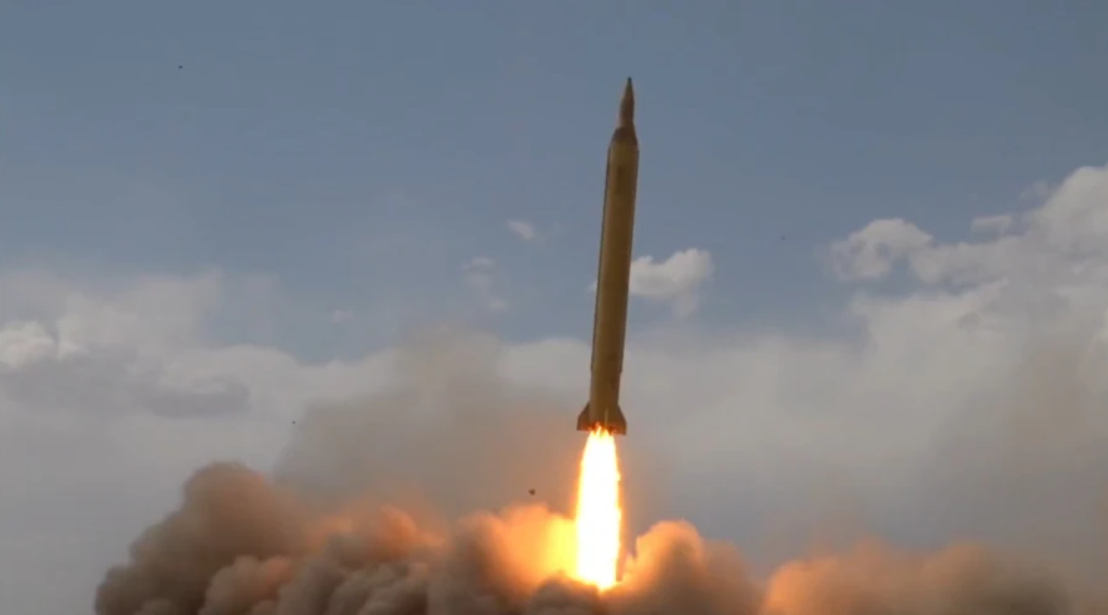
IRGC Spokesman: Most of The Missiles Produced After The 12-Day War Are Yet to be Used

IRGC Spokesman: Most of The Missiles Produced After The 12-Day War Are Yet to be Used

IRGC Spokesman: Most the Missiles Launched in This War Were Produced 10 Years Ago

IRGC Spokesman: Most the Missiles Launched in This War Were Produced 10 Years Ago

Al Bahri: The Man Who Set Palestinian Theater

Al Bahri: The Man Who Set Palestinian Theater