60 Bodies Found in Al-Shja’iya After Israeli Pull Out

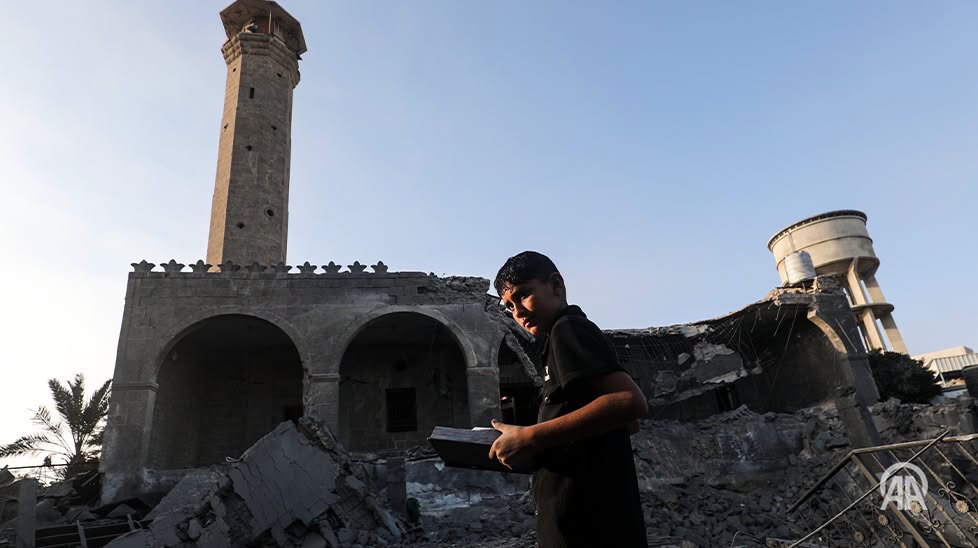
As Palestinians return to the heavily devastated neighborhood of Al-Shja’iya they discovered bodies of civilians in the streets and under the rubble of their homes, as Israeli occupation forces have systematically detonated thousands of buildings in the area.

Over 60 bodies have been discovered in Al-Shja’iya following the Israeli troop withdrawal from the area. They had been there for nearly two weeks.

“Dozens of bodies are still trapped under the rubble in the neighborhood,” Palestinian Civil Defence Agency spokesman Mahmoud Basal told a press conference.

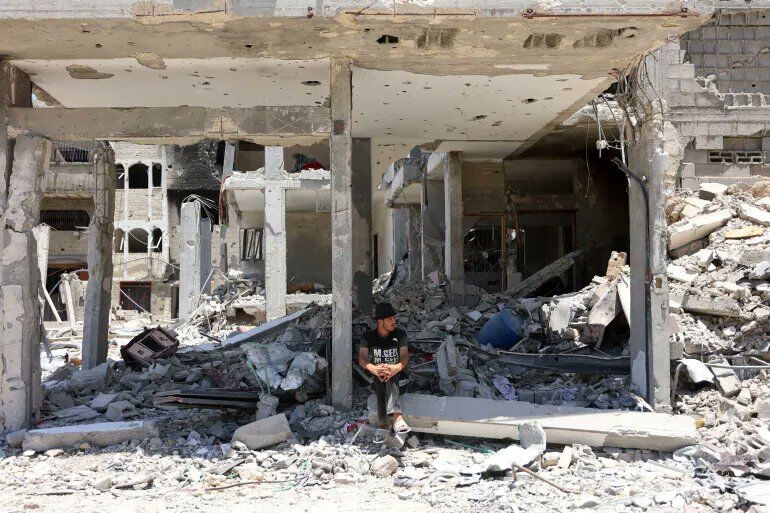
He said Israeli forces destroyed more than 85% of the residential buildings in the neighborhood. “Shejaiya has become a disaster area that is not suitable for habitation,” he added.

The Israeli airstrikes and ground operations decimated more than 85% of residential buildings in Shujaiya, maakin the area uninhabitable and akin to a devastated wasteland.

A medical clinic that served over 60,000 citizens was also destroyed, exacerbating the humanitarian crisis, the Palestinian news agency, Wafa, reported

Palestinians started returning to their ruined homes in the  devastated Shuja’iyya following an Israeli invasion of the area, during which Israeli forces destroyed most of its buildings and all of its infrastructure, rendering it uninhabitable.

Despite their withdrawal from the Shuja’iyya, Wednesday, Israeli forces continued to bomb the area the following day. Shuja’iyya lies to the east of Gaza City.

The withdrawal of Israeli forces revealed a staggering level of destruction, reducing the neighborhood to rubble. Entire residential blocks have been leveled, streets obliterated, and critical infrastructure targeted throughout the area, Wafa reported.

Eyewitnesses from the neighborhood recounted harrowing tales of Israeli forces firing upon civilians as they attempted to evacuate, despite designated exit routes.

CrossFireArabia

CrossFireArabia
Dr. Marwan Asmar holds a PhD from Leeds University and is a freelance writer specializing on the Middle East. He has worked as a journalist since the early 1990s in Jordan and the Gulf countries, and been widely published, including at Albawaba, Gulf News, Al Ghad, World Press Review and others.

Related Posts

Dr Nada Abu Alrub: ‘…No Language of Surrender Here’

Nada Abu Alrub

A free soul may endure every wound, but it will never learn the language of surrender

On her facebook page she writes:

She is an Australian humanitarian doctor. Her father is Palestinian, her mother is Iranian and she has Gazzawi soul.
 

Continue reading
Gaza Sea: A Time Bomb in Waiting

As the sweltering summer heat intensifies and living conditions shrink for residents of the Gaza Strip, the beach is no longer just a place for picnics, relaxation, or seasonal recreation for hundreds of thousands of families. Instead, it has become the last remaining geographical refuge from the scorching heat inside dilapidated tents and overcrowded makeshift settlements.

Along the Gaza City coastline, large numbers of people flock daily in search of fleeting moments of respite and a breath of fresh air.

Faced with an unprecedented and severe shortage of potable water, dozens of families living near the beach have become directly dependent on seawater for their daily needs, such as bathing children and washing clothes and belongings, despite being fully aware of the associated environmental and microbiological risks.

Read also: Between Pollution and the Lack of Rescue Equipment: A Deepening Disaster on Gaza’s Beaches

This crisis is taking on even more complex dimensions as nearly two million Palestinians remain crammed into a narrow coastal strip that comprises only 12% of the Gaza Strip’s total area, according to data from the Civil Defense Authority.

This forced overcrowding along the coastline has made daily, direct contact with the marine environment the only viable option for saving lives from the sweltering heat and harsh displacement conditions.

Before the war, the relevant environmental and health authorities in the Gaza Strip subjected the beach waters to regular monitoring and testing. Based on these tests, they distributed color-coded awareness maps indicating safe and prohibited swimming areas for the public, using precise scientific indicators.

In the last official assessment published before the war, specifically in July 2023, the Palestinian Water and Environmental Quality Authority announced that approximately 60% of the Gaza Strip’s total coastline was classified as a safe and healthy environment for recreational swimming, based on microbiological tests and field health inspections. Pollution was limited to 40% of the coastline near known discharge points.

However, these figures and calculations are now outdated and cannot be applied to the situation in 2026 as reported in the Sanad News Agency.

Continue reading

You Missed

Melissa Barrera: ‘I am Not Afraid of Losing My Career…’

Melissa Barrera: ‘I am Not Afraid of Losing My Career…’

The Face of Innocence

The Face of Innocence

Facing The Israeli Gun: 108 Cases Against Journalists in July

Facing The Israeli Gun: 108 Cases Against Journalists in July

Is There a New Regional Order Emerging?

  • By marwan
  • August 10, 2026
  • 5 views
Is There a New Regional Order Emerging?

Dr Nada Abu Alrub: ‘…No Language of Surrender Here’

  • By marwan
  • August 9, 2026
  • 15 views
Dr Nada Abu Alrub: ‘…No Language of Surrender Here’

The Women of Jerusalem

  • By marwan
  • August 9, 2026
  • 16 views
The Women of Jerusalem