‘Run For The Food And Be Shot’

By Munia Jamal

Sameh described how people — sometimes 20,000 to 30,000 at a time — wait all day in the heat. When the gate opens, they surge forward, crashing through barbed wire, trampling over each other, trying to grab whatever they can from the aid. 

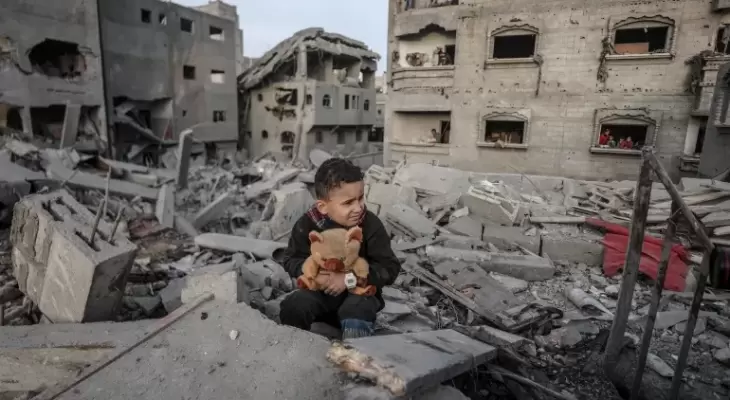
I watched a video last week that I wish I couldn’t see: A small boy, no older than nine, crying over the body of his martyred mother in front of a journalist’s camera. His eyes were red, his shoulders shaking, dust still clinging to his face. 

“She went out to bring us aid,” he said. “She never came back.”

That boy is Ahmed Zidan. And I haven’t been able to forget his face since. His mother had left that day just to get food. That’s all: A little flour, a few canned goods, if she got lucky. But she never returned. She was killed in western Rafah, surrounded by gunfire, panic, and chaos.

Ahmed’s mother was just trying to feed her children. But like so many others, she became a victim of what the world dares to call “The American humanitarian aid.”

Ahmed’s tearful face was shared on the news, across social media, and around the world. But for him, it wasn’t a story, it wasn’t content, it was the moment his world collapsed.

Don’t go, says Ahmad Zeidan holding his mother’s shoes after she was killed: it’s a lie, a lie | the Gaza Humanitarian Foundation is a firing squad pic.twitter.com/QwcU9udAZJ

— Sarah Wilkinson (@swilkinsonbc) June 3, 2025

The Aid that Kills

When the first Gaza Humanitarian Foundation (GHF) site opened on May 26, 2025, it came with bold promises. It was billed as the solution of four centralized aid hubs, guarded by US private contractors, coordinated with Israeli oversight, and allegedly designed to bring order to the chaos of Gaza’s hunger crisis.

According to Israeli and US officials’ claims, aid was supposed to flow safely to the most vulnerable. But just two days later, tanks, tear gas, and bullets greeted the crowds who gathered in Rafah. Instead of food, they found death. So far, nearly 900 Palestinians have been killed and over 5,000 wounded recorded at aid sites. Mothers, children, and elders are all caught between hunger and bullets. 

It’s hard to explain the feeling of being watched while trying to survive, of having your basic needs locked behind fences, guards, and guns. And with any wrong move, you could be shot. 

They called it online “the real-life Squid Game.”

And honestly? They’re right. Because in Gaza, we run for food and get shot for it. Not for prize money, but for a bag of flour. It’s not an exaggeration; it’s the daily reality for the hungry in Gaza.

Scores of Palestinians Killed in Israeli Strikes, Including 20 Aid Seekers

https://www.palestinechronicle.com/scores-of-palestinians-killed-in-israeli-strikes-including-20-aid-seekers/embed/#?secret=XORqk6FFyW#?secret=woulaeWSrI

‘Forgive Me’

Israa is from Khan Yunis, but today she lives in a tent in Al-Mawasi, one of Gaza’s last so-called “safe zones.” Her family was forced to flee months ago. “We’ve lost our home,” she said, “but losing Abdullah… that broke something deeper.”

Abdullah was her cousin — 31 years old, an orphan, and a caretaker to his younger siblings. He lived with his younger brother and sister in the tent. The rest of the family is scattered, most of them are married and displaced in different parts of Gaza.

He used to work as a cleaner, even during the war, hired by Doctors Without Borders when everything else shut down. He was engaged to be married at the end of July. “His fiancée was sewing her wedding dress,” Israa told me. “Now, she’s burying his clothes.”

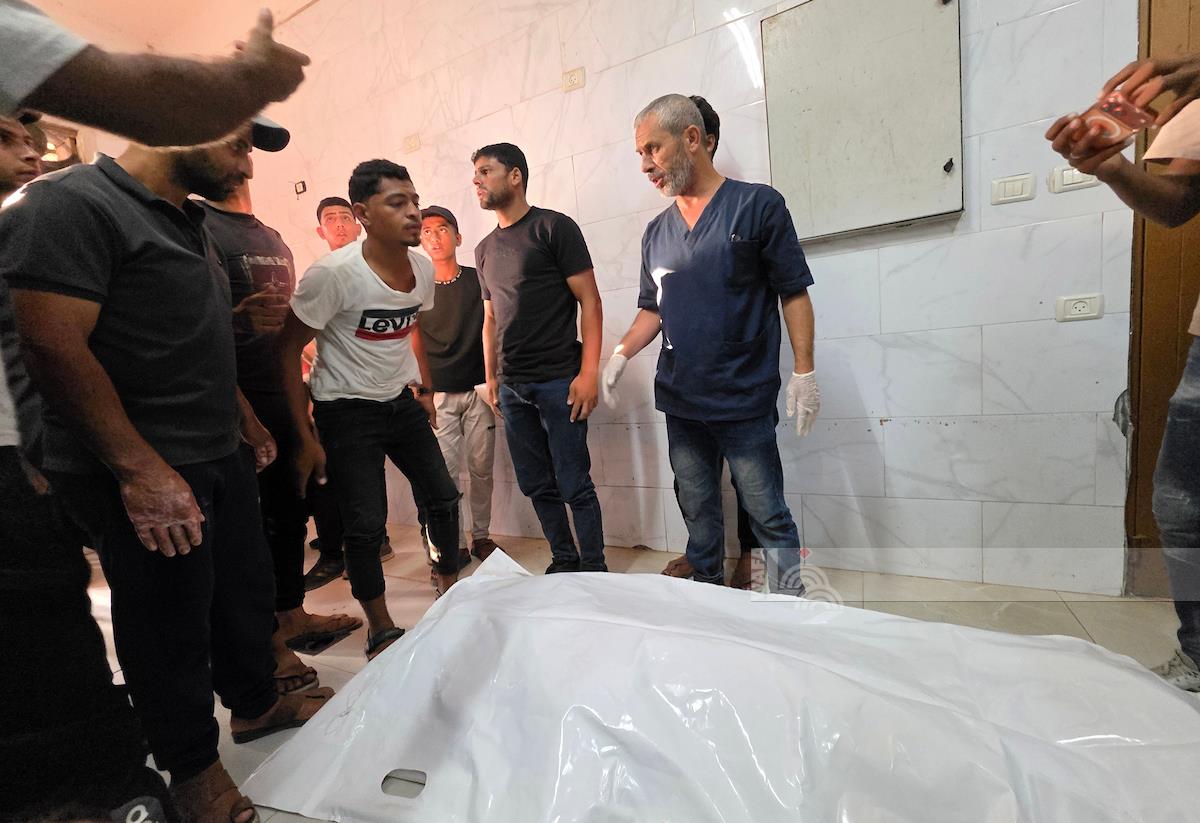
On July 3, 2025, Abdullah went to the American aid center in Khan Younis. He went there almost every day. “Not because he wanted to,” Israa said, “but because he had to. There was no other way to feed the family.”

That day, an Israeli artillery shell struck the crowd. Abdullah was killed instantly.

“It wasn’t random,” Israa said. “They were aiming at the people. He told us before he left, ‘If I don’t come back today, forgive me.’ It’s like he knew. Like he could feel it.” 

When we heard the news, the family was shocked. “We couldn’t believe it. Even now, it doesn’t feel real. He had dreams. He wanted a family. He wanted peace.”

Why do people still go to these centers? Israa answered without hesitation: “Because people are starving. There’s no other choice. We know it’s dangerous. But what’s worse, dying slowly from hunger, or all at once from a bomb?”

I ask if there’s anything she wants to say to the world. She looked at me tired, but clear. “Tell them we are not numbers. Tell them Abdullah had dreams. A fiancée. A wedding date. A heart. He was human. We all are. But this world doesn’t treat us like that anymore.”

Massacre at Aid Centers: Scores of Palestinians Killed by Israeli Fire in Gaza

https://www.palestinechronicle.com/massacre-at-aid-centers-scores-of-palestinians-killed-by-israeli-fire-in-gaza/embed/#?secret=RIPYJFKaW8#?secret=g8QzD1xwIa

It’s a Trap

Sameh is 40, from Beit Lahia, now displaced in Al-Shati refugee camp. When I spoke to him, he didn’t start with anger. He started with exhaustion,  the kind that comes from hunger, from fear, from waiting in line not for bread, but for a chance at it. 

“They starved us for over 100 days,” Sameh told me. “No food was allowed in. Nothing. Then they opened these so-called American aid centers protected by Israeli soldiers and said, “It’s not food. It’s a trap.”

He was talking about the Gaza Humanitarian Foundation centers. Sameh made his way to the Wadi Gaza center near Netzarim in the middle of the strip.  “It was like a playground surrounded by barbed wire, and the aid was inside. They open the gate at random. No one knows when. It could be in the morning or at night. A green flare means the center is open. Red means it’s closed. If it’s daytime, you hear a drone announce it. And that’s when the chaos begins.”

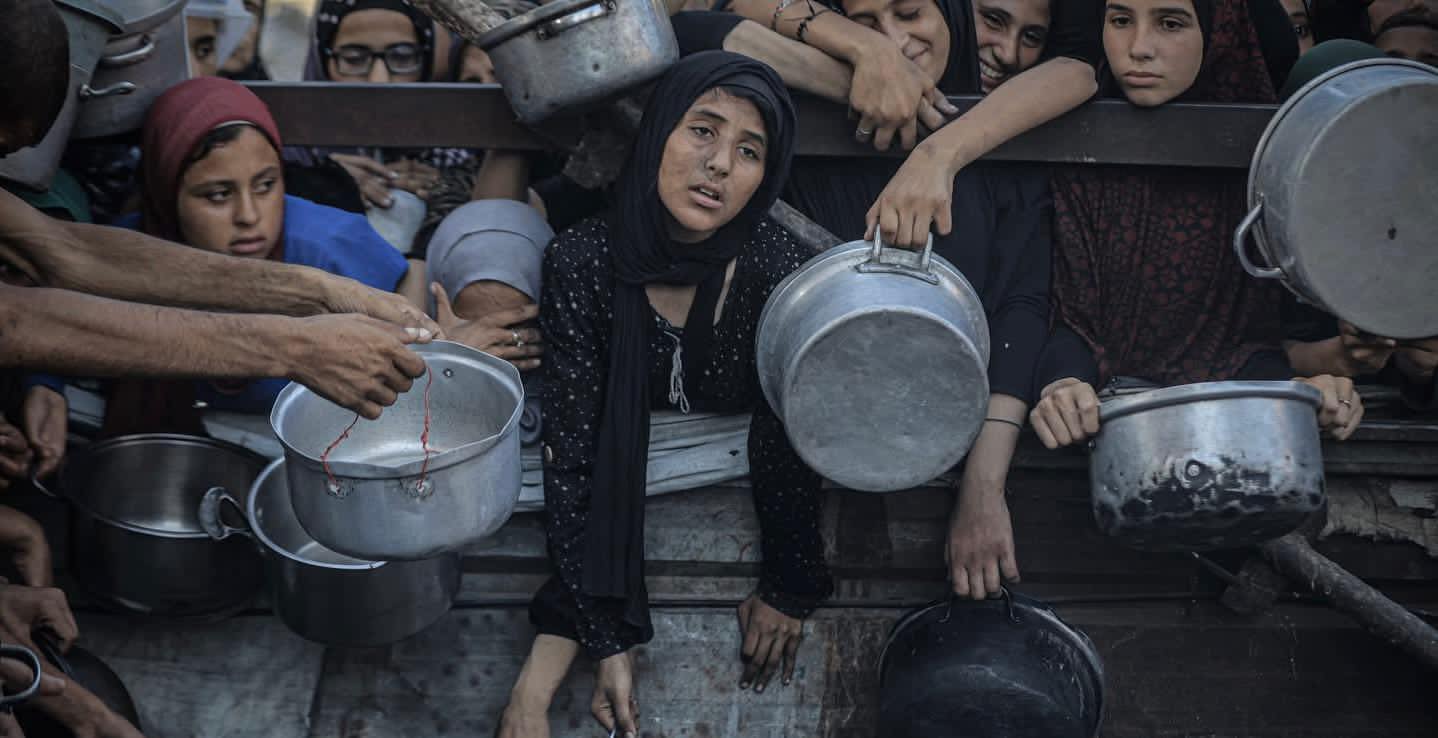
Sameh described how people — sometimes 20,000 to 30,000 at a time — wait all day in the heat. When the gate opens, they surge forward, crashing through barbed wire, trampling over each other, trying to grab whatever they can from the aid. 

He said it never lasts more than ten minutes. “I’ve gone twice. The first time, I left with nothing. The second time, I found a few things on the ground — a kilo of lentils, a kilo of chickpeas, a kilo of peas, and some salt. That’s what I brought home to my kids.”

Sameh told me that only about 10% of these people actually get anything. Organized gangs always push to the front, looting the best items — flour, sugar, oil — and then reselling them at outrageous prices. 

He said the Israeli army watches and lets it happen. In fact, it feels like they want it that way. “There’s no safety. No system. Just weapons, fear, and starvation. The gangs take what they want. The rest of us crawl on the ground like animals. That’s what they made us.”

Sameh has seen more than just hunger. “I saw a young man next to me get shot in the leg. He fell down and screamed, but no one could help him — they were too busy trying to grab food. Another time, a boy no older than 17 — he was right next to me — took a sniper bullet between the eyes. Dead. Just like that. Another guy next to him was hit in the chest.”

Sameh paused before adding something that shook me. “You know what? I’d rather die trying to feed my children than watch them die of hunger in front of me. I have no money. I can’t buy anything. If I don’t go, we starve. If I do go, I might not come back.”

Gaza Humanitarian Foundation ‘Responsible’ for Aid Point ‘Death Traps’

https://www.palestinechronicle.com/gaza-humanitarian-foundation-directly-responsible-for-aid-point-death-traps/embed/#?secret=kOwuM9NpLl#?secret=w9GmBHc7a0

He said Israel allows this violence to continue because it wants disorder. When trucks entered through Netzarim or Zikim in the north, he said, the tribes once organized a secure delivery to UN warehouses. 

It worked — until Israel blocked it. “They don’t want dignity. They want panic,” he told me. “These centers are just a show. They open them so the world can say, ‘Look, Gaza is getting help.’ But what does that help even mean if we can’t reach it? If we have to risk our lives just to get a bag of flour? What kind of aid is this, if we can’t even survive the line to receive it?”

Sameh’s voice didn’t crack when he told me this. It hardened.  Because in Gaza today, even hope feels like something we have to fight for.

Creating Monsters

Sabri is 23. He’s the oldest of five, and ever since his father died, he’s had no choice but to become everything — brother, provider, protector. “I walked from Al-Shati camp to Rafah,” he said. “I left at 4 in the afternoon. I didn’t get back until 3 the next day.”

Twenty-three hours. All of that — the walking, the waiting, the risk — for just three kilos of flour. But it’s not just the distance. It’s what you face when you get there.

Sabri told me the crowds are like groups. “At the front, there are gangs. They’re not like us. They come to steal the valuable stuff and throw the rest on the ground.” 

Behind them, a few desperate people try to collect what’s left. And the ones who truly need the aid? They usually leave empty-handed. Sabri was one of them. “Some people don’t even go for food,” he told me. “They just collect the empty cardboard boxes to burn for fire.”

He said he was lucky this time. He got something. But that luck came with a price. “The shooting started in front of me. People were screaming and trying to cover. But I stayed. Because my brothers were hungry. What else could I do?”

Don’t Fund the Gaza Humanitarian Foundation: It’s a Genocidal Smokescreen

https://www.palestinechronicle.com/dont-fund-the-gaza-humanitarian-foundation-its-a-genocidal-smokescreen/embed/#?secret=WnVV7ZII6O#?secret=LsLzhGUbPw

Hunger doesn’t scare him anymore, not the way the silence at home does, when his siblings look at him with tired faces, waiting for food. “I didn’t care if I died. I just wanted to come back with something.”

Then, Sabri said something that stuck with me: “This war — this way of helping — it’s made monsters out of people. People kill each other for a sack of flour. That’s what they’ve done to us.”

He says that it’s normal now. Like that’s what life should be: risking death for food.

But it’s not normal. Nothing about this is.

It feels like a game, but we are not playing. What kind of help is this? Where feeding your family feels like breaking the law; where aid comes wrapped in barbed wire and guarded by snipers; Where people must risk their lives just to eat.

How did we get to a place where a single bag of flour can cost someone their life? Where hunger turns people fight each other, forget who they are — just to survive.

If the world truly wants to help Gaza, start by treating us like human beings. 

We don’t need pity, we need protection; we need a future; we want to live, not die trying to eat.

We are not players in a game; we are not your footage; we are not actors in a show, we are not numbers on a screen.

At the end of Squid Game, the player 456 whispers: “We are not horses. We are humans. Humans are…”

He never finishes. Neither do we. Because in Gaza, we’re never given the chance.

(The Palestine Chronicle)

  • CrossFireArabia

    CrossFireArabia
    Dr. Marwan Asmar holds a PhD from Leeds University and is a freelance writer specializing on the Middle East. He has worked as a journalist since the early 1990s in Jordan and the Gulf countries, and been widely published, including at Albawaba, Gulf News, Al Ghad, World Press Review and others.

    Related Posts

    Guterres Condemns Israeli Strikes on Beirut

    UN Secretary-General Antonio Guterres on Sunday “strongly” condemned Israeli airstrikes on the Lebanese capital when the US and Iran are nearing an agreement to end hostilities.

    “I strongly condemn today’s Israeli strikes on Beirut,” Guterres wrote on US social media company X. “The strikes took place despite the ceasefire & at a time when the US & Iran are expected to reach an agreement that will pave the way to a peaceful resolution of this conflict.”

    He noted that the conflict has had a “devastating impact on the world’s economy.”

    The secretary-general expressed hope for a “successful outcome” to the diplomatic efforts between Washington and Tehran, and urged all parties to show “maximum restraint at this crucial moment.”

    US President Donald Trump said on Sunday that a peace agreement with Iran remains on track for signing within a “few hours,” despite the Israeli strike on Beirut. He said the attack “should not have happened” and urged all sides to “stand down.”

    Officials in Iran have disputed the timeline, with Iranian media saying Tehran has not yet taken a final decision.

    At least seven people were killed and several others when the Israeli army launched airstrikes on the southern suburbs of Beirut and areas in southern Lebanon on Sunday, Lebanese media said.

    The Israeli army has continued targeting Lebanon since early March when Hezbollah retaliated to the Iran war, killing 3,800 people and displacing more than 1 million. Anadolu

    Continue reading
    Limited Iran Strike: Concept and International Dimensions

    By Dr. Samira Bitam


    In the race for global dominance, America, as always, is committed to playing the political game as the world’s policeman. It believes it has the right to manage its diplomatic and economic affairs in a way that secures its leading position, regardless of whether the targeted country has a legitimate defense or the pretext used to launch its strikes. The objective is paramount, and the target, often due to its nuclear advancements, is seen as an obstacle to America’s complete dominance.

    The crucial question remains: What are the future implications of a new world order that will differ from its predecessor in both the number of poles and the size of the participating countries in alliances? Everyone is vigilant and eager to secure a piece of the global pie, aiming to maintain international standing, security, and open, free competition, all in pursuit of economic strength and astute policy.

    In reality, Iran has never been an enemy of America, but the USA considers it its strongest competitor due to its possession of nuclear weapons—the same weapons possessed by Pakistan, Russia, North Korea, and others. Iran is currently under American scrutiny, and there has been, and continues to be, talk of a limited strike. In the language of politics, every word has a hidden meaning that cannot be understood superficially. “Limited” could refer to a small strike, perhaps targeting a sensitive location, or it could be a verbal threat indicating America’s seriousness about launching an attack on Iran at any moment. Caution is necessary because such attacks have international repercussions and provoke international reactions. We don’t believe America will repeat the same strike against Iran as it did against Iraq if it hasn’t carefully considered its options.

    Iran possesses a silent political language that conceals the reality of its possession of weapons of mass destruction. What some newspapers publish may only represent a fraction of what remains undisclosed. For example, the “Whale” torpedo, specifically designed to destroy American warships, represents perhaps the most crucial element of a comprehensive defense system. According to Israeli estimates, the “Whale” torpedo weighs approximately 500 kilograms and operates underwater at extremely high speeds. To alleviate the burden on American aircraft carriers, Israel assesses that a single torpedo cannot destroy an aircraft carrier unless Iran employs precision operations. Israel’s concerns were evident in Netanyahu’s statement that Israel is facing difficult circumstances. This is understandable, given its gamble on redrawing the map of the Middle East, a gamble that risks failure. The international community will not remain passive, and repeated American aggression against peaceful nations will not go unpunished as before. Governments have reached a level of awareness sufficient to rise up in defense of their borders and territories. Iran will not be the only one affected, as the objective is an existential conflict that will allow Trump to secure his place in history.

    The state of the Arabs today is no less lamentable than it was yesterday, when Iraq found itself mired in a sectarian war fueled by external forces, aimed at destroying its prestige and preventing any progress. America achieved its goals and plans, even though Bush, then president, implicitly admitted his mistake towards the Iraqis. The target was not a nuclear weapon, but a regime that had become a threat, leading to increased pressure on Middle Eastern countries. This occurred amidst a deliberate and even explicit fragmentation of the region, normalization of relations with certain countries, and their sponsorship of attacks like those of September 11, 2001, which targeted the World Trade Center in the United States.

    America’s expenditure of dollars on the newly named Department of War will only add to its burdens. The country is already suffering from internal economic problems and social ills, issues that Trump has neglected, giving them the same attention he has devoted to his war agenda. Meanwhile, the international community is increasingly turning away from such dark policies. The Iranian episode in the global arena is being orchestrated through statements, pronouncements, and verbal sparring, all aimed at disseminating information as mere rhetoric, unreliable for uncovering the whole truth. Some weapons that Iran has not disclosed remain a mysterious enigma, threatening the stability of neighboring countries and those hosting American bases. Should America strike Iran, the entire scene would escalate into a third world war, leading to further political attrition and economic collapse. Statistics show a significant decline in maritime trade, and militias would become active on the borders of countries that have not taken a clear stance on global events. Being a friend of America does not exempt a country from being drawn into conflict, even under the flimsiest of pretexts. International law has been shaped to serve the Zionist-American vision of global hegemony, and membership in the United Nations will not alter this reality. The language of engagement today is the language of force, not negotiation and restraint. The weapons used in wars may not be limited to conventional arms; they may include biological weapons, ideological weapons, and other types that remain undisclosed until the last moment. This is because the cards of the international game are never fully revealed, and the element of surprise is always present. Every country has its own foreign policy and international stances. However, the blame lies with the Arab states that have succumbed to the aggression that devastated Gaza and destroyed its infrastructure. Every action has a reaction, and those who participated in the barbarity of the aggression against the Gaza Strip and merely condemned it will not escape the consequences of a third war, should one erupt.

    Systems are not preserved through silence; rather, they collapse through their own inaction, cowardice, and humiliation. The next war, should it erupt, will bring with it many new realities that will lead to the emergence of a new world order, one that shows no mercy to the weak. The weak are those whose economies are fragile, whose people’s awareness is low, and whose workforce is neither serious nor aware of the magnitude of the stakes that await them. The world will inevitably witness a transformation that will alter perceptions, shift power dynamics, and tip the scales in favor of those who deserve it, without sentimentality or favoritism. Instead, there will be justice for just causes, because global change begins with an act of aggression and ends with a balance of power.

    Opportunities.

    The details of a limited strike, should it occur, will determine the new roadmap. Focusing on the initial strike will clarify the initial ambiguity before any attack.

    Regardless of Trump’s aggressive reactions, whether towards the media or his opponents, his racism in some situations has been blatant. While Trump’s approach to managing affairs is troubling, it has also presented an opportunity for those working closely with him. By observing his habits and reactions, his adversaries can deduce information that allows them to manipulate or control him. Despite their success in this regard, no one can underestimate the difficulty of steering him in the same direction the following day, as Michael Wolff testifies in his book, “Fire and Fury: The Trump White House.”

    Can Iran discern Trump’s seriousness from his jest if the matter concerns the outbreak of a third war, the duration and scope of which are unknown unless Trump decides to end it? Time will tell.

    Dr. Samira Bitam is an Algerian writer. This is a translated version of an article she write for the Al Rai Al Youm website

    Continue reading

    You Missed

    Taleb Al-Rifai No Longer a Kuwaiti

    Taleb Al-Rifai No Longer a Kuwaiti

    Ceasefire And Defeat: Iran Won The War  

    Ceasefire And Defeat: Iran Won The War  

    Breaking: Trump Announces Reopening of Hormuz Strait

    Breaking: Trump Announces Reopening of Hormuz Strait

    Breaking: Iran-US Reach a Deal

    Breaking: Iran-US Reach a Deal

    The First Palestinian Filmmaker

    The First Palestinian Filmmaker

    The Nation Story…

    The Nation Story…