Who is With Israel in World Sports?

The refusal of international and continental sports federations to suspend Israel’s membership, 22 months after its perpetration of genocide in the Gaza Strip, constitutes a blatant violation of the values and principles they claim to uphold. It reflects a selective, double-standard application of the rules governing the participation of states, clubs, and individuals in international and continental competitions, whether official or friendly.

The International Federation of Association Football (FIFA), the Union of European Football Associations (UEFA), the International Olympic Committee, and other international federations continue to refrain from acting against Israel, despite its killing of 664 Palestinian athletes since the start of the genocide in the Gaza Strip in October 2023 and its violations of regulations and standards on human rights, peace, and non-discrimination.

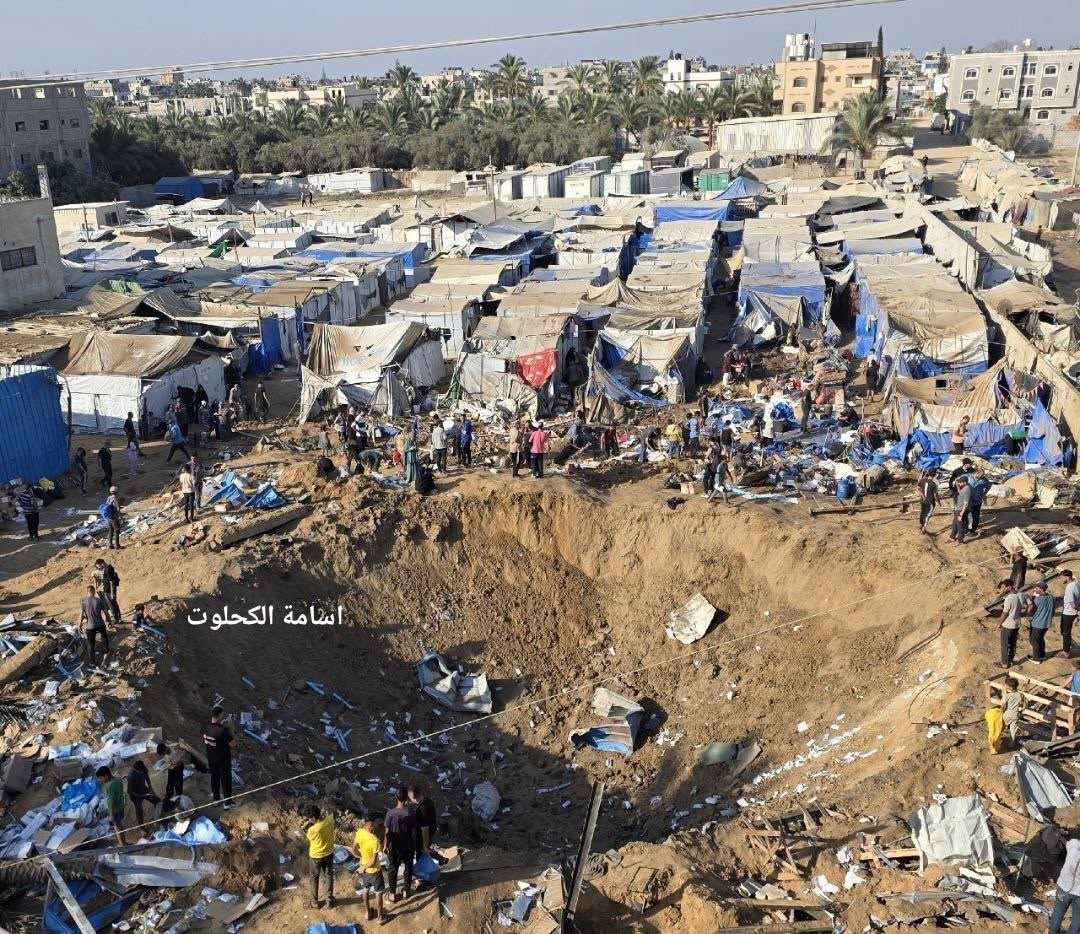
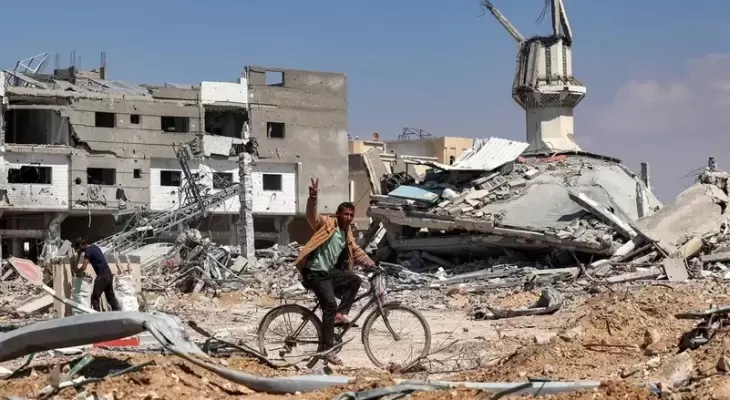
Since the start of its genocide, Israel has targeted all aspects of life in the Gaza Strip, including the sports sector. According to the Palestinian Football Association, the Israeli army has destroyed 264 sports facilities, 184 completely and 81 partially.

Sports activities in the Gaza Strip have been completely suspended since October 2023 due to the widespread and systematic targeting of sports infrastructure, which has been almost entirely destroyed.

Athletes have been killed or, like most of Gaza’s population, forced to devote their time and effort to finding shelter and food, amid ongoing Israeli military attacks, repeated displacement, and starvation and blockade policies that have left the entire population food insecure and claimed the lives of approximately 220 people to date.

In July alone, the Israeli army killed 40 athletes and scouts, the vast majority in the Gaza Strip, according to the Palestine Olympic Committee.

The global influence of football associations, particularly FIFA and UEFA, places a double responsibility on them to uphold human rights principles and exclude national associations whose member states are implicated in serious crimes. It is unjustifiable for the Israeli national team to continue participating in FIFA tournaments, or for Israeli clubs to compete in UEFA tournaments, while Israel kills nearly one Palestinian athlete every day.

The continued disregard by international and continental sports federations for their own regulations, and their failure to take disciplinary action against Israel, constitutes a breach of their ethical and institutional obligations and exposes them to accountability, particularly if Israel exploits its international sporting participation to whitewash human rights violations and promote its sporting activities as a cover for atrocities committed by its army against Palestinian civilians.

The normalisation by sports federations of the participation of representatives of a state committing genocide is not only a legal violation but also an unprecedented moral failure. Allowing Israeli athletes to perform before audiences of hundreds of millions misleads the public and enables Israel to use sporting events as a powerful tool to influence global opinion.

In many cases, Israeli athletes themselves are implicated in grave violations against Palestinian civilians, with consistent estimates indicating that about 30 members of the Israeli delegation to the 2024 Paris Olympics served in the Israeli military or publicly supported the genocide in the Gaza Strip.

Although there is no official data on Israeli athletes who served in the army, Israel’s policy of compulsory conscription makes it reasonable to believe that most people of active athletic age served as reserve soldiers and may have participated in crimes committed during the genocide in the Gaza Strip, particularly given the army’s extensive and long-standing reliance on reserve forces to destroy civilians and infrastructure in the enclave.

FIFA’s regulations provide clear grounds to punish Israel. Article 3 of the FIFA Statutes states that “FIFA is committed to respecting all internationally recognised human rights and shall strive to promote the protection of these rights.” Article 16 also empowers the FIFA Council, “without a vote of the Congress, [to] temporarily suspend with immediate effect a member association that seriously violates its obligations.”

Similarly, Article 11 of the UEFA Disciplinary Regulations states that “all entities and persons subject to these regulations must respect the Laws of the Game, as well as UEFA’s Statutes, regulations, directives and decisions, and comply with the principles of ethical conduct, loyalty, integrity and sportsmanship.” Article 14 provides that “any entity or person subject to these regulations who insults the human dignity of a person or group of persons on whatever grounds, including skin colour, race, religion, ethnic origin, gender or sexual orientation, incurs a suspension lasting at least ten matches or a specified period of time, or any other appropriate sanction.”

On this basis, Israel could be punished and its clubs banned from European competitions for violating the principles of non-discrimination and integrity, engaging in conduct that conflicts with UEFA values, particularly by including clubs from illegal Israeli settlements in Palestinian territory in its league, and for the racist and discriminatory behaviour of some Israeli players.

As for the International Olympic Committee, Principle 1 of the Fundamental Principles of Olympism in the Olympic Charter states that “Olympism seeks to create a way of life based on the joy of effort, […] and respect for internationally recognised human rights.” Article 1 of the Fundamental Principles of the Olympic Code of Ethics also stipulates “respect for human dignity.” Accordingly, the Committee can punish Israel by suspending its membership for violating these and other principles.

It is unacceptable for the administrations of international and continental sports federations to submit to political pressure or favouritism, or to apply double standards in addressing human rights violations.

FIFA swiftly suspended Russia and its football clubs from official activities following its 2022 invasion of Ukraine, with UEFA following suit by banning Russian teams from European championships and prohibiting matches on Russian soil. The International Olympic Committee also acted, citing allegations of human rights violations, aggression against the sovereignty of an independent state, and the destruction of civilian infrastructure.

International and continental sports federations must take a decisive and immediate stance by suspending Israel’s membership in all sporting activities, banning events on its territory, ending its treatment as a state above the law, and imposing all disciplinary measures for the genocide it is committing in the Gaza Strip. They must also prevent Israel from using sport to whitewash gross human rights violations and normalise its illegal actions internationally.

The Israeli Football Association must be compelled to remove settlement clubs in the occupied Palestinian territory from its domestic competitions, in line with the rules of territorial jurisdiction and the non-recognition of illegal annexation.

Euro-Med Monitor calls on international and continental sports federations to form independent committees to document the destruction of sports infrastructure and the killing of Palestinian athletes, press Israel to rebuild the destroyed facilities, compensate affected athletes, and provide emergency support to Palestinian federations to ensure their continued operation through temporary headquarters, secure equipment and records, and rehabilitation programmes.

CrossFireArabia

CrossFireArabia
Dr. Marwan Asmar holds a PhD from Leeds University and is a freelance writer specializing on the Middle East. He has worked as a journalist since the early 1990s in Jordan and the Gulf countries, and been widely published, including at Albawaba, Gulf News, Al Ghad, World Press Review and others.

Related Posts

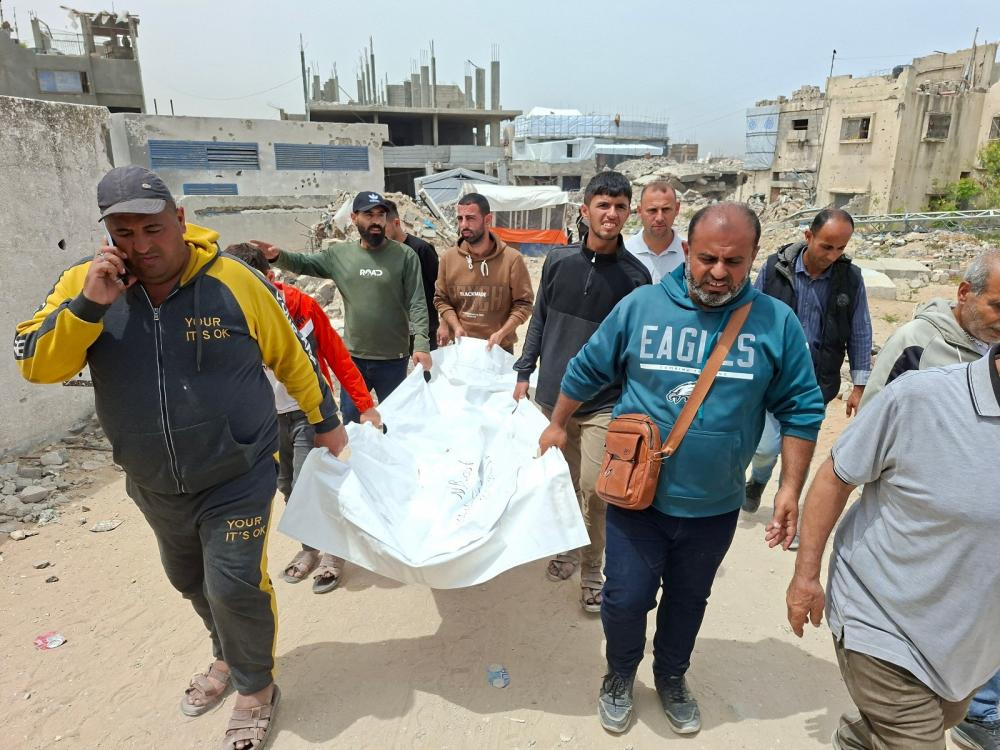
Gaza: Bringing the Dead Home From Beneath the Rubble

GAZA — Almost three years after Israeli airstrikes brought apartment blocks and family homes crashing down across the Gaza Strip, another kind of rescue operation is taking place among the ruins.

This time, the Civil Defense teams are not searching for survivors.They are searching for the dead.

Day after day, crews move from one shattered house to another, lifting concrete, cutting through twisted reinforcing bars and carefully searching through layers of debris for bodies and human remains that have lain there since the earliest months of the war.

For thousands of Palestinian families, the war has therefore never quite reached an ending. There has been no funeral, no grave to visit and, in some cases, no certainty about what happened to a husband, a wife, a parent or a child.

The Palestinian Information Center reported on August 20 that about 8,000 Palestinian bodies were still believed to be beneath the rubble across Gaza. Earlier, in late June, Gaza Civil Defense spokesman Mahmoud Basal put the figure at approximately 8,500 bodies and remains, illustrating the difficulty of establishing a definitive number amid the scale of destruction and the thousands still officially regarded as missing.

And the bodies are still coming out.

On August 24, Civil Defense recovery official Mohammed Abu Dan said teams had recovered the remains of nine members of the Salmi family from their destroyed home in Gaza City’s Zeitoun neighborhood. The house had been struck on November 20, 2023. Seventeen members of the family were believed to have been inside.

A day earlier, Abu Dan reported another operation in Zeitoun in which crews recovered four sets of remains from the Abu Shamala family home after two days of searching, before moving to another destroyed house where five more bodies were found.

These are not isolated searches. They have become a grim routine.

One Excavator Against a City of Rubble

The scale of the task bears little relationship to the equipment available to carry it out.

Civil Defense said in July that one phase of the recovery project was operating with essentially one excavator, one loader and one truck, with support from the International Committee of the Red Cross. The teams were trying to work their way through neighbourhoods containing thousands of missing people.

PIC reported in June that a single excavator could be seen working in Gaza City while crews searched for thousands of bodies. Basal warned that, at such a pace, completing the operation could take years.

Civil Defense says the shortage is not simply a question of damage to its own fleet. Palestinian officials repeatedly say Israel has prevented the entry of the heavy machinery, specialist equipment and replacement vehicles required to remove massive slabs of reinforced concrete safely and quickly. PIC reported again on August 20 that restrictions on bringing heavy equipment into Gaza remained one of the principal obstacles to reaching those buried beneath destroyed homes.

So men trained for rescue frequently find themselves doing work that should require cranes, excavators and specialist recovery machinery with hand tools and limited mechanical assistance.

The result is painfully slow progress.

In February, the Sanad News Agency followed Civil Defense crews into Sheikh Radwan after the search resumed at the ruins of a home bombed in December 2023.

More than 120 displaced people had reportedly been sheltering there.

For survivor Ramzi Salem, the arrival of Civil Defense came after more than two years of appeals for machinery.

There was still only limited equipment.

Much of the digging had to be done manually.

Eventually, 56 bodies were recovered from the site

Salem described each recovery as reopening the original trauma.

Every body that comes out, it is as if the bombing happens again,” he told Sanad.

But there was another emotion alongside the pain: Relief that the dead could finally be buried.

For families such as Salem’s, recovery does not reverse the loss. It gives the loss a place.

Waiting Beside the House

Perhaps that is why families continue returning to the rubble.

Twelve-year-old Muhammad Riyadh Ghaboun stood beside what remained of his family’s house in the Sabra neighbourhood of Gaza City while Civil Defense teams worked nearby.

PIC described the boy as waiting not for his home to be rebuilt, but for the remains of family members buried beneath it for months.

What he wanted was much simpler: for them finally to have graves.

Across Gaza, similar families have lived through a peculiar form of bereavement in which death is understood but burial remains suspended.

Some know exactly where their relatives died. They can point towards a particular room beneath a collapsed ceiling or identify approximately where someone had been sleeping when the building was hit.

Others do not know whether the missing person lies beneath rubble, was killed elsewhere or was detained.

In February, Civil Defense spokesman Mahmoud Basal said that besides the thousands of bodies thought to be trapped beneath destroyed buildings, more than 3,000 people remained missing without confirmed information about their fate.

That uncertainty changes mourning itself.

A grave normally confirms death. In Gaza, thousands of families have been denied even that confirmation.

Digging For His Own Family

Few accounts reveal the psychological cost as starkly as that of Mahmoud Khalla.

His family home was struck on December 21, 2023.

According to his testimony to the Palestinian Safa news agency, around 39 relatives were killed: His mother and father, his wife and children, siblings, their spouses and children, as well as members of his extended family.

Only 12 bodies could initially be buried.

The rest remained beneath the wreckage.

Khalla waited.

And waited.

Twenty-nine months passed.

When the heavy equipment he had hoped would arrive still had not materialised, he and neighbours began digging themselves with shovels, hammers and other basic tools.

They had to break through four collapsed ceilings.

With every blow, Khalla said, he felt himself getting physically closer to his children and siblings while knowing that what he might eventually find would no longer resemble the people he remembered.

The recovered remains included his uncle. Bones believed to belong to children could not immediately be identified and were recorded as unidentified remains.

His experience exposes another agonising stage of the process.

Finding human remains does not necessarily mean knowing whose remains they are.

When A Body No Longer Has A Face

After months or years beneath rubble, heat, dust and moisture, Civil Defense teams frequently recover skeletonised remains, fragmented bones or incomplete bodies.

Identification can therefore become extraordinarily difficult.

Mahmoud Ashour, spokesman for Gaza’s forensic evidence department, said in January that many recovered bodies had deteriorated into skeletal remains or decomposed fragments.

The most important tool needed to resolve uncertain identities—DNA testing—is severely restricted by the absence of the necessary laboratory equipment, according to Ashour.

This means identification may begin with whatever information survives.

Relatives can sometimes recognise clothing.

They may identify jewellery, a personal item or a distinctive physical feature.

Safa reported in April that some families had managed to identify recovered relatives through physical characteristics or clothing after decomposition made ordinary visual recognition impossible.

Where identification is possible, the remains are transferred through the appropriate medical and forensic procedures before burial.

In one November recovery operation at the destroyed Abu Hamada family home in Maghazi refugee camp, Civil Defense reported recovering the remains of 14 people, including women and children. Relatives identified them and the remains were transferred to the forensic medicine department at Al-Aqsa Martyrs Hospital before burial.

Where families cannot identify the remains, the process becomes more complicated.

Forensic personnel document what they can. Earlier Gaza procedures have included photographing distinguishing characteristics, assigning identification numbers and preserving available information so relatives may eventually be able to make a match.

But DNA testing would offer a far more reliable answer.

Ashour has called for equipment as well as a database containing genetic information from families of missing people so recovered remains can be matched scientifically.

Without it, some families may finally receive bones from beneath a house and still not know whether those bones belong to the person they have spent years waiting for.

The Men Who Must Keep Looking

There is another side to these operations that receives less attention: The Civil Defense officers themselves.

Their work once centred on pulling people alive from collapsed buildings.

Now they are regularly required to dismantle the physical remains of destroyed homes while recovering decomposed bodies, skeletons and fragments belonging to children, women and entire families.

The recovery crews know that relatives are often standing only metres away.

A piece of fabric or a bone fragment can suddenly become the answer to a question a family has been asking for two or three years.

Civil Defense official Abdullah Al-Majdalawi described the difficulty after remains recovered from Sheikh Radwan cemetery had become mixed following destruction and bulldozing. Many of those recovered were reduced to skeletal remains and fragments.

He summed up the human problem behind forensic identification with a stark question:

How do names turn into numbers?

That is, in many ways, the dilemma confronting Gaza’s recovery teams.

They work among numbers—eight bodies here, nine there, 47 from one house, 50 collected at Al-Shifa Medical Complex.

But every number belongs to somebody.

In July, Civil Defense recovered 47 bodies and sets of remains from the Al-Hassaina family home in Sabra. Another 36 people were still believed to be somewhere beneath the ruined structure, and officials said the force of the explosion might even have displaced remains into neighbouring properties.

That makes the work forensic as much as mechanical.

Crews cannot simply drive an excavator through a pile of concrete.

Each layer may conceal remains. Each fragment has potential meaning. Each discovery must be handled carefully enough that identification is still possible afterwards.

Speed matters.

But so does dignity.

Fifty Funerals, Nearly Three Years Late

On August 20, Palestinians gathered in Gaza City to bury the remains of 50 people recovered from beneath demolished homes in neighbourhoods including Tal Al-Hawa, Zeitoun, Sabra, Sheikh Radwan and Al-Shati.

Some belonged to the Sawafiri, Batniji and Gharbiya families.

Many had been beneath the debris since 2023.

PIC reported that much of what was recovered was no longer complete bodies but bone fragments, remains and personal belongings. Civil Defense officials said many were women and children.

For those families, the funerals came almost three years late.

For thousands more, there is still no funeral.

There is only the house.

The rubble.

And the waiting.

Parents wait for children. Children wait for fathers and mothers. Husbands and wives live with a loss that is simultaneously certain and unfinished.

Some return repeatedly to the place where they believe a relative lies.

Some ask Civil Defense when their street will finally appear on the recovery schedule.

Some search themselves.

And Civil Defense teams continue moving through Gaza’s destroyed neighbourhoods, one house at a time.

Their progress is measurable in bodies brought home—but against an estimated 8,000 still beneath the wreckage, each recovery also shows how immense the task remains.

The operation is therefore no longer simply a search through rubble.

It is a race to restore identities before time erases more of them.

For the families standing beside Gaza’s ruins, finding the dead does not bring the people they love back.

But after years of looking towards a collapsed house and knowing someone is still beneath it, recovery offers something that war has denied them for far too long:

a name,

a body,

a funeral,

and somewhere to mourn.

Continue reading
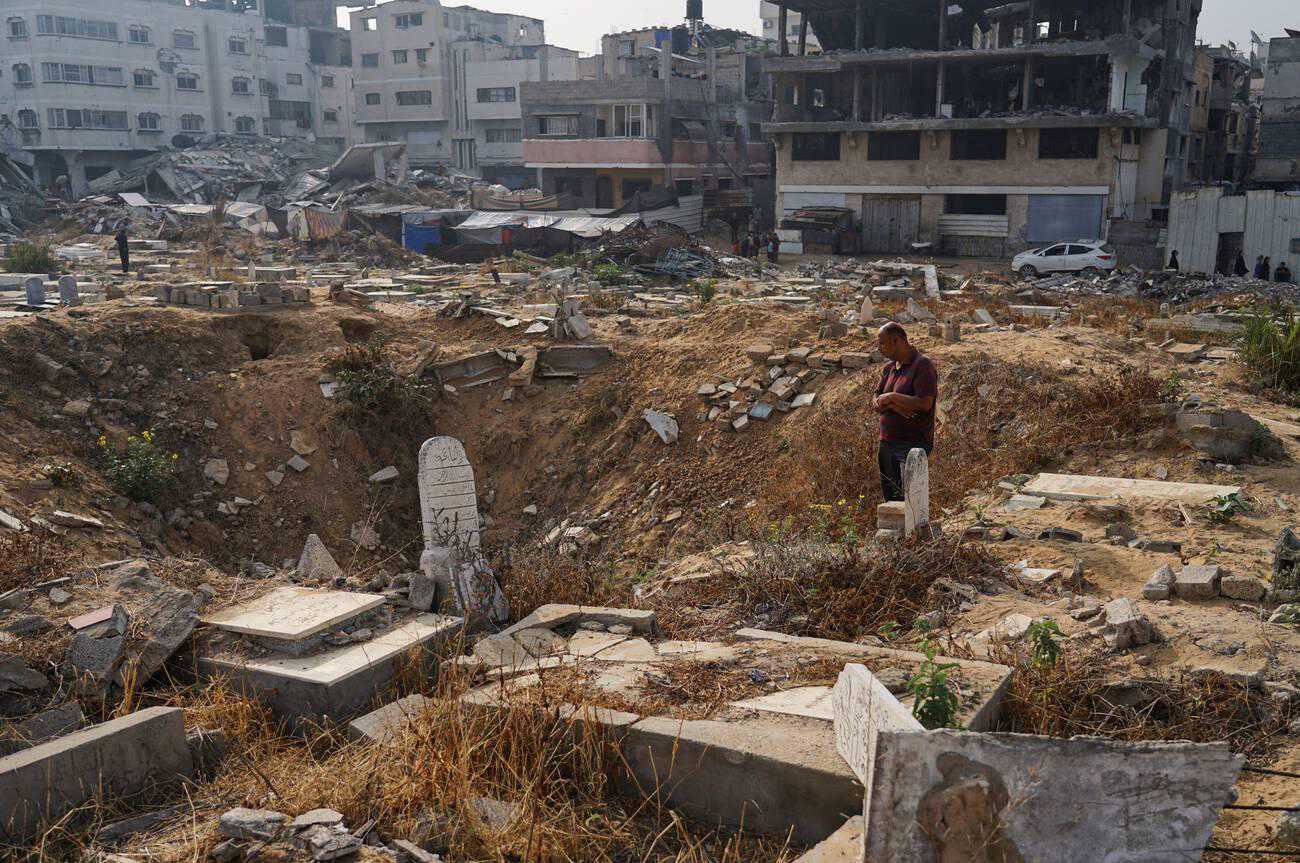
Living With The Dead: Gazan Families Forced to Make Homes Among The Graves

In Gaza, even the cemeteries are no longer reserved for the dead.

CROSSFIREARABIA – In Gaza, even the cemeteries are no longer reserved for the dead.

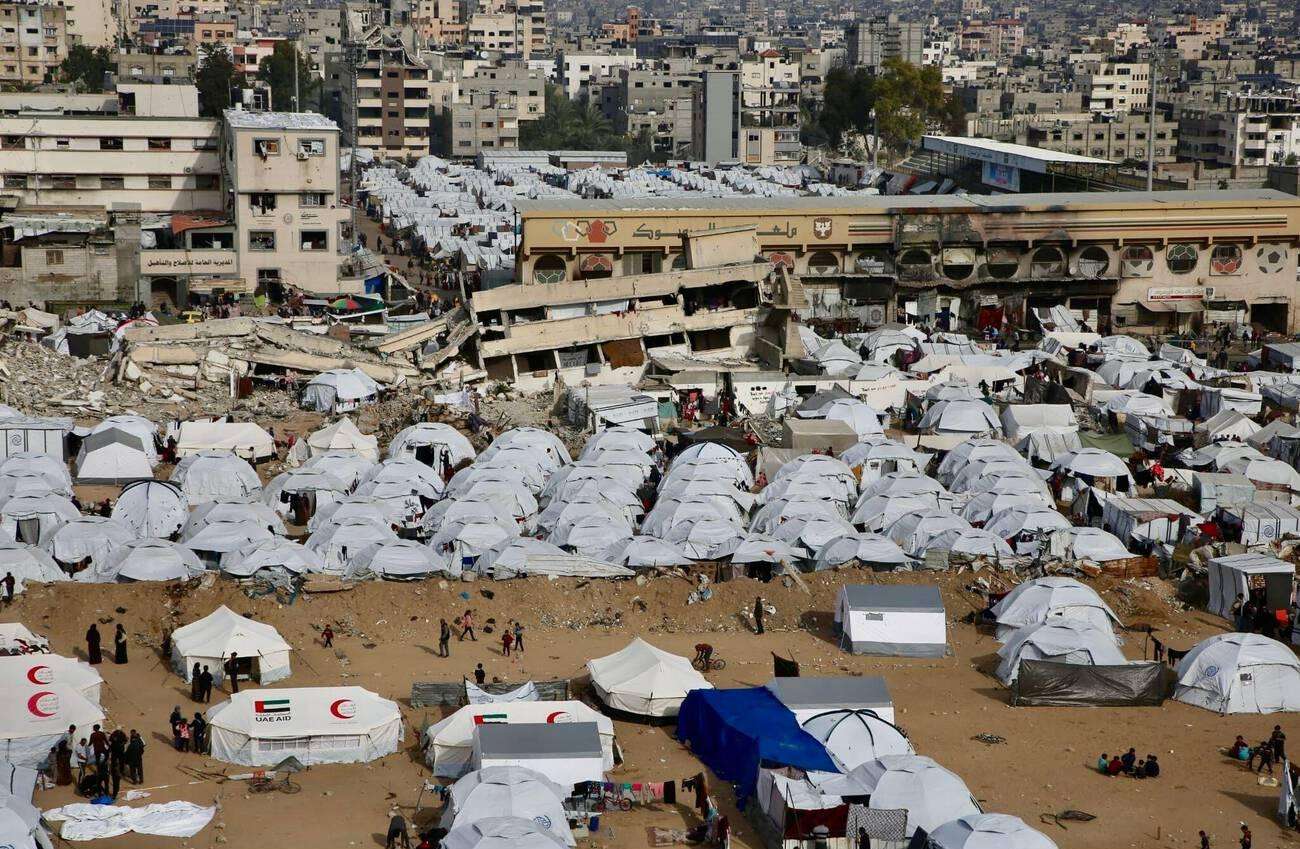
Between headstones and freshly turned earth, Palestinian families have stretched sheets, driven wooden poles into the ground and erected makeshift tents. Children carry water through rows of graves. Mothers cook whatever food they can find beside burial plots. Washing hangs between tombstones. At night, families retreat behind thin pieces of cloth, surrounded by graves because, after repeated displacement, they say there is simply nowhere else to go.

The extraordinary sight is now part of Gaza’s displacement crisis: Living families making temporary homes in places built for the dead.

In Khan Younis, Deir al-Balah and elsewhere in the Gaza Strip, cemeteries and their surroundings have become last-resort shelters for Palestinians whose homes were destroyed or who were ordered to leave areas where they had already sought refuge.

The Palestine Information Center documented the Abu Samak family sleeping on the ground between graves in Al-Sawarha cemetery in Al-Zawayda, central Gaza, after they were forced from their home east of Deir al-Balah. The family said areas to which displaced people had been directed were already packed, leaving them with few choices. Father Adham Abu Samak summed up the family’s predicament with a question heard repeatedly across Gaza: Where are we supposed to go? 

Another displaced woman, Ibtisam Abu Amra, told the Palestine Information Center that her family fled from Abu Arif east of Deir al-Balah and eventually ended up in a cemetery in the centre of the city. She described displacement as taking the children, elderly relatives and whatever possessions could be carried and heading towards an unknown destination. When every alternative was exhausted, she said, the cemetery was what remained.

Ten Children Living Among the Graves

One of the clearest recent examples comes from the Al-Namsawi area of Khan Younis.

In July 2026, Al Jazeera documented the family of Mazen Younis, who, with his wife and children, had been living inside a cemetery in the Mawasi area of Khan Younis for around a year and a half.

The family had originally lived in the Al-Manara neighbourhood before successive displacement forced them elsewhere. Eventually they reached the cemetery.

Their “home” consisted largely of fabric screens erected between graves.

There was no normal kitchen, reliable water supply or the basic infrastructure associated with a house. Younis, who suffers from heart disease, relied on his young daughters to bring water to the family, even when the available water was not suitable for drinking.

Instead of attending school, the girls spent part of their day fetching water and walking to a takiyya, or community food kitchen, to collect meals.

Even that food, the family said, was insufficient.

Younis’s wife said there was no cooking gas or many of the other necessities normally found in a household. The children travelled daily for food and water while the family endured the heat, insects and the psychological strain of living surrounded by graves. The report also described rodents and scorpions as part of the family’s surroundings.

It is an existence reduced to its most basic components: Something overhead for shade, something beneath the body for sleeping, a container in which to carry water, and, when available, a pot in which to heat or cook food.

A Tent Becomes the Entire House

Reporting by the Gaza-based Safa News Agency provides another window into what happens when a family’s entire domestic life is compressed into a tent.

Displaced Palestinian Mardai Shahada described the tent as simultaneously the family’s house, bedroom and kitchen — their whole existence confined to cloth and plastic incapable of properly protecting them from the summer heat or winter cold. , Safa, the Palestine Press Agency has documented families patching worn tents with nylon and thread simply to keep some protection between themselves and the weather.

Other Safa reporting describes displaced people sitting beside plastic tents, storing water in buckets and improvising shelters from whatever materials they can obtain. During extreme heat, tents can become almost impossible to remain inside during daytime, while insects and even snakes have been reported around sleeping areas. ⁠

Winter presents the opposite problem.

Gaza’s Civil Defence told Safa that 1,542 tents were flooded by rain in just two days around the beginning of January 2025, with water rising above 30 centimetres in some locations. Bedding and personal belongings were soaked and some displaced people suffered severe shivering from the cold.

For families living in cemeteries, these same problems are compounded by the environment around them. There are few proper drainage systems, bathrooms or established water points designed for hundreds of people to live there.

Cooking Beside Graves

Life continues because it has to.

Families collect drinking and washing water in plastic jerrycans and buckets. Food comes from humanitarian assistance when available, community kitchens, relatives or whatever can be purchased at increasingly difficult prices.

Cooking is often improvised.

With kitchens destroyed and fuel scarce, displaced families across Gaza have relied on small fires and makeshift cooking arrangements beside their tents. Safa described families in displacement camps gathering around fires at night during cold weather.

Inside the cemeteries, domestic objects consequently appear in surroundings where they would once have seemed unimaginable: Cooking pots, plastic bowls, mattresses, blankets, clotheslines, water containers and children’s belongings sitting beside gravestones.

A cemetery ceases to function exclusively as a burial ground. It becomes a neighbourhood — but one without the services of a neighbourhood.

Toilets Are Another Problem

Sanitation is among the least visible but most serious difficulties.

There are generally no household bathrooms for families who pitch tents inside or beside burial grounds. Displaced people depend on whatever communal facilities exist nearby, improvised latrines or rudimentary pits.

The shortage of proper sanitation can create another danger.

In July 2026, Al Jazeera reported that a displaced Gaza resident trying to enlarge an absorption pit for wastewater beside his tent in Gaza City’s Sheikh Radwan neighbourhood unexpectedly uncovered the body of a child who had previously been buried there when the area was being used as an improvised wartime burial site.

The incident illustrates the extraordinary overlap that has developed between displacement and burial in Gaza: People are sometimes living on land where emergency graves were dug during earlier stages of the war.

Cemeteries Within Cemeteries

The crisis is made more complicated because Gaza’s burial system itself has been transformed.

Sanad News Agency, citing the Euro-Med Human Rights Monitor, reported in September 2024 that around 29 major improvised mass burial locations containing more than 3,000 bodies had been identified, while more than 120 smaller improvised mass graves containing three or more people had been created across Gaza since October 2023.

Sanad has subsequently reported efforts to remove bodies from some of these temporary wartime burial grounds and rebury them in established cemeteries. In December 2025, for example, Gaza Civil Defence said 94 bodies were removed from an improvised cemetery in Sahaba Street in Gaza City as part of a wider effort that had involved moving the remains of thousands of people previously buried in emergency locations.

The result is a landscape in which the distinction between residential space, displacement camp and burial ground has repeatedly been erased.

Hundreds of Families Around One Khan Younis Cemetery

There is no reliable, comprehensive figure for how many Palestinians are currently living inside cemeteries across the entire Gaza Strip. Numbers vary according to location and repeated displacement, and families may enter or leave a site after evacuation orders, attacks or changes in military control.

It would therefore be misleading to put forward one precise Gaza-wide number.

What can be documented, however, is that the phenomenon extends well beyond a handful of isolated families.

The Palestine Information Center reported that an area around the Turkish cemetery west of Khan Younis contained hundreds of displaced Palestinian families. During an Israeli military incursion in July 2025, many fled again, leaving behind fragile tents and small quantities of food and possessions. The same report described torn tents, scattered belongings and burned food after the troops withdrew according to the Palestine Information Center.

Al Jazeera reported in July 2026 that hundreds of displaced families had erected tents in and around cemetery areas in Khan Younis, while its correspondent referred more broadly to thousands of families being driven towards cemetery areas during successive waves of displacement.

The distinction is important: Hundreds of families have been specifically documented at individual cemetery locations, but there is no authoritative census establishing the total number of people sleeping in cemeteries throughout Gaza.

Even the Cemeteries Are Not Safe

Seeking shelter among graves does not guarantee protection.

In July 2025, the Palestine Information Center reported an Israeli ground incursion around the Turkish cemetery, slaughterhouse area and outskirts of Mawasi in Khan Younis. Tanks, artillery and bulldozers entered an area where hundreds of displaced families had been sheltering, forcing people to flee once again. Residents later returned to find tents destroyed and possessions scattered.

The same report cited Gaza’s Ministry of Religious Endowments as saying around 40 cemeteries had at that stage been completely or partly damaged during the war. More recent reporting by the Palestine Information Center, citing Euro-Med Human Rights Monitor, said in March 2026 that its analysis of 62 official cemeteries found 39 completely destroyed and another 19 partially damaged, leaving only four without documented damage — figures attributed to the rights organisation.

That makes the choice of a cemetery as shelter particularly bleak.

Families do not move there because they believe a graveyard is comfortable or safe. They move there because a cemetery may contain one of the few remaining pieces of ground on which nobody is demanding rent and where a tent can still be squeezed between other displaced families.

Living Beside Death

For adults, living among graves carries its own psychological burden.

For children it can be worse.

They play where bodies are buried. They walk between graves to fetch drinking water. After sunset, darkness, stray dogs, insects and the presence of the dead can turn the surroundings frightening.

Yet by morning the ordinary routines begin again.

Someone searches for water.

Someone goes to the community kitchen.

A mother washes clothes or dishes with the small amount of water available.

A fire is lit.

Children emerge from tents.

Blankets and mattresses are rearranged.

And families who once lived in houses try to reproduce the smallest elements of home in a place never intended for the living.

Gaza’s cemetery dwellers are therefore not simply another image of displacement. They represent something more disturbing: The exhaustion of alternatives.

When homes disappear, schools become shelters, shelters are overcrowded or attacked, rent is unaffordable and every supposedly safer area fills with tents, eventually even land belonging to the dead becomes valuable living space.

For some Palestinians in Gaza, the question is no longer whether anyone should have to live in a cemetery.

It is much simpler.

Where else can they go?

The above feature article is written with the help of AI based on specific information fed about Gazans being forced to seek shelter in cemetries. It’s posted on crossfirearabia.com with full links and references.

Continue reading

You Missed

Gaza: Bringing the Dead Home From Beneath the Rubble

  • By marwan
  • August 25, 2026
  • 14 views
Gaza: Bringing the Dead Home From Beneath the Rubble

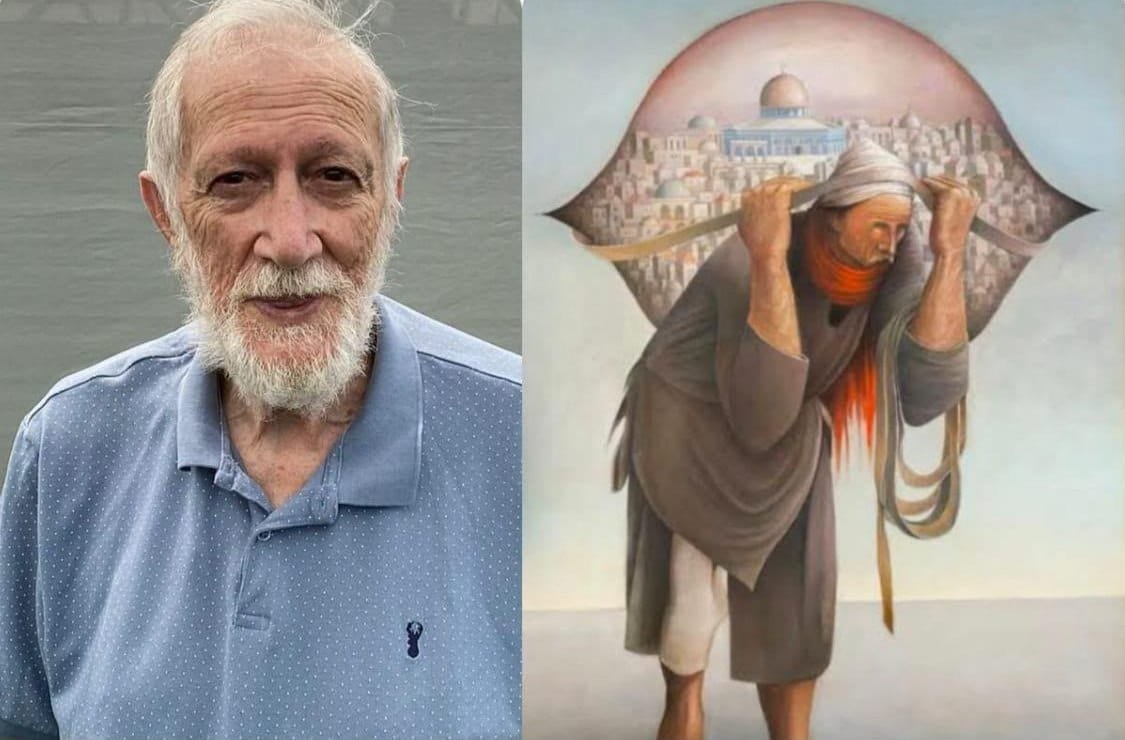
Sliman Mansour: The Artist Who Carried Palestine on His Canvas

Sliman Mansour: The Artist Who Carried Palestine on His Canvas

Morocco-Israel: Normalization Stops at The Top

  • By Heba
  • August 24, 2026
  • 4 views
Morocco-Israel: Normalization Stops at The Top

Albanese Calls For World Force to Protect Civilians in Gaza, West Bank

Albanese Calls For World Force to Protect Civilians in Gaza, West Bank

40 Million Tons of Rubble: Gaza Ministry Faces Challenges in Removing it

40 Million Tons of Rubble: Gaza Ministry Faces Challenges in Removing it

Join The Queue For The Drops

Join The Queue For The Drops