Obliterating Al Zeitoun – Israel’s Appetite For Destruction Boundless

“The situation was terrifying. I clutched my daughter as we walked over shattered glass and rubble, surrounded by smoke, flames, and explosions everywhere. I ran without knowing where to go. God help us. Enough, world, enough.”

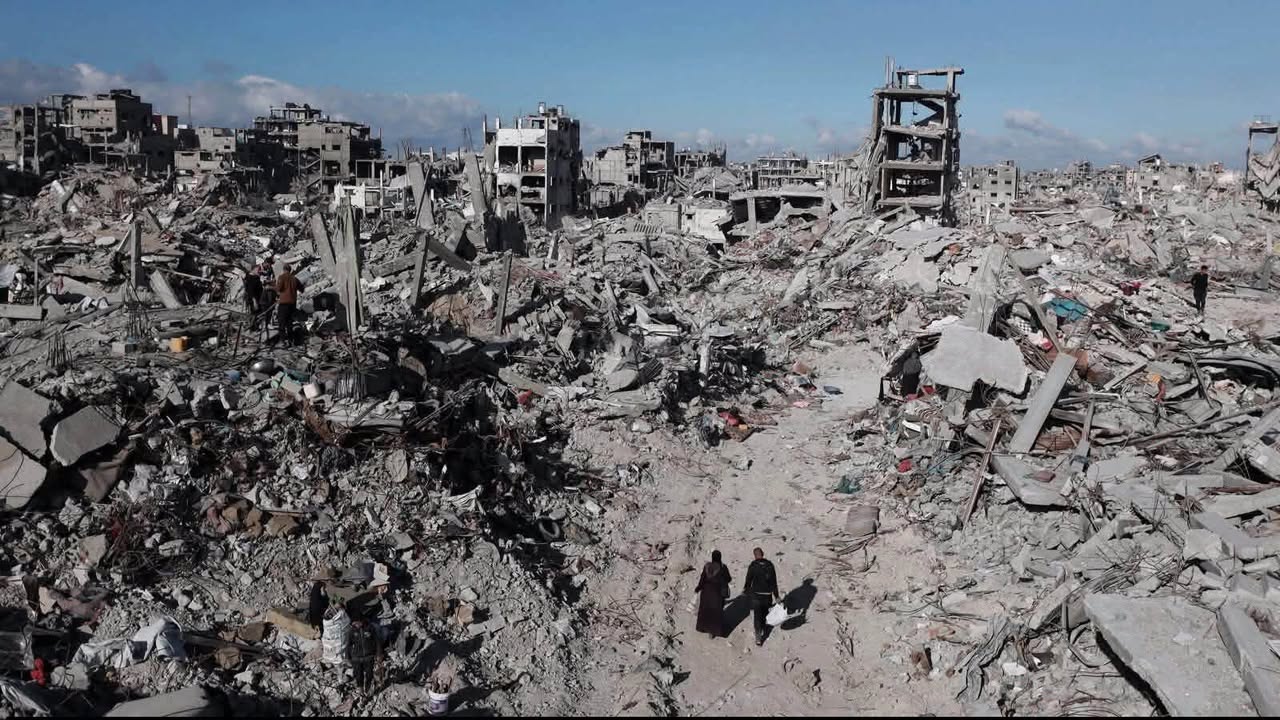
For six days, Israeli occupation forces have been razing the Zeitoun neighbourhood, southeast of Gaza City, flattening approximately 400 homes with explosive-laden robots and aerial bombardment.

This wide-scale military operation mirrors similar assaults in Rafah, Khan Younis, and northern Gaza, aimed at obliterating entire communities and forcibly displacing all who remain. These actions form part of the genocide against Palestinians in the Gaza Strip.

Launched on 11 August, the operation represents Israel’s ongoing push to assume total and unlawful control over Gaza City. The intent is to evacuate long-standing residents and up to one million displaced individuals, most having fled northern Gaza, and confine them to isolated, small areas in the south.

Drones, specifically quadcopters, are being deployed to encircle residential blocks and coerce civilians into fleeing under armed threat. Meanwhile, ground forces advance under heavy cover fire from positions near Street 8, the Dola junction, the Barasi land and the Illiyin areas. This operation has already displaced over 90,000 residents.

Field data from Euro-Med Monitor documents targeted bombings of homes belonging to the Lubbad, al-Aidi, Dader, and Irhayyem families, resulting in nine deaths within the Irhayyem household.

Air raids also hit houses near the Bilal Bin Rabah Mosque, striking the homes of the Dalloul and al-Nassan families, the Bashir Siksik Company premises, and the Kuhail, Shahd, and Siyam residential towers. An attack near Al-Farouq Mosque destroyed the home of the al-Husari family, claiming four lives.

The Israeli forces demolished dozens of homes along Street 8 and at the start of the Hassan al-Banna area. Tents housing displaced members of the Hunaideq family were also bombarded, resulting in seven deaths. Additional structures impacted include those near the University College of Applied Sciences (UCAS), the Al-Falah and Ain Jalut schools, and a charity-run shelter on Albasateen Street, killing eight more civilians. A strike on the Abu Daff family home resulted in 12 fatalities.

Artillery and air strikes continue to pound the areas of Hassan al-Banna, Al-Musalaba, UCAS, Al-Nadeem, and Almadaris Street. Civilians killed near Ain Jalut School and Badr Mosque (not to be confused with the one in Rafah) remain unrecovered due to ongoing bombardment. An airstrike also struck the Al-Huwaiti building in the Old City near Katib al-Wilaya Mosque, killing a mother and her young daughter, and even targeting nearby open ground.

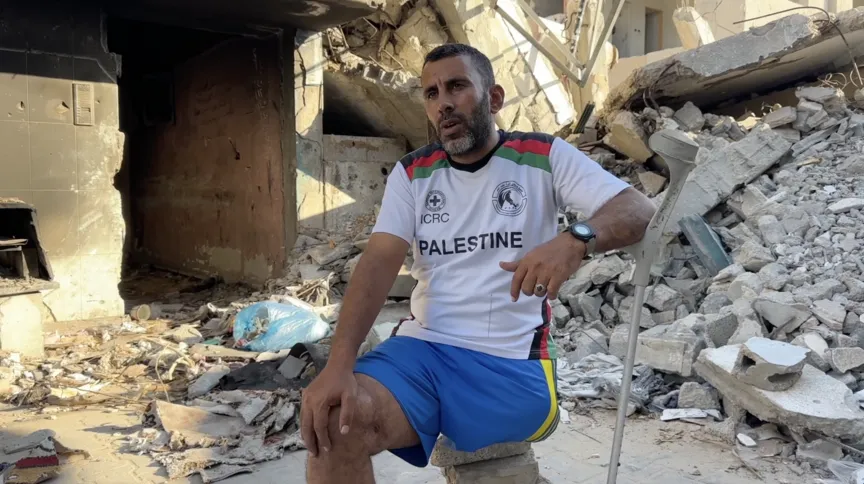
In her testimony to the Euro-Med Monitor, 45-year-old Um Raid said: “We fled before dawn with the children, carrying nothing, as bullets whistled above our heads and bombs shook the ground, leaving behind what remained of our home and all we owned.”

Meanwhile, 33-year-old Mohammad D. described how he had no choice but to flee with his family after a “quadcopter drone” began firing randomly. He said, “I couldn’t even grab my children’s birth certificates. Aircraft roared overhead, armoured vehicles closed in, and I felt we would die if we stayed a minute longer.”

Another resident, 29-year-old Sahar L., who lived near the Bilal Bin Rabah Mosque, recounted, “The situation was terrifying. I clutched my daughter as we walked over shattered glass and rubble, surrounded by smoke, flames, and explosions everywhere. I ran without knowing where to go. God help us. Enough, world, enough.”

Almost half the homes in the Zeitoun neighbourhood were demolished without any documented military necessity, as no fighting had recently taken place there. The destruction was caused by the systematic use of automatic explosives and explosive-laden robots after residents had been forcibly displaced. This pattern shows the intent was not military but to erase infrastructure and force Palestinians into displacement.

The widespread destruction in Zeitoun, the largest neighbourhood in Gaza, is part of a deliberate Israeli policy: completing a campaign of genocide and erasing Palestinian urban life through the total destruction of homes, infrastructure, and access to basic livelihoods.

The international community, including the United Nations and global legal bodies, must intervene urgently to halt the massacres, protect civilians, and hold Israeli leaders accountable for these heinous crimes against the civilian population.

Israel’s ongoing attacks and territorial expansion threaten to unleash unprecedented mass slaughter in Gaza, destroying the already fragile humanitarian response and cementing a new chapter of systemic Israeli genocide. These attacks are not sudden battlefield escalations but calculated policies, and the international community, through its silence, financial backing, and political cover, bears full responsibility for the resulting crimes and tragedies.

States and organisations must exert maximum pressure on Israel to halt the crime of starvation and immediately push for the resumption of humanitarian access by ending the illegal siege of the Gaza Strip. This is the only way to stem the fast-deteriorating humanitarian crisis and ensure the entry of essential aid and supplies amid the looming threat of famine.

Safe humanitarian corridors, under UN supervision, must be established to guarantee the delivery of food, medicine, and fuel to all parts of the Strip, with independent international monitors deployed to ensure compliance. At the same time, rapid rehabilitation of Gaza’s agricultural and livestock sectors must begin as part of both emergency relief and long-term recovery efforts.

All States, individually and collectively, must fulfil their legal obligations and act urgently to stop this genocide in Gaza, taking every feasible measure to protect Palestinian civilians there. They must enforce Israel’s adherence to international law and the rulings of the International Court of Justice and hold Israel accountable for its crimes against Palestinians.

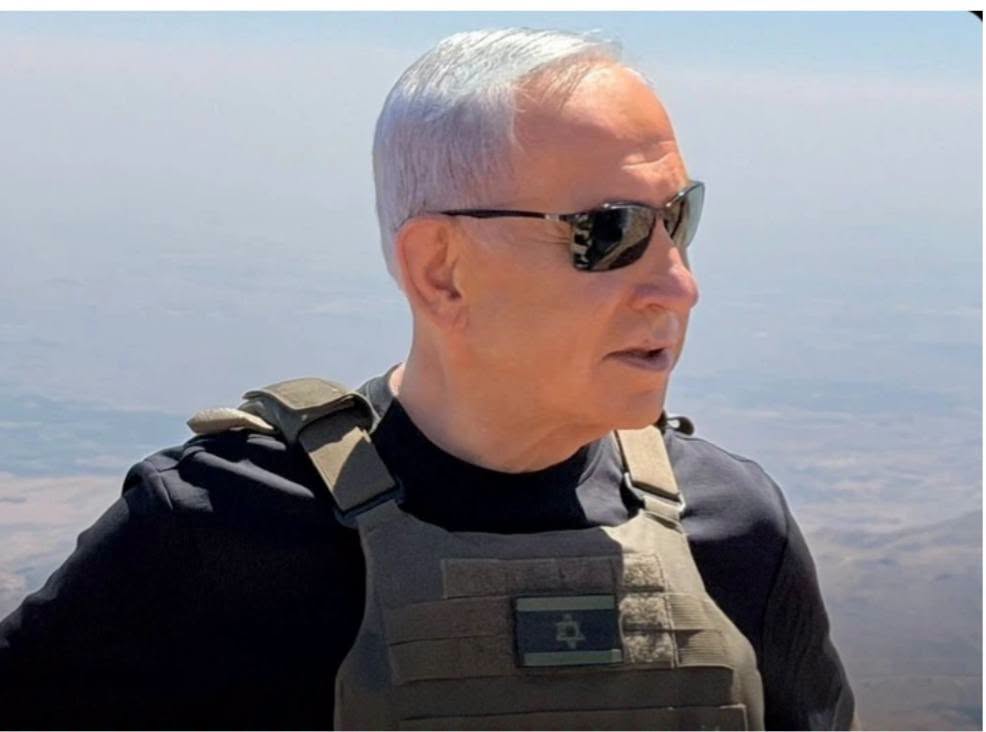
This includes, without waiver, enforcing the arrest warrants issued by the International Criminal Court for the Israeli Prime Minister and former Minister of Defence at the earliest opportunity and surrendering them to international justice, upholding the principle that no one is immune from prosecution for international crimes.

Euromed Human Rights Monitor

CrossFireArabia

CrossFireArabia

Dr. Marwan Asmar holds a PhD from Leeds University and is a freelance writer specializing on the Middle East. He has worked as a journalist since the early 1990s in Jordan and the Gulf countries, and been widely published, including at Albawaba, Gulf News, Al Ghad, World Press Review and others.

Related Posts

‘All I Want is to Bury My Family in Dignity’  

GAZA – Abdel Rahman Khalla no longer holds any dreams of a life; there is no home waiting for him, no family to return to, and no future he can envision as he once did. After losing 39 members of his family under the rubble of their home in northern Gaza, all hopes and aspirations dwindled to a single wish: To find the bodies of his loved ones and bury them with dignity.

Amidst the heavy stones, the dust, and the agonizing wait, he now asks for nothing more than a simple human right: A grave to embrace those who have passed away, and an end befitting the story of a family wiped out by war.

He has decided to dig and undertake this task himself.

Amid the rubble of a five-story building, Khalla stands as the sole witness to one of the most horrific massacres in northern Gaza. He lost about 39 members of his family in a single attack on their home in the Jabalia al-Nazla area on 21 December, 2023.

Read also: Gaza: Civil Defense begins recovering bodies from rubble

Abdul Rahman, the sole survivor of his family, recounts the details of the tragedy, which continues till this day. He says that 39 people, including women and children, were inside the house at the time of the bombing. All were killed under the rubble and no one else emerged alive.

He adds that only 18 bodies were recovered, while the rest, 20 to 21 others, are strill trapped under the debris – over 30 months later because there was no heavy machinery to remove the rubble and debris. Today, Israel continues to block such machinery from entering Gaza.

Abdul Rahman confirmed to the Sanad News Agency they exhausted all avenues, appealing to the Red Cross, Civil Defense, and the Jabalia al-Nazla Municipality, as well as the Qatari and Egyptian committees, requesting such heavy equipment to help in recovering the bodies but all of their appeals went unanswered.

“After 30 months of suffering, we decided to dig with our bare hands,” Abdul Rahman explained, adding the members of his surviving family had only begun manually removing the rubble four days prior, using simple and worn-out tools such as shovels, picks, and light rakes, despite the dangerous situation and the sheer size of their building that collapsed.

But during these arduous efforts, they only managed to recover two bodies; one belonging to his uncle, and the other who remains unidentified. About 19 bodies remain buried under the rubble, awaiting recovery and a proper burial.

Abdel Rahman appeals to the Egyptian Committee and the Reconstruction Committee for urgent intervention, requesting they send bulldozers and trucks to remove the rubble and debris. He emphasizes his family is not asking for the impossible, but simply for their right to reach their loved ones and bury them with dignity.

The tragedy of the Khalla family is not just another statistic in the war’s record, but a human story that speaks of all the suffering of Gaza, where entire families still live amidst the ruins of their homes, searching for their martyrs and awaiting for a long-delayed mercy.

Despite the ceasefire agreement in Gaza that came into effect on October 10, 2025, the Israeli occupation authorities continue to evade their obligations by preventing the entry of hundreds of heavy vehicles needed to remove the thousands of tons of rubble scattered throughout the Strip.

According to data from the Government Media Office, the occupation destroyed 90% of the civilian infrastructure in Gaza during the two years of its offensive, leaving behind more than 70 million tons of rubble, in one of the region’s largest humanitarian disasters in the world.

The Civil Defense Authority indicated in previous statements that dozens of families in Gaza continue to send appeals for help in recovering their relatives months after their martyrdom, but the Authority is unable to respond due to the lack of necessary equipment.

This article was in the Arabic Sanad Lil Anba website and reproduced in crossfirearabia.com.

Continue reading
‘Living Graves’, Is How Palestinian Journalist Describes Israeli Prison

Veteran Palestinian journalist Ali Samoudi described Israeli prisons as “living graves” after his release on Thursday, appearing in severely deteriorated physical condition following his arrest by Israeli forces last year.

Samoudi, who worked for the Palestinian newspaper Al-Quds and international media outlets, said he lost 60 kilograms (about 132 pounds) while in Israeli prison. “My weight was 120 kilograms (about 264 pounds); now my weight is 60 kilograms,” Samoudi said.

According to Samoudi, prison conditions were harsh and cruel, and prisoners suffered. “The food is very bad. Even a cat would not eat what they eat,” he said. “Prisoners have nothing. No notebook, no pen, nothing,” he added, calling on the families of detainees to take care of their well-being. 

He was arrested in April 2025 on false claims of transferring funds to the Palestinian Islamic Jihad. Samoudi and his family strongly denied the allegations.

In a statement issued in January, the Palestinian Journalists Syndicate said al-Samoudi has not been granted a fair trial and that his arrest is “a blatant violation of international law and press freedom”.

The syndicate also warned “that his life is now at risk” due to the harsh and inhumane treatment he has been experiencing in prison.

Samoudi’s son, Mohammed, said his father was an “independent journalist who isn’t affiliated with any party,” adding he was “surprised to hear him being accused of ties with Islamic Jihad. I was in shock.”

Mohammed said the forces raided their home at around 5 A.M., searched the premises and destroyed some of the family’s belongings before taking his father away. He said he didn’t know where his father is being held, but said the family is particularly worried because he is diabetic and suffers from high blood pressure, and therefore needs a special diet and medications.

On May 8, 2025, Wafa reported that an Israeli court had issued an administrative detention order against him for a period of six months.

This was because the Israeli army said it did not have “sufficient evidence” to formally charge him and had hence issued an administrative detention order.

In a statement issued to the United States news group CNN, the Israeli army said: “As sufficient evidence was not found against him, and in light of the accumulated intelligence material, security authorities requested to consider issuing an administrative detention order.”

The military claimed the order was justified as Samoudi’s “presence” posed “a danger to the security of the region”.

Since then, Samoudi has been held in administrative detention and his detention order has been repeatedly renewed.

Samoudi also witnessed the Israeli killing of Al Jazeera journalist Shireen Abu Akleh in Jenin in 2022 and was himself injured that day.

“I was there personally and witnessed the whole thing,” he said about the killing of his colleague. “There was no one there apart from the Israeli force, and they were the ones who shot at us.”

The Palestinian Prisoners’ Society said Samoudi is among more than 3,530 Palestinians held under administrative detention, in addition to over 40 journalists still held in Israeli prisons, including four women.

The group renewed calls for the release of all detained journalists and urged the international community to take responsibility for ongoing violations against prisoners.

More than 9,600 Palestinians remain in Israeli prisons, including women and children, facing torture, starvation and medical neglect, which have led to the deaths of dozens, according to Palestinian and Israeli rights groups. – Quds News Network

Continue reading

You Missed

An Egyptian House in a German Town

An Egyptian House in a German Town

Nakba Art

Nakba Art

Palestinian Population Tops 15.5 Million

Palestinian Population Tops 15.5 Million

‘All I Want is to Bury My Family in Dignity’  

‘All I Want is to Bury My Family in Dignity’  

Israeli Army: 18 Soldiers Dead, 910 Injured in Lebanon

Israeli Army: 18 Soldiers Dead, 910 Injured in Lebanon

Watch Out: Israel is Secretly Filling The West Bank With Settlements

Watch Out: Israel is Secretly Filling The West Bank With Settlements