Mideast in Tailspin of Destruction

On day 10 of the war engulfing the Middle East, UN agencies on Monday reported massive displacement across the region, along with surging food and fuel prices that risk increasing hunger and suffering for the most vulnerable.

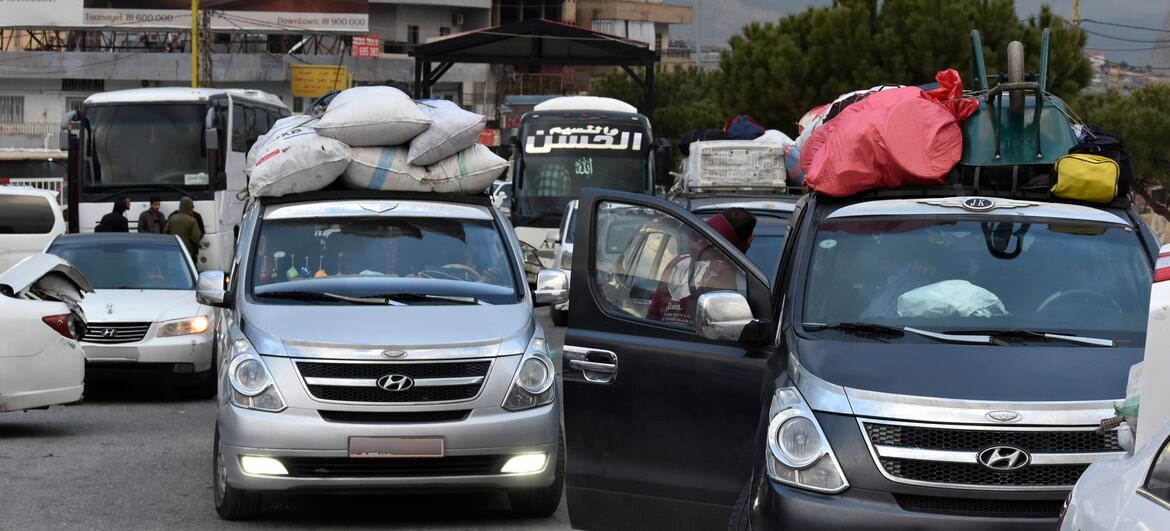
In Lebanon alone, nearly 700,000 people including around 200,000 children have been forced from their homes, “adding to the tens of thousands already uprooted from previous escalations”, the UN Children’s Fund (UNICEFsaid.

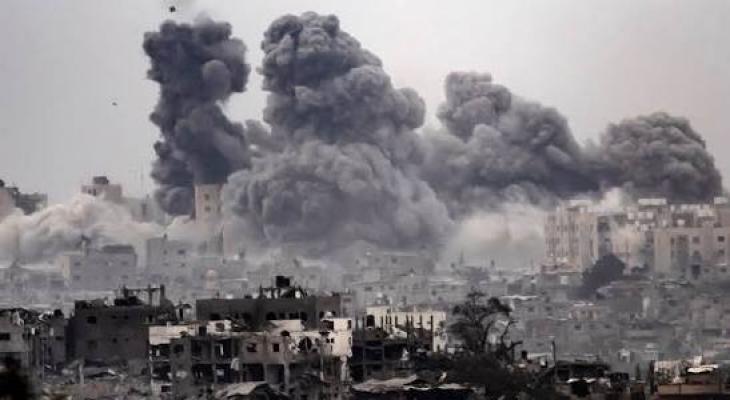
The development follows a weekend of escalating Israeli and U.S. strikes against Iran, counter-strikes by Iranian forces across Israel and explosions in several Gulf States, along with Israeli strikes targeting Hezbollah in Lebanon.

Heavy toll

In its latest update, the UN relief coordination office, OCHA, said that 294 people had been killed in Lebanon and more than 1,000 injured in the first eight days of the war.

On Saturday, 7 March, 41 people were killed in a single operation by Israeli forces in the town of Nabi Sheet in eastern Lebanon that also left dozens wounded, OCHA said, citing the Lebanese authorities.

In addition to “intensified airstrikes across multiple governorates” of Lebanon, the office also noted that Israeli evacuation orders had been reissued for a third time since the war began, covering the entire areas south of the Litani River, and the second time for Beirut’s southern suburbs.

Civilian toll mounts

Over the weekend, the Israeli health authorities reported that around 2,000 people have been injured in Israel since the conflict erupted on Saturday 28 February; one person was also killed when a missile landed in central Israel on Monday.

Iranian authorities have said that at least 1,330 civilians had been killed in the war amid ongoing Israeli and US strikes, while on Monday, the Bahraini authorities said that more than 30 people had been injured by an Iranian drone attack early Monday, as Qatari officials condemned the killing of two civilians in Saudi Arabia.

Ever greater needs

Echoing the deep concerns across the international community at the impact of the ongoing war on civilians, the UN’s top aid official, Tom Fletcher, warned of wider, secondary impacts in countries including Afghanistan and Pakistan “where needs were already great”.

Added to that, the focus on existing crises such as Sudan, South Sudan and Ukraine is slipping “even further down the list”, the emergency relief chief noted, along with continued disregard for international law and institutions including the UN that were created to prevent conflict.

Strait of Hormuz crisis

As rapidly rising fuel prices at the pump on Monday linked to higher oil barrel costs reflected deep economic uncertainty caused by the war, UN agencies also highlighted “severe global supply chain disruptions” affecting shipping, energy and fertilizer markets.

Attacks on shipping in the Strait of Hormuz have practically halted trade along the narrow channel, which carries nearly one-fifth of global oil shipments, along with large volumes of commercial goods.

On Friday, at least four seafarers were killed and three severely injured in the Strait of Hormuz when their vessel was attacked.

Meanwhile, drone attacks on Omani ports have also raised concerns – and costs – of chartered traffic heading there.

According to the International Maritime Organization (IMO), around 20,000 seafarers remained stranded in the Persian Gulf.

The conflict is already having immediate food security impacts in the Middle East,” said the UN World Food Programme (WFP), which explained that a significant share of the global fertilizer supply transits through the Strait of Hormuz.

“Any disruption there risks reduced availability, lower crop yields, and hence higher global food prices,” it said.

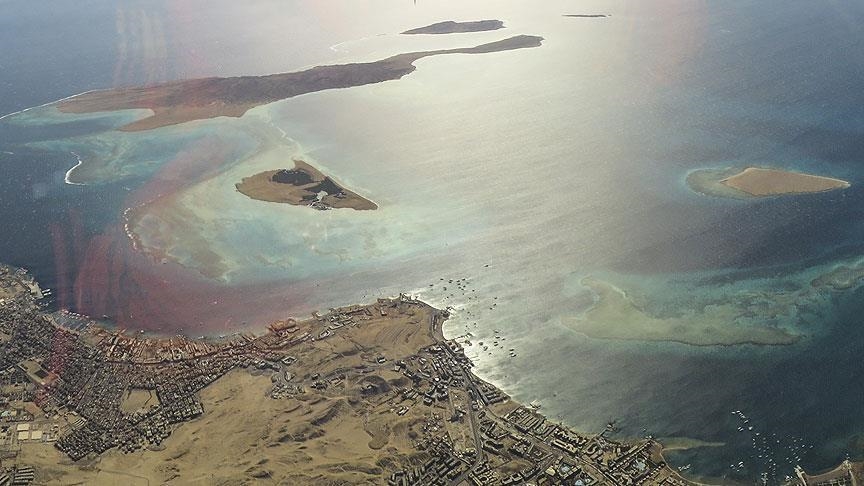
Satellite view of the Strait of Hormuz, connecting the Gulf of Oman to the Persian Gulf, separating Iran from Oman, UAE, and Qatar.

© NASA

A satellite photo shows the strategically important shipping route of the Strait of Hormuz.

Food security concerns

The UN agency also underscored already high levels of food insecurity in Lebanon before the war, as well as Iran, where households have “limited capacity to absorb further shocks”.

In Gaza, sharp food price increases were triggered by the closure of key aid crossing points from Israel, WFP continued, adding that although Kerem Shalom/ Karem Abu Salem crossing has since reopened, food prices remain high.

Without consistent access, WFP could be forced to reduce food rations to just 25 percent of daily requirements for approximately 1.3 million people. Fragile gains achieved following the ceasefire risk being reversed without reliable humanitarian corridors,” it said.

Faced with longer transit times and knock-on delays to humanitarian deliveries, the UN agency and partners have increasingly used suppliers and transit corridors through Türkiye, Egypt, Jordan and Pakistan, while making greater use of overland routes between the United Arab Emirates and the eastern Mediterranean coastal region.

WFP also noted that its Dubai humanitarian hub remains operational despite disruption to flights and shipping.

UN News

  • CrossFireArabia

    CrossFireArabia
    Dr. Marwan Asmar holds a PhD from Leeds University and is a freelance writer specializing on the Middle East. He has worked as a journalist since the early 1990s in Jordan and the Gulf countries, and been widely published, including at Albawaba, Gulf News, Al Ghad, World Press Review and others.

    Related Posts

    Dr Hussam Abu Safiya: Before and After

    Activists on social media circulated a photo on Wednesday of imprisoned Palestinian doctor Hussam Abu Safiya, director of Kamal Adwan Hospital in northern Gaza, during his appearance before an Israeli military court.


    The photo clearly showed signs of his deteriorating health. Abu Safiya appeared to have lost a significant amount of weight, with visible signs of extreme exhaustion and emaciation, along with his long beard. This comes amidst reports from his family and human rights organizations that he is being subjected to torture, ill-treatment, and medical neglect in Israeli prisons.

    Abu Safiya’s last public appearance was in February 2025, when an Israeli television channel broadcast footage of him in chains being violently led by Israeli soldiers inside a prison while being interrogated by Israeli intelligence officers.

    Abu Safiya’s family had previously warned of the continued deterioration in his health, confirming that he was being subjected to torture and ill-treatment, in addition to significant weight loss due to the harsh conditions of his detention.

    Abu Safiya is considered one of the most prominent medical professionals in the Gaza Strip. He garnered widespread attention during the war for his insistence on continuing his work at Kamal Adwan Hospital despite the bombing and siege. He was the last to leave the hospital after it was stormed by the occupation forces, having refused to evacuate it while large numbers of wounded and sick people remained inside during the large-scale attack launched by the occupation on the northern Gaza Strip in what became known as the “Generals’ Plan.”

    Continue reading
    Israeli Attacks on Christians Spike to 88 Cases

    By Dr Marwan Asmar

    The year 2026 maybe the worst experienced by Christians experienced in the occupied territories as the West Bank, Gaza and Jerusalem.

    A latest study by the Religious Freedom Data Center (RFDC) reported there have been 88 reported cases of attacks and harassment on Christians carried out in the Palestinian territories so far this year.

    It points out 63 attack cases were carried out in the second quarter of this year alone which would mean 2026 is set to register a new record of abuse against Christians.

    This is far higher than that of 2025 which stood at 181 cases.

    The violations include spitting incidents and verbal insults, and vandalism of cemeteries, gravestones, statues, and crosses. This is in addition to racist graffiti and desecration of Christian religious sites. Most of these acts are concentrated in the Old City of Jerusalem, Mount Zion, and the vicinity of the Armenian Patriarchate.

    https://www.facebook.com/reel/966328405876006

    The RFDC was set up 2023 in Jerusalem to combat the growing anti-Christian harassment and violence in Israel, particularly in the Old City of Jerusalem that grew in the last years from extremist rightwing Jewish religious nationalists and settlers who are left free to roam the city under the protection of the Israeli army.

    Nun Violently Attacked

    Last April a nun at the French Biblical and Archaeological School in the Old City was violently attacked. As shown by a CCTV camera the attacker came at the nun from behind, shoving her violently to the ground and kicking her.

    Two months later a priest from the Latin Patriarchate was attacked outside a restaurant near the Damascus Gate of the Holy City. Eye-witness reports show the priest was cornered, repeatedly spat at, and insulted verbally by three Jewish men.

    The incident was reported on the 4th of June by the RFDC. The victim, Father Firas Abedrabbo, a parish priest of the Latin Church in Ein Arik, near Ramallah, was assaulted after his  lunch with friends.

    His name was reported in the media unlike the 48-year-old French nun who also worked as a researcher at the Archaeological School. Her name was never released to protect her identity, it was reported.

    Dr Marwan Asmar is a writer based in Amman and is the editor of www.crossfirearabia.com

    Continue reading

    You Missed

    Dr Hussam Abu Safiya: Before and After

    Dr Hussam Abu Safiya: Before and After

    Israeli Attacks on Christians Spike to 88 Cases

    Israeli Attacks on Christians Spike to 88 Cases

    UN Red Alert Lebanon

    UN Red Alert Lebanon

    Last Wedding in Tantura

    Last Wedding in Tantura

    Battle of Wills: Resistance V. Israeli Settlements

    Battle of Wills: Resistance V. Israeli Settlements

    A Public Letter: Stop Smearing Euro-Med

    A Public Letter: Stop Smearing Euro-Med