CrossFireArabia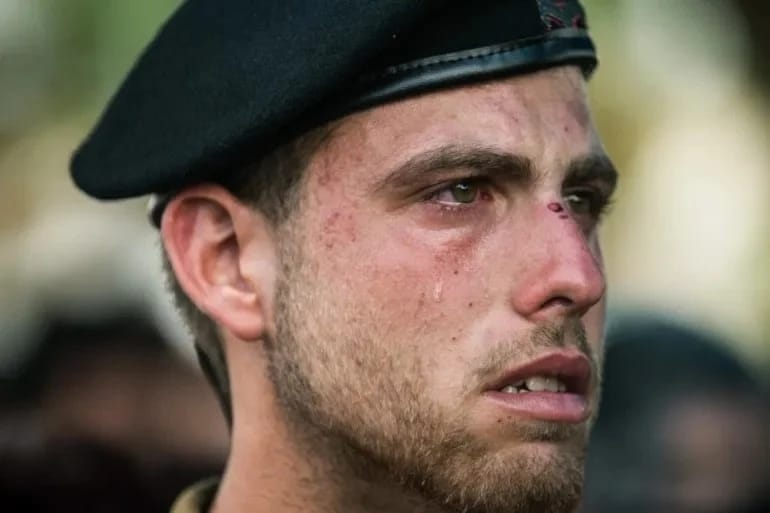
There is an unprecedented psychological crisis in Israel as underlined by rising rates of anxiety, sleep disorders, domestic violence, eating disorders, and traffic accidents. The Jewish daily Haaretz states that it is the war Israeli launched on Gaza starting 7 October, 2023 that created this psychological crisis that will affect Israeli society for years to come.
Haaretz highlighted the case of a reserve soldier who had been functioning normally before the war, but subsequently lost his ability to work and became susceptible to suicide due to psychological distress.
The newspaper quoted Nadav Firsh, head of the Yehalomi Krav Association, which deals with the psychological trauma of combat victims, as saying these cases “are no longer exceptional, but have become commonplace.” He noted that a growing number of soldiers are suffering from similar conditions.
Haaretz added it has documented numerous testimonies from newly-affected individuals since the outbreak of the war, emphasizing that what appear to be isolated cases actually reflect a widespread phenomenon.
Unprecedented Rise in Psychological Trauma
The newspaper noted that data from the Israeli Ministry of Defense shows a sharp increase in the number of those receiving treatment for psychological trauma. It rose from about 62,000 before the war to 87,000, while the number of those suffering from psychological trauma jumped from about 11,000 to 31,000.
Despite this, experts believe the current figures do not reflect the true extent of the crisis. The newspaper quoted Professor Zahava Solomon, a researcher in the field of psychological trauma, as saying what is visible today is “just the tip of the iceberg,” explaining that many psychological effects emerge after the battles end, and warning that a large number of discharged reservists could become “time bombs” over time.
The Crisis Extends Beyond the Military to Israeli Society
The newspaper notes the repercussions of the war are no longer limited to the military, but now extends to broad segments of Israeli society, including residents of areas bordering the Gaza Strip, participants in the Nova Festival, and civilians whose homes were bombed, emphasizing the expansion of the war has led to a rise in the number of those suffering psychological trauma.
According to National Insurance Institute data, the number of civilians recognized as suffering psychological trauma as a result of the hostilities has risen from 6,412 on the eve of October 7, 2023, to more than 69,000 this week. Approximately 35,000 of them have received official recognition of their psychological disabilities, a development described by an official at the institute as exceeding even the most pessimistic scenarios.
“Collective Trauma”
The newspaper points out that the war’s repercussions are no longer confined to soldiers or those directly affected by the fighting, but have extended to reservists and individuals who have experienced violence or lost relatives during the war.
Professor Yossi Levy-Pelz was quoted as saying that Israel is experiencing a state of “collective trauma” that has affected the entire society, amidst increasing psychological strain and a loss of confidence in the leadership.
He added that ignoring this crisis exacerbates its effects, noting that the rise in traffic fatalities during the war years may be one of the consequences of post-traumatic stress disorder, resulting from the tendency of those affected to drive recklessly.
Worsening Social and Psychological Repercussions:
The newspaper pointed out that the effects of the war have extended to various aspects of life, noting a rise in anxiety and eating disorders among teenagers, and a 65% increase in domestic violence cases during the first half of the war. Studies have also shown an increased risk of violence within families where both spouses serve in the reserves.
A significant increase in sleep disorders was also recorded, with the percentage of those suffering from clinical insomnia rising from 5% before the war to 28% by the end of 2025. Experts attribute this to the continued state of anxiety and uncertainty experienced by Israelis, amid constant fears of renewed attacks. Jo24

 Heba
Heba
 marwan