CrossFireArabia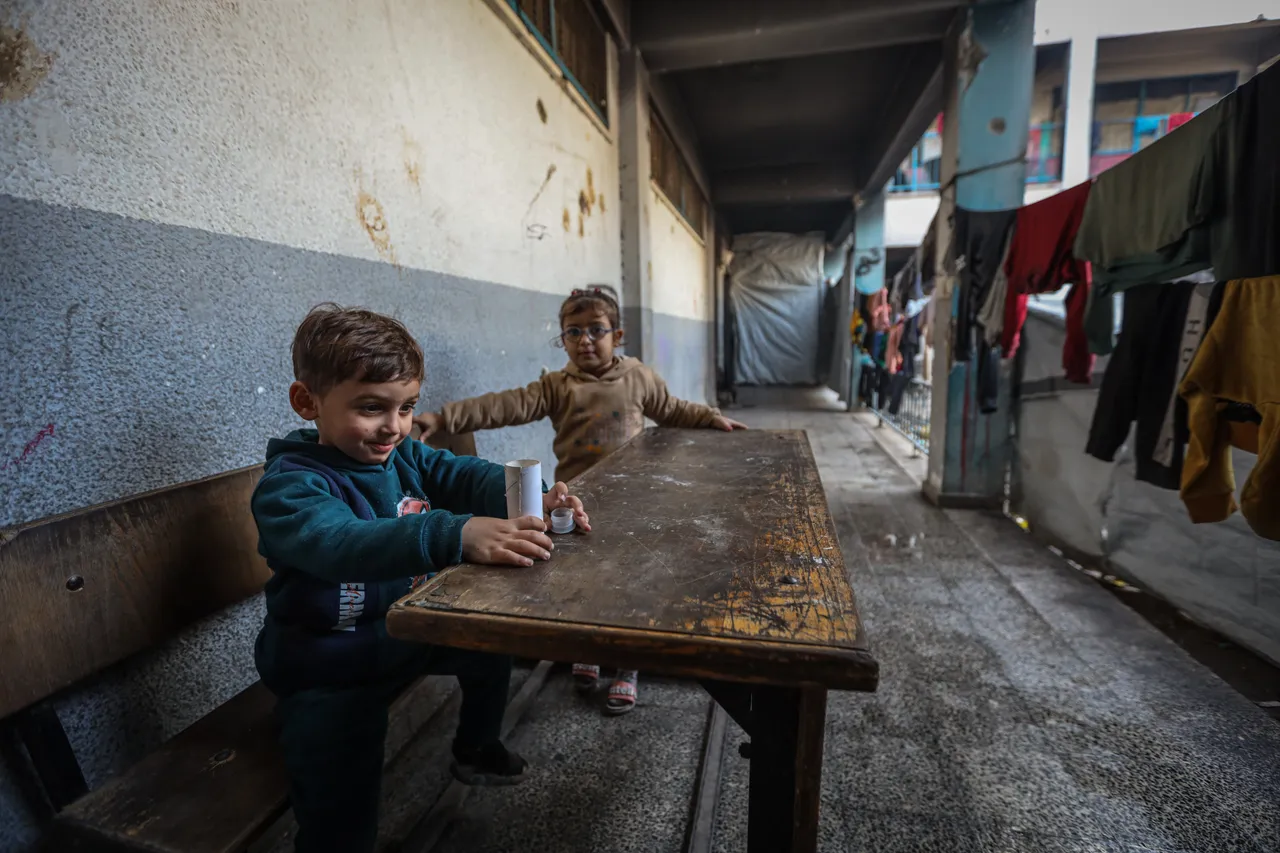
By Hani Shehada
In 2005, a university in the United Kingdom offered me a scholarship. I never set foot on its campus. I could not leave Gaza.
The crossing through which I would have travelled had been closed for more than six months, and a locked gate does not read acceptance letters.
By the time it might have opened, the place would have belonged to someone else, to another academic year, another student, another version of my life.
I have carried that small, private loss for more than 20 years. I raise it now only because it has become the most modest possible version of something far larger: The systematic narrowing of an entire generation’s future.
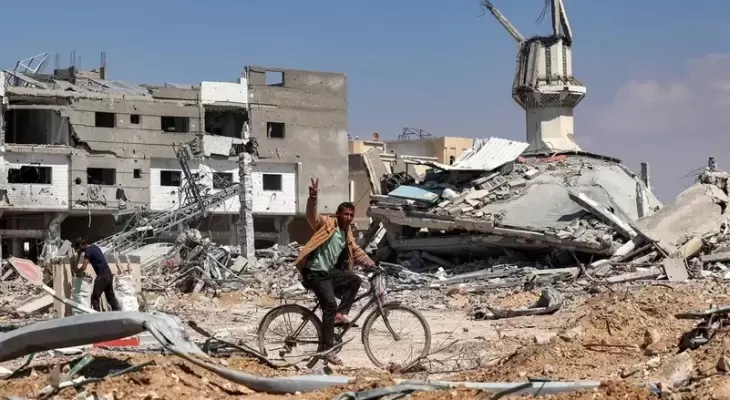
The destruction of education in Gaza cannot be understood only through the number of buildings reduced to rubble.
Its defining feature is its reach across the entire learning system. Schools and universities have been damaged or destroyed.
Students, teachers and professors have been killed or displaced. Libraries, laboratories, archives and other repositories of knowledge have been erased.
United Nations experts and a growing body of academic research have described this pattern as ‘scholasticide’: the systematic destruction of education through attacks on its institutions, infrastructure, students, educators and intellectual life.
The term captures something that statistics alone cannot. What is being lost is not a collection of isolated buildings, but the foundations through which a society preserves knowledge, prepares its young people and imagines a future.
The scale is difficult to comprehend. By July 2025, 97 percent of Gaza’s schools had sustained damage.
United Nations experts reported that all 12 of Gaza’s universities had been damaged or destroyed; a later UNESCO assessment found that 95 percent of higher-education campuses had been affected, with most buildings destroyed or rendered unusable.
More than 68 million metric tons of debris now cover Gaza. Hundreds of teachers, professors and other education workers have been killed.
But the loss of a scholar cannot be measured as the loss of a building can.
It is the disappearance of decades of accumulated knowledge: The lectures never delivered, the research never completed, the students never mentored and the future teachers, doctors, engineers and writers who will never encounter that person in a classroom.
Ordinary foundations of classrooms
For Gaza’s children, education now survives largely through improvisation. Hundreds of temporary learning spaces have been assembled in tents, shelters and damaged buildings.
The word “temporary” has become misleading. For many children, these spaces are not a bridge back to school. They are the only school they know.
Picture it plainly: children sitting on the ground, with no desks or chairs; A teacher working beneath plastic sheeting, without reliable light, electricity or a proper board.
The tent is stifling in summer and vulnerable to rain and flooding in winter. At times, even the most basic tools of learning have been unavailable.
For more than two years, educational materials were prevented from entering Gaza. Not weapons. Pencils, notebooks, exercise books, crayons and rulers.
Only in January 2026 did UNICEF announce that thousands of basic learning and recreational kits had begun entering Gaza after more than two years of restrictions. Reuters news agency reported that the kits contained pencils, but textbooks were still not permitted.
Read that again. We are not debating curricula, teaching methods or class sizes. We have reached the question of whether a child may have a pencil.
A pencil should not be a subject of negotiation. Nor should a desk, a page or a roof. These are the ordinary foundations of a classroom, the things assumed to exist before a lesson begins.
In Gaza, they have become objects of longing: A child wishing for a notebook, a teacher forced to improvise without the simplest tools, the ordinary conditions of learning placed beyond reach.
Gaza is often described as a place Palestinians are desperate to escape. That framing misses something essential.
For many Palestinians I know, leaving is not the dream. The dream is to remain, to study, work, raise a family and build a future in the place they call home, without being imprisoned within it.
But the space in which that life might be lived continues to contract.
In late May, Prime Minister Benjamin Netanyahu said Israeli forces occupied over 60 percent of Gaza and had been instructed to expand that occupation to 70 percent.
Almost the entire population of roughly two million people are confined to a small coastal strip, most displaced and many displaced repeatedly.
The routes on which a life may depend, to reach medical treatment, accept a scholarship, reunite with family or move beyond the path of another evacuation order, remain restricted, uncertain or closed.
To be trapped is not only to be denied departure. It is to watch the boundaries of ordinary life close around you: the space to live, to learn, to recover and, one day, to rebuild.
Within that shrinking geography, children are still expected to learn. They arrive at tents and damaged buildings without reliable electricity, safe water, desks or textbooks.
Some carry injuries that require treatment unavailable in Gaza. Some are living with disabilities. Some have lost one parent, both parents or entire branches of their families.
Yet they are still asked to sit down, concentrate and imagine a future, as though hope itself requires no shelter.
In 2005, a closed border cost one student one opportunity. What is happening now is not the loss of a single chance, but the systematic narrowing of a generation’s future.
Education cannot wait
Gaza’s young people stand before doors held shut: The door to a classroom, an examination, a university place, a recognized qualification and, ultimately, a working life. My loss was one interrupted chapter.
For them, interruption has become the architecture of childhood itself, year after year in which education is delayed, diminished or placed entirely beyond reach.
There is one more word the world reaches for when it speaks about Gaza: Resilience.
That resilience is real. I have witnessed it all my life. But the word becomes dangerous when it allows the outside world to admire Palestinian endurance rather than confront the conditions that make such endurance necessary.
There is nothing inspiring about a child learning her letters on the floor of a tent. There is nothing noble about forcing a generation to prove, again and again, that it still wants a future.
Children should not have to be resilient. They should have schools.
I am not asking for sympathy. Sympathy did not open the border for me in 2005, and it will not open it for Gaza’s students now.
I’m asking to stop treating education as something that can wait, until after the war, after reconstruction, after every other need deemed more urgent.
That order is backwards.
For generations of Palestinians, education has been more than a route to employment.
It has been a means of preserving identity, dignity and possibility under Israeli occupation and forced displacement. A pencil is not what you provide once the serious work is finished.
And the pencil is serious work. The fact that even pencils were kept out reveals how consequential the right to learn has become.
I was eventually able to begin again elsewhere. Most young people in Gaza have no such second chance.
The obligation now is to ensure that education survives with them: that there are teachers to learn from, examinations they can sit, qualifications the world will recognise and universities prepared to receive them.
Because a generation cannot be asked to rebuild Gaza after the world has allowed every path to its future to be erased.
The writer Hani Shehada, an educational expert in Gaza, contributed this article to TRTWorld.