CrossFireArabia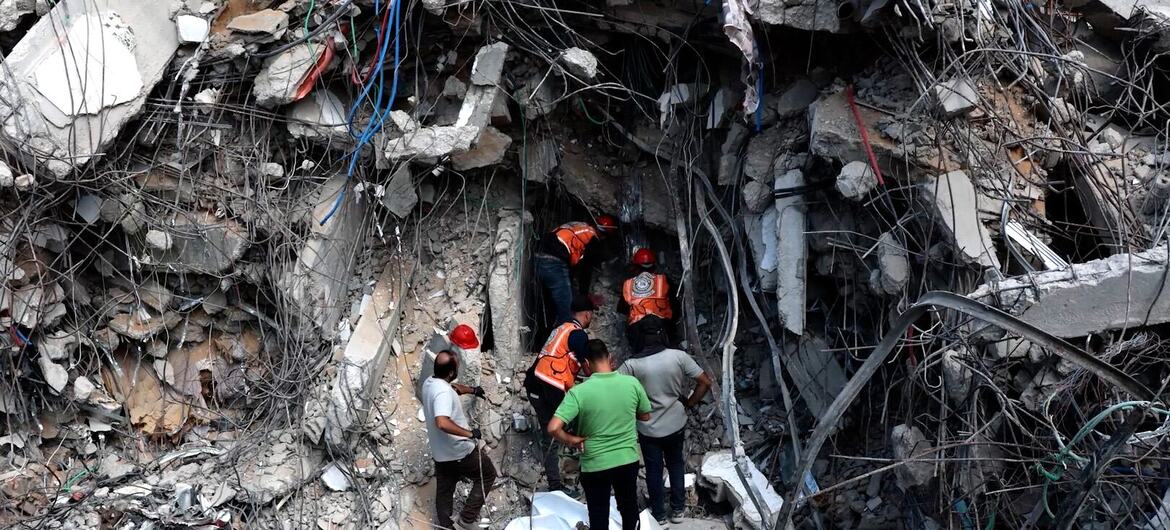
The funeral processions for dozens of martyrs, whose remains were recovered from under the rubble of destroyed homes in the Gaza Strip, sparked widespread reactions, especially given the ongoing suffering of families of the missing who, throughout the years of war, have been unable to locate the remains of their loved ones.
The reactions highlighted the scale of the humanitarian tragedy left by the war, particularly the thousands still missing under the rubble, and the difficulty of recovering bodies, identifying them, and burying them with dignity.
Each remains have a name and a family waiting.
Director-General of the Ministry of Health in Gaza Munir al-Barsh stated that the Strip is not just burying 100 martyrs, but 100 funerals that have been delayed for two years or more, noting that some fathers and mothers have waited for years searching for the remains of their children or any trace that might lead them to them.
In a post on his X account, Al-Barsh described the families’ wait to find their loved ones’ remains as one of the most harrowing aspects of the tragedy, saying that the greatest hope a Palestinian can have in such cases is simply to find a grave for their child.
He added that the victims were not only deprived of life, but also of their right to have their bodies recovered, their names identified, and to be buried with dignity. He noted that some bodies were found in horrific conditions, including some that had been mutilated or burned, and others that were reduced to mere bones and remains.
He pointed out that more than 8,000 people are still missing under the rubble, calling for the provision of rescue equipment, heavy machinery, forensic supplies, DNA testing, and documentation tools. He emphasized that “every body of remains has a name, and every name has a family waiting.”
Al-Barsh warned that mixing rubble with remains could lead to the loss of evidence, noting the presence of more than 80 million tons of debris, including toxic materials such as asbestos, and the mixing of bones with rubble in areas of Rafah.
He emphasized that burying the recovered bodies does not mean closing the file on the missing, but rather serves as a reminder to the families still waiting for the remains of their loved ones. He called on the international community to take action to preserve evidence related to the victims.
Between us and the occupation lies a sea of blood.
For his part, Qatari journalist Jaber Al-Harmi commented on the funeral processions, saying that Gaza buried 106 martyrs after their bodies were recovered from under the rubble of their homes in the Zeitoun neighborhood. He described the events as a scene that comes after years of war in which the occupation was accused of committing widespread crimes against the Palestinians.
Al-Harami stated that the scale of the crimes committed in Palestine, as he described them, is incomparable to any other crimes witnessed throughout history. He also pointed to what he termed attacks, operations, espionage, and assassinations targeting other Arab and Islamic countries. Al-Harami concluded his remarks by saying, “Between us and the Zionists lies a sea of blood.”
Gaza is still searching for its children under the rubble.
Activist Aboud Battah said that the scene of the martyrs’ funerals encapsulates the magnitude of the tragedy unfolding in the Gaza Strip. He noted that among the bodies recovered were 70 children, according to a post he published.
Battah explained that civil defense teams were able, after more than a thousand days, to recover the bodies of the martyrs from under the rubble of their homes, which were destroyed during the war.
He added, “More than a thousand days have passed, and Gaza is still searching for its children under the rubble. The tragedy continues.” Quds Press