Autumn Papers: Palestinians Must Sieze The Moment

By Radwan Barghouti

Sometimes writing is a conversation with oneself—a way of setting oneself straight before going astray…

Prisoner asked:
“When will they let me out?”

Guard replied:
“The door has been open for a long time.”

Prisoner asked:
“Then why didn’t you tell me?”

Guard replied:
“You were too busy asking when.”

Not every door that opens is seen, nor does every historic opportunity announce itself boldly. Sometimes a rare moment passes before a people—a moment when something in the world around them begins to change—yet those who are supposed to seize it are preoccupied with something else.

Perhaps this simple story can serve as a mirror of the Palestinian condition after 7 October, 2023. The war on Gaza, with all the killing, destruction, devastation, and unprecedented human tragedy it has brought, has thrust the Palestinian cause back into the heart of global consciousness. Millions have now seen what Palestinians have been saying for decades. The world has witnessed with its own eyes the scale of the tragedy endured by a people living under occupation. Across capitals and cities around the world, powerful voices have risen demanding an end to the war, justice for the Palestinians, and recognition of their right to freedom, self-determination, statehood, and independence.

Palestine is no longer merely a passing item on the evening news. It has returned to the conscience of the world—to universities and streets, parliaments and international organizations, and to the center of a far-reaching global political and moral debate.

There has been—and still is—a historic moment. But the painful question is: What have the Palestinians done with this moment?

This is not to suggest that the world has simply opened its doors and said to the Palestinians, “Come in; here is your state.” The reality is far more complicated. The balance of power remains deeply unequal, the occupation has not disappeared, and the tragedy in Gaza has not ended merely because international sympathy has grown. But history is measured not only by what is granted to peoples; it is also measured by what peoples themselves are capable of doing when the right historical moment arrives.

And herein lies the problem.

Instead of allowing this tragedy to become a point of Palestinian convergence, and instead of all political forces and factions sitting down together to confront one central question—How can we transform this global sympathy into a Palestinian political project that brings us closer to freedom and independence?—division has persisted, while factional and political calculations continue to rear their heads at precisely the moment when Palestinians most need to rise above them.

It is as though the prisoner continues to ask:

“When will they open the door?”

When the more important question should have been:

“What will we do when the opportunity comes to open it?”

Palestinian unity today is neither a slogan for public consumption nor a group photograph to be taken in front of the cameras. It is a political and historical necessity.

Global sympathy cannot be transformed into genuine political power without a unified Palestinian political voice. Nor can such a voice be built by excluding one faction, monopolizing decision-making, or branding those who disagree as traitors. It can only be built by bringing the entire Palestinian political spectrum together around a clear national program: Ending the occupation, protecting the Palestinian people, safeguarding their inalienable national rights, securing their right to self-determination, and achieving an independent and sovereign Palestinian state.

The past years have demonstrated that Palestinians can be united in suffering, and that the world can sympathize with them in moments of danger. The real challenge, however, is for Palestinians to become united politically as well.

Freedom does not come through sympathy alone. And sympathy, however widespread, does not automatically translate into independence. It requires a people who know what they want, genuine leadership capable of seizing the moment, and political forces willing to set aside their differences when the fate of an entire homeland is at stake.

Perhaps the harshest aspect of the Palestinian situation today is that those who have spent decades waiting for a historic moment may fail to realize that when history opens its window, it does not leave it open for long.

If the lesson of the story is that the prisoner failed to walk free because he was too preoccupied with asking “When?”, then Palestinians do not need to wait for yet another answer about when freedom will come.

The question that should be knocking on everyone’s door today is this:

Do we have the courage to disagree less, agree more, and transform what has happened into the beginning of a path toward freedom and independence?

The door may not remain open forever.

History does not wait for those who hesitate.

At this unprecedented historic moment, the people themselves bear the full responsibility. No one can act in their place.

Waiting for a savior is nothing but an illusion.

Radwan Al-Barghouti is an attorney living in the Kingdom of Sweden

CrossFireArabia

CrossFireArabia
Dr. Marwan Asmar holds a PhD from Leeds University and is a freelance writer specializing on the Middle East. He has worked as a journalist since the early 1990s in Jordan and the Gulf countries, and been widely published, including at Albawaba, Gulf News, Al Ghad, World Press Review and others.

Related Posts

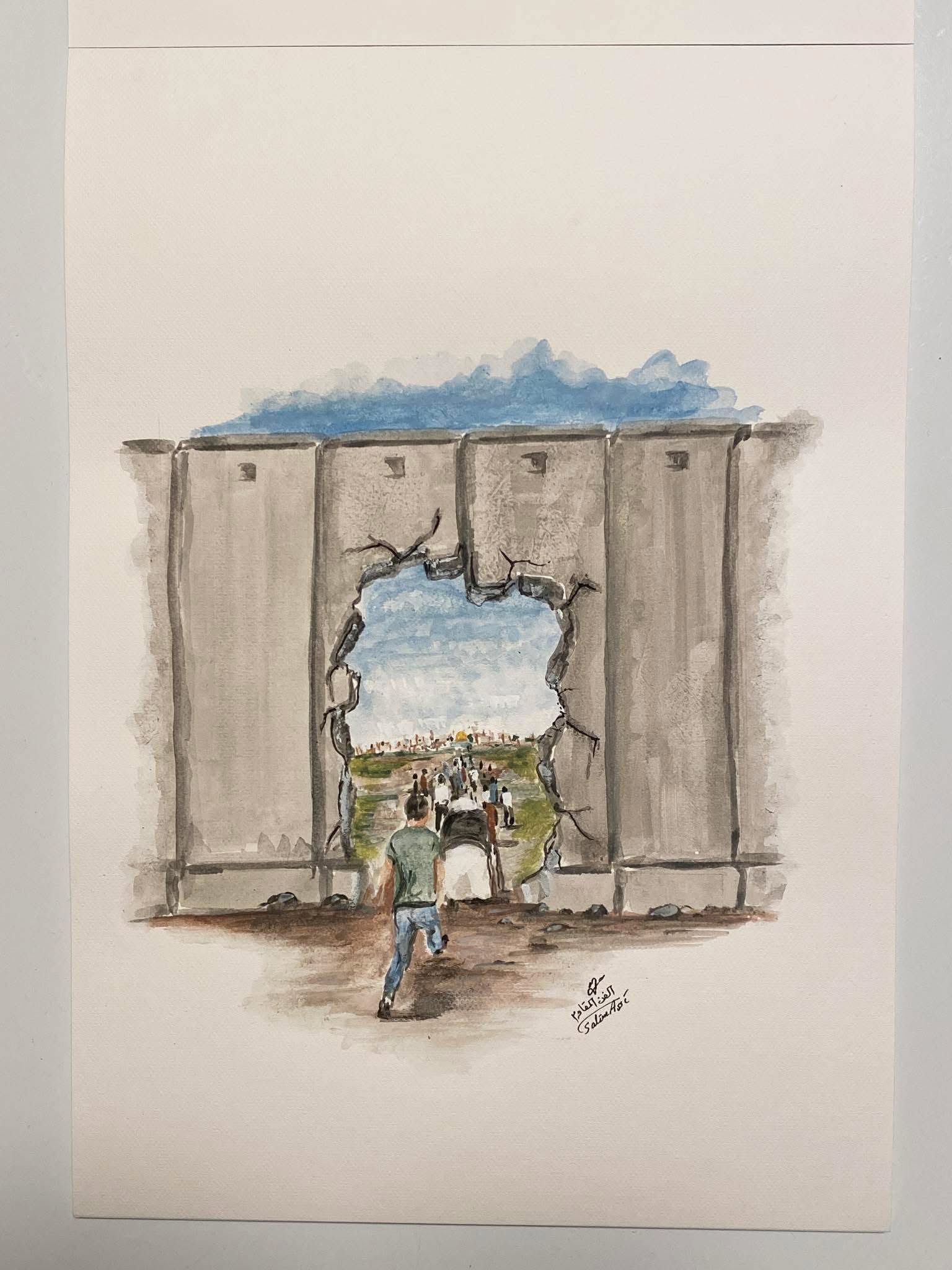
Who is Afraid of Palestinian Revolutionary Art?

By Ramzi Baroud

The death of Palestinian artist Sliman Anis Mansour stirred powerful memories.

He passed away at Al Makassed Hospital in occupied East Jerusalem on August 24, at the age of 79, bringing to a close a legacy that cannot truly be described, but only experienced.

His life almost exactly spanned the age of the Palestinian Nakba. He was born mere months before the mass expulsion of the Palestinian people from their homeland. Yet his death in an occupied city tells us that the story of Mansour, his art and the Palestinian struggle for freedom is far from over.

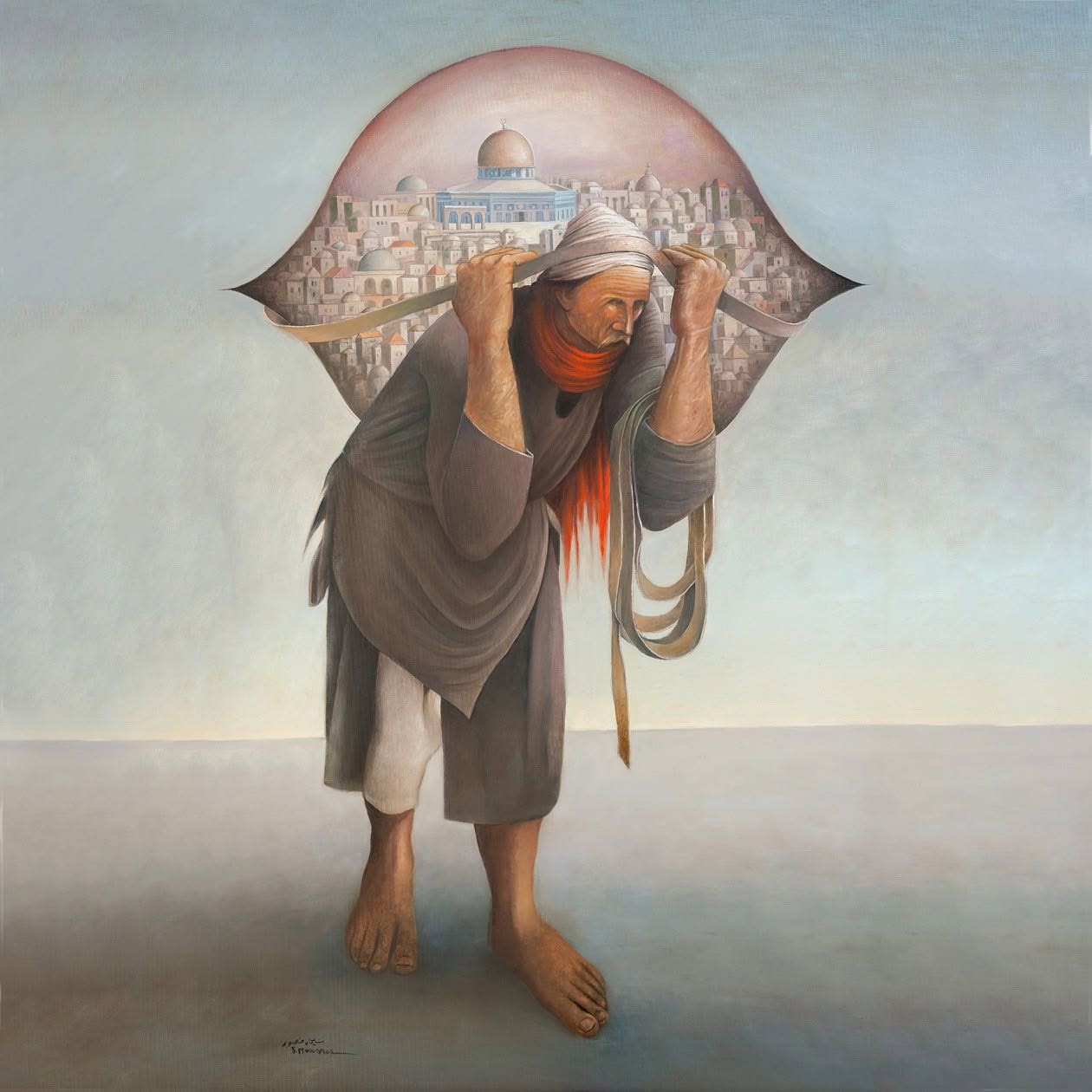
Oddly, for years, I knew Mansour through a single painting: Jamal al-Mahamel (The Camel Carrier of Hardships).

The title itself requires a pause. The phrase is rooted in Palestinian and Levantine popular culture. It describes one who shoulders the collective struggles, pain and responsibilities of others.

In Mansour’s post-Nakba world, that person is an elderly Palestinian porter, a barefoot worker carrying the burden of an entire homeland on his back. That homeland is represented by Jerusalem, with the Dome of the Rock, one of Islam’s holiest sites, rising above it.

Mansour, however, was not a Muslim. He belonged to the once-thriving, though sadly shrinking, Palestinian Christian community and came from the town of Birzeit, near Ramallah in the West Bank.

Let that sink in. One of the most iconic Palestinian paintings of the modern era, celebrating the centrality of Jerusalem and one of its most recognizable historic Islamic sites, was painted by a Christian man.

In the age of Israeli extremists like national security minister Itamar Ben-Gvir and his “religious wars,” this may appear unusual. For Palestinians, it is anything but. Though deeply spiritual, Palestinians have historically transcended religious divides in their long struggle for freedom.

A mosque is never just a mosque, and a church is never just a church. They are powerful symbols of history, culture, roots, spirituality and continuity. Mansour entrusted the Camel of Hardships with carrying all of that alone, as the world watched an old man bent beneath an unbearable weight, yet fierce and unbroken in his resolve.

Though the painting was created in 1973, it exploded in popularity during the First Intifada, the popular uprising that unified Palestinians everywhere. It took on a renewed meaning: we Palestinians may be standing alone, exhausted by time and the betrayal of others, but we remain as steadfast as ever.

The last time I saw that painting hanging in the living room of my old house in the Nuseirat refugee camp in Gaza was also the last time I saw my father, most of my brothers and many of my childhood friends.

My father died years later. The house was bombed. The painting no longer hangs where it once did, at the heart of our old refugee home.

Ironically, it was only after I left Palestine that I discovered that Sliman Mansour was far more than the creator of a single painting. He belonged to an artistic movement that taught visual sumud, steadfastness, to an entire generation.

My lack of knowledge was not a fault of my own. Artists such as Mansour, Ismail Shammout, Fathi Ghaben, Vera Tamari, Tayseer Barakat and Nabil Anani, among others, were simply forbidden by Israeli military ordinances.

Israel is afraid of Palestinian art, particularly art that preserves memory, asserts steadfastness and speaks of revolution. During the Intifada, the Israeli army would storm Palestinian refugee camps almost daily, particularly before dawn, to ensure that artistic expressions on the walls were painted over.

The soldiers did not paint over the walls themselves, of course. They dragged weary refugees from their sleep and forced them to erase every piece of graffiti, every image and every word. The soldiers may have thought they were carrying out a military duty, somehow protecting Israel’s national security. In reality, they were trying to erase evidence of a people whose roots in the land ran far deeper than the occupation itself.

But the evidence was never erased. It could not simply be painted over, even when the artist himself disappeared, because true art is more than an arrangement of colors on canvas. It is one of the deepest forms of documenting one’s own existence.

Fathi Ghaben, who became a close friend of my family, had, like most Gazans, more than his share of suffering. He was a refugee from a once-serene village called Hirbiya, north of Gaza. His family sought refuge in Gaza during the Nakba.

Ghaben had no memories of the village he lost as a child, yet its colors filled his paintings. For him, Palestine was a beautiful woman, powerful in her determination yet gentle in her gaze. Her eyes, always sharply defined, embodied the beauty of a homeland that never abandoned him. She was the worker, the farmer, the student, the protester, the fighter.

Ghaben was repeatedly imprisoned by Israel for emphasizing the colors of the Palestinian flag in his art, accused of “incitement through his paintings.” The occupation army killed his young nephew in 1982, and many of his relatives were killed in the genocide.

Ghaben himself died during the genocide, in February 2024, after being displaced from his home.

For me, and dare I say for many of my generation, it is difficult to process art that does not carry this kind of weight — art that goes beyond mere “expression” and becomes an experience of blood, sweat, tears and the burden of memories that can only be put to rest when justice in Palestine finally prevails.

I think back to the Camel of Hardships, and I am convinced that Mansour’s figure represented more than Palestine and the Palestinian. Perhaps unknowingly, he was also painting the Palestinian artist himself.

They, too, carried an immense responsibility on their shoulders. Without them, several generations might never have truly appreciated the colors of Palestine, smelled the powder of revolution, or understood the true meaning of losing a homeland.

Ramzy Baroud is a journalist, author and the editor of The Palestine Chronicle. He is the author of eight books. His latest book, “Before the Flood” was published by Seven Stories Press. His other books include “Our Vision for Liberation”, “My Father was a Freedom Fighter” and “The Last Earth”. Baroud is a non-resident senior research fellow at the Centre for Islam and Global Affairs (CIGA). His website is www.ramzybaroud.net. The article appeared in The Jordan Times

Continue reading
Netanyahu and The Settlers: Cart and Horse in Action

By Mohammad Abu Rumman

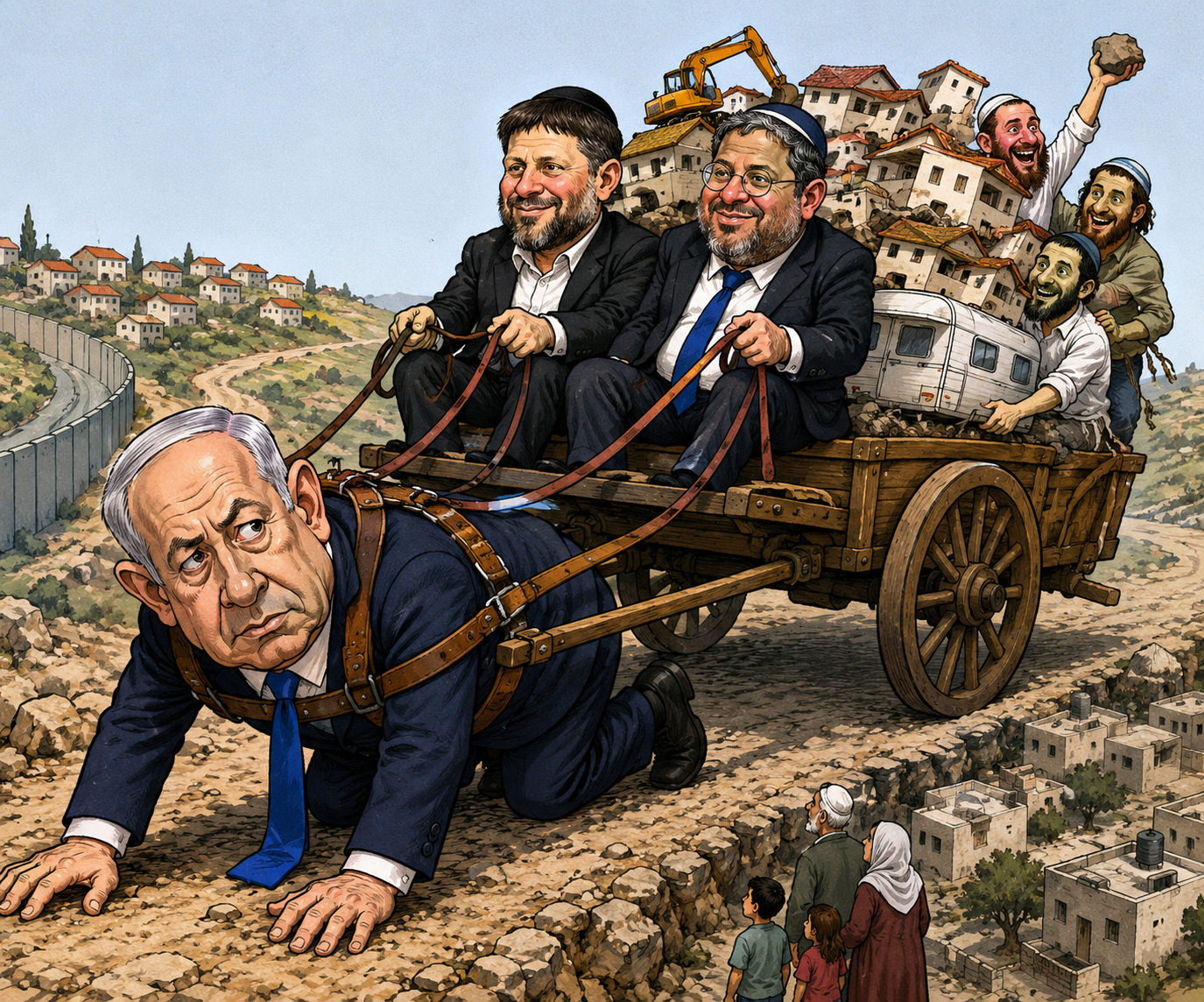
Perhaps the most surprising aspect of the latest events in the West Bank was not what the settlers did — that is hardly new or unexpected — but what Benjamin Netanyahu himself said. The Israeli prime minister denounced the “criminal acts of violence” committed by settlers in the villages of Qusra and Jalud, describing those responsible as a “handful of rioters” whose actions harm law-abiding settlers, interfere with the army’s work, and damage Israel’s standing in the world. This is precisely where the paradox lies: What exactly is Netanyahu condemning? Do the settlers’ actions really contradict his government’s policies, or do they ultimately serve the same project, albeit through different means and methods?

What is happening in the West Bank did not begin over the past few days, nor with the latest attacks. It has been developing for years along a clear trajectory, one that has accelerated dramatically under the current government and since the Gaza war. The United Nations has documented unprecedented levels of settler violence, with more than 1,430 attacks this year affecting some 260 Palestinian communities. Nearly 3,800 Palestinians have been displaced in 2026 as a result of settler violence, demolitions and evictions. These figures cannot simply be viewed as a collection of isolated security incidents; they point to a much deeper transformation taking place on the ground.

Settler violence, in fact, is only one part of a much larger picture. Nearly a thousand checkpoints, barriers, gates, and roadblocks now fragment the West Bank, turning everyday Palestinian life into a continuous struggle with geography, time, permits, and restrictions. In the northern West Bank, the situation has become even more severe, with tens of thousands displaced from the Jenin, Tulkarm and Nur Shams refugee camps, alongside extensive demolitions, bulldozing, and the physical reshaping of these areas.

The E1 settlement project takes the issue to another, more strategic level. Moving forward with E1 would effectively sever geographical continuity between the northern and southern West Bank and further isolate East Jerusalem, making the prospect of a contiguous and viable Palestinian state increasingly detached from realities on the ground. Add to this the transfer of significant powers within the Civil Administration to the authority of Bezalel Smotrich, who has made no secret of his objective of preventing the establishment of a Palestinian state; the empowerment of Itamar Ben-Gvir; repeated incursions into Al Aqsa Mosque and attempts to alter the long-standing status quo; settlement expansion; and a broader set of legislative and administrative measures moving in the same direction. What emerges is not a series of disconnected policies, but an integrated effort to determine the future of the West Bank on the ground before any political settlement can take place.

Against this backdrop, Netanyahu’s reference to a “handful of rioters” becomes difficult to take seriously. It suggests that the settlers operate in a political vacuum or somehow act against the direction set by the government and the state. Yet, however chaotic and violent their actions may appear, the outcome converges with a clearly defined political project: Pushing Palestinians away from their land, expanding settler control, fragmenting Palestinian geography and effectively closing the door on the possibility of a Palestinian state.

The real explanation for Netanyahu’s condemnation may therefore lie in his own words: these attacks, he said, “damage Israel’s standing in the world”. That sentence reveals the essence of the problem from his perspective. The concern appears to be less about the direction of these actions than about their method and image; less about their political consequences than about their transformation into openly violent scenes captured by international media — as happened when an NBC News crew itself came under attack by settlers — at a moment when Israel’s international image has become increasingly associated with the Gaza war, settlement expansion, and settler violence.

Netanyahu’s condemnation can therefore be understood as carrying a dual message. To the outside world, it says that the Israeli government neither endorses nor approves of such violence, even as its policies on the ground move in broadly the same direction. To the domestic audience, the message may be that what is required is not necessarily a change of course, but a more disciplined and calculated management of that course — one that does not further inflame the mounting crisis surrounding Israel’s international image and standing.

This is why Netanyahu’s condemnation is itself worthy of condemnation. The problem in the West Bank has long ceased to be simply a group of extremist settlers acting beyond the state’s control. It is part of a political project in which government policy, settlement expansion, security measures, legislation, and the Civil Administration increasingly converge to reshape the territory and demography of the West Bank and create realities that will be exceedingly difficult to reverse.

When Netanyahu finds himself condemning the natural consequences of a project that his own government has done so much to accelerate, the paradox becomes impossible to miss: He is not merely condemning the settlers. In effect, Netanyahu is condemning himself.

By Mohammad Abu Rumman is a columnist in The Jordan Times.

Continue reading

Leave a Reply

Your email address will not be published. Required fields are marked *

You Missed

Autumn Papers: Palestinians Must Sieze The Moment

Autumn Papers: Palestinians Must Sieze The Moment

HRF Files Criminal Complaint Against Israeli FM in Slovenia

HRF Files Criminal Complaint Against Israeli FM in Slovenia

Ex-Israeli PM: Burning Homes With Arabs Inside is “Terrorism”

Ex-Israeli PM: Burning Homes With Arabs Inside is “Terrorism”

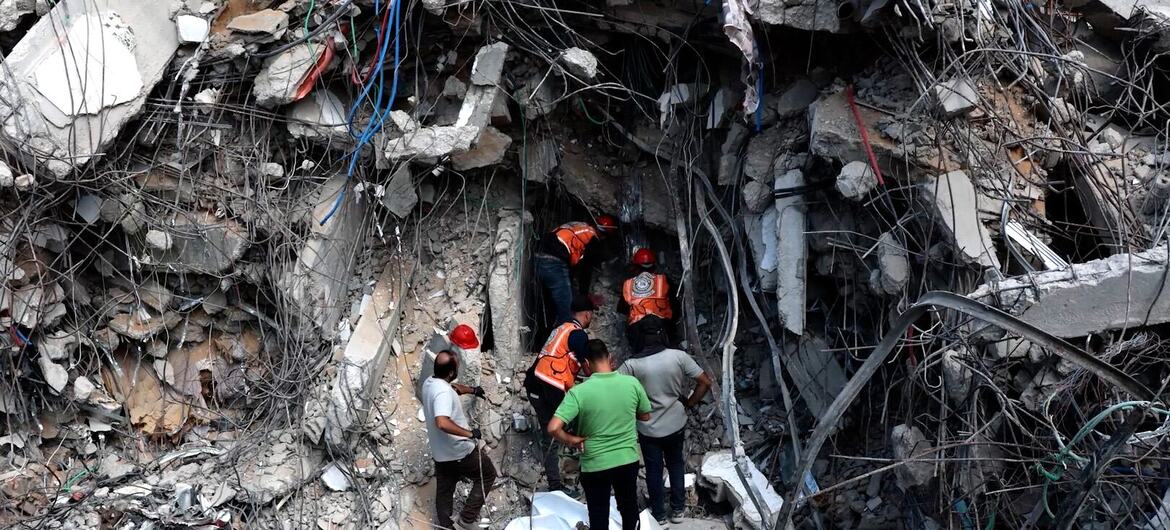
‘When Will They be Buried’? Families Search For Their Loved Ones Under The Rubble

‘When Will They be Buried’? Families Search For Their Loved Ones Under The Rubble

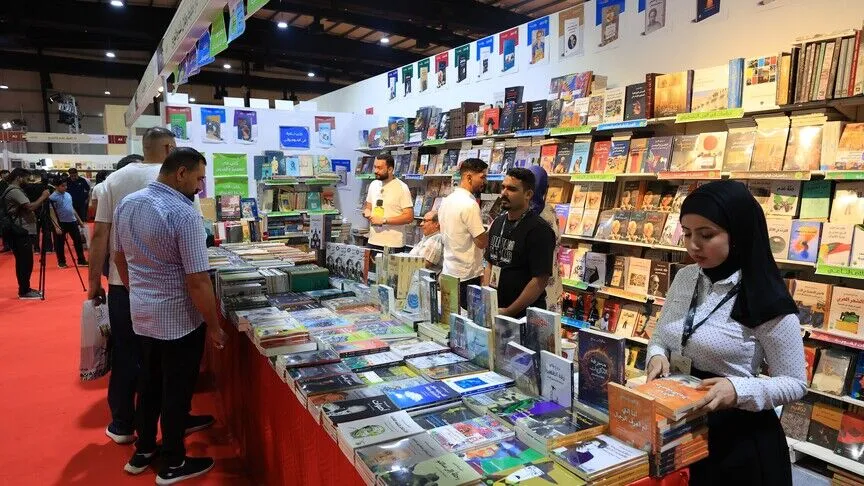
Iraqi Book Fair: 600 Publishers From 28 Countries

  • By Heba
  • September 7, 2026
  • 19 views
Iraqi Book Fair: 600 Publishers From 28 Countries

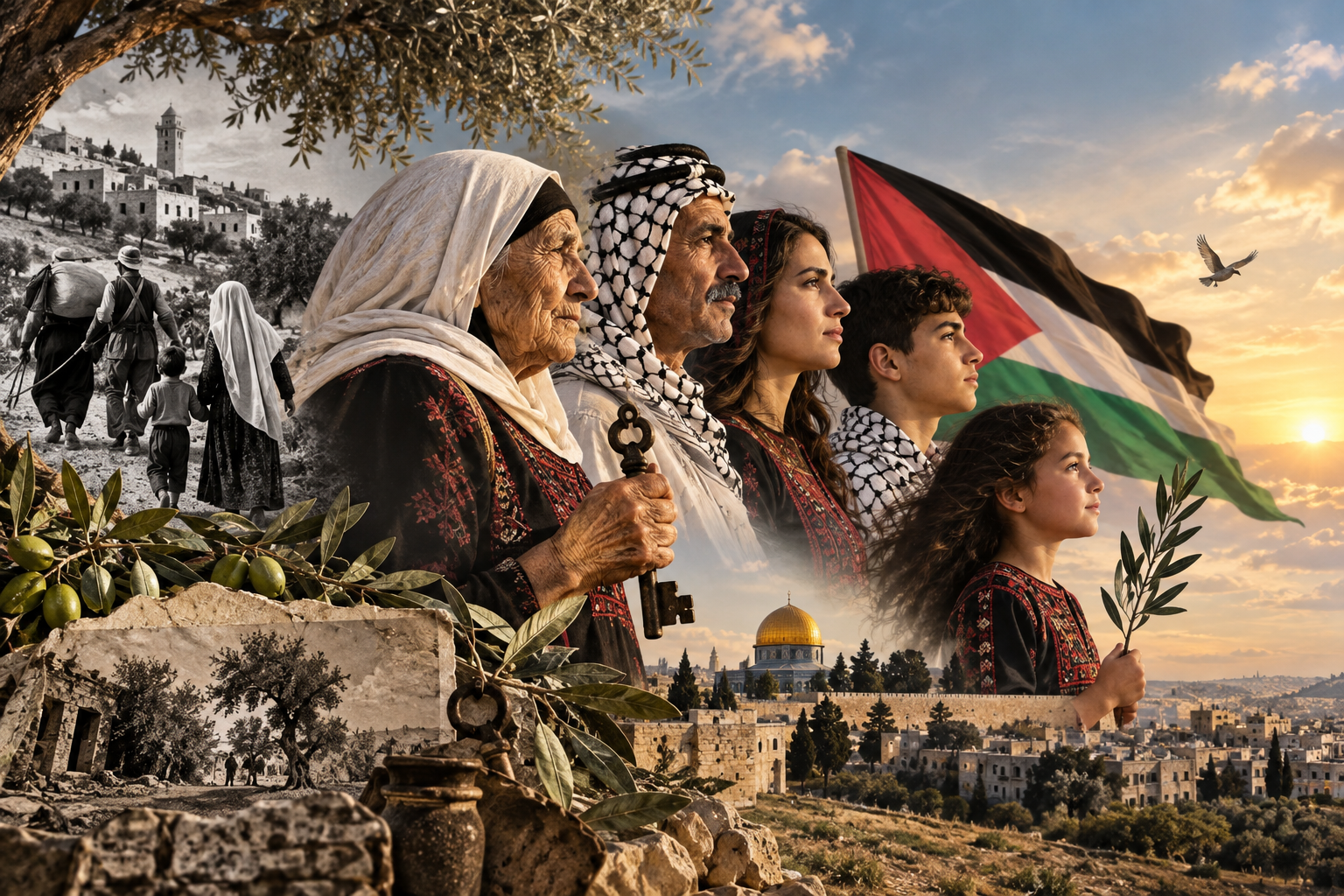
Keeping The Palestinian Narrative Alive Via Its Generations

  • By marwan
  • September 6, 2026
  • 23 views
Keeping The Palestinian Narrative Alive Via Its Generations