Autumn Papers: Palestinians Must Sieze The Moment

By Radwan Barghouti

Sometimes writing is a conversation with oneself—a way of setting oneself straight before going astray…

Prisoner asked:
“When will they let me out?”

Guard replied:
“The door has been open for a long time.”

Prisoner asked:
“Then why didn’t you tell me?”

Guard replied:
“You were too busy asking when.”

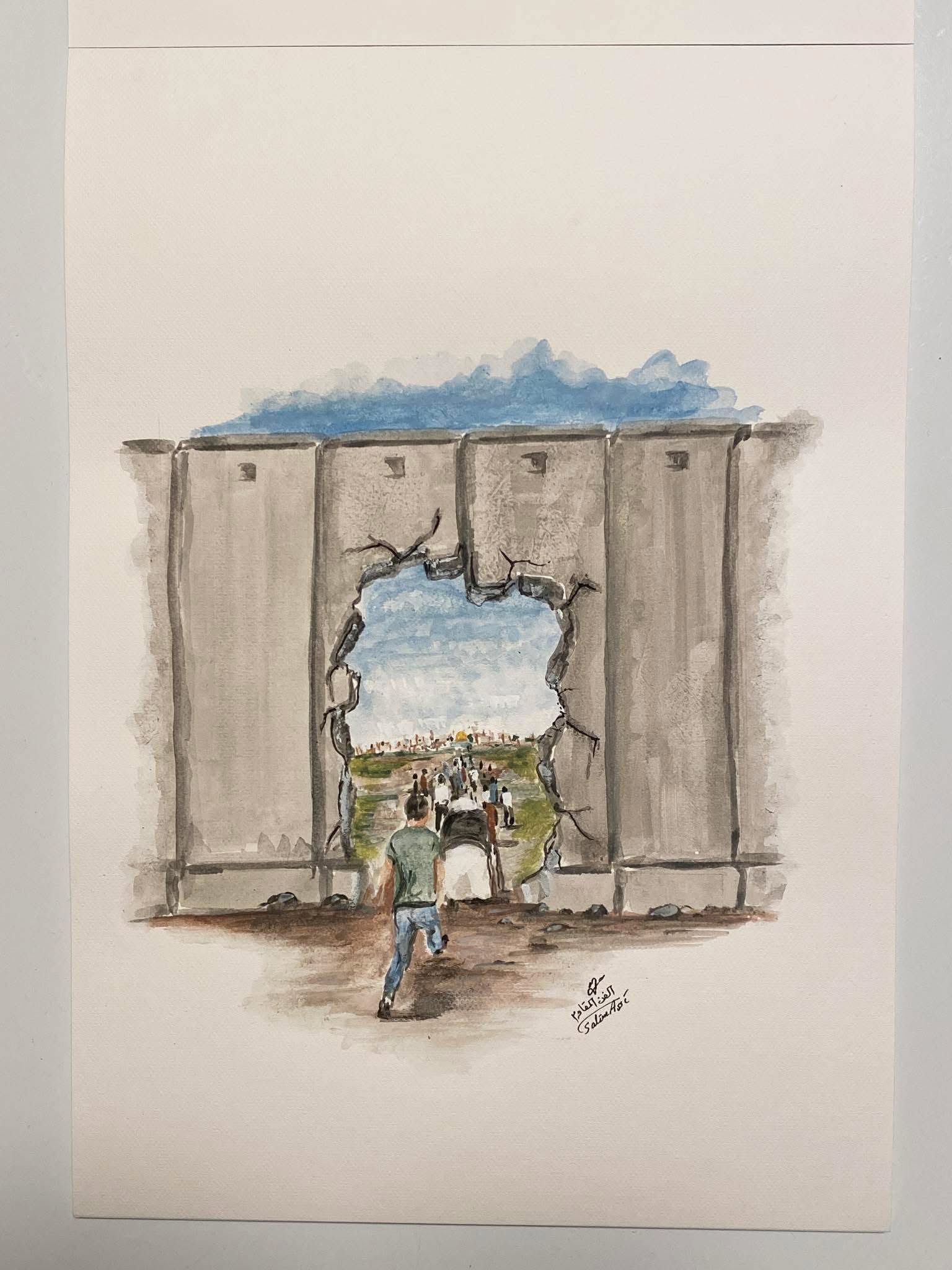
Not every door that opens is seen, nor does every historic opportunity announce itself boldly. Sometimes a rare moment passes before a people—a moment when something in the world around them begins to change—yet those who are supposed to seize it are preoccupied with something else.

Perhaps this simple story can serve as a mirror of the Palestinian condition after 7 October, 2023. The war on Gaza, with all the killing, destruction, devastation, and unprecedented human tragedy it has brought, has thrust the Palestinian cause back into the heart of global consciousness. Millions have now seen what Palestinians have been saying for decades. The world has witnessed with its own eyes the scale of the tragedy endured by a people living under occupation. Across capitals and cities around the world, powerful voices have risen demanding an end to the war, justice for the Palestinians, and recognition of their right to freedom, self-determination, statehood, and independence.

Palestine is no longer merely a passing item on the evening news. It has returned to the conscience of the world—to universities and streets, parliaments and international organizations, and to the center of a far-reaching global political and moral debate.

There has been—and still is—a historic moment. But the painful question is: What have the Palestinians done with this moment?

This is not to suggest that the world has simply opened its doors and said to the Palestinians, “Come in; here is your state.” The reality is far more complicated. The balance of power remains deeply unequal, the occupation has not disappeared, and the tragedy in Gaza has not ended merely because international sympathy has grown. But history is measured not only by what is granted to peoples; it is also measured by what peoples themselves are capable of doing when the right historical moment arrives.

And herein lies the problem.

Instead of allowing this tragedy to become a point of Palestinian convergence, and instead of all political forces and factions sitting down together to confront one central question—How can we transform this global sympathy into a Palestinian political project that brings us closer to freedom and independence?—division has persisted, while factional and political calculations continue to rear their heads at precisely the moment when Palestinians most need to rise above them.

It is as though the prisoner continues to ask:

“When will they open the door?”

When the more important question should have been:

“What will we do when the opportunity comes to open it?”

Palestinian unity today is neither a slogan for public consumption nor a group photograph to be taken in front of the cameras. It is a political and historical necessity.

Global sympathy cannot be transformed into genuine political power without a unified Palestinian political voice. Nor can such a voice be built by excluding one faction, monopolizing decision-making, or branding those who disagree as traitors. It can only be built by bringing the entire Palestinian political spectrum together around a clear national program: Ending the occupation, protecting the Palestinian people, safeguarding their inalienable national rights, securing their right to self-determination, and achieving an independent and sovereign Palestinian state.

The past years have demonstrated that Palestinians can be united in suffering, and that the world can sympathize with them in moments of danger. The real challenge, however, is for Palestinians to become united politically as well.

Freedom does not come through sympathy alone. And sympathy, however widespread, does not automatically translate into independence. It requires a people who know what they want, genuine leadership capable of seizing the moment, and political forces willing to set aside their differences when the fate of an entire homeland is at stake.

Perhaps the harshest aspect of the Palestinian situation today is that those who have spent decades waiting for a historic moment may fail to realize that when history opens its window, it does not leave it open for long.

If the lesson of the story is that the prisoner failed to walk free because he was too preoccupied with asking “When?”, then Palestinians do not need to wait for yet another answer about when freedom will come.

The question that should be knocking on everyone’s door today is this:

Do we have the courage to disagree less, agree more, and transform what has happened into the beginning of a path toward freedom and independence?

The door may not remain open forever.

History does not wait for those who hesitate.

At this unprecedented historic moment, the people themselves bear the full responsibility. No one can act in their place.

Waiting for a savior is nothing but an illusion.

Radwan Al-Barghouti is an attorney living in the Kingdom of Sweden
Continue reading
The True Tale of The Moral Fighter

This is a page from the tales of popular resistance and the formation of Palestinian consciousness Radwan Barghouti writes in Arabic from his home in Sweden. He points out it is a true story which he posted on his Facebook page.

He writes: “In that generation, they knew that resisting occupation was not only about courage in the face of the enemy, but also about morality in dealing with oneself.”

He tells a true tale “of a young man, a member of the Palestinian Communist Party, who he upset mother. The party leadership in his area received word of the story, so they summoned him and held him to a harsh disciplinary hearing.

Today, the story might seem amusing or a bit strange; someone might ask: What does the party have to do with a young man’s relationship with his mother? But those who lived through that era saw the matter from a completely different perspective.

In their view, a fighter did not represent only himself. His daily behavior reflects on the cause to which he belongs to. Then morality was not a marginal detail, nor a personal matter that could be separated from the struggle. A fighter was questioned about his actions as much as his stances: How he treated his mother, how he spoke to his neighbor, how he preserved people’s dignity, how he behaved when he disagreed, and how he used force when it was at his disposal.

Resistance did not grant its adherents any moral privilege simply for resisting occupation. On the contrary, it placed a greater burden upon them: To live up to the ideals they championed in their daily lives.

There was a profound understanding that the liberation of Palestine could not be merely a change of power on the ground, but also a restoration of the Palestinian people’s dignity, values, and ability to live freely and with honor.

Therefore, the freedom fighter was required to resist within themselves what he resisted externally: Injustice, arrogance, selfishness, the humiliation of the weak, and the exploitation of position or power.

Perhaps this is why this small story seems more than just a tale of a mother upset with her son. It unintentionally conveys a complete understanding of what it means to be a freedom fighter: For Palestine you defend to be present in your character, not just in your slogans.

For what is the value of defeating your enemy if you lose yourself along the way? What does it mean to dream of a free homeland when we don’t know how to create even a modicum of freedom, respect, and justice in our own homes, streets, and relationships?

They believed that the cause needed not only loud voices but also strong consciences, and that a true fighter is not just one who demands sacrifices from others, but one who begins by holding themselves accountable.

Therefore, resistance, in its deepest sense, was more than a battle for land; it was an attempt to build a human being worthy of the land they sought to liberate, a human being who understands that the Palestine we struggle for must begin, before it is liberated on the map, in the character of those who bear its name.”

Continue reading
20 States Call on Israel to Lift Blockade on Gaza Aid

More than 20 countries and the EU have urged Israel to lift blockade of aid delivery into Gaza Strip and enable the UN and humanitarian organizations to work independently and impartially.

In a joint statement, foreign ministers of the countries including Australia, Canada, Japan and France, stressed that the population faces starvation and Gaza’s people must receive the aid they desperately need.

Recalling that Israel’s security cabinet is said to have approved a new model for delivering aid into Gaza, which the UN and our humanitarian partners cannot support, the statement stressed that humanitarian principles matter for every conflict around the world and should be applied consistently in every warzone.

“ Humanitarian aid should never be politicised, and Palestinian territory must not be reduced nor subjected to any demographic change,” the readout said.

“As humanitarian donors, we have two straightforward messages for the Government of Israel: allow a full resumption of aid into Gaza immediately and enable the UN and humanitarian organisations to work independently and impartially to save lives, reduce suffering and maintain dignity.”

The statement reiterated an immediate return to a ceasefire and working towards the implementation of a two-state solution, “the only way to bring peace and security to Israelis and Palestinians and ensure long-term stability for the whole region.”

The joint statement was signed by EU officials and the foreign ministers of Australia, Canada, Denmark, Estonia, Finland, France, Germany, Iceland, Ireland, Italy, Japan, Latvia, Lithuania, Luxembourg, the Netherlands, New Zealand, Norway, Portugal, Slovenia, Spain, Sweden and the UK.

Israel, which abandoned the Jan. 19 ceasefire with Hamas, has kept all crossings into Gaza closed to food, medical, and humanitarian aid since March 2, deepening an already severe humanitarian crisis in the enclave.

Israeli Prime Minister Benjamin Netanyahu’s office said Sunday that Tel Aviv will permit the entry of “a basic quantity of food” for Gaza’s population “to prevent the emergence of a hunger crisis.”

He said a famine “could jeopardize the continuation of Operation Gideon’s Chariot,” referring to a new phase of Israel’s ground offensive in northern and southern Gaza.

The Israeli army has pursued a brutal offensive against Gaza since October 2023, killing more than 53,000 Palestinians, most of them women and children according to Anadolu.

Continue reading
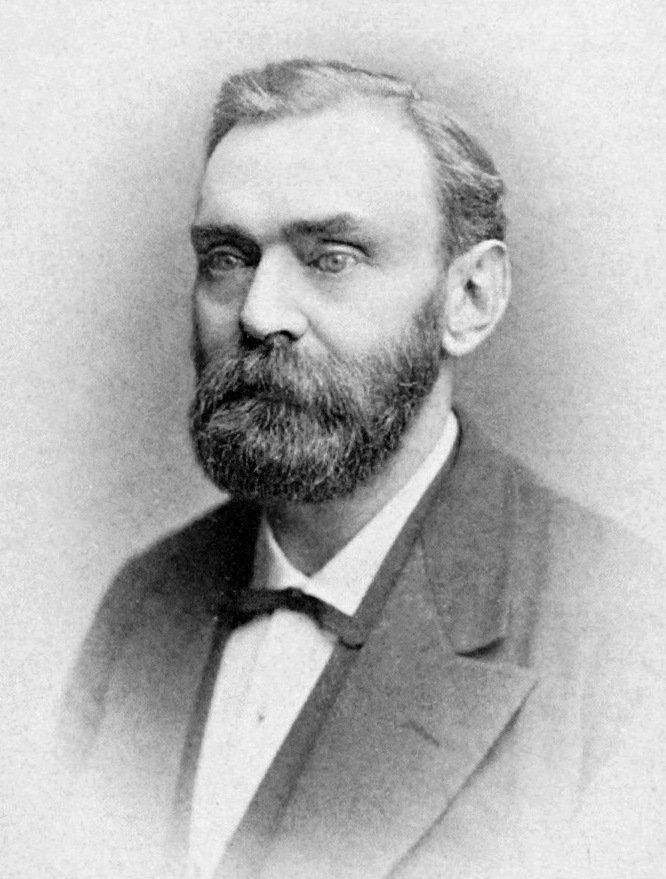
Nobel: The Merchant of Death


By Saleem Ayoub Quna


One must really feel sad to discover that, he or she, has been used or manipulated for a long time by others who pretend otherwise! It will be much worse if one does not do something about it, afterwards.
This is I discovered when I accidentally learned more about the most prestigious international prize called the “Nobel Prize” in its five major categories: Physical science, chemistry, medical science, literature and peace.


This prize is well known worldwide for two main reasons. But we tend to focus on one and disregard the other. The first reason is the prize founder’s name, “Alfred Nobel”, became associated with the most important award man can aspire in modern times, in terms of money and prestige. It is the most prestigious and sought after award in the world!


The other less known reason, but nevertheless no less important, is that its holder’s name is the only one which is, exclusively, linked to the invention of “dynamite” in the late 19th century! That invention was a turning point not only in this man’s life or his country, but in the course of world history. Dynamite was first used to dig out tunnels, build dams, railways, open canals between oceans and so forth. Automatically, that helped, already advanced industrial nations in Europe, to develop and strengthen their economies and improve scientific achievements at home and abroad.


The invention of dynamite which is a kind of ammunition, gradually proved to be most profitable and rewarding enterprise for those involved in it. The appetite to use them became phenomenal to the extent that the number of humans killed, just after the historical invention, drastically surpassed all those who were killed, anteriorly, by other more conventional weapons or natural disasters. The whole issue later became an integral part of manufacturing military hardware which kept developing and expanding until the world reached the era of “weapons of mass destruction” that is causing all the pain and trouble facing people everywhere on this planet since then.


While this multi-faceted tragedy and drama is going on, many people around the world, especially among the cream of the cream strata of scientists, intellectuals, inventors and leaders, and they are in the thousands, working independently or for famed institutions, are counting the days and hours, to see their names, at least, nominated for one the five categories prize, without the slightest effort on their part to know the original story behind all of this big historical farce.


A second turning point in the life of Alfred Nobel took place in 1888. That year a brother of his with the name of Ludwig who was visiting the city of Cannes, south of France, passed away. Alfred had five brothers. A local French newspaper, taking Ludwig for Alfred, picked the news and ran a report on its front page with a dramatic title: “The merchant of death died”!

When Alfred read the paper he was upset. He started contemplating ways to redress this personal dilemma and re-polish his tarnished reputation. It was not until 1895, i.e. seven years after he was described as merchant of death, and just one year before he died, that he decided to include in his will a paragraph that detailed the criteria and conditions of specified financial rewards under a special fund called the “Nobel Prize”, to be granted to all candidates, regardless of their nationality, religion, color or ethnical background. In that year, Alfred’s business empire included 90 operating factories of dynamite and ammunition scattered around the world!

However, the first award distributing ceremony did not take place until 1901 in Stockholm on the 5th anniversary of his death.

Among the hundreds of nominees for the different categories of the award and since its inauguration in 1901, the Nobel Prize was declined by two candidates only: A Vietnamese politician and negotiator named LE DUC THO who was nominated along with no other than Henry Kissinger, to share the Nobel Peace Prize, saying that he did not deserve it because peace was not achieved in Vietnam yet at that time in the year 1973.


The second candidate who declined the prize for literature was the French philosopher and writer Jean-Paul Sartre, saying that he always declined official honors.


Conclusion: Trying to be nominated for the Nobel Prize especially for “Peace”, let alone accepting it is not so different from believing in fake prophets or opportunist politicians whose actions and deeds categorically contradict their preaching and teaching. I have no illusion that any of those who genuinely work for peace on this earth, but “circumstantially” get nominated for the Nobel Peace Prize, will one day, refuse to be trapped in this silk web!

This opinion was especially written for Crossfire Arabia by Saleem Ayoub Quna who is a Jordanian author writing on local, regional and international affairs and has two books published. He has a BA in English Literature from Jordan University, a diploma from Paris and an MA from Johns Hopkins University in Washington. He also has working knowledge of French and German.

Continue reading