In Gaza, Even the Tent Is Temporary: Families Who Have Fled 5, 10, 15 Times
CROSSFIREARABIA – By the time many Palestinians in Gaza reach a tent, they have already fled several times — from home to relatives, from schools to hospitals, from Gaza City to Khan Younis, from Khan Younis to Rafah, and often back again. For families who have moved 10 or 15 times, displacement is no longer a single traumatic event. It has become a way of life.
At two o’clock in the morning, the explosions were getting closer.
Windows collapsed inward. Children woke terrified. Outside, the sound of Israeli tanks and military vehicles appeared to be moving nearer.
The father tried to calm his children, but there was little time for reassurance. The family had to leave.
Again.
Palestinian writer Saber Abu al-Kass later described that night in an account published by Al Jazeera as the beginning of yet another forced displacement. They abandoned what remained behind them and fled into a darkness punctuated by explosions.
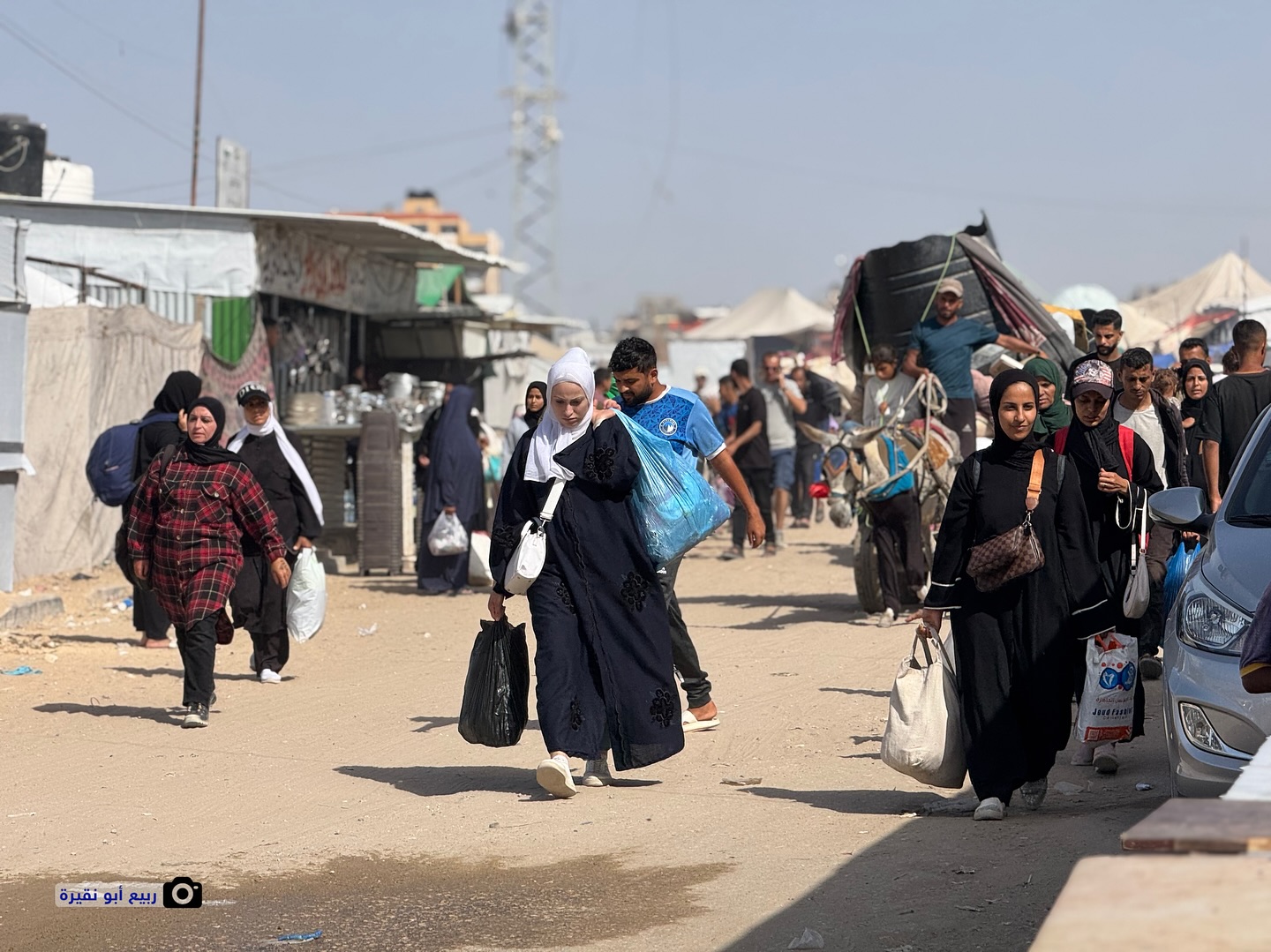
It is a scene that has repeated itself hundreds of thousands of times across Gaza: Parents waking sleeping children; the elderly being helped onto carts or wheelchairs; mattresses rolled hurriedly; a bag of clothes grabbed if there is time; documents, blankets, water and food taken if they can be found.
And then the walk begins.
Not knowing where it will end.
For many Gazans, asking where they are displaced today no longer tells their story. The more revealing question is: How many times have you already been displaced?
Ten times.
Eleven.
Twelve.
Fifteen.
In July 2024, Palestinians interviewed by Al Jazeera were already struggling to count. One man, carrying a child and belongings through the street, said his family had fled 10 times.
“Every time there is suffering,” he said. “We don’t know where to go.”
A girl told the channel that her family was fleeing for the seventh time. Another man counted nine displacements and said he had reached the point where he wished he had stopped running.
United Nations estimates cited in the same report said roughly nine out of every 10 people in Gaza had been displaced at least once — around 1.9 million people — with many uprooted repeatedly.
But statistics cannot quite convey what it means to move 10 times during a war.
Every journey begins with a calculation no parent should have to make: Is remaining here more dangerous than putting the children on the road?
“We barely put up the tent”
For Abir Nasr, there was sometimes barely enough time to turn a patch of ground into a temporary home before she had to dismantle it.
Nasr and her family were repeatedly displaced from Khan Younis toward Rafah. Speaking to Al Jazeera in January 2024, she summed up their existence in a few words:
“We barely manage to put up the tent and sit in it.”
During one displacement from the Mawasi area of Khan Younis, she recalled gunfire and people being killed nearby. The family fled with their children in the middle of a cold winter night.
Her brother Ali Nasr was undertaking his fifth displacement.
“They attacked us in the middle of the night,” he said.
They did not know where to go.
That uncertainty is central to Gaza’s displacement story. People are not generally leaving one dangerous location for a prepared shelter. They may be moving toward a road, a school already overflowing with displaced people, the courtyard of a hospital, an empty plot, a relative’s crowded room — or a strip of sand where they hope they can erect a tent.
Eleven escapes from death
For Lamis Deeb, displacement became almost a map of the war itself.
She fled approximately 11 times.
Seven of those moves took place within Gaza City alone.
Her family’s first flight was from their home to Shati refugee camp in western Gaza. From there they went east within the city. Later, in November 2023, she and her husband headed south toward Khan Younis.
Each movement meant roads damaged by bombardment, crowds of frightened people, military checkpoints and the frantic search at the other end for somewhere — anywhere — to sleep.
Lamis described displacement as if the soul were leaving the body.
“You carry your children, hold them tightly and run,” she told Al Jazeera.
You do not know what is behind you, she said, and you do not know where you are going.
“You just run.”
The war would take more from her than her home. Lamis lost her husband and her father in an Israeli air strike. She was eventually left struggling to survive with her two children.
Her 11 displacements therefore cannot be understood simply as changes of address. They represent eleven episodes of fear, eleven searches for shelter and repeated ruptures of whatever temporary routine she had managed to rebuild for her children.
Fifteen moves — and a library in a tent
Mohammed Saad has moved approximately 15 times with his family.
Before the war, books were part of the physical architecture of his life. His four-storey home included a book warehouse.
Then the house was destroyed.
After months of moving across Gaza, Saad eventually found himself beside a pavement in Deir al-Balah with a modest tent. Yet even there, after 15 displacements, he tried to restore something from his former existence.
For three days, he returned to the ruins and dug with his bare hands to rescue hundreds of books.
His new library was a tent.
The image is almost a metaphor for displacement in Gaza: A man retrieving books from the remains of a permanent house and arranging what survived beside a structure made of fabric and poles — something that can disappear with the next evacuation order, strike, storm or forced movement.
The story of young Hayat Abu Amsha carries the same number: 15 displacements.
Her family’s home was destroyed and she ended up living in a tent lacking basic necessities. Yet in June 2026, the Palestinian child attracted attention for something very different: Playing a violin outside that tent.
The instrument was almost absurdly delicate against the landscape around her.
Fifteen moves had not extinguished her desire to learn music.
Twelve displacements, illness and burning tents
For another displaced man identified as Ziad, the number was 12.
His displacement began on the first day of the war. His home was eventually destroyed. His family scattered.
His married daughter was wounded by shrapnel when an Israeli strike hit a shelter area.
Then the family’s tents in Khan Younis were struck by flying shrapnel and caught fire.
They lost what was inside.
This is one of the cruellest dimensions of repeated displacement. People often arrive at a tent having already lost their houses, furniture and possessions. What remains — blankets, clothes, cooking utensils, perhaps jewellery or family papers — becomes a household compressed into a handful of objects.
When a tent burns, floods or must be abandoned, they can lose their lives a second time in miniature.
Ziad warned that the combination of killing, fear and displacement would have long-term consequences for Gaza’s mental health.
The displacement ends on the map, perhaps.
Psychologically, it does not.
A pregnant woman walking south
For May Younis, three displacements were enough to place enormous strain on her body.
Pregnant during the war, she first walked for long distances from Gaza toward the central area before finding transportation to Khan Younis.
Then she fled again, on foot to Rafah.
Later came another journey, from Rafah to Deir al-Balah.
She sought treatment for intermittent bleeding. According to her account to the Palestine Information Center, medical staff linked her difficulties to poor nutrition and repeated displacement and warned about the risk of premature birth.
For pregnant women, elderly people, people with disabilities and parents carrying infants, evacuation is not merely movement. A few kilometres can become an ordeal.
People walk while dehydrated and hungry. Parents carry children who cannot walk farther. Older people are transported in wheelchairs, on improvised carts or supported between relatives.
And everyone hears the same sounds around them: drones, explosions, artillery and aircraft.
Ten moves — then insects invade the tent
Even reaching Mawasi does not necessarily end the search for somewhere livable.
Um Mohammed Abu Shaeira, 50, originally from Rafah, told the Palestine Information Center that she had changed location ten times.
Some of those later movements were not only attempts to escape military danger.
They were attempts to escape the conditions inside displacement camps themselves.
Fleas, mosquitoes and flies had spread through tents amid accumulated rubbish, sewage problems and the lack of sanitation and insecticides.
“I no longer know where to flee,” she said.
Nearby, Mervat al-Shaer, 35, described spending nights using her own hands to drive mosquitoes away from her children because her deteriorating tent offered so little protection.
The destination of displacement had itself become another place from which people wanted to escape.
The elderly reach the point of refusing to run
By August 2025, exhaustion had transformed the way some displaced people spoke about evacuation.
In western Gaza City, Um Nasser al-Wadiya, a woman in her seventies with failing eyesight and hearing, sat beside a tent assembled from worn pieces of fabric.
She had fled Zeitoun.
Three weeks later she had to leave again, this time from the Karama area.
She then left a tent she had established in Deir al-Balah and eventually reached another improvised camp.
Her children were no longer with her, and she did not know where they were.
Her conclusion was stark:
“Death is easier than displacement.”
Nearby, Fatima al-Qassas, around 60, had fled the Daraj neighbourhood after an evacuation warning. She went to Zeitoun. Bombardment followed her there and she was displaced again.
She, too, said she would not leave again.
For younger people, displacement can mean carrying what remains of a household.
For the elderly, it can mean being physically uprooted when the body is no longer capable of another journey — losing familiar neighbours, medicines, mattresses and whatever small arrangements had allowed them to survive.
Eventually, the terror of the next journey competes with the terror of staying.
Near Mawasi, Yusuf al-Najjar, a father of four, described being displaced three times in only two weeks.
He sat watching the sky.
The family had escaped bombardment repeatedly only to feel encircled by danger again.
That is why the word “safe” has acquired an almost bitter meaning among many displaced Gazans.
A tent is not an address
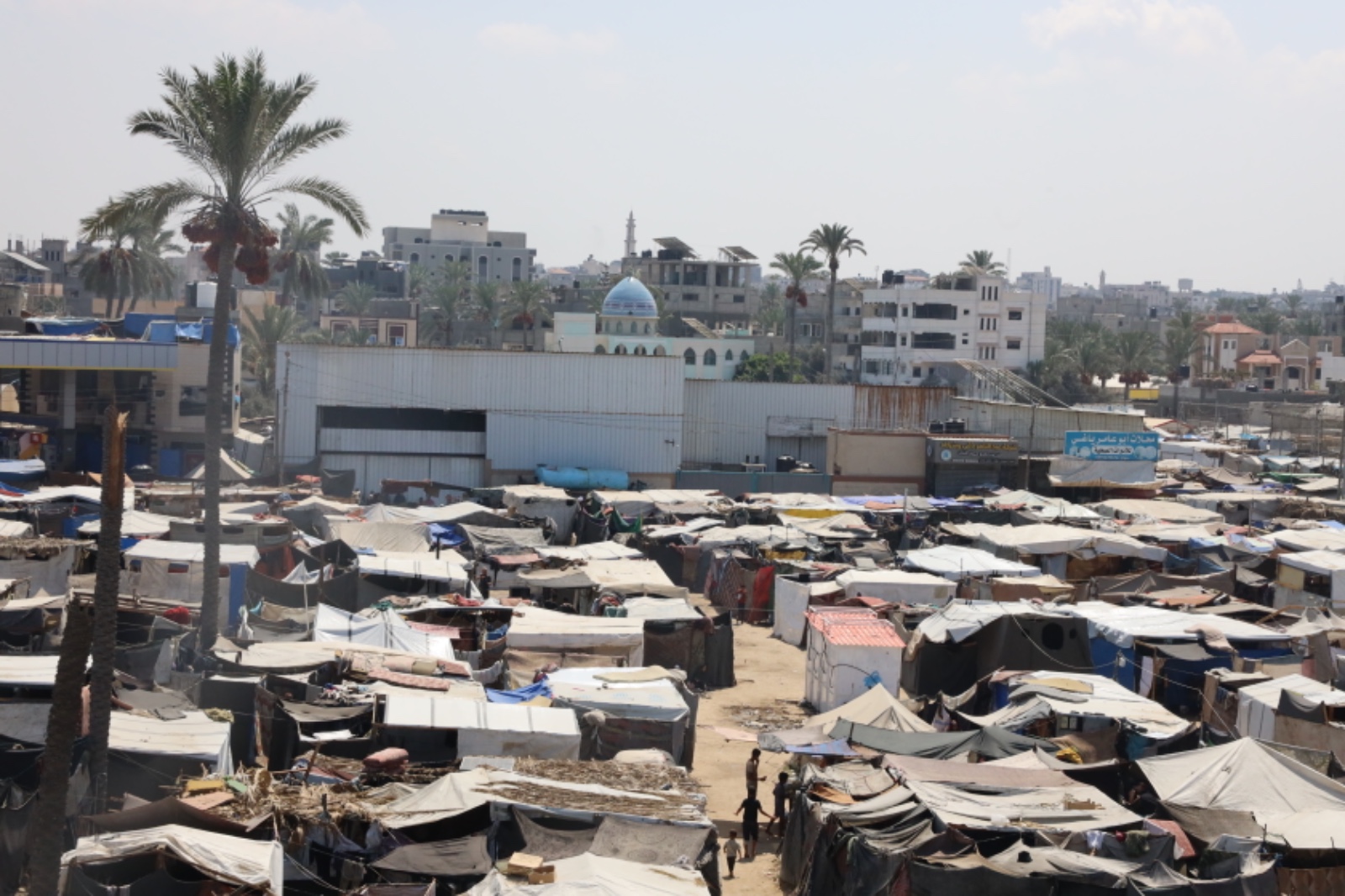
Mawasi was once known primarily for agriculture. During the war, its sandy coastal landscape became one of Gaza’s largest concentrations of tents.
Families built shelters from tarpaulin, plastic, blankets and salvaged timber. Toilets, clean water, sewage infrastructure and electricity were grossly inadequate for the huge displaced population.
And the danger did not stop at the edge of the encampments.
The Palestine Information Center has documented repeated Israeli attacks in the Mawasi area and the continuing struggle of displaced families to obtain water.
Weather provides another form of displacement.
In November 2024, heavy rain and wind damaged or flooded around 10,000 tents, according to accounts cited by Al Jazeera, forcing some families to move their shelters yet again.
By August 2026, local reporting was still documenting the consequences of prolonged tent life: respiratory and skin diseases, mosquitoes, poor sanitation and children suffering in conditions their parents could do little to change. One mother, Feryal al-Attar, had endured 12 displacements while trying to care for her daughter Haneen, a child with serious existing medical needs who subsequently developed a severe skin condition.
This is what makes Gaza’s tent cities different from the conventional image of a refugee camp.
A refugee camp suggests arrival.
For many Gazans, there has been no arrival.
There is only a temporary stopping point.
A family may drive wooden stakes into the sand, tie down a tarpaulin, spread blankets, find a bucket for water and begin calling the space “our tent.”
Children learn which tent belongs to their cousins. A mother creates a cooking corner. Someone hangs clothes on a rope. A father searches for cardboard to cover the ground.
Small routines return.
For a few days, perhaps even weeks, the family begins to behave as if this patch of earth is fixed.
But the bags are never entirely metaphorical.
They know how quickly life can be reduced again to what can be carried.
Mohammed Saad reached his tent after around fifteen moves.
Lamis Deeb fled eleven times.
Ziad fled twelve.
Abir and Ali Nasr reached a fifth displacement while escaping in the middle of a winter night.
Um Mohammed Abu Shaeira counted ten.
May Younis walked through three.
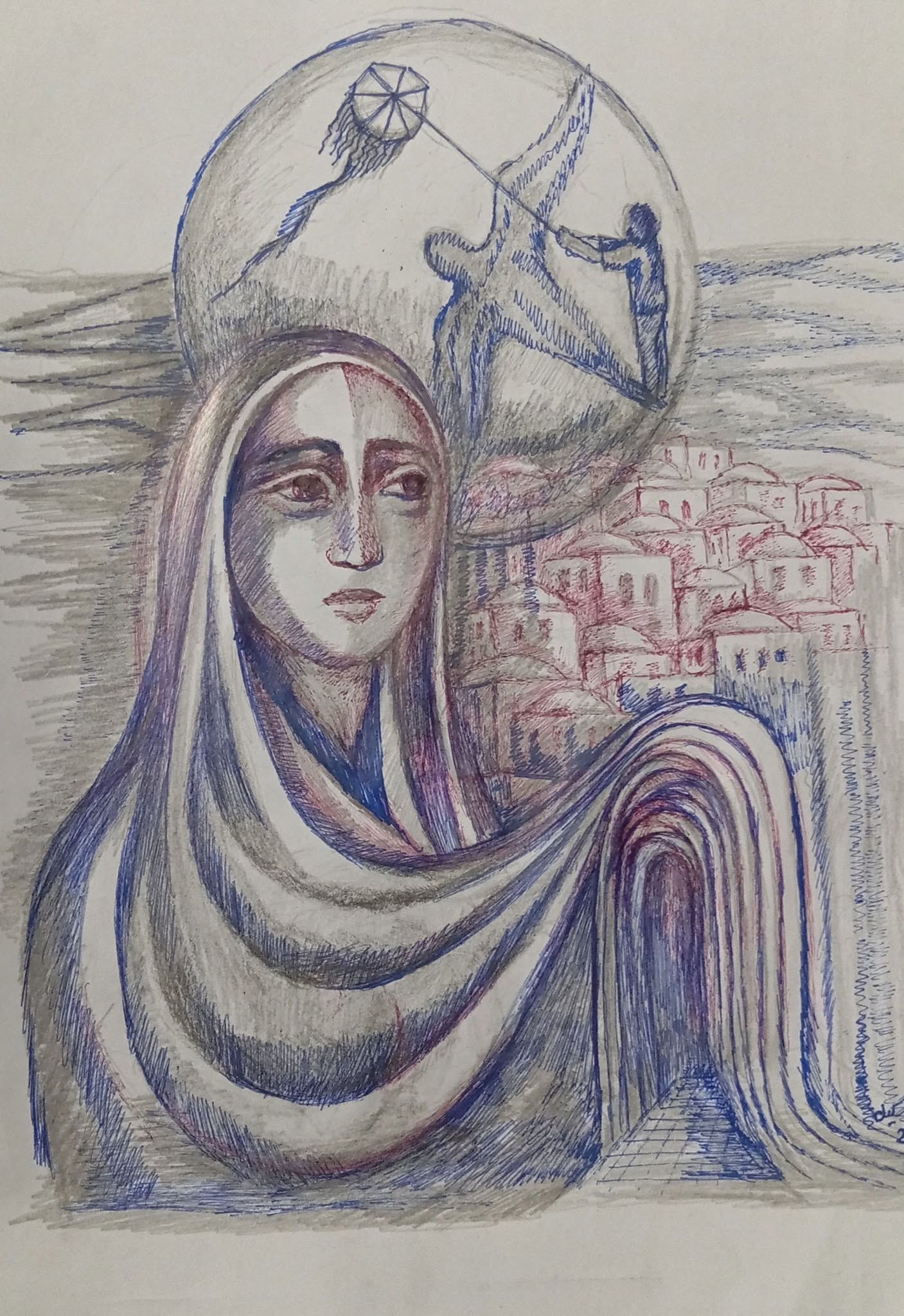
Maysara Baroud, the Gaza artist who continued drawing during the war after his home, studio and university were destroyed, had been displaced 11 times.
Each number represents doors closed behind people who did not know whether they would ever return.
Perhaps that is the most devastating thing about displacement in Gaza.
The tragedy is not simply that so many people live in tents.
It is that after five, ten or fifteen forced journeys, even the tent cannot fully become home.
At night parents still listen to the sky.
Children still wake at explosions.
An elderly woman wonders whether she has the strength to walk again.
And beside the entrance, the few possessions that survived the last journey remain close enough to gather quickly — because in Gaza, after so many displacements, people have learned that the place where they sleep tonight may once again become the place they have to flee tomorrow.

 CrossFireArabia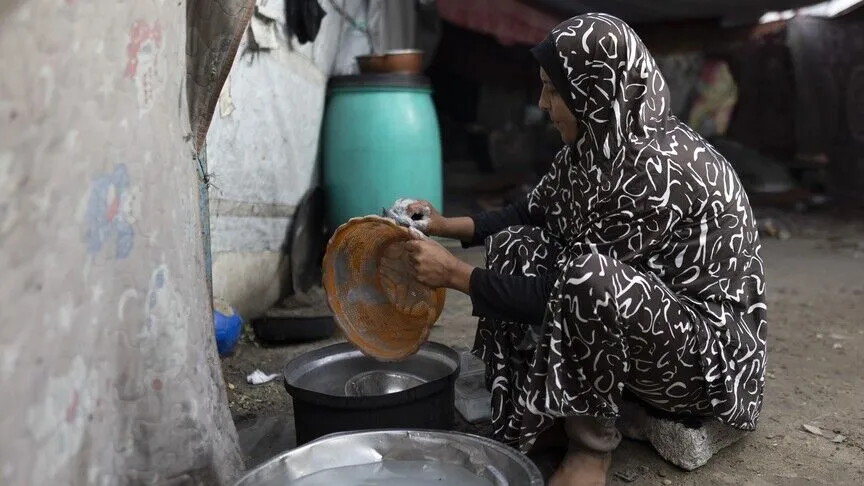

 Heba
Heba