CrossFireArabia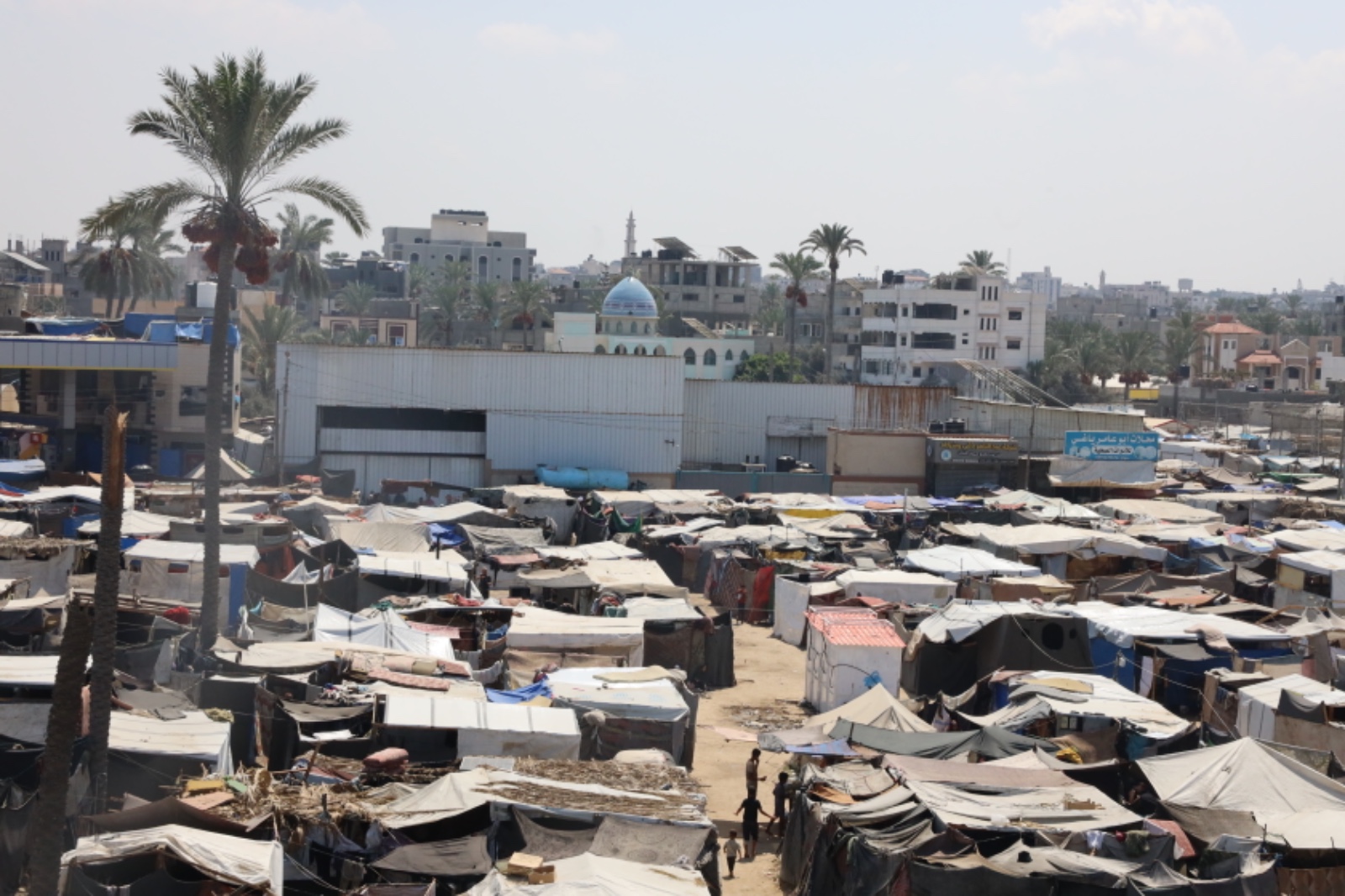
CROSSFIREARABIA — At the end of each day, 36-year-old Amina Abu Ajwa looks at what remains inside a sack of flour and performs the kind of calculation that has come to define life for thousands of women in Gaza.
How many loaves can she still make? How many mouths must they feed? And what happens when the flour is gone?
Amina has four young children. Her husband was killed in October 2023, leaving her simultaneously a grieving widow, mother, caregiver and sole provider. She has a university degree, but no permanent job. Even if she could find work amid Gaza’s devastated economy, another question immediately arises: Who would look after her children while she was away?
For a while, orphan sponsorship payments provided the family with a small degree of predictability. Then those began disappearing too. One sponsorship stopped four months ago; another has not arrived for three months.
“I knew that something would arrive and I could arrange my affairs accordingly,” she told the Palestinian Information Center. “Now I don’t know what I will do next month.”
Today the family survives largely on food parcels, meals from charitable kitchens and occasional help from a neighbour. None is guaranteed.
Amina’s story is personal, but it is hardly exceptional anymore. Across Gaza, Israel’s war has produced a social transformation whose consequences may remain long after the bombing stops: Tens of thousands of households have lost a parent and, frequently, their principal breadwinner.
The latest figures are staggering. According to Aziza al-Kahlout, spokeswoman for the Ministry of Social Development in Gaza, the number of orphans has now exceeded 68,000. Tens of thousands have lost one parent or both, while thousands are being cared for by grandparents because their parents are dead, missing or otherwise absent.
Alongside them stands another vast population: Gaza’s widows.
Ministry figures put the number at more than 28,000 women, many suddenly responsible for feeding and raising families in an economy where jobs, businesses, homes and normal childcare arrangements have been shattered. Earlier ministry figures showed 28,224 registered widows, compared with 22,596 before the war. Around 64 percent were between 18 and 45 — working age, theoretically, but living in a place where the conditions required to work have largely disappeared.
Six children and no breadwinner
Hanan Abu Ghali is another of them.
Her husband was killed early in the war, leaving her responsible for six children. Three receive orphan sponsorships. The payments were never enough to restore anything resembling their former life, but they helped pay for food and other necessities.
As sponsorships faltered at the same time as humanitarian assistance declined, Hanan found herself effectively back where she started: without a dependable income and with six children whose needs do not diminish simply because aid does.
She is no longer thinking about improving their standard of living. The objective is much more basic — keeping the family going.
This is perhaps the central economic reality confronting Gaza’s widows. Losing a husband does not merely mean bereavement. In thousands of households it means the simultaneous disappearance of wages, savings, workplace connections and the person who once shared responsibility for finding food, collecting water and caring for children.
The widow is expected to replace all of them.
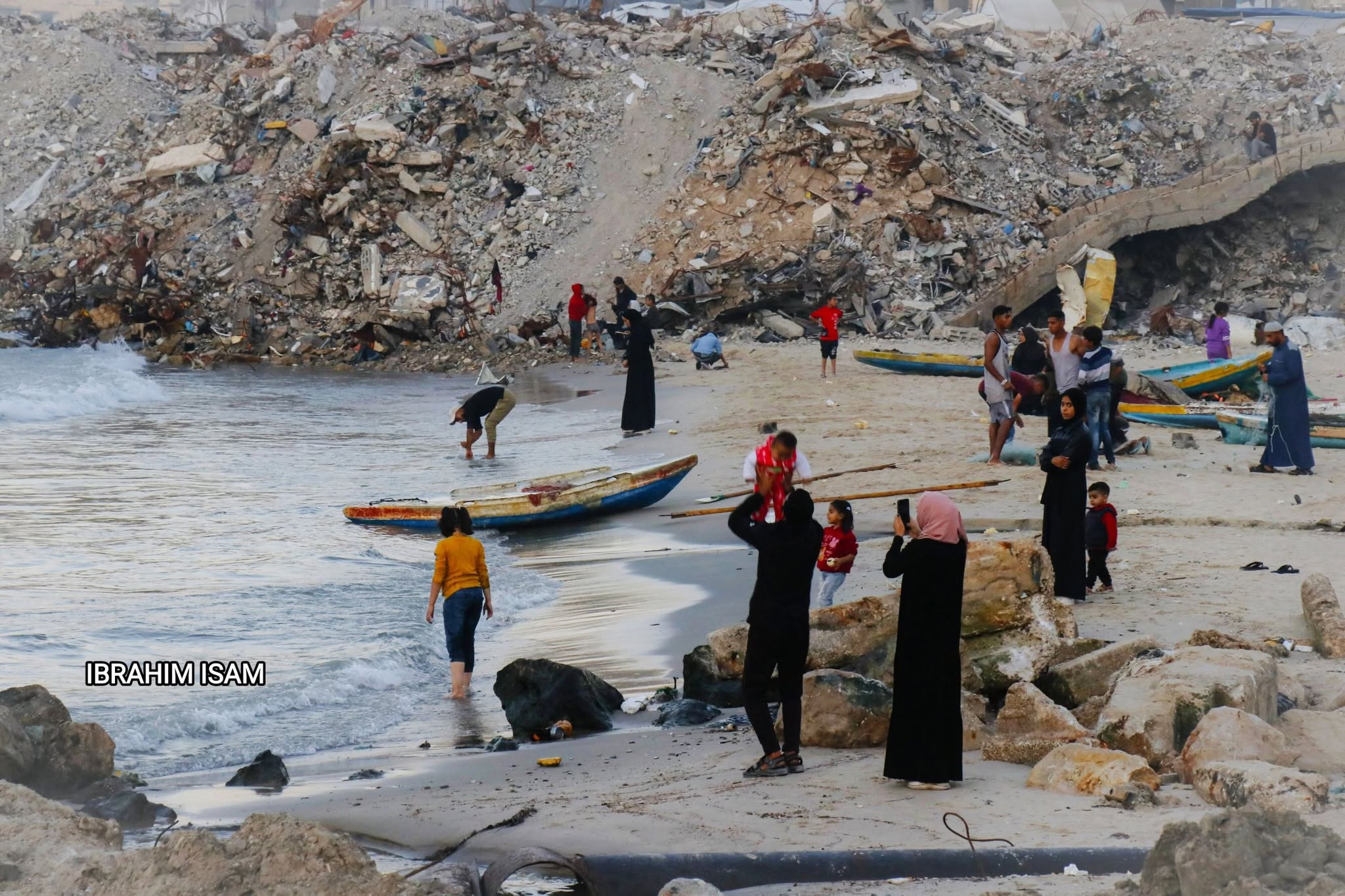
But earning money while caring for several children inside a displacement camp can be almost impossible. A mother who leaves a tent to search for work may have nobody with whom she can safely leave her children. A grandmother caring for orphaned grandchildren faces the same dilemma, compounded by age.
And Gaza’s destroyed economy offers few conventional jobs anyway.
The Ministry of Social Development has warned that loss of family incomes has become so severe that children themselves are increasingly working. Ministry teams have encountered children selling water or food from street stalls, carrying aid and water, gathering firewood or recyclable material from destroyed buildings and working long hours in shops for small sums.
Thus the death of a breadwinner can begin a chain reaction: the father disappears, the mother cannot find work without abandoning childcare, assistance proves inadequate, and eventually a child begins working to help feed the household.
Twelve grandchildren, one grandmother
Few stories illustrate the burden being transferred between generations more starkly than that of Hidaya Abu Alwan.
Hidaya is 66 years old.
She is now raising 12 grandchildren whose parents were killed during the war.
Five of the children initially obtained orphan sponsorships. Children over 12 received none, she said. Then sponsorship for another two children stopped. Today, she receives sponsorship money for only three of the 12 children she is supporting.
Whatever money arrives for one child inevitably becomes money for everybody.
Food, clothes, medicine: there is no practical way for a grandmother feeding 12 children to separate one orphan’s sponsorship from the hunger of the child sitting beside him.
Hidaya fears that even the remaining payments could disappear.
“How can one woman provide food and care for 12 children?” is essentially the question her circumstances have forced her to ask.
Her family also reveals something easily obscured by the word “orphan.”
Who actually looks after Gaza’s tens of thousands of bereaved children?
In most cases, the answer is not an orphanage.
Al-Kahlout says Gaza’s protection system prioritises keeping children within a family environment wherever possible: first with a surviving parent, then grandparents or capable relatives, followed by extended family. Foster arrangements are considered when relatives cannot provide care, while residential institutions are treated as a last resort.
That principle protects family bonds. But under present conditions it also transfers enormous economic responsibility onto people such as Hidaya.
A grandmother who takes in five, eight or 12 grandchildren may herself have no salary, savings or secure home. She may be living in a tent. The family has protected the children from institutionalisation, but who protects the family from destitution?
Is there a safety net?
The answer is complicated.
There is still a social-protection system operating in Gaza, despite the destruction. The Ministry of Social Development, local organisations, charities and international agencies continue distributing food, cash assistance, vouchers and essential supplies and providing child-protection and psychosocial services.
The ministry reported that during August alone, 75,051 food and non-food interventions were carried out in Gaza. It recorded 22,558 interventions involving women’s protection and psychosocial support and another 4,213 services and interventions for orphans.
Across the first eight months of 2026, more than 55,000 Gaza families benefited from humanitarian interventions implemented by the ministry and its partners, alongside more than 56,000 protection and social-care interventions. Assistance has included food parcels, flour and bread, vouchers, emergency cash, medicines, clothing, bedding, baby milk and other necessities.
The ministry has also attempted to maintain a more formal child-protection structure. During the first half of 2026, its teams and partners intervened with unaccompanied and separated children, monitored children in residential and foster care and provided psychosocial assistance. Thousands of orphan sponsorships and other forms of assistance were delivered, while 5,650 additional orphans were added to its database.
So it would be inaccurate to say that nothing exists.
What Gaza does not appear to have, however, is a universal, reliable social safety net capable of guaranteeing every widow and every orphan a predictable income sufficient for survival.
Al-Kahlout says the great majority of Gaza’s orphans do not receive permanent sponsorships. Some receive individual sponsorships or limited financial assistance; others depend primarily upon relatives.
That distinction matters enormously.
A food parcel is assistance. A meal from a communal kitchen is assistance. A sporadic cash transfer is assistance.
A safety net is something different: it is something a mother can count on next month.
Amina’s experience demonstrates the difference.
When the sponsorship stops
The orphan sponsorship system has traditionally been an important source of support for vulnerable Palestinian families. But the war has exposed its fragility.
According to al-Kahlout, programmes have been disrupted by restrictions on financial transfers and bank accounts, border closures, the closure or suspension of humanitarian organisations and difficulties faced by charities seeking to operate. At the same time, the number of children requiring assistance has exploded.
That leaves charities attempting to cover an expanding population with unstable resources.
For the widow receiving the money, however, the reasons are less important than the consequence.
The payment simply does not arrive.
She cannot tell the baker that international funding has declined. She cannot explain to a sick child that a bank transfer has been delayed. Nor can she tell children to postpone hunger until the next aid distribution.
This is why the crisis facing Gaza’s widows cannot be separated from the crisis facing its orphans. They are frequently the same household.
A generation growing up inside the emergency
The greatest danger may lie beyond immediate hunger.
The Ministry of Social Development warned in August that more than 625,000 school-age children had been deprived of formal education for a third consecutive year. It also cited estimates that more than 74,000 children under five could suffer acute malnutrition.
For orphaned children, these pressures come on top of bereavement, displacement and the destruction of ordinary family life.
A child who has lost a father may also have lost the family’s income. A child who lost both parents may move into a grandmother’s tent already occupied by another displaced family. Schooling may disappear. Food becomes uncertain. Eventually the child may be sent to sell water, gather firewood or perform other work simply because the household needs another pair of earning hands.
Poverty, in other words, risks becoming the mechanism through which today’s bereavement shapes an entire adulthood.
For widows, meanwhile, the future presents an equally stark dilemma. Humanitarian relief can keep families alive, but it cannot by itself rebuild economic independence. With roughly two-thirds of the registered widows in working age, Gaza ultimately requires childcare, education, livelihoods and employment programmes specifically designed around women who are now heads of households — not simply food parcels.
The ministry itself has called for economic empowerment and employment programmes for widows. But such programmes require something that Gaza presently has in desperately short supply: stability.
A woman cannot easily start a business when she has been repeatedly displaced. She cannot reliably go to work when there is no school or childcare for her children. She cannot build savings when every available shekel goes toward food, water and medicine.
The family as Gaza’s last welfare institution
For the moment, Gaza’s most important social safety net may therefore be neither the state nor an international agency.
It is the family.
Grandmothers absorb grandchildren. Widowed mothers stretch sponsorship payments among siblings. Relatives share tents and food. Neighbours give one another what little they possess.
But there are limits to how much poverty can be redistributed within families that are themselves impoverished.
The story of Gaza’s widows is consequently becoming one of the defining social legacies of the war. Tens of thousands of women have been forced into the role of sole provider at precisely the moment when the economic structures that would allow them to provide have collapsed.
Behind them are tens of thousands of children.
Some have a mother but no father. Some a father but no mother. Some have neither.
For many, the person standing between them and complete abandonment is an elderly grandmother such as Hidaya Abu Alwan, dividing the sponsorship money of three children among 12.
For others, it is a woman like Amina Abu Ajwa, counting the flour remaining in a sack and calculating how many more pieces of bread she can make.
These women have become Gaza’s emergency welfare system.
But resilience cannot substitute indefinitely for income, childcare, housing, education and a functioning social-protection system.
The question facing Gaza is therefore no longer simply how its widows and orphans survive the present.
It is what happens to a society when tens of thousands of women and children are asked to build their futures from grief — with no certainty that even next month’s bread will be there.

 marwan