CrossFireArabia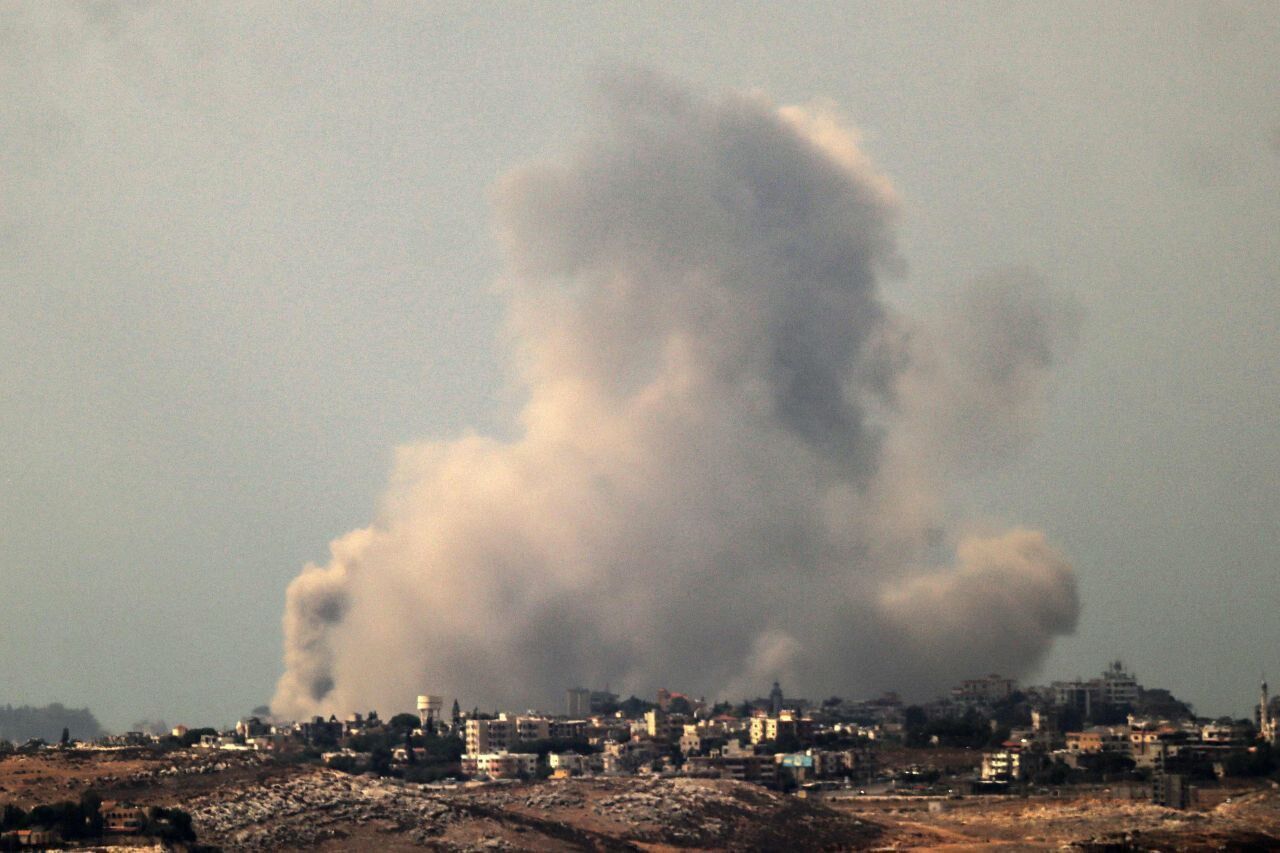
Five months of armed conflict along Lebanon’s southern border have resulted in hundreds of deaths and caused huge disruption to people’s lives, forcing more than 91,000 people from their homes and exacting a significant toll on their financial stability and psychological wellbeing.
Exchanges of fire across the border between Israeli forces and Hezbollah and other groups began on 8 October 2023 and show no signs of abating, while the conflict has recently spread to northeastern Lebanon with Israeli forces bombing the Baalbek-Hermel governorate.
Many of the displaced people left their homes with no possessions and struggle to get hold of basic necessities such as food and blankets. More than 60 families are living in an abandoned hotel repurposed into a shelter in Al-Merouaniye, some 60 kilometres from the border. One of its residents is Ali Hammoud, a barber and a father of three from Rab Al-Thalathine, who fights back tears as he recounts his family’s ordeal.
“My older son has had three mental crises,” he says. “We go to sleep, wake up, and repeat this every day. We are worried that our kids will develop mental problems from this situation. The same routine, day in and day out, is more burdensome to a child than an adult.”
Médecins Sans Frontières (MSF) teams are providing displaced people who fled the border region with psychological first aid. “We’re seeing an increase in depression and anxiety disorders,” says Felicitas Steinhoff, MSF mental health activity manager, who warns of the psychological toll of prolonged displacement.
“In terms of mental health, I think people are really good at coping with short-term stress, but what we see here is families who have been displaced from their homes for over five months now and who are living with a lot of uncertainty around when and even if they might be able to go back,” she says.
Our mobile medical team also provides people with care for chronic diseases and makes regular visits to a clinic in Nabatiyeh governorate, alongside the border.
The team provided 373 consultations since the start of 2024 in both locations. Manahel Rammel, who fled her home in the border town of Oudaisseh on 8 October, says that children and young people are suffering the most. “Young people aged between 18 and 20 sit around without any idea of what they want to do,” she says. “Their future is gone. The future of youth is gone.”
Manahel’s own daughter is fortunate to be studying in Beirut, but Manahel is unable to visit her there due to the high cost of transport. Like many people across Lebanon, Manahel already struggled to make ends meet before the current crisis, but being displaced has exacerbated her financial difficulties.
Lebanon is grappling with its fourth year of severe economic turmoil, which has seen two-thirds of its population pushed into poverty. The current violence has halted or severely impacted many people’s livelihoods, leaving them unable to meet even basic needs.
Ali initially sought refuge in Beirut, but after his savings were exhausted, he moved to the shelter in Al-Merouaniye. “We left our homes with nothing but the shirts on our backs,” says Ali.
“During the truce [a four-day truce in November 2023], we went back to pack some essentials and clothes just to warm ourselves… I had some savings, but they all ran out. I stayed in Beirut for two months and I spent all my money before eventually moving to this shelter,” he says.
While the walls of the abandoned hotel offer some safety and warmth to the families sheltering there, they – like thousands of other displaced people across Lebanon – are clearly in need of comprehensive and sustained assistance as they face an uncertain future.
“If I could rub a magic lantern right at this moment, I would wish to be back home in my village,” says Ali. “We have no solution, only God knows where we’re headed.”