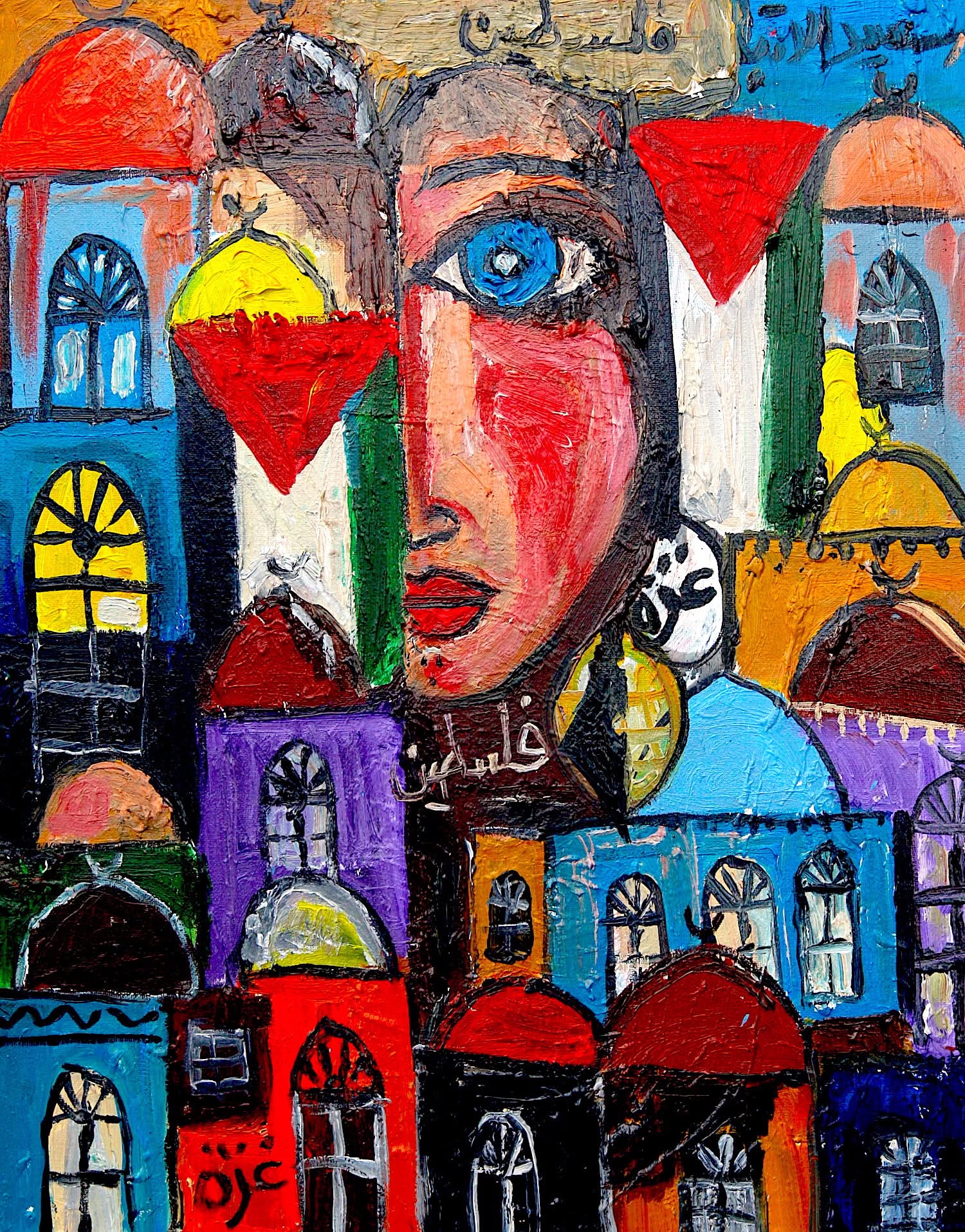
Ghost Town: 70% of Jabalia Homes Reduced to Rubble

Jabalia refugee camp in northern Gaza has become a “ghost town” due to Israel’s relentless attacks, with 70 percent of the camp’s buildings completely destroyed, according to Israeli newspaper Haaretz.

Haaretz, which briefly had access to the camp in besieged northern Gaza, said in a report on Sunday that the number is an estimate by the Israeli army.

None of the army’s other operations in Lebanon and other parts of Gaza “can compare, in the scale of the destruction, to what has happened over the last two and a half months” in the camps.

“As far as the eye can see lie miles and miles of destroyed homes. It’s hard to look away from the devastated remains of Jabalia’s refugee camp in northern Gaza,” Amos Harel, a military affairs analyst, wrote in Haaretz.

“I could see that even the few buildings that are still standing were badly damaged,” Harel said.

“The IDF (army) operated here twice before, in December 2023 and May 2024. But this time, the camp was taken apart,” Amos said.

“Jabalia has become a ghost town. Outside, you mainly see pack after pack of stray dogs roaming around and hunting for scraps of food.”

According to the army’s data, quoted by Haaretz, some 96,000 Palestinian civilians were forcibly displaced from the densely populated camp during the military’s operation.

Haaretz added, citing the army, that more than 2,000 Palestinians have been killed and roughly 1,500 have been arrested in the camp over the same period.

The army claims most of the people killed in the camp were armed, the report also said according to the Quds News Network.

CrossFireArabia

CrossFireArabia
Dr. Marwan Asmar holds a PhD from Leeds University and is a freelance writer specializing on the Middle East. He has worked as a journalist since the early 1990s in Jordan and the Gulf countries, and been widely published, including at Albawaba, Gulf News, Al Ghad, World Press Review and others.

Related Posts

A Public Letter: Stop Smearing Euro-Med

By Richard Falk

My name is Richard Falk, retired professor of international law at Princeton University. I speak here as the Chair of the Board of Trustees of Euro-Med Human Rights Monitor, a civil society organization based in Geneva, that reports on human rights throughout the Middle East and North African region with a special focus on violations of the human rights of the Palestinian people. I am most proud to be associated with Euro-Med due to the fearless dedication it has displayed in its on the ground documenting and reporting upon human rights abuses since 2011 when it was founded by its current inspirational leader Ramy Abdu who has served throughout its existence as its Chair. In all my contacts with Ramy Abdu I have admired how much this civil society initiative has achieved with such a modest budget, heavily depending for the collection of evidence and documentation of allegations on unpaid volunteers from the region, mostly young persons committed to the promotion of human rights.

What has impressed and moved me about Euro-Med is the indispensable work done over the 15 years of its existence under the most difficult circumstances. I make this statement now in response to the intensification of defamatory attacks on Euro-Med as biased and linked to Hamas by the government of Israel and by pro-Israel media and Zionist zealots in Western countries, particularly the United States. These attacks intended to be discrediting have included vicious media diatribes and threats of violence against Euro-Med staff members that have forced the organization to divert attention from its crucial substantive priorities to take prudential measures to protect its staff.

This recent escalation of defamatory attacks on Euro-Med and its leadership has been prompted by the publication of an opinion column written by Nicholas Kristof, a prize-winning regular contributor to the New York Times on May 11, 2026. This carefully reasoned and sourced article explicitly relied on Euro-Med Reports to ground his confirmation of severe forms of sexual violence engaged in by Israeli prison official and IDF soldiers in dealing with Palestinian civilians, and particularly detainees, including women and children. It was not unusual for influential media, NGOs, and activists to rely on Euro-Med reports given its reputation for trustworthy information. In this instance, Kristof’s eminence as a journalist, and even more because the NYT enjoyed had a long record of being a pro-Israeli news source that self-censored itself with respect to the most incriminating abuses by Israel of its legal and moral responsibilities in relation to the Palestinian people.

Kristof’s reference to Euro-Med’s documentation of sexual violence against Palestinians should have enhanced the credibility and demonstrated the effectiveness of Euro-Med instead of serving as a launching pad for a smear campaign that is characteristic Israeli behavior whenever so accused, a practice of shifting the conversation to the credibility of the message as a means of ignoring the message, especially when its veracity is beyond a reasonable doubt.

These charges of sexual violence, shocking as they were, came as no surprise to close observers of Israel’s behavior in the Occupied Palestinian Territories. The surprise was that the NYT had finally broken its habitual silence about Israeli atrocities for so long even when the evidence of systematically and flagrantly violating human rights principles was irrefutable.

This pattern of Israel’s sexual abuse in the aftermath of the October 7 Gaza attack became more extreme and notorious. This development was a major theme of the detailed report in March 2025 by the Commission of Inquiry on the Occupied Palestinian Territory established by the UN Human Rights Council. Additional to the description of instances of human rights abuses was the extremely damning assessment that ‘sexual and gender-based violence’ had become for Israel a ‘method of war.’ It was acknowledged there was lacking convincing evidence that this was explicitly adopted by the Israeli government. Yet the Commission believed this behavior was implicitly endorsed by Israeli officialdom that responded to even the most extreme abuses by granting governmental impunity to the wrongdoers however serious the international crimes.

It is of utmost importance to support the integrity of Euro-Med and other objective human rights organizations and not allow state propaganda and extremist support groups of Israel to shut down or defame courageous efforts to expose human rights abuses. This attack on Euro-Med should be understood as part of a wider campaign of punitive response to truth-tellers (in contrast to impunity for wrongdoers) who are risking not only their reputations but their lives by devoting their efforts to the dissemination of inconvenient truths. United States sanctioning of UN Special Rapporteur of Israeli Violation of Human Rights in Occupied Palestine, Francesca Albanese, is a similar disgraceful attack on an exceptionally brave truth-teller that should be seen as at one with these vicious attacks on Ramy Abdo and Euro-Med.

Voices of global conscience need to accept and act upon the ancient wisdom that when truth prevails, justice is served, human dignity and moral decency upheld. Likewise, when truth is suppressed and evidence of atrocities is filtered or ignored, evil flourishes.

Continue reading
Israel on Gaza Killing Spree as World Looks Away

GAZA CITY—Eight-year-old Jad Suleiman was walking home from school in the Jabaliya refugee camp in northern Gaza on Monday when the Israeli airstrike hit. A piece of shrapnel lodged in his neck, killing him instantly. Outside Shifa hospital, his body lay on a stretcher wrapped in a loose white sheet. Dressed in jeans and a blue and red checkered shirt, the smallness of his body was accentuated by his oversized backpack, still on his limp shoulders.

Jad’s father, Youssef Suleiman, was beyond grief. He wept uncontrollably as he bent over his son’s lifeless body, caressing and kissing his face. “I am not able to speak,” Suleiman told Drop Site News. He was breathing heavily, almost gasping for air. He had removed his son’s backpack and was clutching it to his chest. “My son is 8 years old. What was his crime? He was coming home from school. This is his bag, there is blood on it. This is the bag. This is the bag,” he repeated, unable to continue.

Three Palestinians were killed in the attack, including eight-year-old Jad and a 70-year-old man. Several others were wounded in the strike and brought into Shifa on stretchers, bloodied and wincing in pain.

“You leave your house, not knowing whether you are going to return or whether you are going to die,” Jad’s aunt, Warda Muhaysin, told Drop Site. “There is blood in the streets. It’s enough. Enough…where is the ceasefire people are talking about?”

The body of Jad Suleiman, 8, arrives at Shifa hospital in Gaza City along with other casualties, after an Israeli airstrike in Jabaliya on June 8, 2026. Video by Abdel Qader Sabbah. Warning: graphic footage.

As the world has turned its attention to the wars on Iran and Lebanon, and with a “ceasefire” in Gaza entering its ninth month, the ongoing genocide is steadily becoming more acute.

May was the deadliest month in 2026 for Palestinians in Gaza, with at least 119 killed, including 19 children, according to a report last week by the Palestinian Center for Human Rights citing Gaza Health Ministry figures, which noted an “escalation in mass killings and assassinations that the Israeli occupation forces continue to perpetrate against Palestinian civilians in the Gaza Strip.”

And the killing is ramping up. At least 46 Palestinians have been killed in Israeli attacks in the first nine days of June alone, according to a daily tally of Health Ministry figures, including several children.

A total of eight Palestinians were killed in Israeli attacks on Monday across the enclave. In another attack, this time in Gaza City, an Israeli helicopter gunship flew menacingly low before firing a missile into a residential building in the neighborhood of Tel al-Hawa, wounding another Palestinian child.

“We were baking something in the oven, and our children were playing near this corner of the building,” an eyewitness told Drop Site. “All of a sudden, we saw the helicopter flying. We kept looking at it and asking, ‘Where is it going to bomb?’ It turned out that it was bombing us, not anyone else. We absolutely did not expect it to strike us because they were only little kids playing.”

Israel has killed nearly a thousand Palestinians since it signed a ceasefire agreement with Hamas on October 10, 2025, with more than 1,400 airstrikes and shelling attacks, and over 1,200 shooting incidents, according to a report shared by the Palestinian side with mediators and obtained by Drop Site. Over 3,000 have been wounded.

“The war has returned. Every day there are tens of martyrs and tens of wounded. It has returned, but without being announced. There is no coverage of Gaza,” Azmi Abu Sharby, a Palestinian who lives in Shujaiyeh, a neighborhood east of Gaza City, told Drop Site. “It is all about Iran and all about Lebanon, and Gaza is bombed every day and slaughtered every day.”

On Sunday, Israel again used its own war of aggression as a pretext to close all crossings into Gaza. Following Iran’s strikes on Israel—in retaliation for Israel’s strikes on Beirut in yet another violation of a ceasefire with Lebanon—Israel completely cut off the entry of humanitarian aid to roughly two million Palestinians. Two days later, the Israeli military said it was reopening Karam Abu Salem for the “gradual entry” of humanitarian aid into Gaza and the Rafah crossing for the limited movement of people. But the strangulation of Gaza had already been tightening before the latest measures. Only 36% of the aid agreed upon in the ceasefire has entered Gaza since the deal went into effect eight months ago. Fuel deliveries are even less, at just 15% of the required amount.

The World Food Program estimates that 77% of Gaza’s population face acute food insecurity, including 100,000 children and 37,000 pregnant women suffering from acute malnutrition. Gaza’s Interior Ministry announced this week that it recorded 1,701 births across all of Gaza in May—around 35% of the enclave’s pre-genocide monthly birth average of between 4,600 to 4,800.

“There appears to be a widespread perception, actively encouraged by Israel, the United States, and those governments complicit in the Gaza genocide, that the October 2025 Israel-Hamas agreement produced a meaningful ceasefire or at least an end to the killing. In reality, nothing could be further from the truth,” Mouin Rabbani, Managing Editor of Jadaliyya and a former UN official who worked as a senior analyst on Israel-Palestine for the International Crisis Group, told Drop Site. “Although the Palestinians have scrupulously adhered to their commitments under the agreement, Israel’s killings continue on a daily basis, in attenuated form, and have in fact been increasing in intensity in recent weeks.”

“At least as importantly, the siege continues in a context in which Israel has rejected the proper fulfillment of every single one of its commitments under that agreement,” Rabbani added. “Those governments which like to refer to themselves as ‘the international community’ have been content to look the other way and pretend this is the most normal state of affairs in the world.”

Living Near the Yellow Line

In Shujaiyeh, a neighborhood east of Gaza City, Awni Shallah sat amid rubble in the shade of a badly damaged building. In the near distance, a wall of earth cut out the horizon—a massive barrier with a newly built Israeli military base perched on top, complete with a communications tower and spotlights. Shallah’s tent lay just meters from the “yellow line.”

“All the people in the tents here are very afraid of the ‘yellow line’ advancing,” Shallah told Drop Site. “There is no place, no alternative. We don’t know where to go, where to run to.”

Palestinians living in Shujaiyeh east of Gaza City near the “yellow line.” May 31, 2026. Video by Abdel Qader Sabbah.

The area near the “yellow line”—the line of Israeli control inside Gaza—has come under heavy assault by the Israeli military, with frequent shooting, bombing and shelling of Palestinians living there. Since the October deal gave Israel control of 53% of the Gaza Strip, the military has steadily encroached further west, effectively controlling over 60% of the territory, building 25 kilometers of earthen barriers to physically divide Gaza, fortifying military bases in the eastern half it controls, and corralling Palestinians onto even less land.

Israeli Prime Minister Benjamin Netanyahu recently announced he issued orders to the Israeli army to seize control of 70% of the enclave. “We are currently squeezing Hamas. We now control 60% of the territory in the strip. You know, we were at 50, we moved to 60. My directive is to move to … 70%,” Netanyahu said at a conference in an Israeli settlement in the occupied West Bank on May 28.

“Israel is slowly approaching direct physical control of some two thirds of the Gaza Strip and has openly proclaimed its intention to seize even more of it,” Rabbani said. “Again, the self-style ‘international community’ has responded with a shrug, considering this perfectly normal behavior. Which it of course is in Israel’s case.”

At the same time, Israeli-backed Palestinian militias have also increasingly launched attacks and raids on the area, driving Palestinians further west.

“No one is looking out for us. There is gunfire every day. We wake up in the morning to gunfire, and we sleep to gunfire. There is also shelling, the shrapnel from the shells hits the tents,” Shallah said. “After sunset you don’t find any people in the street, everyone has gone into their tents. They don’t come out.”

President Donald Trump’s “Board of Peace,” which was tasked with monitoring the ceasefire by a UN Security Council resolution in November, is enabling Israel’s plans. Bulgarian diplomat Nickolay Mladenov, who was named High Representative of the Board of Peace and is tasked with implementing Trump’s agenda, has repeatedly blamed the lack of progress in the ceasefire on Hamas, accusing it of refusing to surrender its weapons despite the fact that disarmament was categorically not a part of the phase one deal signed by Hamas in October. Mladenov has also ignored Israel’s daily violations of the ceasefire and threatened that if Hamas did not disarm, the ceasefire terms would be canceled, allowing Israel to resume its full-scale genocidal assault.

“They always come to the weaker side, not to the stronger side. We feel that [U.S. Special Envoy Steve] Witkoff and Mladenov are members of the Israeli cabinet,” Abu Sharby, who also lives several meters from the “yellow line,” told Drop Site. “They pressure us to implement, rather than pressuring the occupation to implement what’s left of the clauses.”

Multiple residents living near the “yellow line” told Drop Site that aid agencies and humanitarian groups do not service the area and that there is no support, food, or water provided to them.

“Organizations, institutions, and volunteers are unable to provide any assistance, they are afraid because we are close to the line,” Abu Sharby said. “We did not find a place in western Gaza, and now it is likely that we will be displaced from this place, and we will not find any other place. The stadiums are full, the schools are full, the streets are full. We do not know where to go if this threat is carried out.”

On Tuesday, Israeli soldiers detained seven ambulance workers from the Palestinian Red Crescent Society while they were carrying out their humanitarian duties on Salah al-Din Street, the main north-south route in Gaza that runs close to the “yellow line.” Five of the medics were released following questioning, while two are still being held by Israeli forces.

“Every day they are advancing on us,” Gomaa Abeed, who lives in a tent in Shujaiyeh close to the “yellow line,” told Drop Site. “Every day the bombing increases, the attacks increase. We don’t see any hope.”

“There is no life here. There is no water. They stopped the community kitchens. They even cut the municipal water supply to us,” he added. “They have taken everything from us. They have taken away the possibility for life.”

Journalist Mohamed Ahmed in Gaza and Drop Site News Middle East Research Fellow Jawa Ahmad contributed to this report. Sami Vanderlip edited the video.

Dropsite

Continue reading

You Missed

UN Red Alert Lebanon

UN Red Alert Lebanon

Last Wedding in Tantura

Last Wedding in Tantura

Battle of Wills: Resistance V. Israeli Settlements

Battle of Wills: Resistance V. Israeli Settlements

A Public Letter: Stop Smearing Euro-Med

A Public Letter: Stop Smearing Euro-Med

Israel on Gaza Killing Spree as World Looks Away

Israel on Gaza Killing Spree as World Looks Away

Did Little Malak Deserve Death?

Did Little Malak Deserve Death?