Iran-Israel War: Cost And Opportunities!

By Mohammad Abu-Rumman

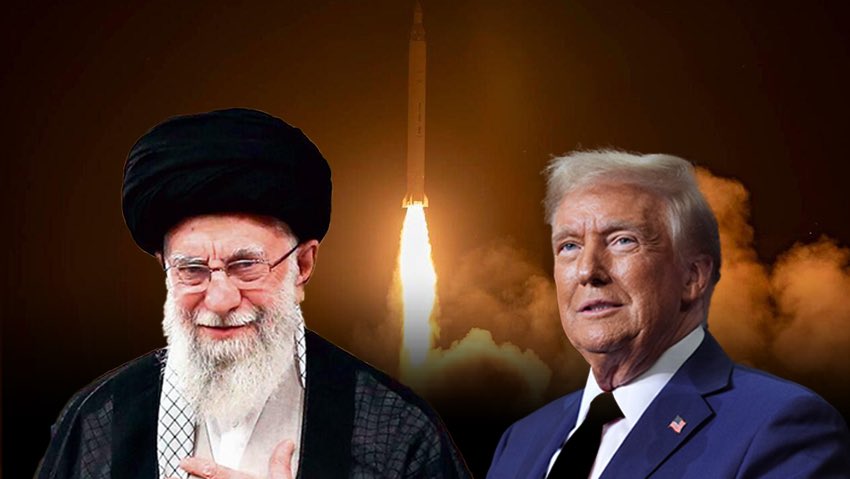
Benjamin Netanyahu has placed the Iranian regime, the Wilayat al-Faqih system, before a fateful challenge through a harsh pre-emptive strike. While extremely risky, the strike was not decisive enough to settle the confrontation. Netanyahu himself did not expect that an ideological-nationalist regime like Iran’s would surrender and offer immediate concessions following the strike, without launching a retaliatory blow against Israel.

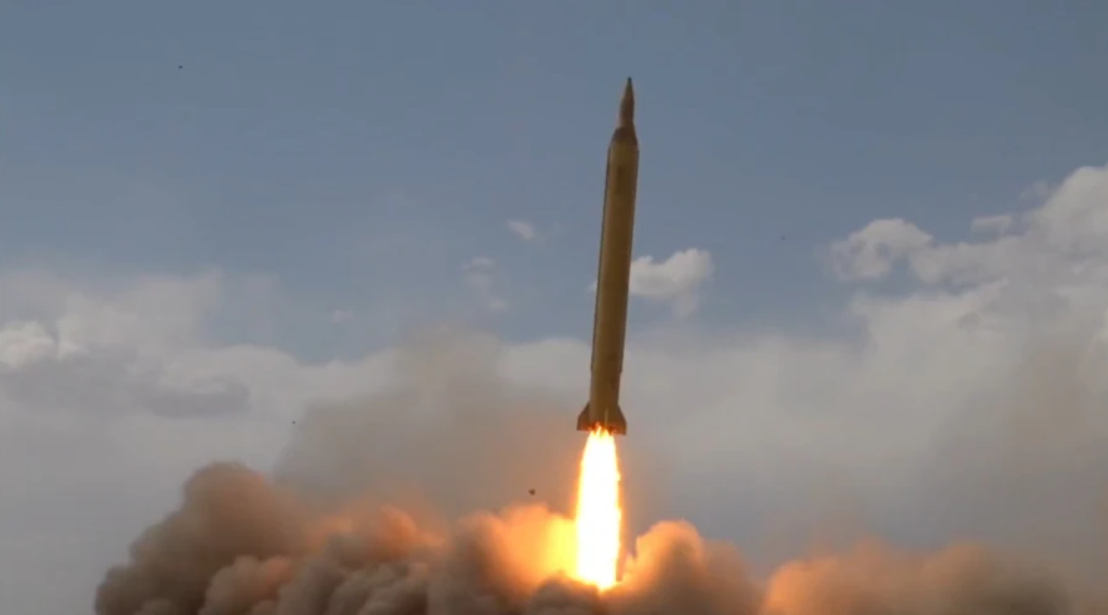
Despite Iran’s unprecedented powerful strikes on Tel Aviv, the reformist current in Iran, represented by Foreign Minister Abbas Araghchi, has also demonstrated its continued commitment to “the negotiating table” and to finding a way out of this war. Iran has deliberately avoided using its full missile capabilities against Israel to prevent the battle from reaching the point of no return.

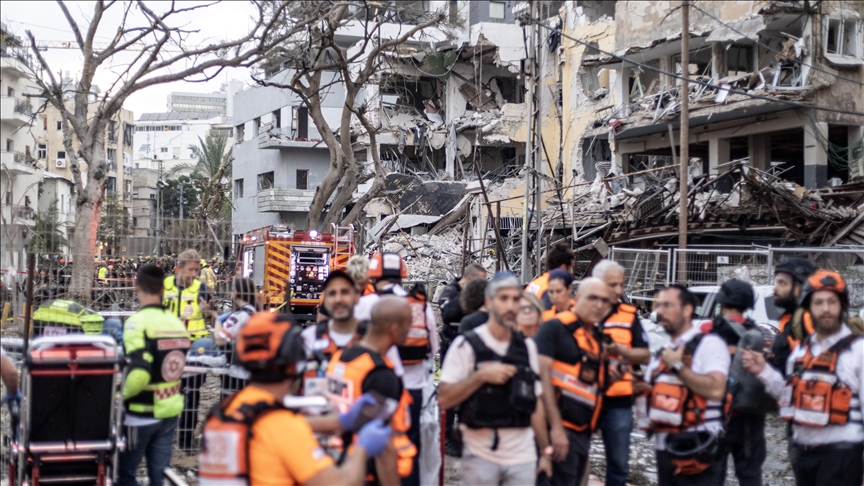
Current indicators suggest that this war will likely not last long, nor will it expand geographically, because the destruction costs—for both sides—are immense. For Iran, this includes damage to its oil facilities, which are the backbone of its economy, as well as the protection of what remains of its nuclear program and infrastructure. For Israel, the fact that Iran managed to breach the Iron Dome and cause major direct damage in the heart of Tel Aviv and Haifa presents a reality that Israelis cannot endure.

In this light, there will likely come a tipping point at which both parties will be willing to end the conflict. The timing of that moment will be decided by the U.S. administration, which will step in to halt the military escalation. But when will this moment arrive? It will come when both sides realise that they can no longer achieve significant additional objectives, and that the cost of continuing the conflict far outweighs the cost of stopping it, especially given that a so-called “knockout blow” is impossible in such existential wars.

On the Israeli side, there are two major areas of superiority: First, Israel’s air force has successfully destroyed much of Iran’s air defense systems, allowing it to operate freely over Tehran and strike targets at will. Second, intelligence penetration, which could lead to further surprises that may force the Iranians to retreat or make subsequent concessions. However, Israel’s major vulnerability lies in its inability to withstand sustained, large-scale missile attacks, especially after a prolonged multi-front military conflict.

As for Iran, it has two primary objectives in the current military confrontation: To preserve the political legitimacy of the Wilayat al-Faqih regime, which is built on religious ideology and propaganda. Failing to respond or retreating now would reflect poorly internally and could erode the regime’s very source of legitimacy. To protect Iran’s deterrence capacity and prevent its regional standing from deteriorating—especially after losing the bulk of its regional influence in the aftermath of “Flood of al-Aqsa” (the Gaza war).

American intervention, whether military or diplomatic, will be decisive in ending this conflict. It is evident that President Donald Trump prefers a negotiated path, aiming for political, military, and economic gains. Netanyahu, however, is betting that a major military defeat for the Iranian regime will lead not only to concessions on its nuclear program (the primary stated objective) but potentially to changing or collapsing the regime itself, thereby neutralizing it within the regional power structure. This would constitute a strategic shift in the regional security equation in Israel’s favour.

Direct US military involvement remains unlikely, except in two scenarios: If Israel were to request assistance after a massive and successful missile strike against its territory. If the U.S. concludes that Iran will not back down unless there is a more dramatic shift in the military balance of power that compels it to return to the negotiating table and offer substantial concessions.

This equation was not the same two years ago. Back then, Iran had greater geopolitical space and extensive tools of influence in the region. However, what has occurred with the fall of Bashar al-Assad’s corridor (the Syrian axis), and the diminished power of Hezbollah and Hamas, has cost Iran critical advantages in the regional balance of power. After this war, there will be significant consequences even for Iran’s remaining influence in Iraq, which may become the final outpost lost by Tehran, ending a twenty-year effort (since the 2003 invasion of Iraq) to weave its intricate carpet of regional influence.

Mohammad Abu Rumman is the Academic Advisor of Politics and Society Institute in Amman and has contributed this article to The Jordan Times.

Continue reading
How Will Israel Stop The Houthi Missiles!

By Dr Marwan Asmar

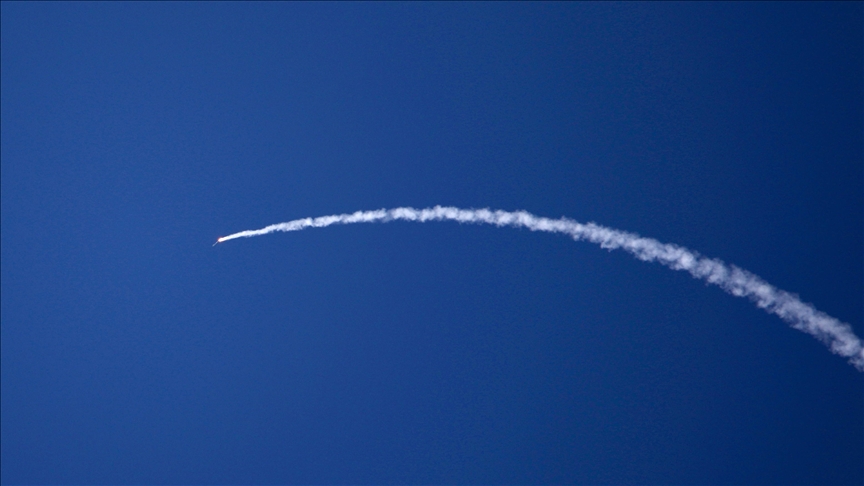
Houthis missiles continue to rain down on Israel and that’s not an understatement. Only in this past month of May Israel was subject to 16 ballistic missiles. That’s almost one every two days. Sometimes two missiles were fired in one day.

On Thursday another ballistic missile was fired on Tel Aviv that stopped a football match for at least 10 minutes in a packed stadium of 30,000 people. Among the spectators, who were ordered to lie down, was Israeli president Isaac Herzog who was scurried to safety. 

The incoming missile for Ben Gurion Airport set sirens in over 300 major cities, towns, villages and settlements between Tel Aviv and Jerusalem.

In addition to that, and something that has become normal for Israelis since 7 October, 2023, 3 to 4 million hurried to underground shelters disrupting their lives and work processes.

This is not to say anything about the continuing psychological blows inflicted on them, and on a daily basis. This is the first time they have been subjected to what has become a set of nightmare occurrences first from Hezbollah and now the Houthi missiles travelling over 2000 kilometers north diagonally over the Red Sea to hit Israeli targets.

Thursday’s attack was in response to Wednesday’s Israeli bombing – the second time since 6 May – of the Sanaa International airport. Israeli bombs already destroyed the airport and the last attack made through 10 Israeli warplanes finished off the only aircraft left that belonged to the Yemeni airlines. The plane had just arrived in Sanaa from the Jordan capital of Amman.

And a day before that the Houthis had fired another missile on Tel Aviv. While most of the missiles are fired down by the Israeli forces before they reach their targets they have created tremendous confusion in the Israeli airwaves. Today tens of airlines have stopped flying to Tel Aviv despite the pleadings of the Israeli government that Israeli airports are safe. 

Since January 2025, 35 ballistic missiles have been launched on Israel from different locations in Yemen. Also, since early this year, 14 so-called attack drones were launched from Yemen to strike targets in Israel. 

As well, and only since March 29 missiles and 9 drones were fired from Yemen because Israeli Prime Minister Benjamin Netanyahu relaunched the war on Gaza on 19th March. Despite the Israeli precautions and ground batteries that shot down these missiles, they have created much debris on the ground when they came down to earth.

With the 16 ballistic missiles launched in May, four drones were also fired on different Israeli cities, statistics provided and confirmed by the Israeli army. It further states that  since 7 October 2023 the Houthis launched 70 missiles on Israeli sites, including ports, airports,  the Mossad headquarters in Tel Aviv and many more.

The Israeli army state these exclude the 330 drones that were fired on Israel over the past 19 months of the Israel genocide on Gaza taking the number of Palestinian deaths to 54,321 with the number of injuries at 123,770.

As a result, the Houthis succeeded in imposing an air embargo on Israel in May as their leadership insists. Their projectiles have stopped 10s of international airlines from flying to the Ben Gurion Airport with British Airways and the low-cost Ryanair being the latest to suspend flights.

These are the latest to follow the Lufthansa group which include SWISS, Austrian Airlines, Brussels Airlines and Eurowings. They have already stopped going to Tel Aviv and are watching the situation carefully before they take the step of resetablishing air connections.

Since 4 May other planes that suspended flights to Israel include  Latvian airline, AirBaltic, easyJet, United Airlines, Iberia and Transavia.

However, among the few foreign airlines that recently resumed flight services to Israel are Air France, Delta, Wizz Air, Ethiopian Airlines, Etihad Airways and Greece’s Aegean Airlines states The Times of Israel.

Unprecedented

The Thursday ballistic missile was unprecedented because the Israeli president was watching. The match had to stop while he was rushed away to safety. The Israeli media says the match was stopped twice when the missiles were launched from Yemen and when tens of thousands of people were told to lie on the ground for 20 minutes and a second time when spectators booed Herzog.

The Houthi leadership already warned the Israelis to do “what it will” because it will not stop firing the ballistic missiles on Israel until the latter stops its war on Gaza.

They say that Israel can bomb Yemen as much as it wants but it will not stop the missiles on Tel Aviv and different areas like Eilat.  Despite putting on a strong face Israel is in a quandary. About 30 Israeli warplanes took part in destroying the Sanaa Airport on 5 May but the Yemenis have not flinched.

Now, the Israeli Minister Israel Katz is in a vehement mood and is warning that Israel will continue to bomb and re-bomb existing sites till the end if need be. Truth be told however, the Israelis are bombing indiscriminately as they don’t know and figure out where the Houthis missiles are being fired from in Yemen.

Netanyahu is convinced that Iran is supplying the Houthis with the missiles and that’s why he wants to hit the country but the problem with that is the Trump administration at present is  talking to Tehran about reaching an agreement on its nuclear file and is sending direct messages to Netanyahu to lay off that country and not attempt any foolish act like striking its nuclear facilities.

Thus only time will tell how international relations will unravel especially since Trump reached a deal with the Houthis at the beginning of May that they would stop bombing them if they desist from attacking American ships and planes. The previous months or so the US waged a military campaign on the Houthis that led to nowhere but a costly war of $1 billion.

With the US out of the way, it can be said the Houthis are having a field day on continuing their strikes on Israel. Their message is simple: Stop bombing Gaza and we will stop striking Israel.

Continue reading
Why Doesn’t Trump Want Netanyahu to Strike Iran?

By Dr Marwan Asmar

CROSSFIREARABIA – United States president Donald Trump seems to be a very happy man these days. He says he is about to reach a deal with Iran on its nuclear file very soon.

Israeli Prime Minister Benjamin Netanyahu on the other hand is particularly worried, concerned, frustrated and even downhearted. He says ‘we need to strike Iran now before it’s too late and it goes ahead and develops a nuclear bomb’. 

But, and on the contrary, Trump believes that it’s because Iran is still at a weak stage before reaching nuclear  weapons capability, the US can force a deal that would make sure it checks its nuclear arsenal and would submit to the American will.

To prove his point, Trump through his US negotiating team led by Steve Witkoff, is continually talking to the Iranian team through Oman, now in their fifth mediating session about ironing out a new deal that would satisfy the US point of view and give the Iranians peace of mind and something to look forward to like lifting sanctions on the country.

To that extent, and no doubt for public relations, Trump is never short these days on complementing the Iranians with his glowing uttrances on the country and how it can become “great” again.

By their own accord however, both teams who are talking indirectly through the Omanis, say that negotiations is tough and may even going through a rough patch.

The Iranian delegates are sticking to their position, they want a deal but not at any price. They want to continue to pursue their uranium enrichment program believing this is a question of state and national sovereignty. They say they haven’t reached such a local, indegenous breakthrough in order to give it, whilst praising their scentific and technological advancements in this area of power.

The Americans on the other hand insist that Iranian divest itself from this nuclear process for uranium enrichment is a ‘redline’ as it leads to the possession of a nuclear weapon. To the Trump administration, this point is intractable which Iran has to give up on. 

But if this is the case why is the US continuing to talk to Iran? Further still, why should Trump be happy and talk about an impending deal that would lock the hands of the Iranians? Clearly, the American president is happy despite the murky regional waters.

Back to Israel. Netanyahu is deeply worried and wants to frustrate any impending nuclear deal. But he was always frustrated about Iran and argued, well, at least for the last 10 years, against talking to Iran and placating it. It was argued he was the person to convince Trump to leave the international JCPA treaty signed between the five-members of the UN Security Council and Iran in 2018.

Today however, and for Netanyahu, its “horrors” on the horizons. Leaked newspaper reports in The New York Times suggest there is deep tension between Trump and Netanyahu on this issue for the US president doesn’t want the later to embark on any action such as military strikes that would jeopardize any upcoming deal.

That is why Israeli Strategic Affairs Minister Ron Dermer and Mossad Chief David Barnea are being invited to Washington to the White House to impress upon them not to embark on a drastic Israeli action and bomb Iranian military and nuclear sites whilst negotiations are going on.

Many US and European experts however are fearful that Netanyahu wouldn’t be able to be controlled and if he embarks on striking Iran he would do so without consulting the Americans and go it alone and in spite of the ‘talked-about” pressure that is being exercised by the White House on Tel Aviv.

Regardless however, Trump wants a deal come what may for he believes this would be a great achievement for America and would vindicate his earlier action when he got the US out of the deal in 2018 and now in return for a better accord, and moving his own view to create a safer world and enforce his image that he is a man of peace and doesn’t support world wars like his recent attempt to stop the Ukraine War.

If Israel does strike Iran, in theory that would make Trump very unhappy because it would mean the United States is no longer able to control its strategic ally, or it could mean that behind the international and regional diplomatic chit-chat, the US is not too bothered about striking Iran.

But there are also other problems to consider: Wouldn’t a strike on Iran, especially on its nuclear sites, produce a spiral and a slippery-slope in which the latter would surely retaliate and be capable of doing so, with vehement force.

Apart from what that would do to the region, ie, “nuclear catastrophe”, would Netanyahu go along that road and risk annihilation for Israel and its surrounding areas.

These are tough questions to consider and may force Netanyahu to back down and listen to the US.

Continue reading
Hamas, Trump and The Ceasefire

By Dr Marwan Asmar

CROSSFIREARABIA – The USA wants a ceasefire on Gaza, yet it maintains its supplies of weapons to Israel which the latter uses to beat Palestinians with. This was the case with the former Joe Biden administration.

However, it is the Donald Trump administration that is now in the front brokerage seat, talking, and for the first time, to Hamas directly, face-to-face about ending the genocidal, destructive Israeli war on Gaza.

Benjamin Netanyahu is downright angry about this fact, yet he is making sure that he doesn’t upset Trump by his extremist utterances despite the fact that he is on record for wanting to continue the deadly war on the civilians of Gaza under the pretext of destroying Hamas and its military wing.

However, it has been clear, and at least for the past month that direct negotiations between US presidential envoy Steve Witkoff and his team including Adam Boehler have been taking place with top members of Hamas despite the fact that Israel has stepped up its war on Gaza with its mass killing of its starving 2.2 million-population.

The recent breakthrough achieved by the two sides, Monday, is awaiting final approval by the Israeli government which is sending out mixed signals of agreements and discord. However, there is circulating news that Netanyahu is finally ready.

The new deal agreed upon with the American team is that Hamas would agree on a 60-day-ceasefire where the Islamic movement would free 10 alive and dead prisoners (five of each) on the first day of the deal and 10 (also alive and dead) at the end of 60 days.

The American-sponsored deal includes the lifting of the Israeli siege on Gaza and allowing the entry of 100 aid trucks per day to enter the territory. Meanwhile Witkoff says that during those 60 days talks would continue to negotiate a ceasefire on a permanent basis.

However, Israel is still mulling on the fact because it says the ceasefire negotiations originally agreed on with Witkoff last January are different than what the present US-Hamas is talking about. The Israeli side, mainly Netanyahu, states that they want Hamas out of Gaza but first of all they must lay-down their arms and stashed weapons. Finally, the Gaza Strip must be a free area from any weapons.

These are intractable issues although Hamas and directly talking with the Americans, has previously stated it would entertain the idea of Gaza being run by an independent committee. Such flexibility may be one indication why the American administration is talking to Hamas officials and which is unprecedented as no US government, including Trump in his first presidential term, talked to an organization that is on their “terrorist list”.

The latest breakthrough to achieve a ceasefire on Israel’s war on Gaza, relaunched on 19 March maybe seen as another hope-to-be-dashed as in previous long-talks in Cairo and Doha turned out to nothing and were no more than “talking shops” with the Israelis, especially Netanyahu unwilling to end the war on Gaza, and not least of all of what was regarded as weak US president in the form of Joe Biden and his Middle East roving Secretary of State Anthony Blinken.

All this appear to be changing now for Trump wants to end all global wars and doesn’t want to pay American money around the globe as in the case with Biden and his support for Ukraine where billions of dollars were spent. He has already stopped the war with the Houthis after “massacring” the country for a little more than a month and costing the American treasury around a $1 billion.

The American president is talking to Iran on a new nuclear deal and is now talking to Hamas with a real possibility of achieving a deal to end the war and allow UN aid trucks to feed the hungry of Gaza who are once again dying of Israeli-imposed starvation.

To prove his point on wanting to achieve a ceasefire in Gaza, Trump sacked his National Security Advisor Mike Waltz for talking to Netanyahu behind his back last April when delicate talks was being pursued between Trump administration officials and Hamas.

Tide turns

The tide is turning against Israel. As well as less endearing developments in the White House against Israel, many countries around the world, including states in the European Union like Britain, France, Spain, Holland, Belgium, Norway, Sweden and many more are today calling for the stopping of the war on Gaza with many openly saying they would support the creation of an independent Palestinian state.

This is something which is making Israel’s government extremely jittery. Israeli Foreign Minister Gideon Sar is today, adopting a threatening attitude. He says if these countries take this step Israel would declare its sovereignty on many areas of the occupied West Bank.

All this, together with the latest negotiations, may finally persuade Israel to accept a deal rather than hold out and be prepared to be called an international pariah. Regardless however, many say that international pressure must be maintained from Trump in the United States as well as Europeans and the EU Union.

Continue reading
Nuclear Politics: US-Iran and The ‘Illusive Deal’

Dr Marwan Asmar

Despite the seeming sidedness and intransigence between Iran and the US, their fifth round of nuclear talks with Oman as mediator, is expected to be held in Rome on Friday.

Both US and Iranian delegates have been “public” in their approach. The Americans, led by US presidential envoy Steve Witkoff wants Iran to dismantle its nuclear weapons and end its uranium enrichment, a process that would allow it to develop an atom bomb.

The American delegates say this is a “redline” they will not budge away from. However, the Iranians led by the country’s Foreign Minister Abbas Araqchi insist that they must be allowed to enrich because this is part of their sovereignty and national interest.

On the face of it, both positions appear to be diametrically-opposed. The Americans insist on one thing while the Iranians on another with US president Donald Trump’s team believing it would be extremely dangerous for the world to allow Iran access to nuclear weapons.

However, the first round of US-Iran talks started on 12 April in the Omani capital of Muscat and since then three other round of talks were held, including one in the Oman Embassy in Rome. They were described as “positive” and with the exception of the fourth round, they were seen as introductory.

This time around the talks are in Muscat again, on 22 May, 2025 with the full teams taking part at the behest of the Omani Foreign Minister Badr bin Hamad Al Busaidi as mediating between the two sides who are in two separate rooms and not directly talking to each other.

Despite all difficulties and intractable positions, the new republican administration in the White House is determined to iron-out a new nuclear deal with Tehran after the Trump took out the US out of the deal, officially termed the Joint Comprehensive Plan of Action signed in 2015 under the auspices of the UN with the backing of Russia, China, Britain, France and Germany in 2015.

Trump forced the US to exit out of the deal in 2018 and many argue this move allowed Iran to continue to enrich its uranium at 60 percent, much shorter to the 90-percent-mark for a nuclear weapon. The 2015 deal, and for the first time, capped Iran’s enrichment facilities at 6.7 percent, and since 2018 it moved freely in its ability to obtain weapons-grade material whilst wasting months, years and even decades of negotiations.

Back to the present. Outwardly, the Trump administration wants “nuclear-dismantellment” and zero-enrichment. But the fact that the Americans held five meetings with Iranian delegates mean they recognize what Iran is saying about its nuclear program, that it is there for “peaceful” energy reasons and have consequently stressed that if Tehran wants enriched uranium for such purposes it can import from different world countries.

The US administration believes this would check Iranian nuclear capability and prevent them from obtaining the nuclear bomb. But one point stands out and is being downplayed and that is the fact Iran is well-advanced in its nuclear program with at least five nuclear facilities across the country that are well known and inspected by the International Atomic Energy Agency which is a UN watchdog.

The fact that the two sides are meeting on a regular basis sends positive signals despite the recent comments made by Iran’s top spiritual leader Ali Khamenei who is pessimistic about a deal being hammered out, if the United States doesn’t adopt a more flexible and less stringent approach on the Iranian nuclear file, enrichment issue and the removal of sanctions on the country reimposed by Trump when he got the US out of the deal in his first tenure as president in the White House.

These are the hurdles both sides are facing, points the make Iranian decision-makers not at all optimistic. But Trump has so far been using a “carrot-and-stick” approach. He has warned the Iranians that he would be prepared to attack Iran, if it doesn’t sign a deal soon and put the onus on  Israel for the attack that would probably be a joint one with the US.

Netanyahu unhappy!

This point made Israel Prime Minister Benjamin Netanyahu very happy in the month or so prior to 12 April. Then Netanyahu geared himself up for an impending attack on Iran’s nuclear facilities, and was therefore in great shock to hear that Iranian-US talks were in the pipeline and mediated by Oman.

He was in double-shock because the presumably US-Israeli strike was being pushed back in favor of international diplomacy. It is here as well, the cracks between Trump and Netanyahu begun to show still because the US president had already started to portray himself as a man of peace, not a warmonger and wanted to end the war in Ukraine and Gaza and was talking to Hamas, an arch-enemy of the Israeli prime minister with an eye on the Nobel peace prize.

To Netanyahu talking to the Iranians was just one more spike in the Israeli heart because it meant US-Israeli interests were diverging as underpinned by the current talks with Iran and its erstwhile allies like the Houthis which the US planes bombed to no success in a military campaign that started in March, April and stopped on 6 May because it achieved little success and was exorbitantly expensive.

Even if they don’t achieve immediate breakthroughs, the Iran-US talks are likely to continue for a while because it lies within the tenets of new American foreign policy as espoused by Trump. He is unlikely now to drop the diplomatic towel and go for a series of strikes because he knows of the military capabilities Iranian has. Also, Trump is likely to force Netanyhu’s hand and prevent him for striking that country because of the unforeseen consequences it would generate for the region and the US itself.

This analysis is written by Dr Marwan Asmar, chief editor of the crossfirearabia.com website. 

Continue reading