CrossFireArabia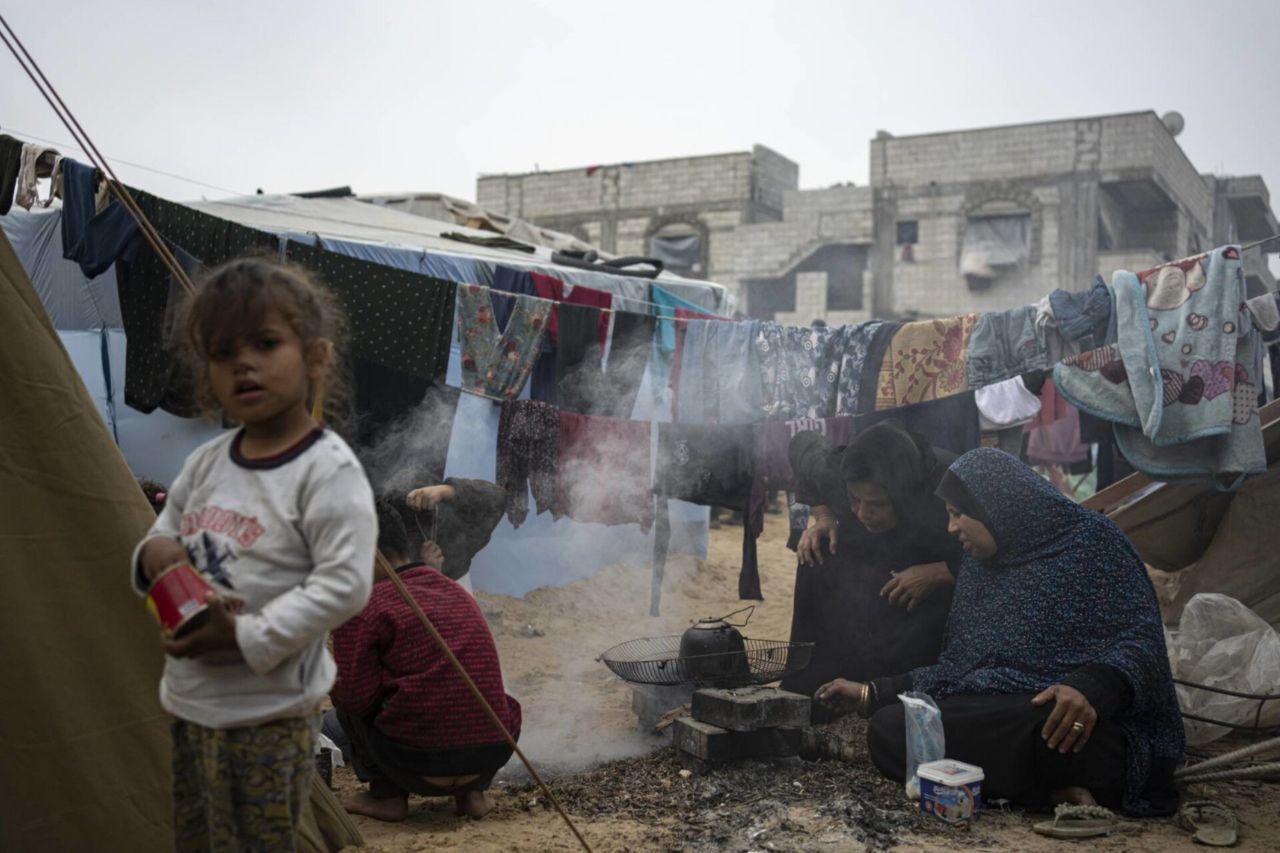
When Hanin first sought care for her malnourished daughter in Khan Younis in southern Gaza, Palestine, the clock began ticking on her chances of survival.
“[My] child was in a critical condition. They referred me to the hospital but there was no means of transportation,” explains Hanin.
Finally, they reached the Médecins Sans Frontières (MSF) inpatient therapeutic feeding centre on a cart.
“My child was tired. She was resting her head towards me and not moving,” says Hanin. “She was close to death before we reached the hospital.”
In contexts like Gaza, where the health system has been decimated and has collapsed, late access to care is posing a health risk to pregnant women and their children. – MERCÈ ROCASPANA, MSF EMERGENCY UNIT HEALTH ADVISOR
After nine months of relentless war, people’s access to healthcare in Gaza continues to worsen, particularly for those most vulnerable when healthcare is unavailable, such as pregnant women and children. Their vulnerability has been exacerbated by repeated displacement, inadequate living conditions, insecurity, and poor nutritional conditions. As a result, MSF teams are seeing an increase in pre-term deliveries and malnutrition in children in the south of Gaza.
“The main health risks for pregnant women are blood-pressure related complications such as eclampsia, haemorrhage and sepsis – which can become deadly if not treated in time,” says Mercè Rocaspana, MSF emergency unit health advisor. “In contexts like Gaza, where the health system has been decimated and collapsed, late access to care is posing a health risk to pregnant women and their children.”
Sole option for maternity and paediatric care in southern Gaza
Al-Nasser hospital is the last tertiary hospital providing maternal and paediatric care in Khan Younis. In February, after several weeks of intense fighting with Palestinian armed groups in Khan Younis, Israeli forces stormed the facility, which had been under siege. MSF teams were forced to flee the hospital.
In May 2024, MSF teams returned to the hospital, and in June, together with the Ministry of Health and other organisations, we reopened the maternity and paediatric wards, including an inpatient therapeutic centre. We started providing support to the paediatric intensive care and neonatal intensive care units.
The needs of women and children are skyrocketing, yet MSF teams at Al-Nasser hospital are witnessing a shortage of vital supplies, jeopardising the provision and quality of care. Due to the lack of other functioning healthcare centres, Al-Nasser is facing an overwhelming increase in patients every day. Between 29 June and 5 July, the paediatric emergency department alone recorded more than 2,600 consultations, meaning staff attended to more than 300 children each day. As more and more children are admitted for inpatient care, they are being forced to share beds, pushing the paediatric services beyond their capacity.
“We are seeing malnourished children, an issue never seen in Gaza before,” says Joanne Perry, MSF project medical adviser, a member of the MSF team working in Al-Nasser hospital. “People are living in tents with minimal access to clean water, and abysmal sanitation. Bombing has devastated the sewage and water systems, resulting in diarrhoea, dehydration, and hepatitis A and skin infections among children.”
Some women are delivering prematurely, often with postpartum complications exacerbated by their living conditions. – MOHAMAD SHIHADA, MSF NURSING TEAM SUPERVISOR
Access to lifesaving maternal care
As the last hospital providing maternity care in Khan Younis, Al-Nasser hospital and its medical team is handling from 25 to 30 deliveries a day. In addition to functioning hospitals being destroyed or closed, the decimation of infrastructure has also created severe obstacles for pregnant women to reach medical facilities. Pregnant women are often forced to navigate unsafe routes amidst the fighting and without safe transportation – often delaying access to healthcare and putting them at higher risk of complications.
“I rode on a donkey-pulled cart to Al-Nasser hospital alone, as my husband couldn’t afford to join me due to financial constraints,” says Najwa, an expectant mother in Gaza.
At the same time, once women have given birth, they must quickly return to unsanitary conditions, often in tents, where lack of food and constant stress put them and their newborns at further health risk.
“Some women are delivering prematurely, often with postpartum complications exacerbated by their living conditions,” says Mohamad Shihada, MSF nursing team supervisor working in the MSF neonatal intensive care unit of Al-Nasser hospital.
In addition to maternity services, MSF is supporting the neonatal intensive care unit, which is equipped with 29 beds and incubators for high-risk newborns.
“There’s no […] diapers, or suitable clothing for my baby,” says Khadra, who gave birth in Al-Nasser hospital’s maternity ward. “Living in a tent exposes them to extreme conditions without even a proper bed.”
As the sole functional maternity unit in southern Gaza, Al-Nasser hospital will continue to face challenges with capacity. Reopening the maternity and paediatric wards is one step forward to providing care, but an immediate and sustained ceasefire in Gaza, alongside unhindered humanitarian aid is the only solution to alleviate the suffering of people trapped in the Gaza Strip, including pregnant women and children.
This article is reprinted from reliefweb


 marwan