Boycott V. Starvation

By Dr Usman Masood 

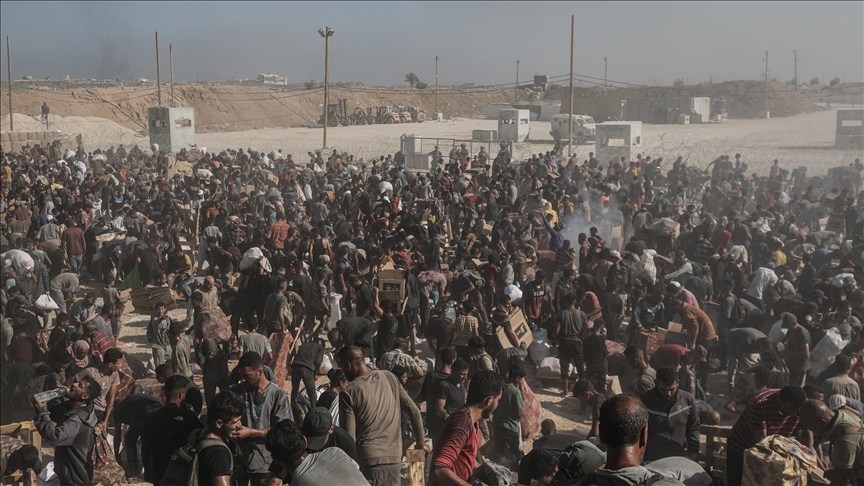
As we debate the sanity and economics of boycotting products during our tea breaks, many in Gaza are going through one of the slowest and most painful transitions imaginable – agonizing starvation. The aroma of my favorite coffee may be one-of-a-kind, but if the same brand operates in Israeli-occupied apartheid territories it’s time to rethink my choices.

Sometimes we call our favorite brands irreplaceable, being so attached to them so as to identify ourselves with their trademarks. Sometimes the economists within us argue that if we don’t buy from a certain company, our people are going to lose jobs. And sometimes, the cleverest among us spell out a simple calculus: boycotts are a sentimental overreaction that is not actually actionable or sustainable.

Arguably, a person should not be defined by a brand. In a world ever more sensitive to businesses’ social responsibility, it is the brand which should be defined by the kind of people it serves – its responsibility to society in the neatest sense.

Humanitarian-washing

If a company thinks it is legitimate to set up its businesses in illegitimately occupied lands, serve an army carrying out massacres, and then offer them “deals” on goods ranging from demolition machinery to feel-good grocery packs, then allowing such brands to represent us is profoundly troubling.

Sprinkling a few giveaways to the poor here and there in the name of social responsibility, after making fortunes from genocide, is the kind of “humanitarian-washing” some companies are heavily relying on these days. As responsible consumers, we need to be wary of giving them a free pass. Draped in philanthropic robes, beneath you’ll find the same Faustian bargain on offer – pleasure, products, and plenty in exchange for “looking the other way,” assuming convenient apoliticism.

Even if you set aside these moral considerations, the arguments in favor of “business-as-usual,” on the pragmatic basis of “it’s the economy, stupid,” are fundamentally flawed.

Economics beyond slogans

Yes, standing up to Israel – and the complicit companies – may cost jobs and investment to the boycotting country, but this considers only the static, one-time costs, ignoring the potential for dynamic, long-run gains. If a boycott causes momentary unemployment, an economist should tell you that capital flows, divestment in one company means investors warming up to another, and hence substitute job creation.

Moreover, a local company picking up steam at the expense of its foreign competitor ensures that the profits and jobs stay at home, rather than being repatriated to the countries of origin. Many economies that saw unprecedented growth in history used the recipe of replacing goods previously imported with local production, which vitalized the domestic industry. While import-substituting policies have had their demerits, the formula proved transformational in the case of economies like Japan, China, and South Korea, where the local production which had initially kicked off in an effort to replace imports flourished with time, making these countries the leaders in global exports.

In his book, Bad Samaritans: The Myth of Free Trade and the Secret History of Capitalism, Ha-Joon Chang notes that the drive for consuming domestically produced goods came down to the grassroots level, to something as frivolous as cigarettes. Such was the emphasis on consuming local products in South Korea that a stigma was attached to smoking foreign brands.

The state encouraged people to report such “treasonous” acts that wasted foreign exchange – foreign currency being a scarce resource, which represented the “blood and sweat” of “industrial soldiers” (p. xiv). Through this lens, boycott metamorphoses into an opportunity. The reluctance to buy Israeli – or occupation-aligning companies’ – products has already been instrumental in carving out a market for local products in countries like Türkiye, Pakistan, and Saudi Arabia.

Transformative power of consumer choice

There are still some who contend that a comprehensive boycott is simply not practical, and therefore, futile. But what’s the point of such an all-or-none approach? To be clear, boycotting does not have to be extreme – not everything, everywhere, forever. One may start with a few products that are easily substitutable, as soon as they may be substituted, for as long as necessary. Small, incremental changes to our consumption patterns may feel insignificant but they can affect retailers’ buying decisions, wholesalers’ stocking decisions, and ultimately, a company’s production decisions. The effect of consumer decisions is such that the impact is heavier each step up the supply chain, a phenomenon referred to as the bullwhip effect.

A small jolt to one consumer’s whip may feel unimportant, but collectively, it may unsettle the machinery of complicit capitalism. It’s time to opt out of the genocide, one product at a time.

The author is an assistant professor in SZABIST University in Islamabad, Pakistan and contributed this article to Anadolu.

  • CrossFireArabia

    CrossFireArabia
    Dr. Marwan Asmar holds a PhD from Leeds University and is a freelance writer specializing on the Middle East. He has worked as a journalist since the early 1990s in Jordan and the Gulf countries, and been widely published, including at Albawaba, Gulf News, Al Ghad, World Press Review and others.

    Related Posts

    World Cup, Wimbledon Kicks: Flags, Nepotism, Red Cards and a Watermelon!

    By Saleem Ayoub Quna

    For a change I would like to give credit to President Trump’s, latest attempt to support the American team before facing off Belgium’s team on July 6, when the day before, and despite his tight and loaded schedule, he called “his friend” Gianni Infantino, FIFA’s President, and asked him for a second look at the punishment against the American striker Folarin Balogun, who made a foul against a Bosnia-Herzegovina player in the match they played earlier on July 2, and which the US won 2-0.

    FIFA regulations stipulate that when a player gets a red card during a match for an offense he makes against the other team, he should be suspended from playing in the following match! Mr. Infantino obliged and lifted the ban against the American player. But the match against Belgium in which Balogun played was won by Belgium 4-1.

    This intervention episode by Trump on behalf of the American national soccer squad did not end there and led to a controversy that would not be settled before the closing of the 32nd round of the current international tournament.

    Infantino was criticized by many within and outside the FIFA body and was asked to resign his post as head of this huge powerful organization. In brief, this episode shows that behind the broad smiles and nice words, sits a huge monster of nepotism and even possible corruption!

    Also it means that sports, as a human “noble” endeavor, is not immune from certain uncouth and loath viruses that can affect and may shatter the dreams of other less resourceful nations!

    Then we have the phenomenon of waiving national flags when a team wins a match. This occasion is ceased by some staff of the winning teams and players to demonstrate their support for a certain political or human cause or admiration of a person. This is exactly what Hossam Hassan, head-coach of the Egyptian team did when his players defeated Australia on July 3 as they scored 4 goals against Australia which scored only 2 goals, in the final shootout play of the match.

    Coach Hassan came down to the pitch and waived the Palestinian flag in a sign of support for the Palestinians in beleaguered Gaza, which celebrated Egyptian performance at the tournament. Israel protested this solidarity gesture with Palestinians and labeled it as anti-Semitic, but FIFA officials maintained that flags belonging to FIFA members, (including Palestine) are allowed to be waived on this occasion!

    On the other side of the Atlantic, and in London to be precise, another major sports event is underway, known as the Wimbledon grand slam championship. Wimbledon is known for its strict rules starting with the must-wear white attire, by all players and staff!

    On June 29, the Turkish Tennis player, Zeynep Sonmez, ranked 51 by WTA, defeated American player Ann Li 2-1. Sonmez wanted to waive a sign of support for the Palestinians, but could not and according to Jamie Baker, the Wimbledon Tournament Director: “Wimbledon rules do not allow political massaging from players”!

    So, what does Ms. Zeynep Somez do?! She sticks a small rubber shock absorber to her racket in a shape of a watermelon composed of the four colors of red, white, black and green! To that subtle demonstration, the Wimbledon people could not raise a finger or blow a whistle!

    In this regard, other sources insisted that some people among the audience waived the Israeli which was received by a blind eye!

    So next time I attend an important tournament or watch it on TV, I will keep my eyes open on tactics and kicks of this sort, which actually might add to the fun of watching!

    Continue reading
    New York: AIPAC Stranglehold No More !

    By James J. Zogby

    The American Israel Public Affairs Committee (AIPAC) has long held sway in elections, threatening and intimidating any opposition. When a critic of Israel was defeated, they boasted of victory as a lesson for others. In last week’s Democratic primary elections in New York City, three insurgent critics of Israeli policies defeated AIPAC-endorsed candidates, pointing to the potential end of an era for the pro-Israel lobby.

    
AIPAC’s approach to politics and elections was smart. Formed by the Conference of Presidents of Major Jewish Organizations, they were connected from the outset to an impressive national network of American Jewish leaders, activists, and donors they used to effectively influence members of Congress to embrace pro-Israel positions.

They’d visit elected officials in Washington seeking endorsements of legislation and enlist local leaders in a congressperson’s district to make the pitch.

    They’d have local representatives offer to help write new candidates’ Middle East policy positions. Implicit were the promise of support if the official or candidate did what was asked—and the threat of opposition if they didn’t.

AIPAC also spawned a network of PACs—political action committees—to raise hundreds of thousands of dollars to distribute for or against candidates depending on their positions on Israel.

Strategic in their operations, not everyone benefited from AIPAC’s largesse.

    Chairs of important congressional committees and very supportive congressmembers facing tough reelections received bundled contributions. When elected officials repeatedly stepped out of line, their opponents would benefit from PAC monies and bundled contributions from individual pro-Israel donors.

Overall, the amounts were not overwhelming but sufficient to send a message. When an election went their way, the lobby would crow about the victory, whether or not their support had been a factor. Their goal was communication: “Fear us, or you too can be defeated.”


    With the end of federal oversight of independent election expenditures, AIPAC and other pro-Israel groups created “super-PACs” to raise and spend tens of millions of dollars each cycle. In 2022 and 2024, they effectively targeted a few candidates critical of Israel and spent millions to defeat them.

After Israel’s genocidal war on Gaza, we’ve witnessed a dramatic collapse of public support for Israel—especially among Democrats. AIPAC can no longer make examples of just a few candidates, with well over 100 electeds now critical of Israel. Add to this that AIPAC has become so toxic they’ve been forced to create new entities or rely on alternates to distribute funds to candidates.

Meanwhile, Israel’s behaviors alienate more voters. And the more money AIPAC spends, the more toxic its brand—even when they win, their heavy-handed tactics lead to declining support.

    This brings us to last week’s New York primaries, a turning point in US politics when two prominent pro-Israel members of Congress were defeated by challengers critical of Israeli policies and supporters of Palestinian justice, and a former leader of pro-Palestinian campus protests won an open race. Not only did AIPAC and its allies spend millions and fail, but also these elections were upfront about Israeli policies and Palestinian rights.


    A hallmark of pro-Israel groups’ past campaign involvement was the lengths they’d go to not make support for Israel a public issue. They’d raise money from their supporters based on Israel, but their expenditures would pay for ads criticizing a candidate’s age or “radical agenda,” never mentioning the candidate’s position on Israel. In these NY contests, many issues mattered to voters, especially frustration with the Democratic establishment’s failed policies—but they were also about Israel, and voters knew it. 


    In predictable reactions from the pro-Israel side, some accused the targeting of AIPAC’s money and influence as unfair or even antisemitic—ignoring decades of AIPAC boasting about its money and influence as the source of its power. Others claimed that with the election’s results, “Jews no longer feel safe in New York,” ignoring that the most prominent contest’s victor is Jewish—a self-proclaimed progressive Zionist who strongly opposed Israel’s genocide against Palestinians. Finally, some desperately attempted to dismiss the entire election as just about New York with no larger significance, ignoring the changed national political landscape as similar contests emerge everywhere. 


    The bottom line is that after a half-century AIPAC’s hold over politics has been weakened. It won’t go away anytime soon, but a real debate over US Middle East policy can now take place. Thank you, New York voters

    James J. Zogby is president of the Washington-based Arab American Institute  and contributed this article to The Jordan Times

    Continue reading

    You Missed

    Lebanese Media in The Age of Political Conspiracies

    • By marwan
    • July 13, 2026
    • 12 views
    Lebanese Media in The Age of Political Conspiracies

    Don’t Forget Palestine!

    • By marwan
    • July 13, 2026
    • 12 views
    Don’t Forget Palestine!

    Israeli Settlements Shoot up!

    • By marwan
    • July 13, 2026
    • 3 views
    Israeli Settlements Shoot up!

    Mahmoud Darwish: I will live, even if life betrays me and I will dream, even if dreams abandon me

    • By marwan
    • July 13, 2026
    • 8 views
    Mahmoud Darwish: I will live, even if life betrays me and I will dream, even if dreams abandon me

    Margot Saba Abdo: A Photo Pioneer in Jerusalem

    • By marwan
    • July 12, 2026
    • 10 views
    Margot Saba Abdo: A Photo Pioneer in Jerusalem

    Mustapha Barghouti: ‘Repression Will Not Deter The Palestinian People’

    Mustapha Barghouti: ‘Repression Will Not Deter The Palestinian People’