EuroMed Urges ‘Outside’ Forensic Experts to Identify Mass Body Victims

The international community must put genuine pressure on Israel to promptly guarantee the unconditional entry of technical teams, forensic specialists, and criminal investigators into the Gaza Strip, along with the required tools. This will help Palestinians in the Strip recover the bodies of victims from beneath debris and in areas where Israeli forces invaded, identify the victims, and provide information about the whereabouts of those who have not been found.

These actions are essential, not only to safeguard families’ rights to know the fate of their loved ones and to bury those who have been killed with dignity and respect, but to ensure accountability for the perpetrators of the genocide that Israel has committed in the Gaza Strip for the past 15 months.

Decomposed

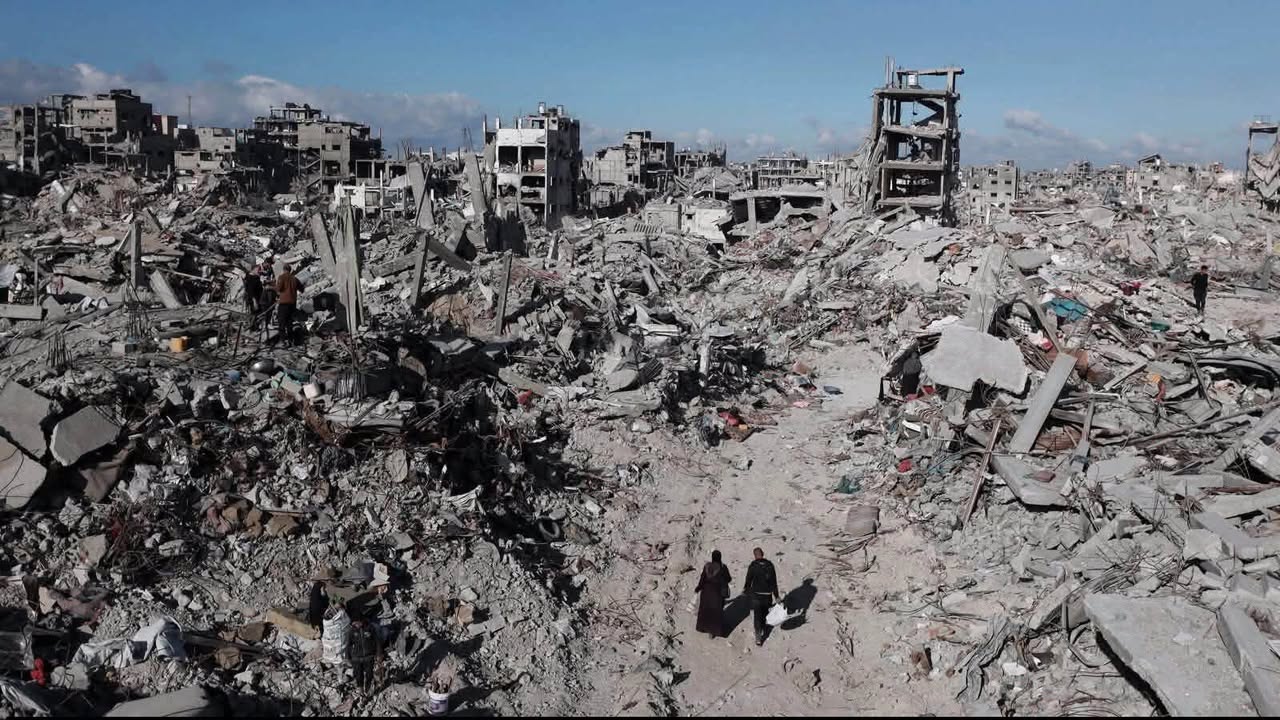
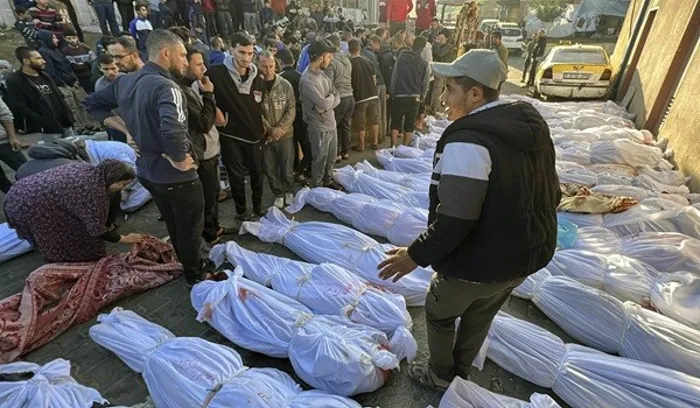
Through urgent field visits during the first few days of the ceasefire, Euro-Med Monitor field teams have documented vast numbers of Palestinian bodies killed by Israeli shelling over the past few months, many of which have almost completely decomposed.

The bodies of 79 people, including 21 unidentified individuals, were recovered in the Rafah neighborhoods by ambulance and civil defense crews following the withdrawal of Israeli army forces.

The Euro-Med Monitor field team was able to inspect areas of incursion in both Rafah and the northern Gaza Strip, and found the severely decomposed remains of multiple additional victims, of whose skulls and a few bones were all that was left.

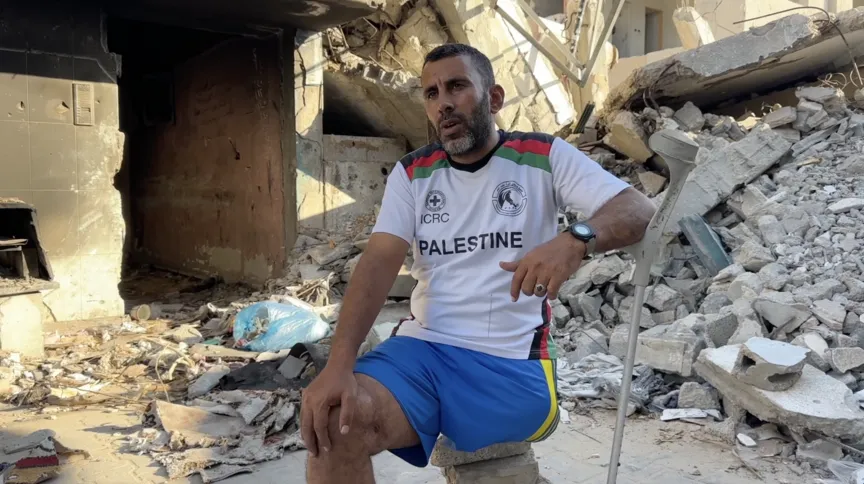
In order to help local rescue teams recover victims from beneath the massive and intricate debris, it is imperative that specialised equipment and technical crews be brought in. It should be noted that the current rescue teams are using antiquated and inadequate tools, which makes it more difficult for them to carry out their mission effectively, and adds to the suffering of families who are waiting to find out what happened to their loved ones.

The situation could worsen, and the number of victims could rise, if this equipment is not provided right away.

Forensic specialists 

Expert teams of criminal investigators and forensic medicine specialists are urgently needed to identify victims, particularly hard-to-identify decomposed bodies. According to preliminary estimates, over 11,000 people are missing, including many individuals who are presumed by their families to have been killed in areas of Israeli military incursion and/or who remain trapped under the rubble following bombings, as well as others who were forcibly disappeared in Israeli occupation prisons. This doubles the suffering of families and highlights the urgent need for international assistance to save remaining survivors and find out what happened to the missing.

Given the potential for heightened suffering if swift action is not taken, this crisis necessitates immediate international intervention. Many of the decomposing bodies found likely belong to individuals who were forcibly disappeared by the Israeli military months ago, underscoring the urgent need for legal proceedings pertaining to the investigation of the missing people’s fate, particularly those who vanished due to the extensive military operations or were detained by the Israeli occupation forces.

Israeli crimes

In addition to strengthening international accountability efforts against the Israeli crimes committed in the Gaza Strip, the presence of specialized forensic teams will help to ensure the preservation of crucial evidence needed to hold those responsible for these violations accountable. To prevent the loss of such evidence or deception in investigations, it is necessary to provide a way to document the condition of victims’ bodies in accordance with human rights standards.

The large number of victims and the fact that Israeli army forces remain heavily deployed in the eastern and northern outskirts of the Gaza Strip, as well as in the Netzarim axis area, south of Gaza City, make it difficult for rescue teams to do their jobs well. To thoroughly investigate the grave crimes Israel has committed against Palestinians in the Strip, it is crucial to make it easier for rescue teams to reach the aforementioned areas, recover victims, and determine the causes of death and potential means of killing.

Given that video footage has shown Israeli bulldozers burying Palestinians after they have been killed—as was the case in the Wadi Gaza Bridge area, south of Gaza City—pressure must be placed on Israel to disclose the locations or potential locations of any mass graves or burial sites of the Palestinian dead, so that the bodies can be exhumed and identified.

Mass graves

Any suspected mass grave sites must be thoroughly investigated, and the appropriate precautions must be taken to safeguard them and prevent tampering. International experts should oversee the exhumation of bodies and victim identification process in compliance with internationally recognised protocols, making sure that victim dignity and family rights are upheld throughout these operations. Additionally, these offences need to be recorded as proof in order to aid in the prosecution of the perpetrators. 

It is crucial to speed up the recovery of the deceased people’s bodies in order to begin separating the victims who are confirmed dead or alive from those still missing and to enable families to bury their loved ones’ remains in a dignified manner and in accordance with their religious beliefs, as well as to determine the number of people who may have been forcibly disappeared in Israeli prisons or camps and pressure Israel to disclose their fate. 

In the case of detainment, it is also important to ensure that families’ contact with their living loved ones is restored and that they are reunited as soon as possible, to relieve the significant psychological and social strain that people and their families endure due to these extended separations. Euro-Med Monitor emphasizes that family reunification is not just a humanitarian issue, but a fundamental legal right that must be upheld without delay.

To achieve justice and accountability, accurately recording each step of this process is crucial. This will guarantee that the required evidence will be available for use in future court cases or legal investigations.

The international community must also act quickly and decisively to guarantee justice and accountability for the crime of genocide in the Gaza Strip. Euro-Med Human Rights Monitor stresses that this includes establishing and sending specialised teams and investigation committees to the Strip to address these crimes.

Teams from the International Criminal Court, specifically, should be sent to the Gaza Strip immediately in order to ensure independent and thorough investigations; gather and preserve evidence; hear directly from victims and witnesses; establish a permanent office in the Strip to carry out their duties as effectively as possible, expedite their processes, and broaden the scope of their investigations to include the crime of genocide; plus issue arrest warrants for all those involved in these crimes, in order to ensure accountability and bring them to justice. 

EuroMed Human Rights Monitor

CrossFireArabia

CrossFireArabia
Dr. Marwan Asmar holds a PhD from Leeds University and is a freelance writer specializing on the Middle East. He has worked as a journalist since the early 1990s in Jordan and the Gulf countries, and been widely published, including at Albawaba, Gulf News, Al Ghad, World Press Review and others.

Related Posts

Abdul Salam Haniyeh: ‘My Father Was an Educator, Leader, a Friend’

Abdul Salam Haniyeh, the son of slain Hamas Political Bureau chief Ismail Haniyeh, said more than 75 members of his immediate family and 250 members of the wider Al-Hajj clan have been killed during Israel’s war on the Gaza Strip.

In an interview with Anadolu marking the second year of his father’s assassination, Abdul Salam described Türkiye as “a political supporter of the Palestinian people,” praised President Recep Tayyip Erdogan’s backing of the Palestinian cause and expressed hope that mediation efforts by Egypt, Qatar and Türkiye would succeed in securing implementation of the Gaza ceasefire agreement.

Family portrait bears scars of war

Standing before a large family portrait hanging on the wall, Abdul Salam pointed to the faces of relatives killed during the war.

He identified Ismail Haniyeh’s three sons — Mohammed, Hazem and Amir — along with several grandchildren who were killed in an Israeli strike April 10, 2024, the first day of Eid al-Fitr, the Muslim holiday at the end of the holy month of Ramadan.

“More than 75 members of the Haniyeh family have been martyred during the war,” he said, adding that 250 members of the broader Al-Hajj clan had also been killed.

‘Teacher, mentor and caring father’

Abdul Salam described his father as a man who combined the roles of father, educator, leader and friend.

“At home, my father was a teacher, mentor, leader, caring father and friend,” he said.

He said Ismail Haniyeh treated his children as friends, regularly sought their opinions and remained closely connected to his extended family.

“We miss his beautiful voice, his warm presence, our meetings with him and our Quran recitation sessions at home,” he said.

Quoting Arabic poetry, he added, “In the darkest night, the full moon is most missed.”

‘Remain among the people’

One of his father’s most important pieces of advice was never to become detached from ordinary people or from Gaza City’s Beach refugee camp, where the family was raised, according to Abdul Salam.

“He always advised us to remain among the people, for the people, and close to our family, neighbors and mosque, because the people are one’s greatest asset in this life,” he said.

He said his father urged his children to stay humble, preserve family ties, serve their community, maintain their prayers and Quran recitation, and support people in times of grief and joy.

“He always reminded us that he could leave this world at any moment and that we should uphold these values after his death,” he added.

‘Still present in our people’s lives’

Abdul Salam said his father continues to occupy a prominent place in Palestinian public life two years after his assassination.

“He remains present in every aspect of our people’s lives,” he said, citing continued public, political and media commemoration of his legacy.

He argued that remembering Palestinian leaders who were killed reinforces the message that the Palestinian struggle will continue.

Ismail Haniyeh was assassinated July 31, 2024, at his residence in Tehran after attending the inauguration ceremony of Iranian President Masoud Pezeshkian. Israeli Defense Minister Israel Katz acknowledged Israel’s responsibility for the assassination in December 2024.

‘Türkiye is a political supporter’

Abdul Salam said Türkiye hosts thousands of Palestinians and has consistently provided political and humanitarian support.

He praised Erdogan’s stance on Gaza and his support for the Palestinian cause.

“Türkiye stands with the Palestinian people under President Erdogan and is making every effort to end the occupation of Palestinian land, in accordance with international law and UN resolutions, and to establish a Palestinian state,” he said. “There is a feeling that we have political support from Türkiye under President Erdogan.”

He highlighted Türkiye’s diplomatic efforts at the UN Security Council, the UN General Assembly and in contacts with the US administration.

Public solidarity should influence leaders

Abdul Salam welcomed growing international public support for the Palestinian cause, including recognition of the State of Palestine by several European countries.

But he argued that popular solidarity must translate into political action.

“The message of the people must reach the tables of international political leaders so that the conflict ends, the occupation ends and the Palestinian state is established,” he said.

He urged European countries and the broader international community to work toward ending the war, ending the Israeli occupation of Gaza and the occupied West Bank, and stopping settler attacks.

He said more than 1.8 million Palestinians are living in tents while Israel controls more than 70% of the Gaza Strip and much of the enclave’s infrastructure has been destroyed.

Hope for Egypt-Qatar-Türkiye mediation

Abdul Salam expressed hope that mediation efforts by Egypt, Qatar and Türkiye would lead to implementation of the ceasefire agreement.

“We are in the midst of mediation by Egypt, Qatar and Türkiye, and we hope there will soon be implementation of the agreement and that Israel will abide by it,” he said.

He praised the role played by the three countries and said he hoped the agreement would restore hope, reconstruction and normal life to Gaza and lead to a full Israeli withdrawal.

His remarks come as Egypt, Qatar and Türkiye continue efforts to implement the second phase of the Gaza ceasefire roadmap after consultations with Hamas and other Palestinian factions.

The Board of Peace and US President Donald Trump announced an agreement Friday on implementing the next phase of the ceasefire, with the board saying Hamas had approved a detailed roadmap.

‘Gaza’s children deserve to live’

Abdul Salam addressed the people of Gaza. “We are from you, and you are from us,” he said.

He said Gaza’s children are appealing to the world to stop the violence after more than 30,000 children have been killed during the war.

“The children of Gaza and Palestine deserve to live like children everywhere else, to build their future, receive an education, and live with hope and stability,” he said.

Despite the ceasefire that took effect Oct. 10, 2025, Palestinian authorities said Israel has continued to violate the agreement, with Gaza’s Health Ministry reporting 1,222 people have since been killed and 4,053 injured.

The ministry said the overall death toll since October 2023 has reached 73,349, with 174,162 injured. Anadolu

Continue reading
Top Oman Everest Climber Dies in Pakistan

Oman has been plunged into mourning following the tragic death of pioneering mountaineer Nadhira bint Ahmed Al Harthy on Thursday, whose life was cut short in a devastating avalanche while climbing in northern Pakistan, bringing an abrupt end to the extraordinary journey of the woman who inspired a generation by carrying the Omani flag to some of the world’s highest and most dangerous peaks.

Nadhira was among a 10-strong team of climbers reported missing following the avalanche in Pakistan-administered Gilgit-Baltistan while attempting to climb Broad Peak, the world’s 12th-highest mountain at 8,047 metres. Her death – alongside that of the Nepalese climber Pur Bahadur Gurung – was announced by the Alpine Club of Pakistan on social media on Friday.


Nadhira etched her name into Oman’s history books in 2019 when she became the first Omani woman to conquer Mount Everest, planting the national flag atop the world’s highest mountain and inspiring countless young Omanis to dream beyond perceived limits.


Nadhira, who was the second Omani national to summit Mount Everest after late Khalid Al Siyabi, became a landmark figure for adventurers across the Sultanate of Oman. 

Among the seven still missing from the 10-person expedition on Broad Peak, is renowned Nepal-born climber Nirmal Purja. The multinational climbing group was being led by Purja. He is known for climbing all 14 of the world’s 8,000m-plus mountains in just over six months in 2019.


Three of four climbers’ bodies have been located by Pakistani search crews.

Nadhira’s death triggered an unprecedented wave of grief across the Sultanate, with ministries, senior officials, diplomats, sports personalities and ordinary citizens paying tribute to a woman widely regarded as a symbol of courage, resilience and national pride.

Tributes also spread widely across social media, where thousands of Omanis shared messages celebrating her legacy.

The Ministry of Foreign Affairs confirmed that it is working closely with the relevant Pakistani authorities to complete the formalities required to repatriate Al Harthy’s body to Oman after it was recovered during a difficult search and recovery mission on Broad Peak. Times of Oman

In a statement, a spokesperson for the ministry’s Consular Department expressed profound sorrow over the loss, while extending heartfelt condolences to her family and loved ones.

The ministry also highlighted that Nadhira’s impact reached far beyond mountaineering.

As Chairperson of the Oman-Nepal Friendship Association, she played a significant role in strengthening humanitarian and cultural relations between Oman and Nepal, promoting friendship, cooperation and community engagement.

The Ministry of Culture, Sports and Youth described her as one of Oman’s most inspiring personalities, saying her life represented ambition, perseverance and determination. The ministry said the nation had lost an exceptional figure whose achievements would continue to inspire future generations long after her passing.

The Civil Defence and Ambulance Authority also mourned her death, remembering her as a passionate advocate of safety awareness. The authority said she consistently demonstrated exemplary commitment to safety procedures during her expeditions and actively supported initiatives aimed at promoting a culture of safety throughout society.

Condolences poured in from prominent Omani figures who remembered not only her remarkable achievements but also her character and determination.

Saud Al Harthy described his cousin as a young woman defined by resilience, strength and an unwavering determination to succeed. He said she had left behind a legacy of extraordinary accomplishments that would continue to elevate Oman’s name on the international stage.

Former leading women’s sports administrator Saada Al Ismaili paid tribute to what she described as her inspiring national, educational, sporting and historical legacy. She praised her ability to pursue the demanding mountaineering pursuits, while proudly raising Oman’s flag atop some of the world’s most challenging mountains.

Khalid Al Muslahi, Undersecretary of the Ministry of Foreign Affairs for Administrative and Financial Affairs, described Nadhira as the embodiment of perseverance and determination. He said she would forever be remembered as the first Omani woman to stand on the summit of Mount Everest and as a lasting symbol of courage whose legacy would remain deeply rooted in the hearts of Omanis.

Pakistan’s Ambassador to Oman, Naveed Safdar Bokhari, also expressed his condolences.

“Deeply saddened by the tragic news of demise of Nadhira Al Harthy in an avalanche accident. She was a legend in the field of mountaineering and a great source of inspiration for millions. I wish to convey our heartfelt condolences to her family and the entire Omani nation.”

Nadhira etched her name into Oman’s history books in 2019 when she became the first Omani woman to conquer Mount Everest, planting the national flag atop the world’s highest mountain and inspiring countless young Omanis to dream beyond perceived limits.

Nadhira’s high-altitude accomplishments also included successful summits of several of the world’s most formidable 8,000m peaks, including Manaslu, K2, and Nanga Parbat.

She became the first Arab woman to reach the summit of Nepal’s challenging Ama Dablam. Earlier in her mountaineering career, she had also climbed Mount Kilimanjaro, Africa’s highest mountain.

To many Omanis, however, her greatest achievement extended beyond records and summits. She became a role model who inspired women, young people and aspiring adventurers to pursue ambitious dreams while proudly representing their country on the world stage.

Following a challenging search and recovery operation, Nadhira’s body was recovered from Broad Peak and was transported by helicopter to Skardu. From there, arrangements are being made to repatriate her remains to Oman, where family, friends and the nation will bid a final farewell to a woman whose courage took the Omani flag to the roof of the world—and whose legacy will continue to inspire generations to come. Times of Oman

Continue reading

You Missed

Hiding The Evidence: Israel Removes Mass Debris Via 100 Trucks Daily

  • By marwan
  • August 3, 2026
  • 9 views
Hiding The Evidence: Israel Removes Mass Debris Via 100 Trucks Daily

Israeli Bullet Rips a Child’s Hand in a Gaza Classroom

Israeli Bullet Rips a Child’s Hand in a Gaza Classroom

Hebrew Study: Those Leaving Israel Soars Sky High

Hebrew Study: Those Leaving Israel Soars Sky High

Abdul Salam Haniyeh: ‘My Father Was an Educator, Leader, a Friend’

Abdul Salam Haniyeh: ‘My Father Was an Educator, Leader, a Friend’

Israel Disappointed as Trump Backs Away From Iran Hit – Al Jazeera

  • By marwan
  • August 2, 2026
  • 16 views
Israel Disappointed as Trump Backs Away From Iran Hit – Al Jazeera

‘You Can’t Break Gaza’

  • By marwan
  • August 2, 2026
  • 12 views
‘You Can’t Break Gaza’