CrossFireArabia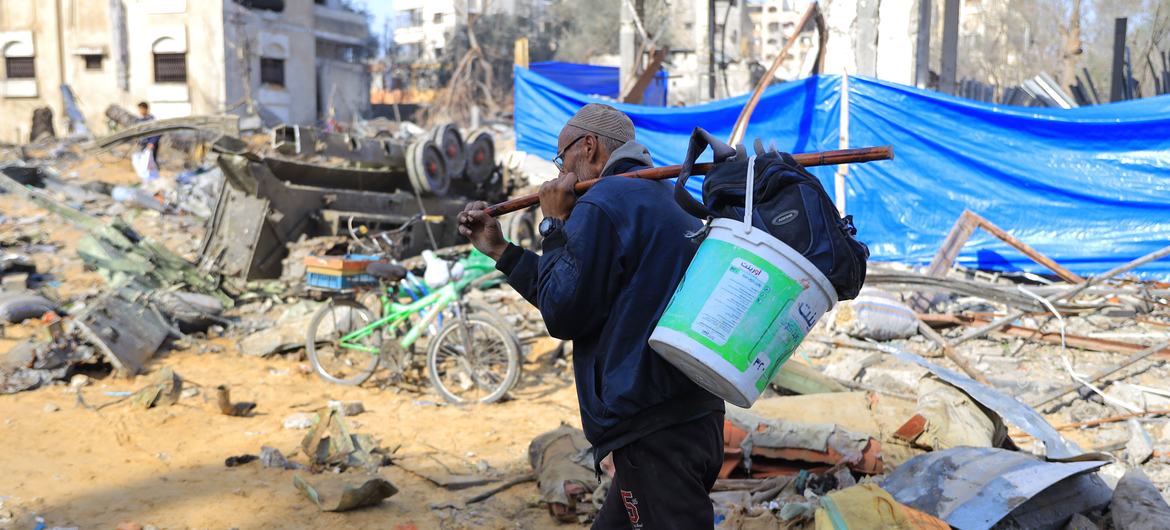
Amid sweltering heat, raw sewage and overflowing trash, displaced families in southern Gaza are facing an escalating public health crisis as aid remains blocked and medical supplies dwindle.
In the makeshift coastal encampments of Al Mawasi, families have no choice but to live in unsanitary conditions that are rapidly turning deadly, Louise Wateridge, Senior Emergency Officer at Palestine refugee agency, UNRWA, told UN News.
She described an increasingly dire situation: malnourished children and families, already worn down by months of war, battle unrelenting heat, unsanitary conditions, a lack of clean water and limited access to healthcare.
“The trash is just out of control. The sewage, the rodents, the pests, the rats, the mice – all of these animals are going between the structures that people are sheltering in,” she said.
As the days hot up, “disease is spreading. There is not enough medicine,” she added. UNRWA teams are conducting intensive clean up campaigns, but their resources are running out.
“They’ve got about 10 days left of pesticides. Supplies are going to run out,” Ms. Wateridge warned.
Heavy equipment destroyed
The worsening conditions are being compounded by the destruction of Gaza’s public health infrastructure.
According to the UN humanitarian coordination office (OCHA), more than 30 vehicles essential for waste management, water supply and sewage maintenance were destroyed by Israeli airstrikes between 21 and 22 April.
In the past week alone, at least 23 reported strikes have hit tents sheltering internally displaced persons (IDPs), killing dozens of civilians – including women, children, and persons with disabilities.
Health system under strain
OCHA also noted that Gaza’s health system is continuing to collapse.
Over half of the remaining health facilities are located in zones under evacuation orders, posing serious access challenges for communities in urgent need. There are also widespread shortages of medicine, equipment and medical staff.
As of 15 April, an estimated 420,000 people have been displaced – many for the second or third time.
Shrinking humanitarian space
Humanitarian space continues to be shut down. Vital humanitarian aid has not entered Gaza for 52 consecutive days.
OCHA noted that between 15 and 21 April, nearly half of the planned humanitarian movements were denied or impeded.
It reported that out of 42 planned aid missions across the Gaza Strip that were coordinated with the Israeli authorities, 20 were denied, two faced impediments, 19 were facilitated and one was cancelled.
Meanwhile, UN agencies also have to contend with lack of funds to sustain their programmes.
As of 22 April, donors have disbursed about $569 million out of the $4.07 billion (about 14 per cent) required to meet the most critical humanitarian needs of three million people requiring assistance in Gaza and the West Bank, including East Jerusalem.