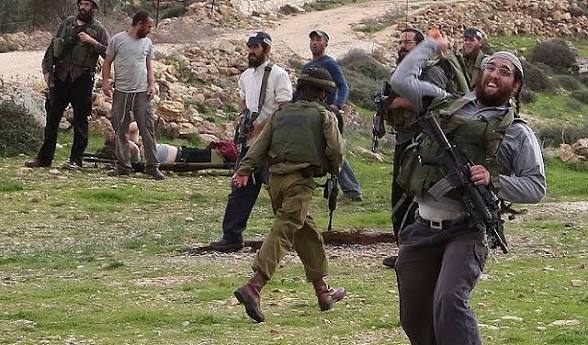
Israeli settlers attacked West Bank Palestinians 1,330 times since the beginning of 2026 according to documentary evidence by the United Nations Office for the Coordination of Humanitarian Affairs (OCHA). The attacks resulted in mass casualties and destruction of Palestinian properties. In a UN Office statement, Monday, OCHA stated it is deeply concerned over the escalation of violence across the West Bank in recent days. It stated that since last Thursday, at least eight Palestinians, including a child, have been killed, in addition to two Israelis, while others have been injured. It added that homes, mosques, trees, and agricultural facilities have been burned or vandalized, some completely destroyed, while at least 10 Palestinian families have been forced to flee their homes due to the recent wave of violence.
For weeks, the West Bank has witnessed an escalation in settler violence against Palestinian citizens and their property. Palestinian and international human rights organizations say that Israeli soldiers turn a blind eye to settler attacks and even participate in them. The UN Office for the Coordination of Humanitarian Affairs (OCHA) noted that Israeli forces have tightened restrictions on the movement of Palestinians and their access to various areas in the West Bank, preventing thousands of people from accessing essential services, including emergency medical care and livelihoods.
OCHA reported that from the beginning of this year until last Saturday, 77 Palestinians, including 18 children, were killed by Israeli forces or settlers, while three Israelis were killed during the same period. The office emphasized that humanitarian organizations continue to call for the urgent protection of civilians and strict adherence to international humanitarian law and international human rights law, stressing the importance of holding those responsible for violations accountable as reported in Quds Press.
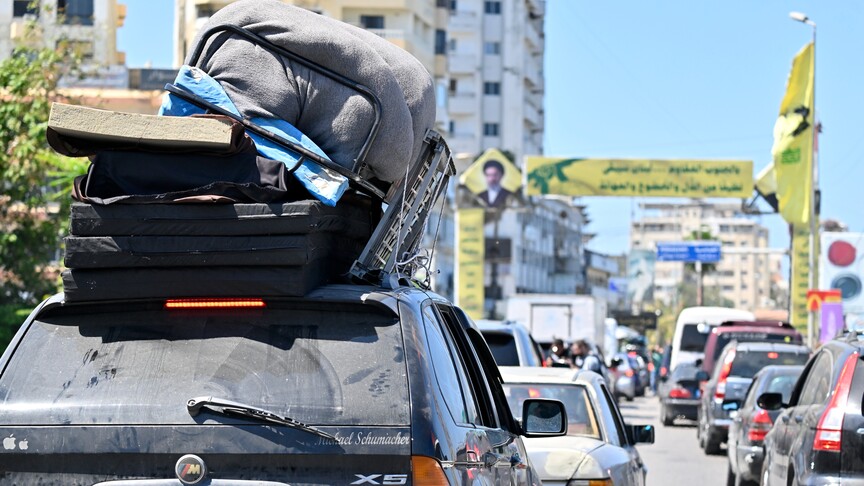
Nearly 50,000 people have returned home in southern Lebanon, though more than 106,000 remain in collective shelters across the country, the UN said Thursday. “Nearly 50,000 people have now returned to their homes in Nabatieh and South governorates,” UN spokesman Stephane Dujarric told reporters, citing data from the UN Office for the Coordination of Humanitarian Affairs (OCHA). “However, more than 106,000 people remain in collective sites across the country, with many others seeking shelter elsewhere.”
As World Cancer Day is marked on Wednesday, thousands of patients in Gaza face worsening illness, untreated pain and closed crossings – despite the limited opening of the vital route through Rafah this week.
“We are dying. Every day, between two and three patients die inside this hospital,” says Munther Abu Foul, a cancer patient lying on his bed in Gaza’s largest hospital. “I can’t get out of bed because of the pain. We want a solution – open the crossings.”
His words capture the reality facing thousands of cancer patients across the Strip, where access to specialist care has collapsed and evacuation for treatment abroad remains out of reach for many.
Local health organisations warn that around 11,000 patients are currently deprived of specialised or diagnostic cancer treatment inside Gaza.
Some 4,000 patients who received medical referrals to hospitals outside the Strip have been waiting for more than two years to travel.
UN News visited Al-Shifa Hospital in Gaza City, documenting the dire conditions inside its oncology department. Patients crowd corridors and wards, waiting for consultations or treatments that are no longer available.
Essential medicines and equipment are in short supply, while many patients endure chronic pain that leaves them barely able to move.
UN News
A man takes care of his brother, a cancer patient at Al-Shifa hospital in Gaza City.
‘Every day, two or three patients die’
Mr. Abu Foul flips through his medical transfer papers, issued long ago for treatment outside Gaza. He has not been able to travel for more than two years.
“The health situation in the Gaza Strip is dilapidated,” he says. “There is no treatment or medicines, and we are dying. Every day, two to three patients die here inside this hospital. I can’t get out of bed because of the pain.”
He appeals directly for help. “We want a solution. Open the crossings properly so that God will release us from this suffering. Everyone will be held accountable.”
Nearby, Mohamed Hammou tends to his elderly mother, who is also battling cancer. He says families are forced to watch loved ones deteriorate without care.
We want a solution. Open the crossings properly so that God will release us from this suffering – Abu Foul
“This is how we stand in front of a patient who is dying, without treatment or any medical facilities that help them recover,” he says. “This does not please God and it does not satisfy people. We call on Islamic, Arab and international nations to look at the sick with mercy.”
A brother in pain
In another ward, Raed Abu Warda cares for his brother Hamid, whose cancer has worsened after long delays in treatment. What began as a small, benign illness has become a life-threatening condition.
“He has been suffering from cancer for two years,” Raed explains. “He waited all this time for the crossing to open so he could be treated outside. His pain has increased, as you can see.”
He gestures towards a wound that has opened beneath his brother’s chin. “The disease has created this wound, and his condition is getting worse every day. I stand watching my brother and mourning his condition because of the pain.”
UN News
The health situation in the Gaza Strip is deteriorating for those suffering from life-threatening cancers, despite the limited opening of the Rafah crossing.
The number of patients seeking care at Gaza’s oncology departments continues to rise, even as hospitals face severe shortages of medicines, equipment and specialised staff. For newly diagnosed patients, the future is increasingly uncertain.
Evacuations far short of needs
With the limited reopening of the Rafah crossing, the World Health Organization (WHO) is supporting the evacuation of patients and their companions from Gaza, focusing on ensuring safe transport. Yet the scale of need far outstrips what is currently possible.
All we ask for is a way to live
More than 18,000 patients – including around 4,000 children – are waiting to be evacuated abroad for medical treatment, according to WHO.
The UN Office for the Coordination of Humanitarian Affairs (OCHA) reported last week that Gaza’s Ministry of Health had recorded more than 1,200 patient deaths while people were waiting for medical evacuation. Around 4,000 cancer patients remain on critical waiting lists, trapped between closed crossings and a health system pushed beyond its limits.
For patients like Munther Abu Foul, time is running out. “We are dying,” he repeats. “All we ask for is a way to live.” – UN News
The UN on Friday said the winter conditions in the Gaza Strip are turning deadly as 11 children have died of hypothermia, and renewed calls to lift Israeli restrictions on humanitarian operations.
Citing the Office for the Coordination of Humanitarian Affairs (OCHA), UN spokesperson Farhan Haq said at a news conference that “families in Gaza continue to face harsh winter conditions.”
He reported that “on Tuesday, another child reportedly died from hypothermia,” adding: “This is the eleventh child who has died this way since the beginning of the winter season, according to the Ministry of Health in Gaza,” according to Anadolu.
Noting that since October, “the UN and our partners have distributed tens of thousands of tents, providing shelter to over half a million people,” Haq stressed that “tents provide limited protection, especially during the rainy season.”
“We continue calling for more durable shelter solutions to limit people’s dependency on tents,” he added.
Haq also warned that food access remains fragile, saying: “Even with the improvements in food consumption this month, humanitarians stress that the entry of aid and commercial supplies must be sustained and further diversified.”
He said that efforts to address malnutrition have expanded, adding: “Humanitarians have expanded services through dozens of facilities established since the ceasefire.”
“We reiterate that restrictions on humanitarian operations must be lifted,” Haq said, calling on Israel to end “the ongoing ban on UNRWA” and urging that humanitarian partners be allowed to operate “without hindrance across the Gaza Strip and the West Bank, including East Jerusalem.”
The current olive harvest season in the occupied West Bank has seen the highest level of illegal settler attacks in five years, a UN agency said Saturday.
The UN Office for the Coordination of Humanitarian Affairs (OCHA) said in a statement that 126 attacks were recorded in 70 Palestinian towns and villages, while over 4,000 olive trees and saplings were vandalized.
“The 2025 olive harvest season has so far witnessed the highest level of damage and number of affected communities due to settler attacks since 2020,” it added.
OCHA noted that 60 of the documented attacks involved direct assaults on Palestinian civilians, with at least 17 people injured and 19 vehicles vandalized in the past week alone according to Anadolu.
The UN agency said illegal Israeli settlers from newly established outposts have also imposed access restrictions on Palestinian farmers in multiple locations, preventing them from reaching their groves during the harvest.
On Saturday, illegal Israeli settlers attacked Palestinian olive pickers in the village of Burin, south of Nablus, and assaulted several of them, the official news agency Wafa reported.
Illegal settlers stormed farmland between Burin and the nearby town of Huwara, beat multiple harvesters and forced them to leave the fields, the broadcaster said.
Wafa added that the attackers also scattered the olives the farmers had already collected, leaving them on the ground.
The attack came amid a sharp rise in settler violence against Palestinian farmers during the annual olive harvest, which typically begins in mid-October each year.
According to the official Colonization and Wall Resistance Commission, 259 attacks on Palestinians carried out by the Israeli army and illegal settlers during the olive harvest season.
Israeli attacks have escalated across the occupied West Bank since October 2023, killing more than 1,062 Palestinians and injuring 10,300 others, according to Palestinian figures.
In a landmark opinion last July, the International Court of Justice declared Israel’s occupation of Palestinian territory illegal and called for the evacuation of all settlements in the West Bank and East Jerusalem.