President Xi Visit to Cairo, 1st in 10 Years

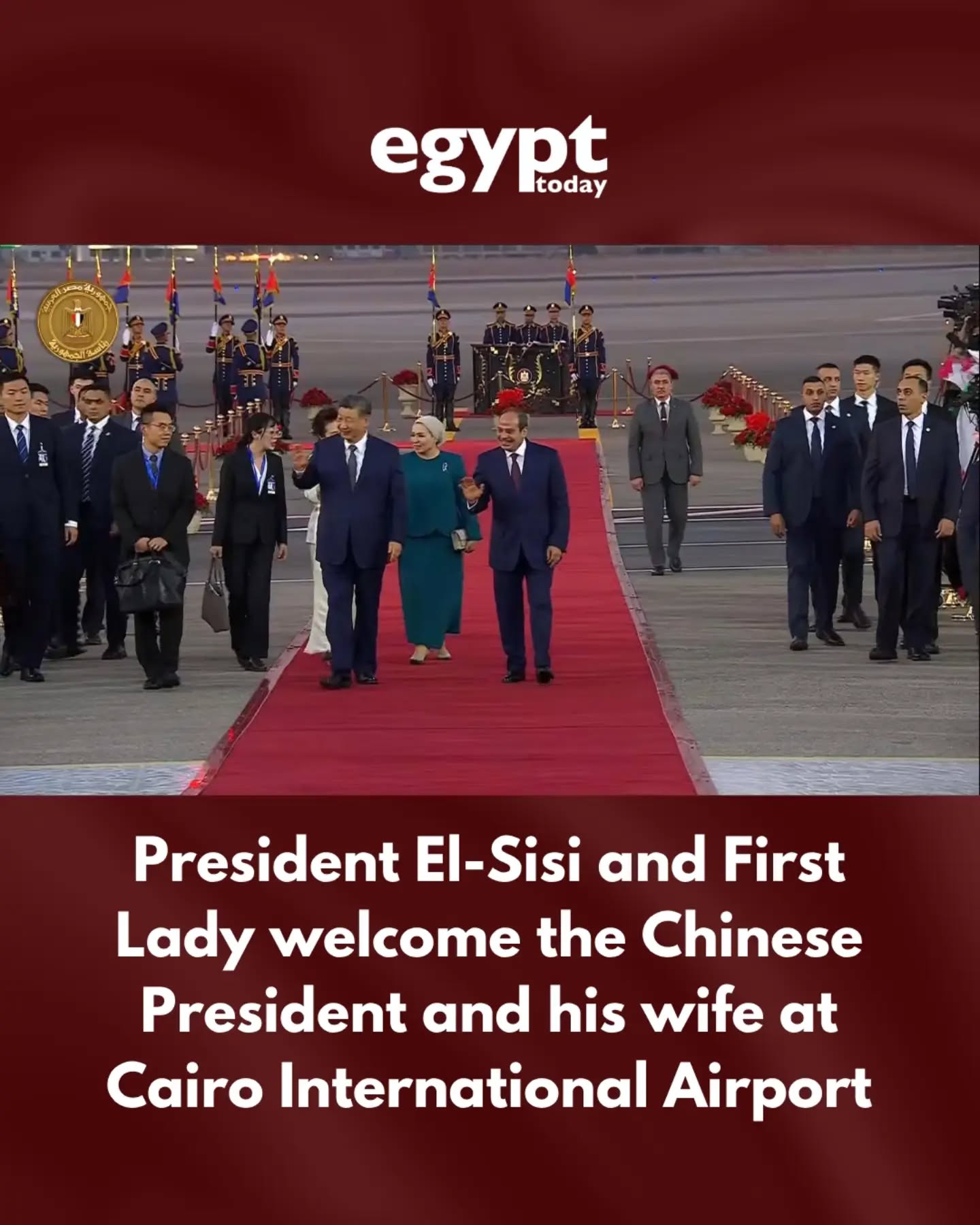
Chinese President Xi Jinping arrived in Cairo on Tuesday evening for his first official visit to Egypt in 10 years.

Egyptian President Abdel Fattah al-Sisi received Xi at Cairo International Airport, according to an Anadolu correspondent.

The two leaders are expected to discuss strengthening bilateral relations and implementing the countries’ comprehensive strategic partnership, as well as regional and international issues of mutual concern.

The Egyptian presidency said Tuesday that the visit would focus on implementing the comprehensive strategic partnership agreement signed by the two countries in 2014.

The talks will also include consultations on regional and international developments, according to the presidency.

In an article published Tuesday in Egyptian state-run newspapers Al-Ahram, Al-Akhbar and Al-Gomhouria, Xi said relations between China and Egypt were in their “best period in history” after 70 years of friendship.

He called for a deeper, comprehensive strategic partnership and expanded high-quality cooperation under China’s Belt and Road Initiative.

Xi also called for stronger cultural exchanges and closer China-Arab and China-Africa cooperation.

Sisi, in an article published by Al-Ahram, said Egypt and China agreed that an expansion of armed conflicts would not serve the interests of any regional or international party.

China’s Foreign Ministry announced last Wednesday that Xi would undertake a foreign tour from Aug. 30 to Sept. 3, according to the official Xinhua news agency.

Xi last visited Egypt in January 2016, his first visit to the country since becoming president.

During that visit, Xi met Sisi and attended a ceremony marking the 60th anniversary of diplomatic relations between the two countries.

Sisi has visited China several times, most recently in May 2024.

Egypt and China established diplomatic relations in 1956, making Egypt the first Arab and African country to recognize the People’s Republic of China.

Beijing backed Cairo during the 1956 Suez Crisis, while Egypt supported China’s restoration of its seat at the UN in 1971.

The countries established a strategic partnership in 1999, which was elevated to a comprehensive strategic partnership in December 2014 during Sisi’s visit to Beijing. Anadolu

  • CrossFireArabia

    CrossFireArabia
    Dr. Marwan Asmar holds a PhD from Leeds University and is a freelance writer specializing on the Middle East. He has worked as a journalist since the early 1990s in Jordan and the Gulf countries, and been widely published, including at Albawaba, Gulf News, Al Ghad, World Press Review and others.

    Related Posts

    British Row: Netanyahu’s Son Says Falklands Belong to Argentina

    Yair Netanyahu, son of Israeli Prime Minister Benjamin Netanyahu, has sparked a backlash from British far-right figures after backing Argentina’s claim to sovereignty over the Falkland Islands, Israeli daily Haaretz reported Monday.

    Yair Netanyahu wrote on the US social media company X in Spanish that the Falkland Islands belong to Argentina, calling them the “Islas Malvinas,” the name preferred by Argentina. He described the islands as “a bunch of rocks” located thousands of miles from Britain.

    His comments came as he criticized the UK Labour government over what he described as “hypocrisy and hostility towards Israel,” which he also called “antisemitic.”

    Rupert Lowe, leader of Britain’s far-right Restore Britain party, responded by calling on Israel to clarify whether Yair Netanyahu’s position reflected the position of the Israeli government.

    “Following the intervention of Netanyahu’s son, where he states that the Falkland Islands belong to Argentina, it is entirely legitimate to ask what the official Israeli Government position is on the sovereignty of the Falkland Islands,” Lowe said on X.

    Lowe also shared Yair’s post and said, “You have enough problems to be focusing on in Israel, Netanyahu. The Falkland Islands are British, and will remain that way. A Restore Britain Government will go to war if necessary to ensure it.”

    Former Conservative MP and minister Conor Burns also criticized Yair in an expletive-laden post on X, writing: “Dear Nepoyahu, Piss off. Yours sincerely, Israel’s many friends in the UK (Stronger sentiment available from British subjects in the Falkland Islands).”

    Argentine President Javier Milei reposted several of Yair’s posts on X. Netanyahu subsequently said his comments appeared to have “contributed to Israel-Argentina relations … contrary to the left’s propaganda.”

    Nile Gardiner, a former aide to British Prime Minister Margaret Thatcher, who led Britain during the 1982 Falklands War, said Yair did not represent the official position of the Israeli government.

    “Thankfully this is not the official position of the Israeli government. The courageous Falkland Islanders have exactly the same right to sovereignty, self-determination and freedom as the immensely brave people of Israel. The Falklands will always be British,” Gardiner wrote on X, reposting Yair’s statement.

    Argentina claims sovereignty over the Falkland Islands, which it calls the Malvinas Islands, citing succession from the Spanish Crown and historical decrees, while Britain has maintained control and administration of the archipelago since 1833.

    In the early 1980s, Argentina and Britain fought what became known as the Falklands War over the disputed archipelago.

    The Falkland Islands consist of two main islands, East Falkland and West Falkland, along with more than 700 smaller islands. The archipelago covers about 12,200 square kilometers and lies roughly 480 kilometers off Argentina’s southern coast, with an estimated coastline of about 1,300 kilometers. Anadolu

    Continue reading
    The True Tale of The Moral Fighter

    This is a page from the tales of popular resistance and the formation of Palestinian consciousness Radwan Barghouti writes in Arabic from his home in Sweden. He points out it is a true story which he posted on his Facebook page.

    He writes: “In that generation, they knew that resisting occupation was not only about courage in the face of the enemy, but also about morality in dealing with oneself.”

    He tells a true tale “of a young man, a member of the Palestinian Communist Party, who he upset mother. The party leadership in his area received word of the story, so they summoned him and held him to a harsh disciplinary hearing.

    Today, the story might seem amusing or a bit strange; someone might ask: What does the party have to do with a young man’s relationship with his mother? But those who lived through that era saw the matter from a completely different perspective.

    In their view, a fighter did not represent only himself. His daily behavior reflects on the cause to which he belongs to. Then morality was not a marginal detail, nor a personal matter that could be separated from the struggle. A fighter was questioned about his actions as much as his stances: How he treated his mother, how he spoke to his neighbor, how he preserved people’s dignity, how he behaved when he disagreed, and how he used force when it was at his disposal.

    Resistance did not grant its adherents any moral privilege simply for resisting occupation. On the contrary, it placed a greater burden upon them: To live up to the ideals they championed in their daily lives.

    There was a profound understanding that the liberation of Palestine could not be merely a change of power on the ground, but also a restoration of the Palestinian people’s dignity, values, and ability to live freely and with honor.

    Therefore, the freedom fighter was required to resist within themselves what he resisted externally: Injustice, arrogance, selfishness, the humiliation of the weak, and the exploitation of position or power.

    Perhaps this is why this small story seems more than just a tale of a mother upset with her son. It unintentionally conveys a complete understanding of what it means to be a freedom fighter: For Palestine you defend to be present in your character, not just in your slogans.

    For what is the value of defeating your enemy if you lose yourself along the way? What does it mean to dream of a free homeland when we don’t know how to create even a modicum of freedom, respect, and justice in our own homes, streets, and relationships?

    They believed that the cause needed not only loud voices but also strong consciences, and that a true fighter is not just one who demands sacrifices from others, but one who begins by holding themselves accountable.

    Therefore, resistance, in its deepest sense, was more than a battle for land; it was an attempt to build a human being worthy of the land they sought to liberate, a human being who understands that the Palestine we struggle for must begin, before it is liberated on the map, in the character of those who bear its name.”

    Continue reading

    Leave a Reply

    Your email address will not be published. Required fields are marked *

    You Missed

    President Xi Visit to Cairo, 1st in 10 Years

    President Xi Visit to Cairo, 1st in 10 Years

    British Row: Netanyahu’s Son Says Falklands Belong to Argentina

    British Row: Netanyahu’s Son Says Falklands Belong to Argentina

    The True Tale of The Moral Fighter

    The True Tale of The Moral Fighter

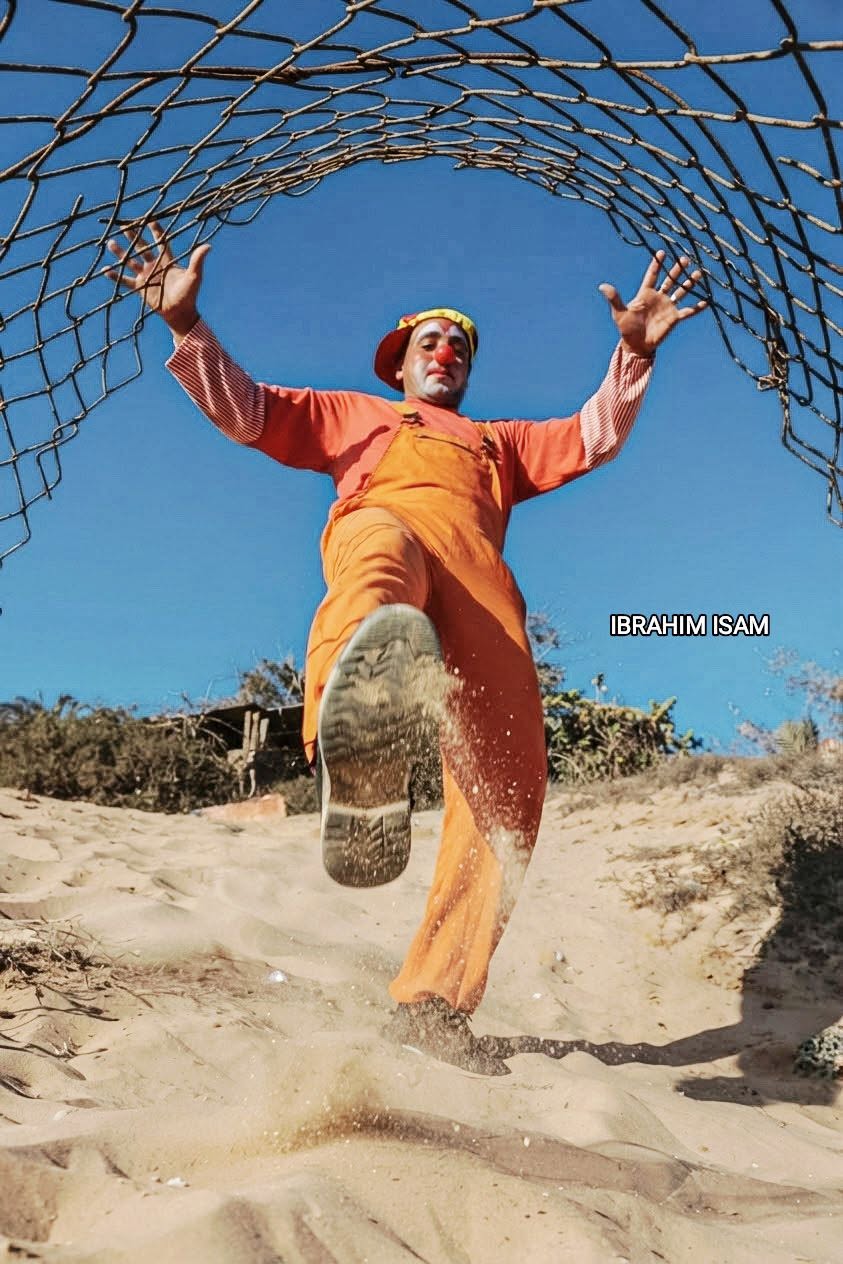
    Clowning in The Sand

    Clowning in The Sand

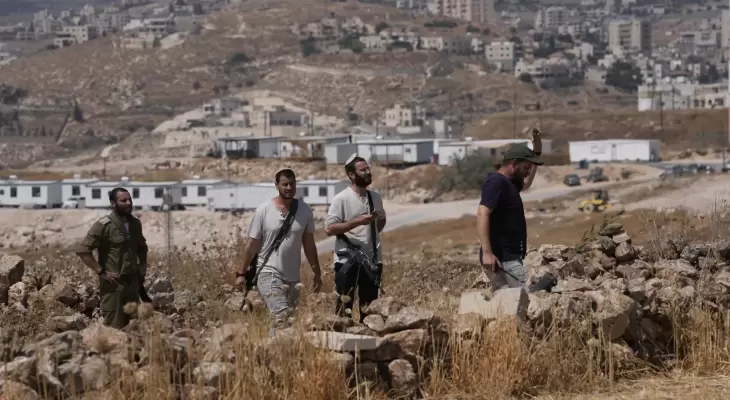
    Israeli Army: Settler Attacks Puts The West Bank in Resistance-mode

    Israeli Army: Settler Attacks Puts The West Bank in Resistance-mode

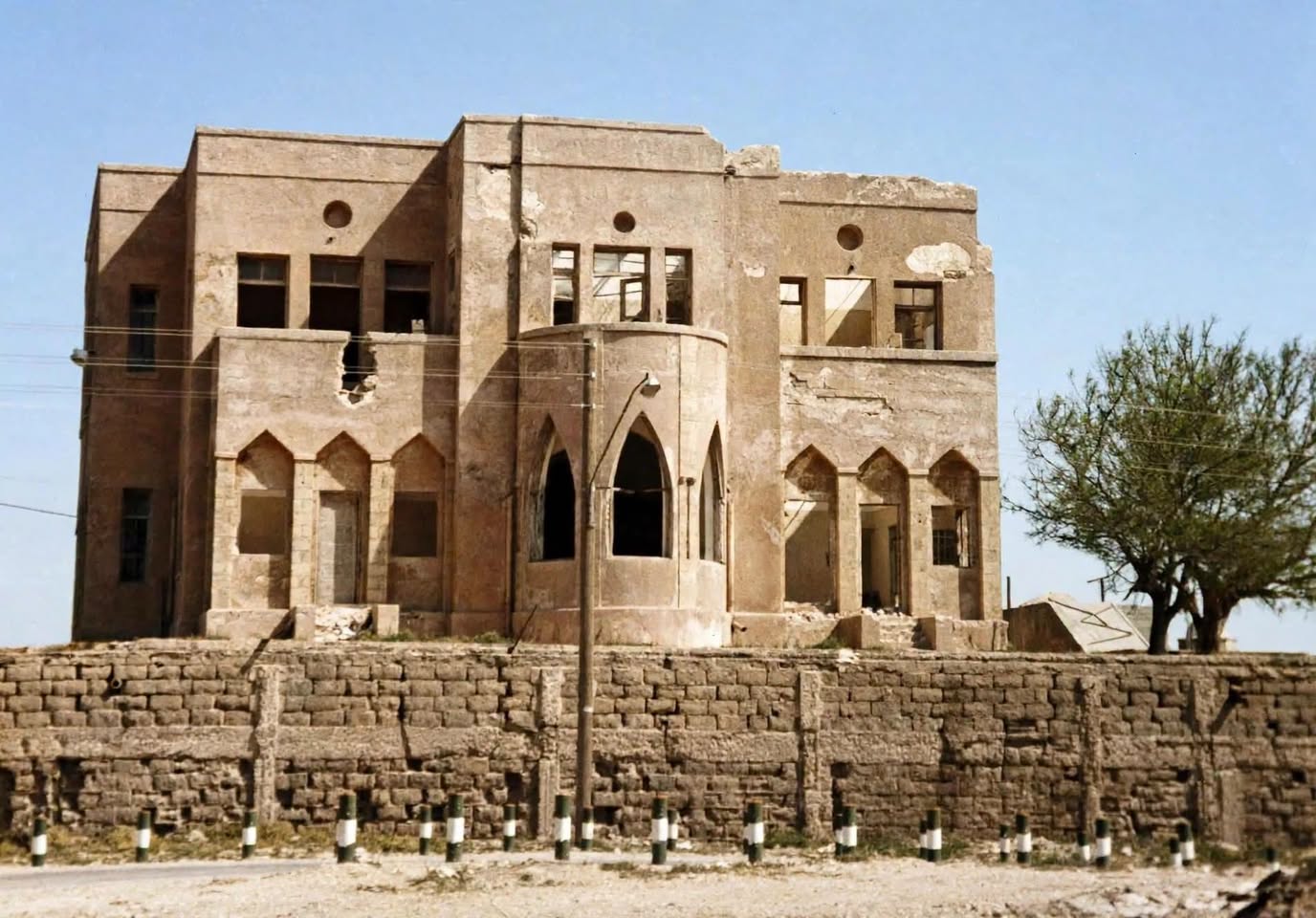
    Glorious Past: The Red Bidas Palace!

    Glorious Past: The Red Bidas Palace!