Gaza War Costs Israel $67,73 Billion

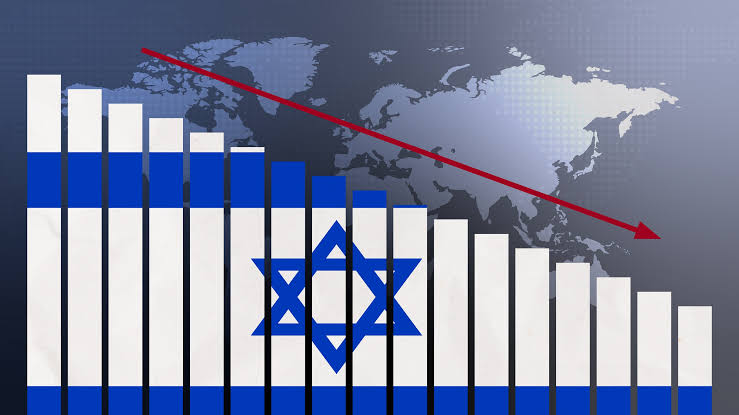
The Israeli economy is in deep crisis because of its war on Gaza that started on 7 October, 2023 and sees no end in sight.

The persistent war which Prime Minister Benjamin Netanyahu refuses to stop because of political and domestic reasons has cost the Israeli economy a massive 250 billion shekels, the equivalent of a mind-boggling sum of $67,73 billion.

According to Israeli economists, the war cost is a truly astronomical figure that is likely to keep going up if a ceasefire is not reached soon.

Put another way the war costs Israel nearly $300 million per day and many fear the Israeli economy may not be able to bear this heavy financial burden much longer.

On top of that, the Israeli defense establishment wants an annual increase of at least NIS 20 billion ($5.39 billion),” Rakefet Russak-Aminoach, former CEO of Israel’s Bank Leumi, told Israeli Channel 12 according to Anadolu.

“The deficit is much larger, we have evacuees, wounded, and many economic needs that are not even counted in the cost of the war,” she added.

The devastating cost of the war on Gaza is trending on the social media because of the vast increase that is needed to run the daily slaughter of the Palestinians that so far resulted in 40,000 being killed.

One blogger however, sought to look at the situation the other way round. He said because of the “Israeli war of genocide”, “the Gaza Strip has incurred losses exceeding $33 billion,” because of the massive destruction from Israeli warplanes and tanks to the Gaza infrastructure.

The cost to the Israeli economy is being translated into major economic deficits. Jacob Frenkel, a former governor of Israel’s central bank, said the country’s budget deficit reached 8.1% last July.

“The most urgent and important task is to deal with the deficit,” he said. “Israel started the year 2023 without a deficit and since then the situation has deteriorated. By the end of July, the deficit reached 8.1%, or about NIS 155 billion ($41.8 billion). It must be covered.”

Uri Levin, a former CEO of Israel Discount Bank, said Israel will not be able to rehabilitate its economy without winning back the trust of international investors, according to the Turkish news agency.

CrossFireArabia

CrossFireArabia
Dr. Marwan Asmar holds a PhD from Leeds University and is a freelance writer specializing on the Middle East. He has worked as a journalist since the early 1990s in Jordan and the Gulf countries, and been widely published, including at Albawaba, Gulf News, Al Ghad, World Press Review and others.

Related Posts

Albanese Calls For World Force to Protect Civilians in Gaza, West Bank

UN Special Rapporteur Francesca Albanese called Sunday for an “international protection presence” in the occupied West Bank, East Jerusalem and Gaza, saying such a deployment was “absolutely urgent.”

“Third states have an obligation, per the ICJ, to act to end Israel’s unlawful occupation,” Albanese wrote on the US social media platform X, referring to a July 2024 advisory opinion by the International Court of Justice that deemed Israel’s occupation of Palestinian territory unlawful and said states must not assist in maintaining it.

Albanese also questioned whether UN Secretary-General Antonio Guterres’ diplomatic efforts and the General Assembly’s “Uniting for Peace” mechanism could overcome the Security Council’s deadlock on the conflict.

The mechanism allows the General Assembly to consider international peace and security issues when the Security Council cannot act because of a lack of unanimity among its permanent members. The council has repeatedly been unable to take action on Gaza and the West Bank amid vetoes by the US. Anadolu

Continue reading
40 Million Tons of Rubble: Gaza Ministry Faces Challenges in Removing it

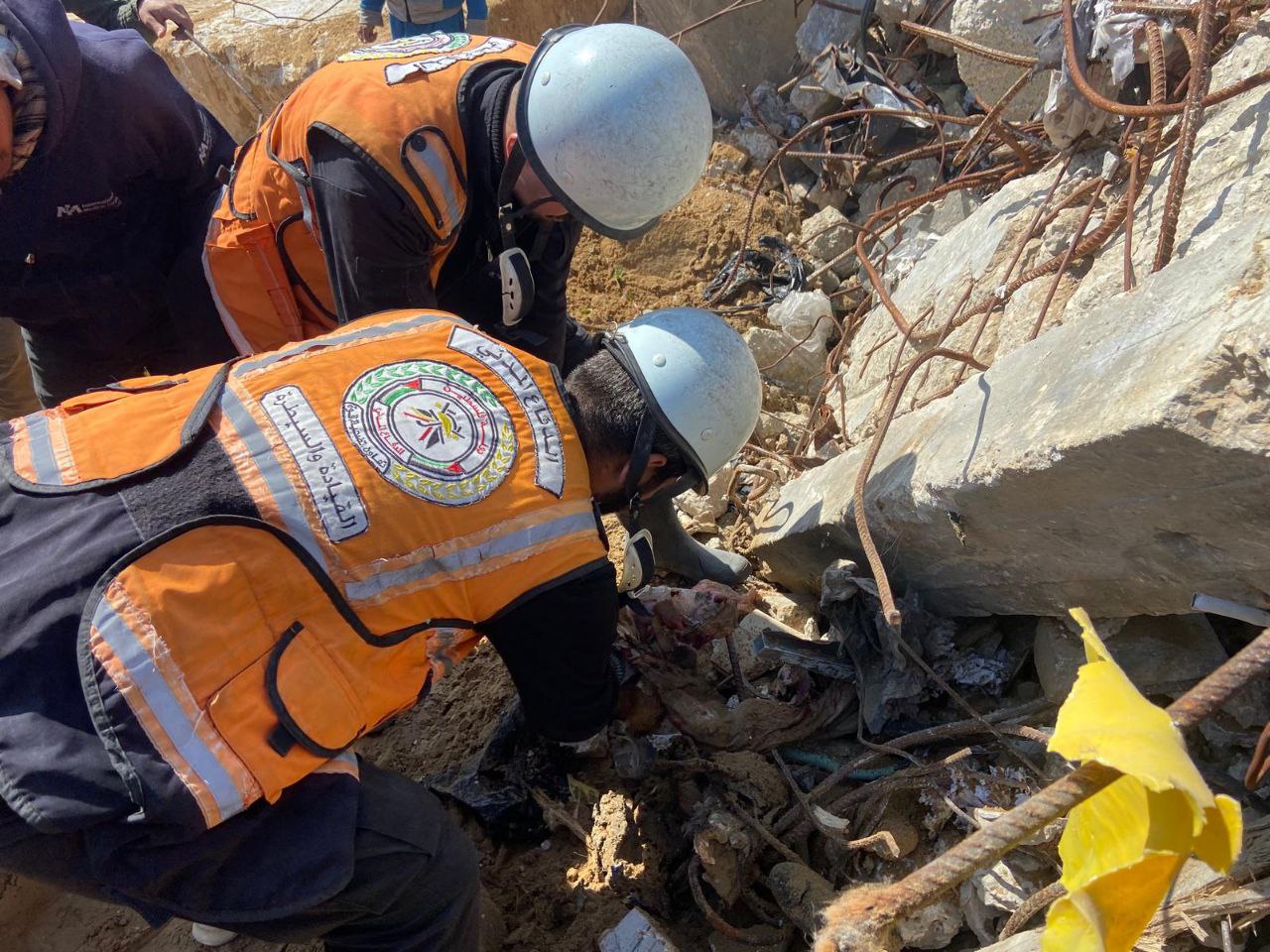
Gaza’s Ministry of Public Works and Housing confirmed that Israel’s ongoing targeting of tents and shelters of displaced people in the enclave is a systematic policy of destroying the basic necessities of life. It noted the amount of rubble that has piled up in the various regions of the Strip has exceeded 40 million tons.

Ministry spokesman Najla Hammad told the Sanad News Agency, Monday, the ministry is facing unprecedented challenges in removing the rubble because of the severe shortage of heavy machinery due to the Israeli-imposed blockade and the closure of crossings.

Hammad pointed out that the recent Israeli aggression has displaced more than 80 families, leaving them homeless and exposed, noting the ministry received widespread appeals to replace the tents that have been damaged and/or completely destroyed.

Read also: “Public Works”: Only 5% of shelter supplies enter Gaza

She added what is making things worse is that the Israeli occupation is preventing the entry of tents, tarpaulins, and shelter supplies and the reduction of usable land in the Gaza Strip to less than 30%.

Hammad explained that crews are continuing to work on opening main roads and providing alternative spaces for service facilities and educational centers but tough going. However, she announced the completion of the removal of the rubble at the site of the Hijazi Clinic in northern Gaza, in cooperation with the United Nations Development Programme (UNDP), and its handover to the Ministry of Health for reconstruction.

She indicated that the demolition and clearing of rubble is currently limited to only 4 out of the 10 sites previously identified, due to security restrictions and a lack of heavy equipment. The teams are operating with only one excavator and a very limited number of trucks.

Hammad noted the use of local alternatives and solutions, such as recycling crushed rubble to level roads and areas threatened by flooding, and melting plastic and aluminum to recycle supplies for health units in the camps is also moving.

UN reports confirm that the scale of destruction and rubble in the Gaza Strip surpasses that of major wars and conflicts in modern history. International organizations warn that preventing the entry of machinery, engineering equipment, and shelter materials exacerbates the humanitarian, environmental, and health catastrophe, hindering the provision of even the most basic services to more than two million displaced people lacking safe shelter.

The Ministry of Public Works and Housing in Gaza previously warned in August of the severe deterioration in the housing sector due to the widespread presence of tons of rubble. It emphasized that the aid and tents permitted entry by the Israeli occupation amount to no more than 5% of the actual needs of the displaced, given the strict restrictions at the crossings and the repeated forced displacement.

Recently, the Ministry of Public Works and Housing launched an emergency program to repair and renovate partially damaged homes in the Gaza Strip, a step aimed at persuading and facilitating the return of displaced families to their homes and original areas.

Last June, Hammad, announced a comprehensive plan for managing, storing, and crushing rubble for reuse, as part of the ongoing efforts to address the issue of debris resulting from the conflict.

Hammad said that the Ministry is presently working with the UNDP and have to-date  constructed more than 15 shelters that have accommodated over 1,700 displaced families in the Gaza Strip, including five centers in the south that alone have housed approximately 700 families.

Continue reading

You Missed

Morocco-Israel: Normalization Stops at The Top

  • By Heba
  • August 24, 2026
  • 2 views
Morocco-Israel: Normalization Stops at The Top

Albanese Calls For World Force to Protect Civilians in Gaza, West Bank

Albanese Calls For World Force to Protect Civilians in Gaza, West Bank

40 Million Tons of Rubble: Gaza Ministry Faces Challenges in Removing it

40 Million Tons of Rubble: Gaza Ministry Faces Challenges in Removing it

Join The Queue For The Drops

Join The Queue For The Drops

‘My Way Out of Insanity’

‘My Way Out of Insanity’

The Child, Tree and The Dark

The Child, Tree and The Dark