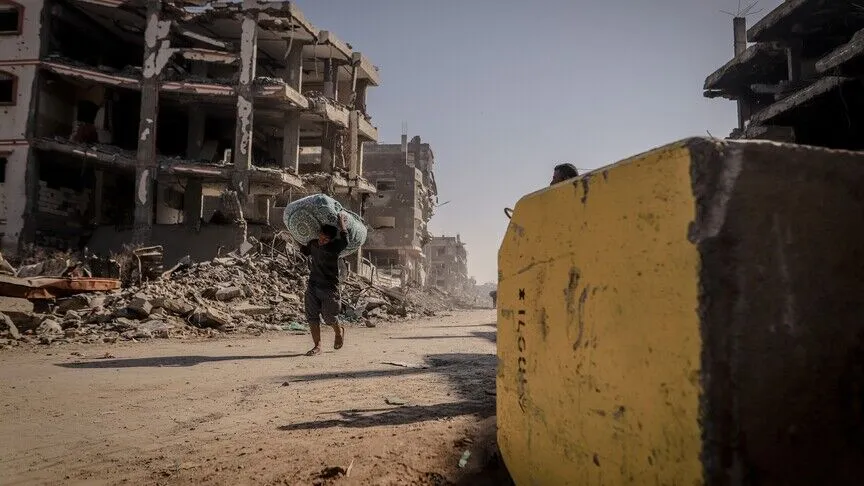
Analysis: Middle East in Iranian Eyes

CROSSFIREARABIA – During the Israeli Genocide on Gaza Benjamin Netanyahu used to stand up and say with a smirk: ‘We are changing the face of the Middle East’.

Upbeat about murdering the women and children of Gaza from the late 2023 onwards, he was talking about the further normalization of the Arab world as established by the Abraham Accords, establish an economic order under Israel’s hegemony and end Hamas, Hezbollah and Houthis while clipping the wings of Iran.

Of course, Netanyahu’s face soon changed, albeit two-and-a-half years later, when Iran and Hezbollah were forced into a war generated by Israel and the USA on 29 February, 2026. While Iran got a battering, in the next 39 days, US ships and military bases in the Gulf and Jordan received such a hammering that soon forced US President Donald Trump to plead for a ceasefire.

In this war, Israel received a great shock, being attacked literally on an hourly and daily basis with its buildings, military basis and infrastructure taking directs hits while its millions of people living in underground shelters around-the-clock. 

To use a metaphor Tel Aviv’s nose was being rubbed in the sand in a way that has never been imagined by Netanyahu nor his ilk of extremist right wing fascist politicians who started calling for the expulsion of Gaza Palestinians from their homeland ever since the Israeli genocide on them since 7 October, 2023. 

Today’s Netanyahu’s vision of a new Middle East has been drastically changed, thrown in his face in fact! Iran’s political stances and its missiles have changed things around. The US and Israel were not able to change the current Iranian government in Iran despite killing the country’s spiritual leader Ali Khameini, have not ended the country’s nuclear program nor ended its ballistic missiles. 

So what is Netanyahu talking about? Yes, today there is clearly a new Middle East emerging but it is not according to Netanyahu’s eyes nor his wishful thinking. If anybody should be ‘celebrating’ it is clearly Iran, it’s government, revolutionary guard, its Generals, officers and soldiers who are very probably changing the face of the Middle East and may even be setting the map of how the region should look like in form from now on. 

From day one of the war, Trump started running scared despite his outlandish mutterings! He came to realize quickly that Netanyahu and the Mossad pushed him against Iran, convincing him it would be an easy fight and the government there would fall like a pack of cards. Trump since, started kicking himself as he finally fell to Netanyahu’s squinted prism to go after that country. Netanyahu kept pushing for this wild step since the 1990s through previous US presidents from Bill Clinton, George W Bush, Barack Obama and Joe Biden.

But they did not listen to him however, Trump fell into the trap and maybe this is why he is now privately kicking himself because he basically sent the globe into an economic tailspin and soaring exorbitant oil prices, a potentially deep recession and financial chaos.

In this war Netanyahu may have shot himself in the foot. His alliance with the USA  juxtaposed by Hezbollah whose fighters laid dormant since November 2024 when it stopped firing at Tel Aviv was a big surprise to the latter. Israel had previously thought that Hezbollah agreed to a ceasefire out of weakness and thus their entry into military action was unexpected. Hezbollah kept the military pressure on for six more days after Washington signed off with Iran and beating the Israeli army into submission.

On day 46 Trump intervened calling on the Israeli army to stop fighting Hezbollah. He had ulterior motive, he wanted to extract a normalization agreement between the Lebanese government and Israel; their ambassadors had just started meeting in Washington at the invitation of the US State Department in an upbeat atmosphere and inline for a final agreement to establish an accord between Tel Aviv and Beirut alongside the ones signed between Israel and four Arab states, the UAE, Bahrain, Sudan and Morocco starting September 2020. 

Thus a normalization agreement would be a feather in Trump’s cap, a sort of prestige move for the US president. But his pressure may have been seen as a life-saving formula. Trump was saving Israel from Netanyahu’s insistence that his army to keep fighting in southern Lebanon. Its fight has already cost Israel at least 13 soldiers who were killed, more than 500 injured and more than 100 topnotch Merkava tanks destroyed. Israeli towns and cities were being hammered from the north.

Israel was being beaten from the north. Its towns, cities and military bases again were wide-open to incoming rockets from Lebanon and were not being deflected. It was a war that had to be stopped. This time Trump insisted. If a ceasefire with Iran was going to stick, then Netanyahu had to be forced to make his soldiers stop their fight in Lebanon. 

Thus for the time being Netanyahu’s hand lie in check. Yet in the long run his dream for a new Middle East with Israel playing a central part in it may have been halted. After all, no Gulf or even Arab states now would think of normalizing with Israel despite the fact that Lebanon is being forced into it, but even for then its early days.

Netanyahu can kiss goodbye his long-life attempt to sign a normalization accord with Saudi Arabia for instance, a kingdom which is seen as a “major puller” in the Arab and Muslim world. It has already said that normalization is off the table with Israel. The Gulf has been disappointed in this war because it showed that America were not able to protect them from Iranian missiles that targeted their infrastructure as well the US military bases strewn across the region.

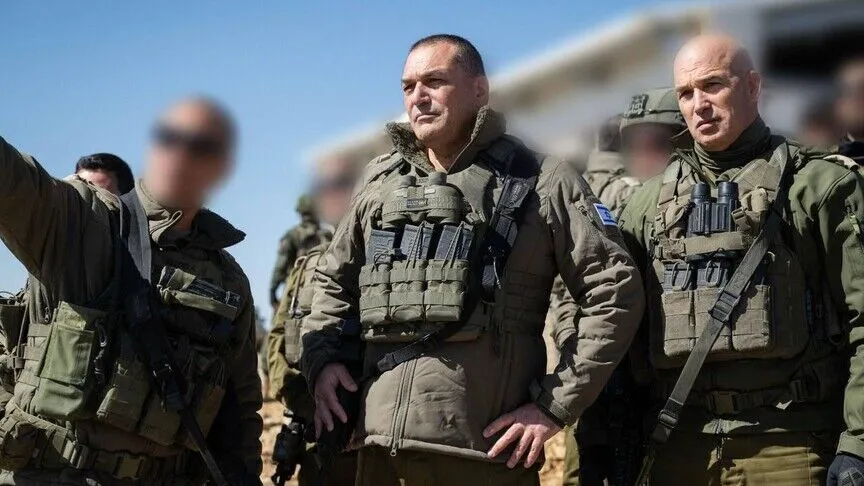
Netanyahu has lost on the economic level as well. His country stands economically devastated, army in ruins as admitted to by the Israeli chief of staff Eyal Zamir, and the dream of opening an ‘economic Middle East’ is definitely dashed for the time being.

America, as Trump knows, is left to pick up the pieces of a tattered world caused by war any choas in a region that is vital to the global system.

Continue reading
BoP and The Lurking Devil!


Eight months ago and precisely in June 2025, the US and Israel launched their first combined “Midnight Hammer” military operation against Iran, in an attempt to obliterate its controversial nuclear facilities, set since 2018, to be settled through negotiations between the US and Iran. Prior to that strike, not Ukraine nor Venezuela or Greenland, but Gaza was the hottest issue on Trump’ international agenda, as he was applying the final touches on his anticipated peace plan for the devastated tiny strip! On 26 January this year, i.e. nearly a month ago, Trump from Davos, in Switzerland, proudly announced the birth of BoP, “The Board of Peace”, which he would preside over forever.


To enhance his initiative’s chances to succeed, Trump had invited world leaders to join his new born club for peace. Those who responded favorably had little choice to do otherwise, and some of them promised to contribute billions of dollars to make the plan work. Other big shots such as Russia, France or China were either not interested or invited!


The last one to join the club, but reluctantly, was no other than the Israeli Prime Minister, Benjamin Netanyahu, despite his direct involvement in the thick of the matter. Netanyahu thought the plan was naïve and amateurish in more than one aspect! So he would send his Foreign Minister to attend the signing ceremony in Davos, for his own thoughts were focused on other more important issues that would take place later! Regardless of Netanyahu’s caveats, the Trump BoP seemed to be one of few feasible options to stop the violence and killing committed by Israel.

in Gaza, and a shy start towards a peaceful transition in Gaza and beyond despite the many loopholes.
On this occasion Trump said: “This is a big, big day, a beautiful day, potentially one of the great days ever in civilization”. The he added: “I am not talking about Gaza. Gaza is one thing, but we are talking about
much beyond Gaza. The whole deal, everything getting solved. It is called peace in the Middle East”. While this BoP was hailed as an achievement for Trump’s diplomacy, envisaged by his top capable advisor to the Middle East, Steve Witkoff, and his assistant Jared Kushner, Trump’s trusted son-in-law, it whistled disaster in Netanyahu’s ears.


From this man’s point of view, if the BoP was put on track of the peace train, let alone its arrival at its desired destination, it would mean one thing and nothing else: the end of Gaza tragedy which also meant the end of Netanyahu’s political career. For him, it looked like a trap that he had, knowingly but unwillingly, a role in setting up. At this crucial moment the manipulative devil and the survival instinct in
Netanyahu, were awakened and pushed him to embark on planning a reversal of this momentum. He had to end this nonsense talk about peace for Gaza, let alone beyond! For certain, he regretted his consent to the suspension of the Midnight-Hammer strike back in June against Iran. Now time is running short for him again.

He needs to take a big and last gamble to divert Trump’s current menacing approach to solve the thorny issues in this region. He, prematurely, and ahead of his originally scheduled visit to the US, books
a meeting with Trump at Mar-a-Lago in Florida, thus effecting his sixth meeting with Trump in less than a year!

There, he presents his case: Today, he tells Trump, Iran is the biggest real danger facing Israel and the free world led by the US; Iran is stockpiling an arsenal of all kinds of deadly missiles; the majority of
Iranians want the US to help them topple the regime which is massacring the protesters in the streets; Iranian negotiating team are just buying more time; it is now or a never again chance to finish this
nightmare called Iran, after its proxies in Syria, Yemen, Iraq, Gaza and Lebanon were defeated earlier.
Trump submissively listened, as Netanyahu managed to put a hold on every other item on Trump’s agenda, including his cherished BoP project for which he hoped to be nominated for the Nobel Prize for
peace!

Today as the war against Iran goes into its sixth day, two things and plus are crystal clear; there will be no peace prizes, and there will lot of havoc and chaos on the ground, plus the devil in Netanyahu, will be the happiest breathing creature around, for the time being!

Continue reading
OIC Condemns US Envoy Views on Israel’s Rights in Mideast

The Organisation of Islamic Cooperation (OIC) on Saturday condemned remarks by US Ambassador to Israel Mike Huckabee, warning that his comments about Israeli expansion in the Middle East threaten regional security and stability.

Mike Huckabee argued that Israel has a biblical right to the land stretching from the Nile to the Euphrates rivers, saying on a podcast released Friday: “It would be fine if they (Israel) took it all.”

Huckabee made the remarks in an interview with US journalist Tucker Carlson, during which he defended Israel’s actions in Gaza and voiced support for the idea of “divine providence” giving control of the region to Israel.

After Huckabee claimed Israel had a divine right to vast portions of the Middle East, Carlson asked him: “What land are you talking about?” Interpretations of the biblical phrase “river of Egypt” vary, with some scholars identifying it as a riverbed in the Sinai Peninsula and others as the Nile.

“It would be fine if they took it all,” Huckabee replied, referring to Israel’s biblical right to the territory stretching from the Nile River to the Euphrates.

‘Dangerous and irresponsible’

The OIC described Huckabee’s remarks in a statement as “dangerous and irresponsible,” calling them an unacceptable call for the expansion of Israel, the occupying power, and the seizure of additional Palestinian and Arab lands.

The comments were based on “a false and rejected historical and ideological narrative and claims” that violate state sovereignty, diplomatic norms, principles of international law, UN resolutions, and the UN Charter, the group added.

The organisation warned that such extremist rhetoric would fuel further extremism and embolden Israeli policies centered on displacement, settlement expansion, and attempts to impose annexation on occupied Palestinian territory.

It said these measures “threaten security and stability in the entire region.”

RelatedTRT World – Palestine, Jordan and Egypt slam US envoy’s remarks on Israeli control of Middle East

Supporting legitimate rights

The bloc reaffirmed its unwavering support for what it described as the legitimate rights of the Palestinian people, foremost among them the right to self-determination and the establishment of an independent, sovereign state on the June 4, 1967 borders with East Jerusalem as its capital.

Huckabee, named US ambassador to Israel in April 2025, is an evangelical Christian who has previously spoken of expansionist claims based on what he described as a “divine right” for Israel in the West Bank.

Israeli Prime Minister Benjamin Netanyahu told news channel i24 last August that he feels “very attached” to the vision of a Greater Israel. He said he considers himself “on a historic and spiritual mission,” including “generations of Jews that dreamt of coming here and generations of Jews who will come after us.”

Greater Israel is a term used in Israeli politics to refer to the expansion of Israel’s territory to include the West Bank, Gaza, and Syria’s Golan Heights, with some interpretations also including Egypt’s Sinai Peninsula and parts of Jordan.

Arab countries

Arab countries also separately strongly condemned the statement as “absurd and provocative”, unacceptable, and contrary to international law.

Jordan

In a statement, Jordan’s Foreign Ministry called the remarks “absurd and provocative”, saying they “constitute a violation of diplomatic norms, an infringement on the sovereignty of states in the region, and a blatant breach of international law and the UN Charter.”

The ministry added that the comments “contradict the publicly declared position of US President Donald Trump rejecting annexation of the occupied West Bank.”

The ministry called for “the concerted efforts of all parties to consolidate stability in Gaza and to implement the US president’s plan and UN Security Council Resolution 2803, instead of issuing absurd, escalatory, irresponsible statements that carry no legal value or effect.”

Egypt

Egypt’s Foreign Ministry condemned the statements, describing them as a “flagrant departure” from the principles of international law and the UN Charter.

Cairo expressed surprise at the remarks, saying they contradict the vision put forward by US President Trump and the related 20-point framework aimed at ending the genocidal war in Gaza, as well as the outcomes of a Board of Peace conference held in Washington on Feb. 19.

Egypt reiterated that Israel has no sovereignty over occupied Palestinian land or any other Arab territories, stressing its categorical rejection of any attempts to annex the West Bank, separate it from Gaza, or expand settlement activity in the occupied Palestinian territory.

Saudi Arabia

Saudi Arabia’s Foreign Ministry also condemned “in the strongest terms” and fully rejected Huckabee’s “reckless remarks,” which violate international law, the UN Charter, and diplomatic norms, calling them a dangerous precedent when issued by a US official and dismissive of the region’s long-standing relations with the US.

A ministry statement warned that such extremist comments “threaten international peace and security” by antagonising countries and peoples in the region and undermining the foundations of the international order.

Saudi Arabia called on the US State Department to clarify its position on a rejected proposal and reiterated its firm stance in rejecting any infringement on states’ sovereignty, borders, and territorial integrity.

The statement stressed that the only path to a just and comprehensive peace lies in ending the occupation based on a two-state solution and establishing an independent Palestinian state on the 1967 borders with East Jerusalem as its capital.

Kuwait

Kuwait’s Foreign Ministry also rejected the US ambassador’s remarks, saying in a statement that they represent a clear violation of international law and relevant international legitimacy resolutions, including Resolution 2803, and undermine states’ sovereignty and territorial integrity.

It said the comments directly contradict President Trump’s stated vision and the related 20-point peace framework, warning that legitimising control over others’ territory would inflame tensions and weaken efforts to restore stability.

Kuwait reaffirmed that Israel holds no sovereignty over the occupied Palestinian territory or any other Arab land and rejected attempts to annex the West Bank, separate it from Gaza, or continue settlement expansion.

It reiterated its support for the Palestinian people’s inalienable right to self-determination and the establishment of an independent state on the June 4, 1967, borders with East Jerusalem as its capital, in line with international resolutions and the Arab Peace Initiative.

Iraq

Iraq’s Foreign Ministry said in a statement that the remarks constitute a serious overreach that contradicts the principles of international law and the UN Charter and infringes on the sovereignty, independence, and territorial unity of states.

Baghdad stressed its firm position in support of state sovereignty and its rejection of any policies based on domination or the imposition of a fait accompli, calling for respect for international law to strengthen regional security and peace.

Oman

Oman’s Foreign Ministry also condemned the remarks, describing them as an illegitimate acceptance of imposing control over Arab lands, including the occupied Palestinian territory.

Muscat said the comments were contrary to international law and the UN Charter, warning that the rhetoric undermines prospects for peace and threatens regional security and stability.

The ministry reiterated Oman’s firm support for the Palestinian people’s right to self-determination and the establishment of an independent state on the June 4, 1967, borders with East Jerusalem as its capital, and for ending the occupation of all Arab territories. – TRTWorld

Continue reading
Netanyahu Leaves Washington Empty-Handed

By Mohammad Al-Kassim

Israeli Prime Minister Benjamin Netanyahu returned from Washington without the outcome he had clearly hoped for, or the outcome he had led his domestic audience to expect in the days before the trip.

The visit, hastily moved up by a week and framed by Netanyahu as urgent and decisive, ended with a brief, anodyne statement from his office. There was no joint appearance, no press conference, and no public declaration of alignment with President Donald Trump on Iran. 

When Netanyahu met with Trump at the White House on Wednesday, Iran was top of the Israeli PM’s agenda. And on his way back to Israel, Netanyahu said he had made his feelings clear – “not hide my general scepticism about the possibility of reaching any agreement with Iran”. 

For a leader who typically amplifies diplomatic achievements and personal rapport with American presidents — from his 2015 address to Congress opposing the Obama administration’s Iran deal to his close partnership with Trump during the Abraham Accords — the restraint was striking.

President Trump, for his part, said “nothing definitive” had been decided. 

The White House made clear that negotiations with Iran remain ongoing following the first exploratory round of US–Iran talks aimed at testing parameters for a possible new nuclear framework. 

That, in itself, was the headline Netanyahu had hoped to prevent.

Meeting defined by what didn’t happen

Netanyahu arrived in Washington, saying he would present Israel’s “guiding principles” for negotiations with Iran. 

But there was nothing fundamentally new in those principles — nor in the message he delivered.

For more than three decades, Netanyahu has framed Iran as an existential threat to Israel, warning of its nuclear ambitions in international forums, including at the United Nations General Assembly in 2012, where he famously drew a red line on a cartoon bomb.

His objectives have been consistent: weaken Iran by any means available; prefer regime change if possible; and, failing that, ensure Iran is permanently deprived of nuclear capabilities and long-range missiles.

After last year’s direct, unprovoked Israeli attack on Iran, missile capabilities have become even more central to Israel’s demands.

In Washington, Netanyahu pushed a maximalist position:

  • no uranium enrichment on Iranian soil, a demand that goes beyond previous US negotiating frameworks, including the 2015 Joint Comprehensive Plan of Action, which permitted limited enrichment under strict monitoring;
  • strict limits — ideally elimination — of Iran’s ballistic missile programme, a core pillar of Tehran’s deterrence strategy and long considered non-negotiable by Iranian leadership;
  • constraints on Iran’s regional allies and proxy networks, and
  • Israeli freedom of action to strike Iran, even under any future agreement.

He also opposes any ‘sunset clause’ seeking permanent restrictions that would entrench Israel’s strategic dominance in the region.

None of this aligns with the trajectory of US–Iran diplomacy. 

While the Trump administration has yet to spell out the precise parameters of a potential agreement, early signals from Washington point to a more limited objective than Israel has been demanding. 

The focus appears to be on extending Iran’s nuclear breakout timeline and preventing weaponisation — rather than eliminating uranium enrichment altogether or dismantling Iran’s ballistic missile programme.

In effect, the White House seems to be testing whether an imperfect but enforceable deal is achievable before turning to escalation. 

That approach reflects a calculation that containing Iran’s nuclear advances, even partially, may be preferable to the risks of confrontation or military action.

At the same time, President Trump has sharpened his rhetoric. 

He reiterated his commitment to negotiations but paired it with a stark warning: if Iran fails to reach a nuclear deal with Washington, the outcome would be, in his words, “very traumatic”. 

For the first time, Trump also attached a timeframe to that ultimatum, suggesting that diplomacy has a limited window — roughly the next month — before consequences follow.

The message from Washington is deliberate ambiguity: diplomacy remains the preferred path, but the clock is now publicly ticking.

The timing of Netanyahu’s trip is critical. Netanyahu advanced the visit shortly after the first round of US–Iran talks, signalling urgency — and concern. 

Israeli officials feared momentum: that negotiations might move ahead before Israel could shape their parameters.

That fear appears well-founded. While Trump continues to issue rhetorical threats toward Iran, his actions suggest a preference for testing diplomacy before escalating militarily. 

Domestic pressures and political stakes

Netanyahu’s urgency is also driven by domestic considerations. 

His governing coalition faces mounting pressures, including disputes over military conscription exemptions for ultra-Orthodox parties, budget constraints linked to prolonged wartime expenditures, and ongoing public dissatisfaction following the October 7 attacks and subsequent regional escalation. 

A dramatic confrontation with Iran — or even the perception that he is leading one — would be politically transformative.

Iran remains one of the few issues in Israel that still commands near-consensus across coalition and opposition lines. 

Netanyahu knows that. He has long positioned himself as the indispensable guardian against Tehran, and he needs to show Israeli voters that Washington remains closely aligned with him.

That explains the repeated emphasis, aimed at domestic audiences, on “coordination” with the US — even when public evidence of such coordination is thin.

According to Israeli assessments, Netanyahu brought intelligence to Washington intended to cast doubt on Iran’s intentions, including claims that Tehran is stalling negotiations, continuing executions, and refusing to engage seriously on missiles.

But if this intelligence was meant to derail diplomacy, it appears not to have succeeded.

Trump’s team — including Steve Witkoff, Jared Kushner, Marco Rubio, and others — listened. 

But the White House has not embraced Israel’s conclusion that negotiations are futile. 

Instead, it appears determined to test whether a deal is possible, even if imperfect. That leaves Israel preparing for an alternative outcome.

The prevailing assessment in Israel is that talks may ultimately fail — either because Iranian demands prove incompatible with US red lines, or because Israel’s demands make an agreement politically or technically impossible. 

That is precisely why Netanyahu insists on keeping the military option alive.

Behind closed doors, the three-hour meeting likely went beyond negotiating positions to contingency planning: what happens if talks collapse, how far Israel can act independently, and what level of US support or tolerance it might expect.

Israel’s core demand remains unchanged: freedom of action.

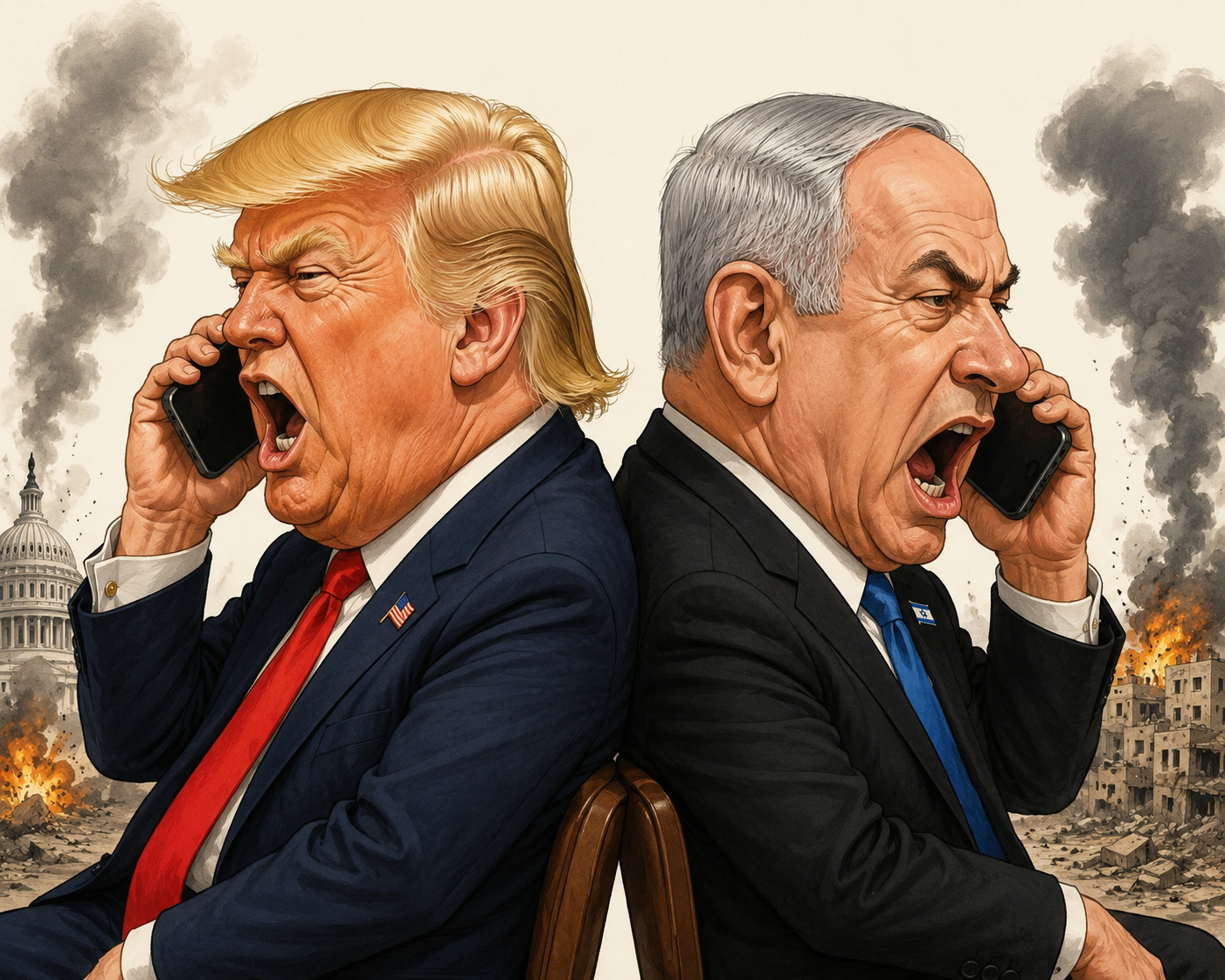
Despite public expressions of unity, Netanyahu and Trump are approaching Iran from different strategic premises. 

Trump appears to value flexibility and leverage, using the prospect of force to extract concessions while keeping diplomatic channels open. 

Netanyahu seeks permanence: structural constraints that prevent Iran from re-emerging as a threshold nuclear power under any future political configuration.

What binds them — at least for now — is political self-interest. Both prefer to avoid public confrontation. Both face domestic calculations. And both understand the risks of escalation.

For Netanyahu, however, the Washington visit underscored an uncomfortable reality: Israel can influence US policy, but it does not control it.

Diplomacy is moving forward — whether Israel likes it or not. – TRTWorld

Continue reading
Netanyahu: ‘Epstein Didn’t Work For Israel’

Israeli Prime Minister Benjamin Netanyahu used the renewed focus on the Epstein files to attack his predecessor Ehud Barak, saying that Jeffrey Epstein “did not work for Israel.”

The Jerusalem Post daily reported that Barak’s ties to Epstein received extensive media attention after the two met several times in 2015 and 2016, years after Epstein’s first criminal conviction. Photos circulated at the time showed Barak entering Epstein’s Manhattan residence in New York.

In his first public comment on the Epstein documents, Netanyahu wrote on US social media company X that Epstein’s “unusual close relationship with Ehud Barak doesn’t suggest Epstein worked for Israel. It proves the opposite.”

“Stuck on his election loss from over two decades ago, Barak has for years obsessively attempted to undermine Israeli democracy by working with the anti-Zionist radical left in failed attempts to overthrow the elected Israeli government,” he added, referring to his own administration.

Netanyahu accused Barak of engaging “in activities publicly and behind the scenes to undermine the government of Israel, including fueling mass protest movements, fomenting unrest and feeding false media narratives,” according to Anadolu.

Barak has been a vocal critic of Netanyahu for years and has repeatedly called for the government’s removal.

In mid-2025, Barak joined about 3,000 Israeli medical and health professionals in signing petitions urging the government to secure the return of captives held by Palestinian factions in Gaza, even if it required halting the war that began on Oct. 8, 2023, and lasted two years.

On Friday, US Deputy Attorney General Todd Blanche announced the release of more than 3 million additional files to the public as part of the Epstein investigations.

Epstein, an American financier accused of running a large-scale sex trafficking operation involving underage girls, some as young as 14, was found dead in a New York jail in 2019 while in custody.

The case files include the names of numerous high-profile figures, among them the former British prince Andrew, former US President Bill Clinton, current US President Donald Trump, former Israeli Prime Minister Ehud Barak, singer Michael Jackson, and former New Mexico Gov. Bill Richardson.

Continue reading